The views and opinions expressed on this site and blog posts (excluding comments on blog posts left by others) are entirely my own and do not represent those of any employer or organization with whom I am currently or previously have been associated.
Academic Version: Applying my personal experiences and academic research as a professor of Sociology and Asian American Studies to provide a more complete understanding of political, economic, and cultural issues and current events related to American race relations, and Asia/Asian America in particular.
Plain English: Trying to put my Ph.D. to good use.
Perhaps you may have heard about Michelle Wie, the 15 year old Asian American golf phenom and rising star of the women’s golfing world. She’s been described as the next Tiger Woods and as this New York Times article describes, she’ll be once again competing head-to-head against many of the top male golfers in the world this weekend:
During a magical two days at last year’s Sony Open in Hawaii, Wie impressed her competitors and bruised a few egos, shooting 72 and 70 to finish two over, missing the cut by one stroke, and finishing ahead of 48 players, including three who have won major championships – Todd Hamilton, Jeff Sluman and Craig Stadler.
After last year’s experience, and with so many Waialae practice rounds under her belt, Wie did not hesitate when asked about her goals for the week. “To do a lot better than last year, to make the cut,” Wie said when interviewed after last week’s Mercedes Championships pro-am. “A top 20 would be fantastic, if everything works out well.”
Reminded that to finish in the top 20 she would have to beat more than 120 men, Wie flashed her photogenic smile and said, “That would be really cool.”
Michelle is also one of several up-and-coming Asian and Asian American women golfers who have taken the Ladies Professional Golf Association by storm. Notables include Se Ri Pak, Grace Park, Aree Song, Jinnie Lee, Ya-Ni Tseng, In-Bee Park, Mi-Hyum Kim, Jung Yeon Lee, Jennifer Rosales, Christina Kim, and Seol-An Jeon, to name just a few.
Asian Americans are not well represented in many professional sports, so it’s nice to see that we’re doing well women’s golf. Good luck to everyone and in particular, go get ’em, Michelle!
Those of you who are “automotive enthusiasts” probably know by now that the North American International Auto Show in Detroit and the Los Angeles International Auto Show are going on right now. And one of the most anticipated debuts in both shows is the latest Ford Mustang, which blends retro styling from the first Mustangs of the 1960s and early 1970s with brand new and (mostly) up-to-date mechanics and performance.
But did you also know that the man mainly credited with bringing this new Mustang to life is a Vietnamese American named Hau Thai-Tang? Mr. Thai-Tang is clearly a rising star within the Ford corporation and was also recently named as Director of Ford’s well-respected “Special Vehicles Team” operation. As various media outlets such as USA Today have described, like many Vietnamese Americans, Mr. Thai-Tang was a refugee who fled Viet Nam with his family at a relatively early age and eventually settled in the U.S. He eventually came to Ford as a race car engineer and then landed the assignment as Chief Engineer of the new Mustang.
It’s always nice to see a fellow Asian- and Vietnamese-American (especially a male) doing well and representing our community in a professional that’s not usually identified with Asian Americans. Way to go, Hau!
Yesterday, as CNN reports, a federal judge dismissed all charges of illegally possessing and copying documents relating to national security that could have been used for espionage purposes against the U.S. against Chinese American Katrina Leung. The judge dismissed the case due to misconduct on the part of federal prosecutors:
“The government decided to make sure that Leung and her lawyers would not have access to Smith,” the judge said in her decision. “When confronted with what they had done, they engaged in a pattern of stonewalling entirely unbecoming to a prosecuting agency.”
This decision follows on the heals of recent similar decision that exonerated Asian Americans suspected of disloyalty and espionage against the U.S., such as Army Chaplain James Yee and nuclear scientist Wen Ho Lee. In all these cases, overzealousness and blatant misconduct on the part of federal prosecutors ultimately played a part in the dismissal of the charges. All these dismissals also include the judge chastizing the federal prosecutors on their misconduct as well.
Lesson to be learned, once again: Just because someone is Asian American does not mean s/he is more likely than anybody else to be disloyal to the U.S. or to be a potential spy. Period.
If you follow college football, you know by now that last night, the USC Trojans destroyed the Oklahoma Sooners 55-19 in the Orange Bowl/BCS Championship game to repeat as national champions. It was a pretty impressive performance, and as more than one observer has noted, for example in this recent Sports Illustrated/CNNSI.com article, much of the credit goes to USC’s Offensive Coordinator Norm Chow.
Coach Chow is one of the most respected, well-paid, and successful (he has mentored several Heisman Trophy winners) assistant coaches in the game. At the same time, there’s been a little controversy about why he isn’t a head coach yet. Some would argue that it’s because he’s Asian. Others point out that it’s not entirely clear that he absolutely wants to be a head coach and/or that he doesn’t have any head coaching experience at this point. As the article points out,
Many feel Chow’s lack of comfort with the spotlight may explain why, almost inexplicably, he remains a coordinator while less accomplished peers ascend to the head-coaching ranks. Granted, Chow has pretty good gig as it is and therefore doesn’t pursue just any old opening. However, when Stanford came calling last month, Chow thought he’d finally found his match. He interviewed at length and was one of two finalists, but the Cardinal elected to go with Pittsburgh’s Walt Harris.
Then, when USC administrator Daryl Gross took the athletic director job at Syracuse and promptly fired Orange head coach Paul Pasqualoni, many assumed he’d take Chow with him. “I talked to Daryl [Wednesday] night,” said Chow, “and it’s not a situation either of us would pursue.”
Whatever the case may be, I have to take my hat off to Coach Chow and the incredible work that he’s done. The results speak for themselves and Coach Chow rightfully deserves all the accolades that he has received. Keep up the great work, Coach!
The Asian American community (as well as all Americans in general) lost one of its heroes yesterday. Robert Matsui passed away at the age of 63 from a rare blood disorder.
As the Associated Press article reprinted in its entirety below notes, he was an internee during World War II who fought to win reparations and an official government apology for his community and eventually became a leader in the Democratic party. The story also describes some very moving tributes in his honor from major political leaders around the country.
I have followed his career for a while and personally consider him to be a very inspirational role model. Thank you for your work and your life, Congressman Matsui.
———————————————–
Rep. Matsui, a Top Democrat, Dies at Age 63
Sun Jan 2, 6:32 PM ET
By Thomas Ferraro, Associated Press
Word of the death of Rep. Robert T. Matsui has prompted an outpouring of praises from Washington and California political figures, all honoring a former Japanese-American prisoner during World War II who went on to serve 26 years in Congress.
Matsui died of complications from a rare disease Saturday night at Bethesda Naval Hospital outside Washington, D.C., his family said Sunday. He was 63.
In a statement, President Bush called Matsui “a dedicated public servant and a good and decent man who served with distinction” in Congress, adding, “Laura and I send our prayers and condolences.”
Matsui was an attorney who became a City Council member in 1971 before winning election to the capital city’s solidly Democratic fifth congressional district in 1978. He juggled political and policy roles during more than a quarter-century in Congress, most recently serving as chairman of the Democratic Congressional Campaign Committee where he headed the party’s unsuccessful effort to regain control of the House.
He also was the third-ranking Democrat on the powerful House Ways and Means Committee, where he was his party’s point man on Social Security legislation.
In a statement announcing Matsui’s death, his office disclosed that the congressman had been diagnosed several months ago with myelodysplastic disorder, an often-fatal form of bone marrow cancer. The congressman’s family said he entered the hospital on Dec. 24 with pneumonia.
U.S. Sen. Barbara Boxer called herself “shocked and despondent” over Matsui’s death, saying in a statement, “He has been part of my political life for more than 20 years, and he represented the best in politics.”
Matsui was born in 1941. The following year, his family was among the Japanese-Americans forced into internment camps during World War II. Decades later, he helped pass legislation which apologized for the internment policy and provided compensation for the survivors. In a 1988 speech to his congressional colleagues, Matsui said he was motivated by “the tears and painful remembrances of internees.”
U.S. Sen. Dianne Feinstein called Matsui as “a master of balanced, practical public policy” and praised his successful efforts to seek legislative redress for other Japanese-Americans who had been interned during War II.
Former President Clinton and his wife, U.S. Sen. Hillary Rodham Clinton, said in a statement, “Bob Matsui leaves behind a rich legacy of service that improved the lives of his own constituents, all Americans, and people throughout the world.”
California’s Republican governor, Arnold Schwarzenegger, also praised Matsui in a statement, saying, “Today, all Californians mourn the loss of this tremendous individual and man of integrity.” Schwarzenegger will call a special election for a new representative in his Sacramento-area district.
Matsui was recently re-elected with ease to his 14th term. His wife, Doris, was until 1998 a deputy director of public liaison in the Clinton White House. He is also survived by a son, Brian.
In his hometown Sunday, Sacramento Mayor Heather Fargo described Matsui as “our voice, our advocate, our leader” in ensuring federal support for flood control, light rail, transportation, housing and parks projects in the city of 418,000 people.
“His loss obviously goes well beyond Sacramento, but I think it’s felt strongest here,” she said.
Matsui generally supported Democratic legislation, but his support for global trade legislation put him at odds with members of his party on some high-profile measures.
As senior Democrat on the subcommittee on Social Security, Matsui gave every impression during the final few weeks of his life of being eager to lead the opposition to Bush’s plans to establish personal retirement accounts as part of a general overhaul of the program.
“With the passing of Bob Matsui, our country has lost a great leader and America’s seniors have lost their best friend in Congress,” House Democratic Leader Nancy Pelosi, a friend and fellow Californian, said in a statement.
Incoming Senate Democratic Leader Harry Reid of Nevada recalled Matsui as “a champion for the underdog who was the same kind, gracious man no matter how far he rose in Congress and in life.”
This past week, a 9.0 magnitude earthquake (the largest one in almost 40 years and the fourth largest ever recorded) rocked the Indian Ocean, causing massive tsunamis (aka tidal waves) to wash ashore and devastate countries such as Sri Lanka, India, Thailand, Indonesia, Malaysia, Bangladesh, and the Maldives. The death toll has already passed 100,000 and is sure to continue rising.
You might remember that about two-thirds of Asian Americans are immigrants. As such, many still have a direct connection to their Asian homelands and to family, relatives, friends, and countrymen back in Asia. Therefore, it is not a surprise that even beyond the shear devastation that has afflicted so many people in that region of the world, this tragedy hits home very hard for many Asian Americans. Even if they may not know anyone personally in these areas, my sense is that as people who share many aspects of history and culture in common, many Asian Americans have been deeply affected by these events as well.
It’s in times like this that I remember just how privileged my life is and how easily I take things such as food, shelter, and physical safety for granted. I hope that you’ll join me in offering your best hopes and wishes to everyone affected by this tragedy. If you would like to directly help those in need, please consider making a donation to the American Red Cross (you can designate your donation to be used for the “International Response Fund”, and where your donation is tax deductible) or the International Federation of Red Cross and Red Crescent Societies (where you can also designate that your funds be used to help the victims of this tragedy).
Events like this remind us that despite our differences, we are still all part of the same race — the human race.
I applaud this move — it means first, flights to visit my relatives in Viet Nam will now be cheaper presumably, and second, it’s another indication that U.S.-Vietnamese relations are normalizing, whether the staunch anti-communist Vietnamese here in the U.S. like it or not.
In the conventional academic literature, these two terms (transnationalism and assimilation) are usually considered close to being opposites to each other, at least as applied to Asian Americans. How can you live in two separate cultures and societies and be considered completely integrated in either one of them?
However, Asian Americans have always had ways to transcend conventional barriers, whether they were legal, economic, or in this case, cultural. As an example, the San Jose Mercury News has an excellent collection of articles entitled Asian Impact, which looks at how different Asian Americans living in the California Bay area (which has apparently replaced New York City as the most prominent Asian American metropolis in the U.S.) bridge the gap between Asia and Asian America.
Very interesting and informative stuff and definitely worth checking out.
I recently found two articles that are a good example of the frequently contradictory nature of relationships between different Asian ethnic groups, in this case between Japanese and Koreans. The first article, from Salon.com, explains,
Koreans have a harsh history in Japan. Their homeland was under Tokyo’s colonist yoke for 35 years, and in Japan they still face discrimination and cruel stereotypes. But thanks to the mega-hit South Korean soap opera “Winter Sonata,” Koreans these days also face something quite different in Japan: adulation. On visits to Tokyo, the show’s two main actors — Bae Yong-joon, 32, and Choi Ji-woo, 29 — are mobbed by swooning fans, and sales of chewing gum and chocolates they advertise have surged.
So on the one hand, there are examples of how Japanese and Korean culture mesh well with each other. On the other hand, we are reminded again that there are specific reasons why relations between different Asian ethnic groups are somewhat strained at times. Look no further than this recent headlines, following on the heels of the preceding article: Japan’s Supreme Court Refuses Compensation to South Korean War Slaves.
Even after historical evidence has overwhelming documented how the Japanese army kidnapped hundreds of thousands of young women from Korea, China, the Philippines, and other countries that they colonized during World Warr and brutally and visciously used them for sex slaves (euphemistically called “comfort women”), the Japanese government still refuses to acknowledge these atrocities, let alone offer an official apology for their actions. Even worse, many Japanese are openly defiant against acknowledging Japan’s barbaric actions during the war. The article describes one good example:
Japan’s Education Minister Nariaki Nakayama said this weekend he was relieved current Japanese textbooks have cut back on a “self-tormenting” view of World War II. “There was a time when Japanese textbooks were full of nothing but extremely self-tormenting things saying that Japan was bad,” Nakayama told a town hall meeting in southern Oita prefecture on Saturday, according to newspapers. “We have tried to correct that,” he was quoted as saying. “I’m really glad that recently there are fewer words such as ‘comfort women’ and ‘forced relocation’ used in textbooks,” he said.
I guess it just goes to show that pan-Asian unity is still easier said than done.
Chai Vang, a Hmong refugee living in Wisconsin, allegedly shot and killed six people the other day in an hunting dispute. Apparently, Vang mistakenly occupied a hunting perch located on private property, was confronted by the owners (or those who knew the owners), told to leave, started to leave, but then turned around and fired dozens of shots from a semi-automatic rifle toward the people and later, those who came to help.
The details are still emerging about this tragedy, but the question that comes up is, was Vang set off by racial taunts or derogatory slurs, as he now claims? As an earlier CBSNews.com article reports,
Some Hmong leaders questioned whether racial differences may have figured in the shootings; authorities have not determined a motive. . . In Minnesota, a fistfight once broke out after Hmong hunters crossed onto private land, said Ilean Her, director of the St. Paul-based Council on Asian Pacific Minnesotans. . .
Vang’s arrest left some Hmong citizens in his hometown fearful of a backlash. About 24,000 Hmong live in St. Paul, the highest concentration of any U.S. city. And the shooting has already provoked racial tension in an area of Wisconsin where deer hunting is steeped in tradition.
Locals in the Birchwood area, about 120 miles northeast of the Twin Cities, have complained that the Hmong, refugees from Laos, do not understand the concept of private property and hunt wherever they see fit. Michael Yang, a Hmong activist, said various Hmong groups held an emergency meeting Monday to talk about how to respond. Those at the meeting heard stories from some Hmong hunters about friction with white hunters.
Of course, there is no excuse for what Vang did. As the article also points out,
But, Minnesota state Sen. Mee Moua rejected the idea that cultural differences played any role in the shooting. “We’re all just speculating that may have been a trigger for him,” said Moua, who is Hmong. “We’re all searching for answers.” Moua added that Hmong-Americans feel racism on a daily basis, but “that doesn’t mean you kill people.”
A recent article in the New York Times elaborates further on some of the racial/ethnic aspects of this story. Ultimately, Sen. Moua is right — facing racism does not mean that you kill people and in no way am I justifying what he did. But it would clearly explain what made Vang snap — the last spark that finally ignited years, even decades of having to quietly and passively deal with prejudice, racial hostility, and systematic racism.
It’s been a long, long time coming, but I’m glad to see that UCLA has just become the first major research university to establish an independent Asian American Studies Department. Previously, the Asian American Studies curriculum at UCLA was only a an interdisciplinary program.
But now that it’s achieved departmental status, it can offer a doctoral program and hire faculty that would be fully affiliated with the department. Just as important, being a department will allow its faculty and students to feel that they finally have a home base, so to speak, along with a sense of official legitimacy and institutional support.
You might recall that earlier this year, the U.S. Supreme Court ruled that it is constitutional to consider race as a factor in college admissions as long as racial/ethnic minority applicants are not given extra points in the admissions process. But ironically, wishing to avoid potential lawsuits, many universities are ending programs that specifically targeted students of color and instead, are opening them up to all students. This recent article from the Chicago Tribune explains:
Throughout the country, schools such as Northwestern are opening up minority scholarships, fellowships, academic support programs and summer enrichment classes to students of any race. The change follows last year’s U.S. Supreme Court ruling that race can be considered in college admissions but only among other factors and that each candidate must be evaluated individually.
That landmark 5-4 decision, hailed as a victory by college and university officials, preserved affirmative action in admissions, but found unconstitutional a University of Michigan program that automatically gave extra points to African-American, Latino and American Indian applicants. In what some now say is an unexpected erosion of affirmative action, colleges are interpreting the ruling to mean they can no longer offer race-exclusive programs designed specifically to help minority students.
This development is happening at a time when the pool of underrepresented students of color applying for college is actually declining. This means that even as affirmative action is being validated, the numbers of disadvantaged Blacks and Latino students may still decline. At the same time, the numbers of Asian American college applicants continues to grow, as does the proportions of students who are of Asian ancestry on major university campuses all around the country.
It is becoming more clear to me each day that most Asian Americans do not need affirmative action any longer. However, notice that I said “most.” A few still do, namely Cambodians, Hmong, Laotians, etc. Thankfully, many colleges have recognized this and are targeting these specific Asian ethnic groups, rather than the entire Asian American racial category.
Does this mean that most Asian Americans are being hurt by affirmative action programs, similar to what many Whites are arguing? I still say no.







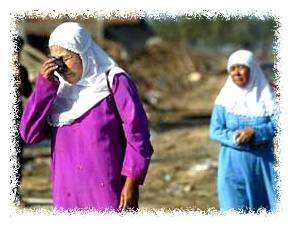 Even if they may not know anyone personally in these areas, my sense is that as people who share many aspects of history and culture in common, many Asian Americans have been deeply affected by these events as well.