The views and opinions expressed on this site and blog posts (excluding comments on blog posts left by others) are entirely my own and do not represent those of any employer or organization with whom I am currently or previously have been associated.
Academic Version: Applying my personal experiences and academic research as a professor of Sociology and Asian American Studies to provide a more complete understanding of political, economic, and cultural issues and current events related to American race relations, and Asia/Asian America in particular.
Plain English: Trying to put my Ph.D. to good use.
The Pacific News Service and New California Media have released the results of a survey of Asian Americans in California, which found that California Asians disproportionately contributed to the tsunami relief efforts. As the article explains,
70 percent of Asian Californians have contributed to tsunami relief efforts, compared to 33 percent of all adult Americans across the country. . . Asian Californians account for about 1 percent of the U.S. population, yet were responsible for more than 15 percent of overall donations. According to the poll, an estimated $200 million has come from the California Asian population out of the $1.2 billion in nationwide donations. . .
According to the poll, only 8 percent of Asian Californians reported knowing someone directly impacted by the tsunami. Despite this, two out of three still donated to the relief effort. . . Asian Americans in the United States have historically split along cultural, linguistic and historical lines and identified solely with their countries of origin. But according to the poll, Asian immigrants — who make up the bulk of the U.S. Asian population — are becoming more comfortable with the all-inclusive Asian American label.
Indeed, it’s very common for inter-ethnic rivalries and historical traditions of conflict and suspicion to hinder efforts among Asian Americans to unite as one collective group. But as this survey shows, in times of crisis, Asian Americans are capable to putting aside their differences and to come together as a united community, whether it’s in the name of fighting for justice for Vincent Chin, responding to racist media stereotypes, or in this case, helping our Asian brothers and sisters in the tsunami relief efforts.
When we’re united as one community, we can accomplish amazing things.
The Pacific News Service has a very interesting article on the leading candidates for Mayor of Los Angeles and how each of their campaigns addresses the city’s complex racial/ethnic issues. To make a long story short, demographic changes in recent decades has led to Latinos becoming the majority population (although not yet a majority of voters) and they are increasingly looking to flex their emerging political power.
Further, as Latino power has increased, the political efficacy (along with the population size) of Blacks has declined and they are trying to hang onto the last vestiges of power. And of course, the power base of Whites continues to slowly decline as well, as White flight into surrounding suburbs has increasingly led to calls among many White residents to split the L.A. school district so that, as the article notes, more affluent White schools are not forced to subsidize poorer and underserved urban schools.
Interesting, the article does not mention Asian Americans at all, despite the fact that as of the 2000 Census, Asian Americans represented 10% of Los Angeles’s population and have surely increased that proportion since then. In all likelihood, Asian American have already surpassed Blacks to become the second largest racial/ethnic groups in the city. Unfortunately, it looks like another case of Asian Americans again being treated as the invisible minority.
As I’m sure you’ve heard, Pope John Paul II has been through several illnesses recently. He is 84 years old, stricken with Parkinson’s Disease, and it is widely believed that he may be nearing the end of his life soon. In that context, speculation about who may succeed him as the next Pope is already well underway.
One of the better analyses is by former Vatican diplomat and professor at James Madison University, John-Peter Pham, who apparently is Vietnamese. Professor Pham recently wrote a book entitled Heirs Of The Fisherman: Behind The Scenes Of Papal Death And Succession. As he explains in this article at MSNBC/Newsweek, Pope John Paul II changed the rules slightly regarding how the next Pope should be elected:
Traditionally, a two-thirds majority is required to elect the pope. But, now, he’s changed the rules so that, essentially, after a little over a week’s time staying at this hotel in relative comfort, if they haven’t elected someone, they can change the rules to elect by simple majority after they have gone through the whole procedure. . . [T]his way, a determined majority can elect someone who is not a consensus figure.
Professor Pham also notes that even though Pope John Paul II has appointed 116 of the 119 cardinals who will elect the next Pope, there’s no guarantee that his successor will be a carbon copy of himself:
Both popes and cardinals have been surprised by what comes out of a conclave. Because of the nature of the constitution of the church that invests sole and absolute power in one man, once that man is seated in that chair, all bets are off. You can’t, from the grave, control your successor. Conventional wisdom only takes you so far.
Professor Pham also goes on to describe five cardinals who are early favorites who are likely to be considered for the next Pope — three Italians, one Nigerian, and one Austrian. I could not locate any biogrpahical information about Professor Pham, but don’t be surprised to hear about him or see him on television in the upcoming months, as the talk about the Pope’s successor intensifies. As always, it’s nice to see another Asian American, in this case another Vietnamese American, earning respect.
Nearly every respondent (95%) had experienced at least one form of discrimination and/or harassment in their lives. For example, 82% said that they had experienced discrimination based on their sexual orientation, and 82% had experienced discrimination based on their race or ethnicity.
The three most important issues facing APA LGBT community members were immigration, hate violence/harassment, and media representation.
Nearly all respondents (96%) agreed that homophobia and/or transphobia is a problem within the APA community. And, over 80% agreed that APA LGBT people experience racism within the predominantly white LGBT community.
The majority of respondents felt that LGBT organizations inadequately address issues of race (58%), class (80%), and disability (79%).
Also, 59% of the Asian American LGBT in the survey agreed or strongly agreed that Asian Americans experience racism within the White LGBT community. Further, 85% of survey respondents agreed or strongly agreed that homophobia is a problem in the Asian American community. As the former Director of Education at the Asian Pacific Islander Coalition on HIV/AIDS, I am not at all surprised to see the level of prejudice and discrimination that exists from both the White LGBT community and the “mainstream” Asian American community toward Asian American LGBT.
The results unfortunately show just how perilous a position many Asian American LGBT find themselves in — being unable to find appropriate support from either White gays and lesbians on the one hand, and from straight Asian Americans on the other. Add into that mix the fact that many are recent working-class immigrants and the almost constant threat of HIV/AIDS and you can come to the conclusion that in many respects, LGBT are one of, if not the most marginalized and vulnerable members of the Asian American community, and in American society in general.
Salon.com has an article that describes the growing popularity of using multicultural situations and multiracial actors in commercials and advertisements. However, as is generally the case in the advertising world, the reality of the everyday world does not always match up perfectly with stylized advertisement images:
In the idyllic world of TV commercials, Americans increasingly are living together side by side, regardless of race. The diverse images reflect a trend that has been quietly growing in the advertising industry for years: Racially mixed scenarios — families, friendships, neighborhoods and party scenes — are often used as a hip backdrop to sell products. The ads suggest America’s ethnic communities are meshing seamlessly, bonded by a love of yogurt, lipstick and athletic gear. . .
But critics say such ads gloss over persistent and complicated racial realities. Though the proportion of ethnic minorities in America is growing, experts say, more than superficial interaction between groups is still relatively unusual. Most Americans overwhelmingly live and mingle with people from their own racial background. Advertising, meanwhile, is creating a “carefully manufactured racial utopia, a narrative of colorblindness” says Charles Gallagher, a sociologist at Georgia State University in Atlanta. . .
[P]articularly since data from Census 2000 underscored the nation’s increasing ethnic complexity, ads that meld racial groups in less controversial ways have slowly become the norm. Interracial settings now are used as a matter-of-fact backdrop to sell wine and bath soap. . . “For so long, speaking to consumers of color has been absent from the landscape,” said Dana Wade, president of Spike DDB, a New York-based ad agency that uses multiracial images in most of its advertising. “It’s important to correct that.”
This subject has the potential to become quite a thorny issue. On the one hand, it is certainly true that people of color and multiracial individuals have traditionally been systematically left out of the vast majority of commercials and advertisements as companies have implicitly assumed that there entire audience of consumers was almost exclusively White. Therefore, the emergence of more multicultural images is indeed a step in the right direction.
On the other hand, as critics point out, advertisers need to recognize and understand that life is more complicated than a mixed-race group of friends having a party at the beach. This issue reminds me of how many colleges and universities, in their attempts to promote their campus as racially and culturally diverse, recruit students of color to appear in carefully staged pictures for their promotional materials when in reality, their campus and almost all their high profile campus activities (i.e., sporting events, etc.) remain virtually all-White.
So is there a middle ground here? I think it has to be a two-way process. First, hopefully consumers will understand that advertisement by design are supposed to be superficial idealized images, rather than an accurate reflection of reality. Therefore, I hope that consumers will recognize that even though they may be seeing more images of people of color in commercials and other ads, that does not necessarily mean that race relations in the U.S. are completely hunky-dory.
On the other hand, advertisers also need to understand that all with using images of people of color to promote their products, they should follow up on this effort to reflect a more accurate image of America by also promoting more people of color behind the scenes, as managers, supervisors, and executives. It’s one thing to portray a multicultural image to the public — it’s another to really mean it by institutionalizing multiculturalism behind the scenes, where it really counts.
This probably won’t be notable to many people who don’t follow international open wheel motor racing but in case that describes you, you may find it notable that the Formula One team Midlands Jordan Toyota has just named Narain Karthikeyan as the first Indian-born driver ever to race in Formula One, the pinnacle of automotive technology and competition and most popular sport in the world in terms of television and event audiences, next to World Cup soccer.
There have been several Japanese drivers in Formula One and one from Malaysia, but never one from India. As ESPN RPM explains, this move bodes well for Formula One’s long term goal of expanding its schedule of races away from Europe where tobacco advertising is usually severely limited, and into Asian countries such as India, where there are virtually no restrictions: “It also gives India, an attractive business market for sponsors with its enormous potential audience, a Formula One focal point after a stalled attempt to host a race in the country.”
In case you’re wondering, there have been American drivers in F1 of course, but never an Asian American driver. The only Asian American race car driver right now who has any notoreity is 28 year old Roger Yasukawa, who races in the Indy Racing League (a professional series that includes mostly oval races, including the Indianapolis 500). It’s hard to say whether there will be an Asian American driver in F1 anytime soon, which is rather ironic considering the prominent role that young Asian Americans have had in the sport compact import scene over the last decade or so.
Therefore, it remains to be seen whether Formula One’s expansion into Asia increases the chances that an Asian American, not just Asian, driver will one day race at the highest level of motor racing in the world. At the least, I hope the proliferation of Asian drivers in F1 helps to quell the stereotype that Asians can’t drive. This is assuming that Karthikeyan doesn’t fall flat on his face and embarass himself . . . and us too.
Well-respected Vietnamese American journalist Andrew Lam has a commentary article in the Pacific News Service in which he describes the emerging phenomenon of “stress” in modern-day Viet Nam. As he notes,
Stress is the latest trend to hit Vietnam from America since MTV. At first glance it seems impossible: Vietnam, after all, is a country full of hardworking young people, and rural life is backbreaking for the majority. Generation after generation has known nothing but sweat and toil. But stress is a phenomenon not of simple hard work. It is a kind of symptom associated with young, upwardly mobile urban professionals in peacetime. . .
Vietnam’s upwardly mobile urban young are given to multitasking these days. Next to Huy, Tram is talking on one phone, ordering a drink, conversing with another friend, and, yes, text messaging on another cell phone — all at once. . . A practice among the urban young is to place one’s cell phone on the table upon sitting down at a restaurant. Everyone then proceeds to check out everyone else’s new toy. “I bought a $500 dollar cell phone, and everyone in my circle has one. So I bought a new one for $1,200, and now I’m respected. It’s materialistic, but in my business, you have to do it.”
Quite ironic, isn’t it? Here is Viet Nam, supposedly one of the staunchest communist countries in the world, unable to escape the inevitable global influence of capitalism. It just goes to show just how powerful greed is — greed for money, for status, for materialistic satisfaction.
It would be easy to criticize these young Vietnamese workers as overly selfish and materialistic, concerned more about making money and having the latest symbols of wealth and status, rather than working toward democracy or social equality in their country. But we have to remember that, as Andrew Lam points out in his article, the vast majority of ordinary Vietnamese citizens have known nothing but toil, tedium, and unfullfilled aspirations for almost all of their lives.
I think they deserve to enjoy the fruits of their labor. At the same time, I am worried that the encroachment of capitalism will inevitably create an even wider gap between the affluent and the poor. However, maybe capitalism will be a force so irresistable that one day, it will finally be able to topple an entire totalitarian communist regime by itself. Like I said, quite ironic, isn’t it?
As you probably know, there’s been a lot of controversy about outsourcing in the last few years and the perception that too many American jobs are being shipped overseas to Asian countries like India, China, the Philippines, etc. But how about outsourcing in reverse, a.k.a. ‘insourcing’ — bringing jobs and investment from Asia over here to the U.S.? The Christian Science Monitor has an article that describes just that. An excerpt:
Across the country, mayors are brushing up their chopstick skills in an effort to win Chinese investment. Individual counties and cities are setting up trade offices in Beijing and other Chinese cities. Some places are enlisting their Chinese-American citizens to translate and show visitors that their city cares about Asian culture. . .
There is no question the Chinese are coming . . Observers expect further investments in US companies involved in oil and gas production and appliances. . . “This is the first inning of a very long game,” says Don Straszheim, an economist who follows China trends in Santa Monica, Calif. Chinese officials don’t dispute that the future is likely to include some significant investments in the US. “The Chinese have adopted a policy to go global,” says Zhanling Yuan, an economic and commercial consul in New York.
As with virtually all other issues relating to Asian Americans, this development can have both positive and negative consequences. On the positive side, as China and other Asian countries invest more in the U.S. and ideally create new jobs for Americans, it will hopefully start to dispel the notion that China is only interested in draining the U.S. economy by taking jobs away. It would also certainly help balance out the trade deficit that currently exists between Asian countries and the U.S. And on the cultural side, it is likely to help China improve its image (and by implication, the overall image of Asian Americans) among U.S. citizens.
However, there are potential negative consequences as well. You may remember the Japan-bashing that occured back in the 1980s when Americans were feverishly accusing Japanese companies of trying to “buy” the U.S., and that what Japan could not accomplish militarily during WWII, they were now trying to do economically through buying up U.S. companies and property. Well, there is no reason to believe that the same suspicions would not be raised here as China invests more in the U.S. — just witness the fears about Lenovo’s recent acquisition of IBM’s computer manufacturing division.
We all remember the consequences of Japan-bashing back in the 1980s, most infamously Vincent Chin’a murder by two Detroit auto workers who took him for being Japanese and blamed him for the recession and decline of the U.S. auto industry. Is something like that going to happen again once China, still a political and military rival to the U.S., and Chinese companies start buying up more U.S. companies? Stay tuned . . .
On the heels of the recent tasteless and offensive incident in which a radio DJ insulted and physically threatened a call center operator in India, Hot97 FM in New York recently created a parody song to “We Are the World” entitled “Tsunami Song” that mocks the tragedy in south and southeast Asia and that also uses racial slurs against Asians. Here are the lyrics:
There was a time, when the sun was shining bright
So I went down to the beach to catch me a tan
Then the next thing I knew, a wave 20 feet high
Came and washed your whole country away
And all at once, you can hear the screaming
And no one was saved from the wave
There were Africans drowning, little Chinamen swept away
You can hear God laughing, ‘Swim you bitches swim.’
[Chorus]
So now you’re screwed, it’s the tsunami,
You better run and kiss your ass away, go find your mommy
I just saw her float by, a tree went through her head
And now your children will be sold to child slavery
Apparently the radio host, Ms. Jones, played the song twice, had a heated on-air argument with one of the show’s other hosts (who is Asian American), and then later the radio station apologized for airing the song. The latest is that the staff of the morning radio show that first aired the song have agreed to donate one week’s pay to tsunami aid efforts.
I applaud that the station eventually realized that the song was completely tasteless, offensive, and racist and apologized. I also applaud the morning staff’s decision to try to make amends by donating one week’s salary to the relief efforts.
However, I still cannot fathom why so many people apparently felt that it was ok to mock and ridicule a human catastrophe that has already claimed over 200,000 lives and that it was even better to call the victims of this tragedy racial slurs. What saddens me even more about this event (as well as the previous radio incident described above) is that the people behind these racist acts were Black — other people of color.
If people still wonder why the Democrats lost this past election and why “The Left” is in such shambles these days, this is a perfect example — people who should be supporting each other and helping each other out in times of crisis are instead ridiculing each other and using human tragedies to try and be funny.
Many people apparently feel that tensions and conflicts between Asians and other groups of color are overexagerated or blown out of proportion by the media. That may be true to some extent, but incidents like this only serve to once again show that there are very real differences between groups of color. Further, this most recent slap in the face of Asian Americans all across the country is likely to negate years of goodwill and bridge-building between the Asian and Black communities.
In other words, at a time when both our communities should be marching forward together, what we have instead is one step forward, two steps back. This is a tragic incident in more ways than one.
The FBI has notified law enforcement authorities in the northeast about a possible terror plot that involves about 10-14 Chinese nationals who may be be planning some kind of terrorist attack against Americans involving some sort of nuclear or “dirt” bomb in the Boston area. This alert is significant because, as far as I know, it is the first time that an Asian or Asian American has been identified as a possible front-line terrorist (as opposed to being suspected of espionage or assisting terrorist suspects).
It will be interesting to see how law enforcement officials handle this alert, especially since many authorities believe that this “tip” is nothing more than an act of revenge against these Chinese for failing to pay a smuggler who helped them enter the U.S. illegally. Will they treat this alert just like all the other ones that I’m sure they receive on a daily basis, or will this particular alert receive extra attention, perhaps based on the implicit assumption that, once again, Asians are perpetual foreigners and therefore, not “real” Americans.
Even though the FBI has actual names and photographs in this case, should we expect another case of racial profiling here, where virtually all Chinese Americans (and by implication, virtually all Asian Americans) are suspected? We’ll have wait and see.
Latest update: The FBI is now saying that as I suspected, this terror alert was a false alarm and that the person who made the original tip most likely did do so out of revenge against the Chinese immigrants. It’s nice to know the truth, but I find it interesting how much attention this alert got even when the FBI itself admitted that it was never substantiated nor independently verified.
The Seattle Times has a very interesting article about the legacy of Washington Governor Gary Locke. If you’ll recall, Gov. Locke was the first mainland Asian American governor ever, and his governorship recently ended after two terms (he decided not to seek a third term). As the article describes, Gov. Locke seemed to have a rather complex set of priorities and accomplishments:
Many conservatives view him as a big-government liberal. Many liberals view him as, well, a conservative. . . As a legislator, he supported one of the biggest business-tax increases in state history and frequently argued for imposing a personal income tax. As governor, however, he approved billions of dollars in tax breaks to big business and vowed to never support an income tax. . . He has championed civil rights and tough-on-crime measures. He is a big backer of social-service programs and preaches personal responsibility.
During his first year as governor, Locke joined with Republicans to enact landmark welfare-reform legislation — but only after they agreed that the program be open to immigrants. . . As governor, Locke has been dogged by the charge that he lacks the vision of a true leader. Technocrat and tinkerer are two of the words most frequently used to describe him. He has been portrayed in cartoons as a limp rag-doll and as captain on a ship that remains tethered to the dock. Some say it’s just his low-key manner and his plain way of putting things. He once referred to his legislative agenda as “prudent yet bold.”
Does Gov. Locke’s shifting stances on issues and programs represent a tendency toward indecision and lack of executive backbone, or is he merely being pragmatic, realistic, and more focused on results than ideology? I may be a little biased but as someone who has always admired him, I think it’s more of the latter.
In fact, I think Gary Locke represents an excellent example of what sociologists might call a “postmodern” leader — someone who is not bound by traditional political or ideological boundaries and instead, focuses on what is the right thing to do at the moment given the circumstances and at the same time, what will benefit the most people in the long run.
As I have repeatedly stressed throughout Asian-Nation, the Asian American community is way too complex and diverse to expect all of us to think, act, or attain socioeconomic success (or fail to do so) in the exact same ways. In other words, Asian Americans are another reflection of the world around us — complex, multifaceted, and ever-evolving. With that in mind, I think Governor Locke is an excellent example of contemporary Asian America.
The San Francisco Chronicle has a series of articles written by Vera H-C Chan and Jeff Yang that reviews the Best and Worst of Asian Pop Music 2004, along with summaries of other Asian American culture-related news from this past year. It’s a very nice, interesting overview of many events that made news (and some that should have). Make sure to check it out.





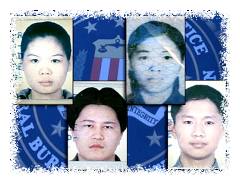 This alert is significant because, as far as I know, it is the first time that an Asian or Asian American has been identified as a possible front-line terrorist (as opposed to being suspected of espionage or assisting terrorist suspects).