The views and opinions expressed on this site and blog posts (excluding comments on blog posts left by others) are entirely my own and do not represent those of any employer or organization with whom I am currently or previously have been associated.
Academic Version: Applying my personal experiences and academic research as a professor of Sociology and Asian American Studies to provide a more complete understanding of political, economic, and cultural issues and current events related to American race relations, and Asia/Asian America in particular.
Plain English: Trying to put my Ph.D. to good use.
Here are some more links out that have come my way relating to Asians or Asian Americans. As always, links to other sites are provided for informational purposes and do not necessarily imply an endorsement of their contents:
Interracial Couples in New York City Needed for Documentary:
Hello, I’m a documentary filmmaker who is looking for an interracial couple based in New York to be the subjects of a film I’m making. I was wondering if could send you a description of what I’m looking for that you could distribute to your network. It would be very much appreciated!
17th Annual Taiwanese American Cultural Festival:
Green Taiwan
Saturday, May 09, 2009, 10 AM to 6 PM
Union Square, San Francisco
Celebrate Taiwanese American Heritage Week with food, demonstrations and musical performances! Musical acts include traditional Taiwanese folk
music by the O Kai A Capella Singers, a Taiwanese aborigine group, and pop music by local Asian American artists. Celebrate our green theme with our orchid display or hear energy talks by Silicon Valley industry experts. Free and fun for the entire family!
Despite — or perhaps because of — Barack Obama’s election as President, affirmative action remains one of the most controversial and divisive issues in American society today. It’s an issue that can divide not only different racial/ethnic groups, but even members of a single racial group like Asian Americans. In fact, some of the most heated arguments I’ve had with people over affirmative action has been with other Asian Americans.
The issues and controversies surrounding affirmative action are not going to be resolved any time soon and perhaps not even in my lifetime. For now, I hope that we can all look at the issues from a more sociological and objective, rather than personal, point of view and at least understand each side’s positions, even if we don’t agree with them. To help in that process, MSNBC as an article that does a nice job at describing the current state of affirmative action in the U.S. in an objective and balanced way:
Strict racial quotas were unconstitutional, the court said — affirmative action was not. But that ruling far from decided what many considered the big-picture issue: Does protecting minorities discriminate against the majority? More than 30 years [after the famous Bakke v. University of California lawsuit], and scores of lawsuits later, the question remains unanswered. . . .
“The laws that Congress wrote are clear — everyone is protected from racial discrimination,” said Roger Clegg, president of the Center for Equal Opportunity, a conservative think tank that advocates eliminating race and ethnic considerations. “Not just blacks, but whites. Not just Latinos, but whites.”
Those who favor affirmative action say race divisions still exist in this country, 40 years after the civil rights movement. “Race so permeates society that you can’t ignore it,” said Dennis Parker, director of the American Civil Liberties Union’s Racial Justice Project. . . .
Twenty years later, a more conservative court declared that public school systems cannot try to achieve or maintain integration based on explicit race rules. . . . At issue in the case were programs in Seattle and Louisville, Ky., that tried to maintain racial diversity by limiting transfers and admissions.
“The Supreme Court case law isn’t clear. There aren’t bright lines and clear guidance,” said attorney Deborah Archer, director of the Racial Justice Project at New York Law School. “It’s very difficult to extract a rule from those cases that can be applied across the board.” Instead, “they have tended to be concerned with a specific aspect, and the decisions are made on case-by-case basis,” said Archer.
To summarize, through the years, the Supreme Court has basically ruled that consideration of an applicant’s race/ethnicity is legal, if there is a direct and specific reason supporting it, which includes the goal of creating a racially and ethnically diverse student population at colleges and universities and in private sector companies. However, the Supreme Court has also ruled that blanket policies such as quotas and allocating points to minority candidates are illegal and unconstitutional.
As the article also mentions, the Supreme Court is not likely to make any broad or sweeping decisions on affirmative action in general any time soon, instead preferring to make judgments about specific programs and policies on a case-by-case basis.
Blacks and Hispanics lag behind whites for higher-paying jobs at the largest rates in about a decade . . . Blacks overall slightly narrowed the gap in 2007 with whites in average salary, but the pay disparity widened for blacks with college degrees. Blacks who had a four-year bachelor’s degree earned $46,502, or about 78% of the salary for comparably educated whites.
It was the biggest disparity between professional blacks and whites since the 77% rate in 2001, when the U.S. fell into a recession due to the collapse of the tech bubble and the Sept. 11 terror attacks. College-educated blacks had previously earned as much as 83% of the average salary of whites in 2005.
Hispanics saw similar trends. . . . Hispanics with bachelor’s degrees had an average salary of $44,696, amounting to roughly 75 cents for every dollar made by whites — the lowest ratio in more than a decade — after hitting a peak of 87 cents to every dollar in 2000.
The numbers highlight some of the barriers for minorities, said Mark Mather, a demographer for the Population Reference Bureau. He said the pay disparities could widen further since blacks and Hispanics tend to be relative latecomers to the professional world and thus more vulnerable to layoffs in the current recession.
This finding that Blacks and Latinos are especially vulnerable in times of economic recession has been consistently documented. Some of this disparity has to do with the fact that many Black and Latino college-educated workers have less seniority and overall years of experience than many White workers, and therefore earn less.
On the flip side of this issue about affirmative action, as I mentioned in an earlier post, the University of California has officially approved changed to its policies on eligibility for admissions (i.e., on who qualifies to be considered for admissions, not who actually gets admitted). Many Asian Americans and other people of color argue that these changes will disproportionately hurt the chances of Asian American applicants and other applicants of color and that these policies basically amount to “affirmative action for Whites.”
All of these developments illustrate the complex and often contradictory nature of this issue. Like I said, as a sad legacy of our country’s racialized history, it’s an issue that will unfortunately continue to perplex use for years and likely generations to come.
Time magazine has released its annual list of the World’s 100 Most Influential People and I highlight the Asians or Asian Americans on the list (descriptions are from Time magazine):
Leaders & Revolutionaries
Susilo Bambang Yudhoyono (President of Indonesia)
The country’s transition from authoritarianism has proved that as a democracy, Indonesia can be culturally vibrant and economically prosperous. Since winning the presidency in 2004, Susilo Bambang Yudhoyono has managed to keep the nation afloat, even during the current global recession. . . The time is right for Indonesia, as the world’s most populous Muslim nation, to assume a more prominent position in Asia and throughout the Muslim world. In response to President Obama’s warm overtures to Muslim countries for a new phase in relations with the U.S., Yudhoyono can take the lead and chart a new course for the region.
Wang Qishan (Vice Premier of China)
He is the man China’s leaders look to for an understanding of the markets and the global economy. As a result, China has been supportive of U.S. actions to stabilize our capital markets and has not given in to those who advocate reversing economic reform to insulate China from the world. . . . Wang managed the largest bankruptcy restructuring in China’s history in 1998 and thereby prevented a banking crisis that could have crippled the country’s growth.
Ashfaq Kayani (Pakistan Army’s Chief of Staff)
General Kayani, 57, commands an army with troops fighting in what President Barack Obama has rightly called the “most dangerous place in the world.” He’s lost more than 1,000 soldiers in that fight. He knows the stakes. He’s got a plan.
Xi Jinping (Vice President of China)
As Vice President of China, Xi is considered the most likely candidate to assume the country’s presidency in 2012. You can already feel the Chinese system starting to flex as it prepares to make way for him. . . . Xi’s own experiences as a provincial leader and his firm politician’s instinct suggest that he is trying to knit the interest groups of China’s ruling Communist Party into something capable of executing the difficult political and economic reforms that have become essential. The running joke in Beijing is that anytime there is a potentially nasty task, Xi gets it: the Olympics last summer, and now an urgent new working group on social stability.
Builders & Titans
Nandan Nilekani (Co-Founder and Co-Chairman of Infosys Technologies)
Infosys, the information-technology-services giant, was India’s first truly global company, and its core entrepreneurial insight was that spectacular success can be achieved through innovative, ethical and transparent business-management practices. In the process, Nandan, 53, became both a corporate icon and India’s brand ambassador. . . . As the new India, fueled by its robust democracy and favorable demographics, seeks to make the transition from a developing nation to a developed one, it will need the vision and talent of people like Nandan Nilekani.
Jack Ma (Chinese Internet Entrepreneur)
As founder and CEO of Alibaba.com, Ma, 44, runs one of the world’s biggest B2B online marketplaces, an eBay for companies doing international trade. Alibaba and Ma’s consumer-auction website, Taobao.com, did so well that in 2006, eBay shut down its own site in China.
A.R. Rahman (Indian Musician)
A.R. Rahman, 43, dominates the music industry so totally that he has supplied the sound track for a whole generation. He enjoys the godlike devotion of India’s youth, but everyone from the street child who sweeps train platforms to the middle-aged doctor in Mumbai’s posh Malabar Hill hums his tunes. . . . Renowned for his immense range, he’ll do a traditional score for a conventional film, then blend exotic vocals with Japanese music and Western classical arrangements in his next project. A veritable Pied Piper, he has no competition, yet he makes it a priority to discover new talent and promote it.
Suraya Pakzad (Afghani Activist and Humanitarian)
It is difficult to name a more committed advocate for women’s rights in Afghanistan. A recipient of the 2008 International Women of Courage Award, Pakzad is the founder of the Voice of Women Organization, committed to providing Afghan women with shelter, counseling and job training. Her shelters give abused women safe haven, legal services and long-term protection. She has worked tirelessly to raise awareness about gender-based violence that victimizes Afghan women.
Tiger Woods (American “Cablinasian” Golfer)
You rarely see an athlete who single-handedly changes an entire sport. When Tiger couldn’t play last year because of an injury, golf ratings suffered. He has changed the way golfers train and prepare themselves and has brought huge numbers of new fans to the sport. . . . We should all enjoy it. We may never see a golfer like this again.
Manny Pacquiao (Filipino Championship Boxer and Humanitarian)
Pound for pound, Manny Pacquiao is the best boxer in the world. But even more important than holding that distinction, Manny has connected with the people of his home country, the Philippines, to the point where he’s almost like a god. The people have rallied behind him and feel like they’re a part of him, because they can see his talent, his dedication, his grace and his class. The grip he holds over the Philippines is similar to Nelson Mandela’s influence in South Africa.
Scientists & Thinkers
Steven Chu (Chinese American Secretary of Energy)
Chu, 61, won the Nobel Prize in 1997 for his esoteric studies in physics. . . Perhaps Chu’s greatest impact, however, has been in the area of energy. Long a vocal advocate of weaning the U.S. from its dependence on fossil fuels, he was picked by President Barack Obama for both his ability and his candor. With the future of the earth’s climate dependent on rethinking the ways we consume energy, both skills will be needed in equal measure, but it’s the candor part that might be the most refreshing.
Yoichiro Nambu (Japanese Physicist)
Scientists have always sought symmetry in nature, meaning laws that are the same in all circumstances. Nambu realized that when a situation occurs that defies symmetry, a new particle is born. . . . A major task of the Large Hadron Collider, the particle accelerator near Geneva that was turned on last year, will be to search for a particle known as the Higgs boson that, according to Nambu’s theory, is responsible for breaking the symmetry between electromagnetism and the weak nuclear force. . . . Nambu shared the 2008 Nobel Prize in Physics.
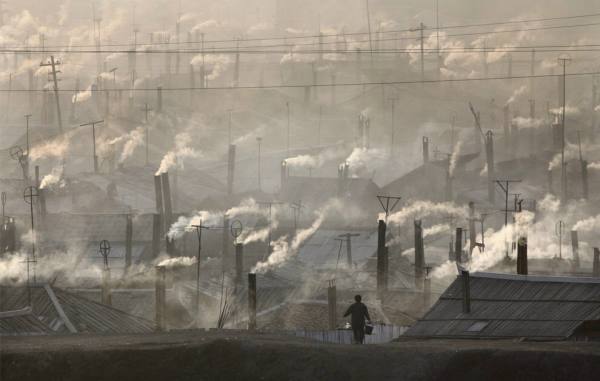
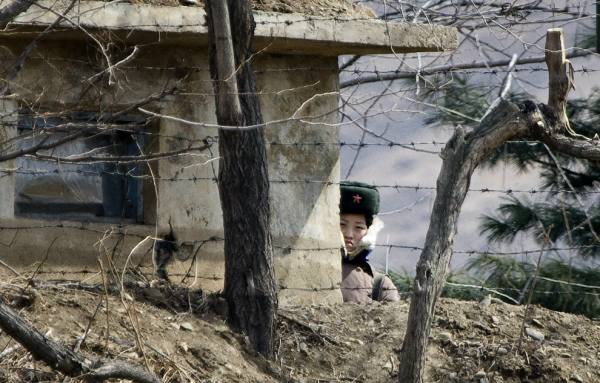
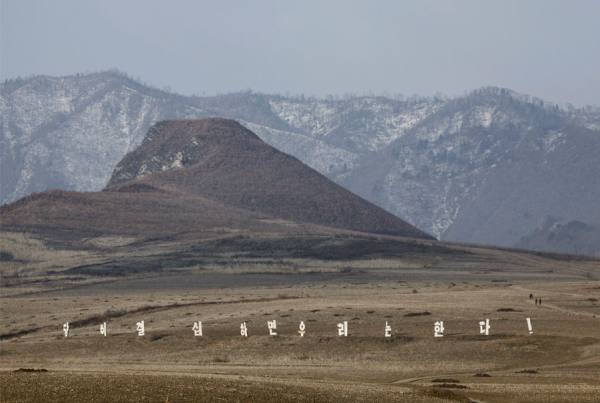
I came across this page at the Boston Globe website — a series of pictures of village life taken on the border of China and North Korea. We often hear about North Korea in the news but I imagine that few of us really know what life is really like there. These pictures give us a brief glimpse at one example of life there. Below are a few that I found particularly interesting (place your mouse over the picture to read its caption from the Boston Globe website):
Those outside the Vietnamese community may see the defendants’ accusations of communist sympathies as modern day McCarthyism. But in this case, both the defendants and plaintiffs have fought against actual communists during the Second Indochina War.
The defense lawyer said that his clients were exercising their freedom of speech. . . . The prosecutor Gregory Rhodes said the defendants “presented their opinions as statement of facts.” “This wasn’t just defamation,” said Rhodes. “These were downright lies and for the defendants to do this was so callous and extremely sad for the whole community.”
As I describe in my chapter mentioned above and as any Vietnamese American can attest to, politics and community activism is a contact sport in the Vietnamese American community. Sentiments, loyalties, and accusations can fly indiscriminately and can turn on a dime. As another example of this ethnic turmoil, San Jose Councilwoman Madison Nguyen recently defeated attempts by a group of Vietnamese American constituents to recall her, many of whom enthusiastically supported her election several years prior.
I find it ironic that, in my academic research and my personal experiences, the Vietnamese American community seems to have both some of the highest levels of ethnic solidarity among all Asian American ethnic groups, but as incidents like these illustrate, some of the deepest and most volatile divisions and differences as well. If nothing else, these divisions among Vietnamese Americans obliterates the stereotype that all Vietnamese Americans, let alone all Asian Americans, are the same.
On this specific issue of individual freedoms, my opinion has always been that Vietnamese Americans certainly have rights to freedom of expression. Their experiences as refugees of a costly and controversial war that ultimately cast out of their homeland are very real, have left many emotional and physical scars, and it is understandable that many have strong emotions associated with communism as a result.
At the same time, there is a limit to such expressions. As the saying goes, “With freedom comes responsibility.” As citizens of the U.S., Vietnamese Americans should remember that verbal criticisms and mass demonstrations are perfectly legitimate expressions of dissent, but threats and acts of violence are not, nor are defamation and slander. The laws of this country are clear and there are no exceptions, regardless of how angry one feels or one’s level of past suffering.
A common theme in many of my posts on this blog is how Asian American identities are evolving in the 21st century and how Asian Americans will fit into the American racial landscape as our society continues to become increasingly diverse, globalized, and transnational. I’ve also noted that alongside the evolution of the Asian American identity, a new and more inclusive “American” identity is inevitably taking place as well.
To illustrate one example of these emerging identities and racial dynamics, earlier this week, ABC News’s NightLine program had a segment on the fusion of Korean and Mexican food in Los Angeles, in the form of kimchi quesadillas and Korean barbecue tacos and burritos, served by a taco truck run by Korean Americans:
These particular menu items may or may not be a fad or temporary trend, but they nonetheless illustrate the inevitable fusion of different cultures and in this case, cuisine traditions. As such, represent another microcosm of what’s taking place in American society in general. And like the video shows, these new cultural combinations may be an acquired taste, but for those willing to be adventurous and who have the personal initiative, they can be quite satisfying.
President Obama’s first 100 days in office have certainly been momentous and ambitious. While most of his attention has been focused on the economy and the recession, he and his administration are still planning major initiatives in the near future on other policy issues. As many observers point out, this includes the always controversial issue of immigration reform:
Mr. Obama will frame the new effort — likely to rouse passions on all sides of the highly divisive issue — as “policy reform that controls immigration and makes it an orderly system,” said the official, Cecilia Muñoz, deputy assistant to the president and director of intergovernmental affairs in the White House.
Mr. Obama plans to speak publicly about the issue in May, administration officials said, and over the summer he will convene working groups, including lawmakers from both parties and a range of immigration groups, to begin discussing possible legislation for as early as this fall. Some White House officials said that immigration would not take precedence over the health care and energy proposals that Mr. Obama has identified as priorities. But the timetable is consistent with pledges Mr. Obama made to Hispanic groups in last year’s campaign.
He said then that comprehensive immigration legislation, including a plan to make legal status possible for an estimated 12 million illegal immigrants, would be a priority in his first year in office. Latino voters turned out strongly for Mr. Obama in the election. . . . But with the economy seriously ailing, advocates on different sides of the debate said that immigration could become a polarizing issue for Mr. Obama in a year when he has many other major battles to fight.
Opponents, mainly Republicans, say they will seek to mobilize popular outrage against any effort to legalize unauthorized immigrant workers while so many Americans are out of jobs. Democratic legislative aides said that opening a full-fledged debate this year on immigration, particularly with health care as a looming priority, could weigh down the president’s domestic agenda.
In preparation for intensifying the national debate about immigration reform and as the New York Times reports later, the policy positions are starting to come together, as illustrated by a major agreement between the country’s two largest labor unions on forming a united position on how to deal with the millions of undocumented immigrants in the country:
John Sweeney, president of the A.F.L.-C.I.O., and Joe T. Hansen, a leader of the rival Change to Win federation, will present the outlines of their new position on Tuesday in Washington. In 2007, when Congress last considered comprehensive immigration legislation, the two groups could not agree on a common approach. That legislation failed.
The accord endorses legalizing the status of illegal immigrants already in the United States and opposes any large new program for employers to bring in temporary immigrant workers, officials of both federations said. . . .
But while the compromise repaired one fissure in the coalition that has favored broad immigration legislation, it appeared to open another. An official from the United States Chamber of Commerce said Monday that the business community remained committed to a significant guest-worker program. . . .
In the new accord, the A.F.L.-C.I.O. and Change to Win have called for managing future immigration of workers through a national commission. The commission would determine how many permanent and temporary foreign workers should be admitted each year based on demand in American labor markets. Union officials are confident that the result would reduce worker immigration during times of high unemployment like the present.
Based on March 2008 data collected by the Census Bureau, the Pew Hispanic Center estimates that unauthorized immigrants are 4% of the nation’s population and 5.4% of its workforce. Their children, both those who are unauthorized immigrants themselves and those who are U.S. citizens, make up 6.8% of the students enrolled in the nation’s elementary and secondary schools.
About three-quarters (76%) of the nation’s unauthorized immigrant population are Hispanics. The majority of undocumented immigrants (59%) are from Mexico, numbering 7 million. Significant regional sources of unauthorized immigrants include Asia (11%), Central America (11%), South America (7%), the Caribbean (4%) and the Middle East (less than 2%). . . .
They are especially likely to hold low-skilled jobs and their share of some of those occupations has grown. In 2008, 17% of construction workers were undocumented, an increase from 10% in 2003. One in four farmworkers is an unauthorized immigrant. . . . The 2007 median household income of unauthorized immigrants was $36,000, well below the $50,000 median household income for U.S.-born residents. In contrast to other immigrants, undocumented immigrants do not attain markedly higher incomes the longer they live in the United States.
The Pew report does not take a political position in regard to undocumented immigration and instead, as good social science should do, provides anyone who is interested with valid, reliable, and objective information and data to more accurately support whatever position they have on the issue.
However, my colleagues at Racism Review make a compelling argument that the data in the Pew report supports the position that legalizing the status of undocumented immigrants benefits us all. As one example, supporters of the DREAM Act that Congress is currently considering argue that legalizing the status of undocumented immigrants and letting them to pursue a college education will allow them to earn more money over their lifetime, which will ultimately result in them paying more taxes at all levels.
As I’ve recently written about, it’s shaping up to be another fierce battle between those who take an “deportation only” approach versus those who see the bigger picture and advocate “comprehensive reform.” I just hope that within this debate that opponents of legalization for undocumented immigrants refrain from demonizing and dehumanizing the people involved and instead, see the issue as an institutional and structural one, more so than an individual-level one.
Presuming that President Obama and his administration follow through on their plans to put the issue of immigration reform on the front burner of American politics, there will be plenty to say about this issue in the coming months.
Update: Shortly after I published this post, the swine flu began making headlines all around the world, particularly here in the U.S. Since it apparently originated in Mexico, unfortunately but predictably, we are now seeing a racist backlash against Mexico and Mexicans, as described by MSNBC:
“No contact anywhere with an illegal alien!” conservative talk show host Michael Savage advised his U.S. listeners this week on how to avoid the swine flu. “And that starts in the restaurants” where he said, you “don’t know if they wipe their behinds with their hands!” And Thursday, Boston talk radio host Jay Severin was suspended after calling Mexican immigrants “criminalians” during a discussion of swine flu and saying that emergency rooms had become “essentially condos for Mexicans.”
That’s tepid compared to some of the xenophobic reactions spreading like an emerging virus across the Internet. “This disgusting blight is because MEXICANS ARE PIGS!” an anonymous poster ranted on the “prison planet” forum, part of radio host and columnist Alex Jones’ Web site. There is even talk of conspiracy. Savage speculated that terrorists are using Mexican immigrants as walking germ warfare weapons. “It would be easy,” he said, “to bring an altered virus into Mexico, put it in the general population, and have them march across the border.”
For those who follow the automotive industry, you may have heard about Tata Motors — India’s biggest automaker. Corresponding with the political and economic rise of India in general in the past decade or so, Tata Motors is also emerging as a major international automaker. As one example, in 2008, it purchased the Jaguar and Land Rover luxury car businesses from Ford Motor Company.
Another reason Tata Motors has been making the news is that last year, it created a sensation when it announced that it would mass-produce a car for emerging countries called the Nano that would sell for about US$2,000, making it the cheapest new car available in the world. Speculation was rampant that it was technically and financially impossible, or that the final product would be nothing more than a rickshaw with bumpers.
Well, Tata’s Nano is finally here and as Edmunds Motor News reports, it is a real, legitimate car that in many ways, is a technical marvel:
The 2009 Tata Nano has the hopes and dreams of all India riding upon its tiny fenders. With a starting price of only $2,000, the Nano has been built to provide affordable all-weather transportation to those who might have never before been able to afford a car. . . .
When you see the 2009 Tata Nano in person, the first shock — other than its incredibly low price — is that the car looks, well, exactly like a car! . . . Media reports have run rampant with rumors that the Nano’s body is plastic, the chassis is glued together, or that the motor is powered by a hamster in a wheel. None of these are true. In fact, the Nano is remarkably simple in terms of how it’s built.
The body and chassis are constructed of steel; only the bumpers are plastic. Traditional spot-welding is used to fabricate the car. Computer-aided design has helped the engineers trim weight from the body and chassis. . . . The Nano has obviously been built to a price. But . . . Tata Motors didn’t skimp when it came to adding a little style. . . .
During a mix of city and highway driving, the Nano will average around 47 mpg. . . . Surprisingly, the engine emits only 101 g/km of CO2 emissions on the European driving cycle, which puts the Nano among the cleanest cars on sale anywhere. . . . The Nano’s cabin is remarkably quiet considering the car’s cost constraints. At top speed, the hum from the engine is never excessive or annoying. . . .
So the Nano is pretty clever in the way it saves costs. You expect this. But you might not expect how fun the Nano is to drive.
From an environmental point of view, many have questioned the wisdom of adding millions of Nanos onto India’s already-crowded streets and the pollution it’s bound to cause. As someone who is trying to consciously reduce my carbon impact on my environment, I would say that’s a fair question to ask. At this point, I only point out that in terms of pollution levels and resource consumption in proportion to its population, India is still significantly behind the U.S. and other industrialized nations, who pollute and consume many times more than India per capita.
Other people would probably also point out that at this point and in its current form, the Nano is not suitable for the American market. True, but we need to remember that it was never intended for the U.S. Instead, it was designed to provide reliable, inexpensive, all-weather transportation for average families in developing nations. And that’s where I detect the first hints of ethnocentrism regarding the criticisms about the Nano.
That is, much of this initial skepticism and criticism reminded me of when Tata Motors was in the process of purchasing the Jaguar and Land Rover brands from Ford. Back then, and similar to what people said regarding the Nano, many people in the automotive establishment and elsewhere questioned the ability and even appropriateness of Tata to buy and properly maintain such prestigious brands.
As I wrote back then, it seemed to me that much of controversy revolved around the fact that Tata Motors was owned by Indians, not Americans, Europeans, or Whites. As such, I hypothesized that many did not think it was “right” for prestigious British car brands like Jaguar and Land Rover and their overwhelming White workers to be owned and controlled by non-Whites from a developing country. As it turns out, Jaguar and Land Rover are doing just fine these days (or at least as well as most brands in this recession).
Similarly, much of the skepticism and criticism about the Nano also strikes me as a little ethnocentric, premised on the idea and stereotype of India and Indian companies as backward, undeveloped, and inferior. Certainly, not everything is perfect in India and it still faces many political and economic difficulties as it continues to modernize, just like China does and “developed” countries like the U.S. did when they were at this stage in their history.
When it comes to political news back in Asia, most of the mainstream media’s attention is directed at the “usual suspects” — China, India, Japan, and North Korea. However, Thailand is in the midst of plenty of political turmoil recently. For those who want some background information on the current protests taking place in Thailand, Andrew Lam at New America Media offers a very nice and succinct summary:
According to Thai police, up to 40,000 anti-government “red-shirt” protesters have scattered around the Thai capital, blocking roadways and entrances to upscale shopping malls. A few days earlier, in the nearby beach town of Pattaya, they managed to scare away leaders attending the Asian economic summit and attack Thai Prime Minister Abhisit Vejjajiva’s own convoy, causing injuries to several members. The prime minister barely got away. His declaration of a state of emergency was only met with more riots by the red shirts. They only began to break up when thousands of soldiers moved in.
Many of these red shirt protesters were trucked in from rural areas. Fierce supporters of exiled Prime Minister Thaksin Shinawsastra, who was ousted in 2006 when he was traveling abroad, and charged with corruption in absentia, the protesters are now threatening to bring down the economy as well. Foreign investors are driven away by the unrest and tourism, already suffering from Thailand’s instability, is predicted to sink even further.
Yet, less than six months ago, it was the “yellow shirts” who owned the streets. Members of the People’s Alliance for Democracy (PAD), they wore yellow to honor Thailand’s revered King Bhumibol Adulyadej. Representing a more urban population – in many ways the educated and bourgeois class — the yellow shirts blocked the airport for days and stranded nearly 250,000 tourists.
The yellow shirts were incensed when a pro-Thaksin prime minister was popularly elected into office when the general election was held in December 2007. In effect, the yellow shirts disagreed with the election, claiming fraud. The constitutional court, under pressure to get the country moving again, agreed with them and disqualified the pro-Thaksin prime minister.
The trouble was that there was no clear evidence of fraud. In fact, Thaksin himself won the election fair and square before he was ousted by the military three years ago, with tacit support from the king. Many observers predict that he would win again were he to return and run in a fair election. A populist, the former prime minister made great strides among the rural population, provided education and jobs, and brought many out of dire poverty. Charges of corruption aside, his growing base in the countryside rivals that of the affection the people have for their king.
This leads to the issue of civil war, or something close to it.
I previously wrote about the evolution of the American identity and how in the context of American society becoming more diverse and globalized, we as Asian Americans now have the opportunity to use our transnational cultural ties and networks to make meaningful contributions to moving American society and its economy forward into the 21st century. In other words, our “foreignness” may finally be seen as an asset, rather than a liability.
Having said that, I also recognize that there are still “traditional” beliefs about what it means to be an American that we need to overcome and persistent stereotypes about our Asian identity and loyalty to the U.S. that we still need to dispel once and for all. This week, we saw three examples on this kind of “traditional” assumptions about our community and questions about the validity of the “American” part of our identity as Asian Americans.
The first example involves Lori Phanachone, a Laotian American high school student in Des Moines Iowa, who refused to take an English fluency test, arguing that as an Honors student for several years and one who speaks perfect English, the test is insulting, demeaning, and discriminatory. She was initially suspended by her school district and her National Honor Society membership was revoked. Earlier this week, after a lawsuit threat by the Asian American Legal Defense and Education Fund (AALDEF), the Iowa school district finally relented, reclassified Lori as an English proficient student, will waive the test requirement, and reinstate her National Honor Society membership:
Lori Phanachone, a senior who ranks seventh in her class of about 119 and has a 3.9 grade point average, refused to take the English Language Development Assessment several times last month, saying the test was demeaning and racist. Previously, the school district’s curriculum coordinator, Lori Porsche, said taking the test was mandatory for Phanachone because she indicated on her school registration that English was not the first language spoken in her home.
Her parents are Laotian and still speak little English. Phanachone, who was born in California and lived in upstate New York before moving to Storm Lake with her family in 2006, said she has never been enrolled in any English Language Learning or English as a Second Language program.
In the second example in which Asian Americans were questioned on their American identity, as the Houston Chronicle reports, Texas state Republican representative Betty Brown recently urged Asian Americans to change their names to “simpler,” more Americanized names that would be “easier for Americans to deal with”:
A North Texas legislator during House testimony on voter identification legislation said Asian-descent voters should adopt names that are “easier for Americans to deal with.” The comments caused the Texas Democratic Party on Wednesday to demand an apology from state Rep. Betty Brown, R-Terrell. But a spokesman for Brown said her comments were only an attempt to overcome problems with identifying Asian names for voting purposes. . . .
“Rather than everyone here having to learn Chinese — I understand it’s a rather difficult language — do you think that it would behoove you and your citizens to adopt a name that we could deal with more readily here?” Brown said. Brown later told [Organization of Chinese Americans representative Ramsey] Ko: “Can’t you see that this is something that would make it a lot easier for you and the people who are poll workers if you could adopt a name just for identification purposes that’s easier for Americans to deal with?”
Finally, the third example involved an incident that unfortunately, too many Asian Americans (especially students) are familiar with. As described in a newly-created Facebook group, this particular example occurred at Tufts University in Boston:
There was a bias incident involving members of the Korean Students Association (KSA) that took place in the early morning hours on Thursday, April 9, in Lewis Hall Lounge, while the club members were practicing for their culture show.
At approximately 1:45AM, a white freshman male living in Lewis Hall approached five male members who were practicing their dance. He had been drinking at a bar prior to arriving at Lewis Hall. He insisted several times that the KSA members teach him the moves to their dance and was repeatedly asked to stop. Despite this request, he continued to molest the dancers, imitating the dance moves and declaring, “This is the gayest shit I’ve ever done.”
The KSA members then asked him to leave, to which he responded, “Fuck you. Fuck you, I could take all of you. I’ll kill you all.” He then threatened to get his fraternity brothers to help him retaliate. At this point, he began to physically harass the dancers, spitting at one member and shoving another one of the guys. An altercation ensued during which the freshman ripped two shirts and inflicted minor cuts to a member’s forehead. In order to restrain him, the KSA members pinned him to the floor and put him into a headlock, at which point the freshman mentioned that he could not breathe and the person holding him down immediately let go.
At this moment, the freshman’s friend and his girlfriend, who watched from the side, stepped in to take him away. When he got up, he started cursing “Fuck you, fuck you” and spitting at the dancers again. As he was being dragged away, he shouted, “Fuck you all, you fucking chinks, go back to China! Go back to your fucking country, you don’t belong in this country.”
His friends took him to the bathroom, where he could be heard repeatedly shouting, “If I see them again, I will fuck them all.” The fight was reported to an RA, who wrote and sent in a bias incident report. According to the RA, submitted within the report was testimony from his girlfriend supporting the fact that her boyfriend initiated the altercation.
In all three incidents, the assumption is pretty clear — that because we may happen to speak a language other than English at home (even though we are still completely fluent in English), or because we don’t have Anglicized “American” names like Smith or Jones, or because we don’t want to indulge the whims of a drunken frat guy, that we as Asian Americans are not real or legitimate Americans. Instead, we’re considered foreigners, outsiders, and troublemakers who make unreasonable demands.
Beyond the sheer ignorance and ethnocentric beliefs fundamentally embedded in these assumptions, what the Iowa school district, Rep. Brown, and the drunken frat guy all fail to see is that contrary to the stereotype that we are intent from being separate from mainstream society, our history and experiences consistently show that we’ve been trying to integrate into mainstream American society all along. In these three cases, it involved using our bilingual skills to help ease our parents into American culture, trying to make sure voting records are correct so that we can participate in the American democratic process, and putting on a performance that bridges Asia and America.
But as with previous incidents and examples over the past 150 years or so since the first Asians immigrated to the U.S. in large numbers, even as we attempt to become Americans and integrate into mainstream American society, we are questioned, challenged, and prevented from doing so time and time again by those who consciously or unconsciously believe that only one group qualifies to be a “real” American — Whites.
Unfortunately, as these three recent incidents demonstrate, this kind of ignorant, narrow-minded, and short-sighted thinking is still with us today and still confronts us as Americans of Asian descent.
Here are some more links out that have come my way relating to Asians or Asian Americans. As always, links to other sites are provided for informational purposes and do not necessarily imply an endorsement of their contents:
JACL Asks Support for Veterans Commemorative Stamp:
The Japanese American Citizens League (JACL), the nation’s oldest and largest Asian American civil and human rights organization, is asking its members and friends to write letters of support for the Japanese American (Nisei) WWII Veterans Commemorative Stamp proposed to the United States Postal Service.
The Postal Service has announced that its stamp committee will review letters of support for the Japanese American (Nisei) World War II Veterans Commemorative Stamp at its next meeting on April 23-24. Though the proposal will apparently not be officially reconsidered for issuance at the meeting, the Postal Service has acknowledged that they would review recent letters of support for the proposal.
The campaign is hoping to sway the Citizens’ Stamp Advisory Committee (CSAC), which oversees stamp selection for Postmaster General John Potter, to change its stance on the internal, non-public guideline that prohibits stamps that honor sub-branches, units or divisions of the military. Previously, the Postal Service had said that the proposal would not be looked at until the July meeting.
Should you, your organization, or a group of supporters wish to send a letter of support that might be reviewed at the April meeting, please send it as soon as possible. The Committee must be convinced that the proposal is worthy of consideration and that there is widespread public support. Letters of support can be sent to CSAC Chairperson Jean Picker Firstenberg (address below). If you or your organization have already sent a previous correspondence to the Postal Service asking for issuance of the stamp, a follow-up letter may also be sent. Personal letters are best, and a past 2007 sample letter can be found at the campaign’s website, www.niseistamp.org .
Send letters to:
Chairperson Jean Picker Firstenberg
Citizens’ Stamp Advisory Committee
c/o Stamp Development
U.S. Postal Service
1735 North Lynn Street, Suite 5013
Arlington, VA 22209-6432
The JACL thanks you for your support.
Online Petition to Support Asian Workers in Saudi Arabia:
Dear Sir,
I need your support on the campaigning signature drive on the eploitation of Asian migrant workers in Saudi Arabia and to stop at once the modern day slavery by their employers who bar their rights and welfare.
Next month is Asian Pacific American Heritage Month and inevitably, many people wonder exactly who or which ethnic groups are included in the category of “Asian Pacific American.” Specifically, several have asked me whether Arab and Middle Eastern Americans should be included. This is a complicated question to be sure and the short answer is technically (i.e., from the Census Bureau and federal government’s definition), they are considered White, not Asian.
However, as the Los Angeles Times reports, several in the Arab and Middle Eastern American community don’t consider themselves White (and certainly aren’t always treated as if they’re White) nor Asian. Instead, they are tying to create a new racial definition that more accurately represents their history, characteristics, and experiences:
Nicole Salame, 19, was filling out an application to UCLA last year when she got to the question about race and ethnicity. She thought a mistake had been made. . . . Her Lebanese-born mother told her Arabs are considered white, but Salame didn’t believe her. Her high school counselor told her the same thing. . . . For years the federal government has classified Arab Americans and Middle Easterners as white. But confusion and disagreement have led some students to check “Asian” or “African,” depending on what part of the Middle East they came from. Some, like Salame, simply marked “Other.”
Now several UCLA student groups — including Arabs, Iranians, Afghanis and Armenians — have launched a campaign to add a Middle Eastern category, with various subgroups, to the University of California admissions application. They hope to emulate the Asian Pacific Coalition’s “Count Me In” campaign, which a few years ago successfully lobbied for the inclusion of 23 ethnic categories on the UC application, including Hmong, Pakistani, Native Hawaiian and Samoan.
The UCLA students said having their own ethnic designation goes beyond self-identity and has real implications for the larger Arab and Middle Eastern communities.
The article points out that in past decades, those of Arab and Middle Eastern descent fought to be legally and officially designated as White, which was formalized by the Census in 1970. However, in the context of recent demographic, political, and cultural trends, Arab and Middle Eastern Americans now are more inclined to identify as a separate racial/ethnic group, one that better reflects the uniqueness of their community:
UCLA junior Shawn Gabrill said he has more in common with other children of immigrants than with those whose parents were born in this country.
“I feel like when I put down ‘white’ on an application, they assume my parents finished high school, went to college and that English was my first language,” the 20-year-old English major said. “And none of these things describe me.”
Gabrill, the son of Jordanian and Egyptian parents, said he had difficulties with the college application but, because he was seen as white, he wasn’t identified as someone who needed extra help from high school counselors.
“So it’s kind of like we’re in between. We’re not white, but we’re not as disadvantaged as the other groups so we don’t get any of that aid,” he said. “So we’re kind of invisible in that way.”
Of course, the usual criticism from more “traditional” Americans is that such an effort to create a new racial category will only divide our country further and would make it harder to unite everyone under a universal “American” identity. The problem with that argument is that first, based on our country’s history and still embedded in most of our social institutions, a universal “American” identity has usually meant being White. Therefore, in denying Arab and Middle Eastern Americans their own identity amounts to another misguided “colorblind” approach that ignores the historical legacies and contemporary realities of American racial history.
The second problem with this colorblind argument is that it flies in the face of real and significant demographic changes taking place all around us, and the political and cultural shifts that result from such changes. As I’ve consistently written about, being “American” in the 21st century is more than just a sense of patriotic loyalty. That’s part of it, but it also includes making real contributions to America’s political, economic, and cultural future in the face of globalization, financial crises, and the changing political landscape around the world.
With that in mind, just like Asian Americans, Arab and Middle Eastern Americans are poised to use their transnational cultural ties to bridge the gaps that currently divide the U.S. from other religions and countries. If the U.S. is to retain its “superpower” status and level of influence around the world, trying to impose American ideals and models of government or economy will not work any longer and in fact, will only hasten our country’s decline.
Instead, as the Obama administration has recognized, we need to embrace these global trends and build more mutually-respectful connections, relationships, and networks with countries and religions around the world, particular in Asia and the Middle East. Although it’s too late to be officially implemented in the 2010 census, one step in that process is to support the efforts of Arab and Middle Eastern Americans to create their own racial category that reflects their unique history, experiences, and resources that they can contribute in helping us forge a new American identity here in the U.S. and around the world.