The views and opinions expressed on this site and blog posts (excluding comments on blog posts left by others) are entirely my own and do not represent those of any employer or organization with whom I am currently or previously have been associated.
Academic Version: Applying my personal experiences and academic research as a professor of Sociology and Asian American Studies to provide a more complete understanding of political, economic, and cultural issues and current events related to American race relations, and Asia/Asian America in particular.
Plain English: Trying to put my Ph.D. to good use.
Here are some more announcements and links out that have come my way relating to Asians or Asian Americans. As always, links to other sites are provided for informational purposes and do not necessarily imply an endorsement of their contents:
After a year interlude, SERCAAL, the Southeast Regional Conference of Asian American Leaders, returns to the University of Florida for another unforgettable conference!
SERCAAL was created with the goal of education and spreading Asian Pacific American awareness in mind. The conference is dedicated to addressing issues and topics specific to the APA community in the Southeastern region. We also encourage networking between the next generations of active leaders and hope to attract students from all kinds of backgrounds, hoping to provide an opportunity for students to learn from established leaders and activists who have all initiated change.
Our conference will be held October 9th-10th and our theme this year is “Collaborate, Challenge, Change.†The theme reflects our mission to initiate a commonality of issues pertaining to our generation and what can be done in our community today through preparation of students to take the initiative.
The Mentored Path to Citizenship is a $675 naturalization grant to provide assistance to a qualified individual in L.A. County seeking U.S. citizenship. This one-time grant will provide financial assistance towards application fees, while also giving the recipient the opportunity to receive assistance from the Asian Pacific American Legal Center throughout the application process.
All interested individuals are asked to complete a written application which may be found below or available by calling the office at (213) 250-9888. Applicants must show proof of residency in Los Angeles County and demonstrate eligibility to become a U.S. citizen. Viable candidates will be interviewed in a confidential screening process by OCA-GLA with assistance by APALC.
For further questions, please contact OCA-GLA’s office at (213) 250-9888. Written inquiries may be sent to 1145 Wilshire Blvd., 1st Floor, Los Angeles, CA 90017 and emails may be directed to info@oca-gla.org. The deadline to submit applications will be September 25, 2009.
The Advancing Justice Conference, being held on October 29-30, 2009 at The Center at Cathedral Plaza in Los Angeles, CA, is an inaugural national civil rights and social justice conference, expected to draw several hundred individuals from across the country.
The conference aims to bring together a diverse group of stakeholders in one place to address a broad range of issues facing the Asian American and Pacific Islander community. It serves as a unique forum where researchers, advocates, direct service providers and other leaders can meet face-to-face, talk about their common challenges and find ways to work collaboratively.
Taking place over two days, the conference covers a variety of issues including: immigration reform and enforcement, immigrant integration, human rights, civil rights and national security, health care, Census 2010, redistricting, low-wage workers, hate crimes, and LGBT rights. It also includes presentations on corporate and foundation fundraising, new media, community organizing, board and commission participation, capacity building, and intergroup collaboration.
The Advancing Justice Conference is a joint project by the Asian American Institute (Chicago), Asian American Justice Center (Washington, D.C.), Asian Law Caucus (San Francisco) and Asian Pacific American Legal Center (Los Angeles). To learn more and to register, visit advancingjustice.org.
The Kirwan Institute for the Study of Race and Ethnicity is pleased to announce the Call for Proposals for its second biannual conference, entitled Transforming Race: Crisis and Opportunity in the Age of Obama, to be held March 11-13, 2010, in Columbus, Ohio.
We seek innovative proposals that address any of three thematic tracks: Racial Dynamics and Systems Thinking; Race Talk; and Race, Recession, and Recovery. We invite practitioners, community organizers, scholars, researchers, and others to submit proposals for papers, entire panels, workshops, performances, fishbowls, and more!
Please visit our web site, http://transforming-race.org, for conference details and updates. To encourage widespread participation, please feel free to share this e-mail and attachment with your networks. Should you have any questions, contact Rebecca Reno at reno.34@osu.edu.
Kirwan Institute for the Study of Race and Ethnicity
The Ohio State University
414 Mendenhall Laboratory
125 South Oval Mall
Columbus, OH 43210
Tel: (614) 688-5429
Fax: (614) 688-5592
Web site: http://www.kirwaninstitute.org/
Blog: http://kirwaninstitute.blogspot.com/
As MSNBC reports, the Pennsylvania Human Relations Commission has completed its report on the incident and has found that despite its denials, the club is guilty of racial discrimination in its actions:
The club has maintained that there were too many children for the number of lifeguards on duty and that many of the children who were at the club couldn’t swim. . . .
[Email] messages quoted in the report include one from club board member George Whitehill to the rest of the board that said in part, “Race is an issue since every email of complaint mentioned race.” . . . The state report also noted that other large groups that came to the swim club did not generate the same reaction.
For example, a plumbing company has held an annual party at the club that draws about 100 to 125 people each year, about five to 10 of them black, the report said. It found that far more children were in the pool for those parties, yet no club members threatened to quit and guests did not report “inappropriate or rude comments” from club members.
Club lawyer Joe Tucker said Tuesday night that the decision “has nothing to do with the actual facts” and would be appealed. “The die was cast by the media firestorm. They had no choice but to reach the decision they did,” Tucker said.
Apparently almost everybody except the club itself can see that it was painfully obvious that race was a significant, and probably only factor in how the children of color were treated.
The saddest part is that, in the face of overwhelming evidence against them, the club continues to deny that race played any part and instead, chooses to blame the entire incident on the media. This is just another unfortunate example of colorblindness to the extreme and racial ignorance.
Or, as many would probably sum it up, it’s racism, plain and simple.
The Pew Research Group has just released reports based on Census data that describe the demographic and socioeconomic characteristics of the five largest Latino groups in the U.S. (Mexican, Puerto Rican, Cuban, Salvadoran, and Dominican).
More than eight-in-ten Hispanics self-identify themselves as being either of Mexican, Puerto Rican, Cuban, Salvadoran or Dominican origin. Hispanics of Mexican origin are by far the largest group, accounting for nearly two-thirds of the Hispanic population in the U.S.
The five population groups differ along several dimensions — for example, in the share of each group that is foreign born, citizen (by birth or naturalization) and proficient in English. The groups vary by average age and tend to live in different areas within the United States. Likewise, the groups display varying levels of education, homeownership rates, and poverty rates.
These and other characteristics are explored in five fact sheets, one for each country-of-origin group. Each population is also compared to all Hispanics and the U.S. population overall.
As we all know, issues directly related to the Latino population such as immigration continue to be highly controversial and hotly debated. Hopefully these fact sheets will provide a valid and sound statistical foundation upon which we can all better understand their characteristics as we proceed with such discussions.
As part of this blog’s mission of making academic research and data more easily accessible, understandable, and applicable to a wider audience and to practical, everyday social issues, I highlight new sociological books about Asian Americans and other racial/ethnic groups as I hear about them.
This particular book examines a consistently controversial and hot-button topic among all Americans, but particularly Asian Americans — interracial dating and marriage. The author’s findings are not likely to end the disagreements about the racial and gender dynamics inherent within such unions and may even add more fuel to the fire, but nonetheless it is a worthy contribution to the discussion.
Despite being far from the norm, interracial relationships are more popular than ever. Racing Romance sheds special light on the bonds between Whites and Asian Americans, an important topic that has not garnered well-deserved attention until now. Incorporating life-history narratives and interviews with those currently or previously involved with an interracial partner, Kumiko Nemoto addresses the contradictions and tensions — a result of race, class, and gender — that Asian Americans and Whites experience.
Similar to Black/White relationships, stereotypes have long played crucial roles in Asian American/White encounters. Partners grapple with media representations of Asian women as submissive or hypersexual and Asian men are often portrayed as weak laborers or powerful martial artists. Racing Romance reveals how allegedly progressive interracial relationships remain firmly shaped by the logic of patriarchy and gender inherent to the ideal of marriage, family, and nation in America, even as this ideal is juxtaposed with discourses of multiculturalism and color blindness.
In a recent post, I described how economic tensions seem to be making many Americans not just more stressed out, but also more likely to lash out against those around them, particularly if they are immigrants. While that post focused on individual-level tensions and hostility, a recent Time magazine article discusses the case of Cirila Baltazar Cruz, a Mexican from an indigenous background, who recently had her daughter taken away from her because she does not speak English, a case that unfortunately highlights this same kind of anti-immigrant sentiment on the institutional level:
Cirila Baltazar Cruz comes from the mountainous southern state of Oaxaca, a region of Mexico that makes Appalachia look affluent. To escape the destitution in her village of 1,500 mostly Chatino Indians, Baltazar Cruz, 34, migrated earlier this decade to the U.S., hoping to send money back to two children she’d left in her mother’s care. She found work at a Chinese restaurant on Mississippi’s Gulf Coast.
But Baltazar Cruz speaks only Chatino, barely any Spanish and no English. Last November, she went to Singing River Hospital in Pascagoula, Miss., where she lives, to give birth to a baby girl, RubÃ. According to documents obtained by the Mississippi Clarion-Ledger, the hospital called the state Department of Human Services (DHS), which ruled that Baltazar Cruz was an unfit mother in part because her lack of English “placed her unborn child in danger and will place the baby in danger in the future.”
Rubà was taken from Baltazar Cruz, who now faces deportation. . . . [A]dvocates for Baltazar Cruz had charged that the problems sprang from faulty translation at Singing River. Baltazar Cruz was later joined [at the hospital] by a Chatino-speaking relative but the hospital declined his services and instead used a translator from state social services, an American of Puerto Rican descent who spoke no Chatino and whose Spanish was significantly different from that spoken in Mexico.
According to the Clarion-Ledger, the state report portrayed Baltazar Cruz as virtually a prostitute, claiming she was “exchanging living arrangements for sex” in Pascagoula and planned to put the child up for adoption. Through her advocates, Baltazar Cruz adamantly denied those claims. . . .
The social-services translator also reported that Baltazar Cruz had put Rubà in danger because she “had not brought a cradle, clothes or baby formula.” But indigenous Oaxacan mothers traditionally breast feed their babies for a year and rarely use bassinets, carrying their infants instead in a rebozo, a type of sling. . . .
In such cases, says the Southern Poverty Law Center’s Bauer, a lack of interpreters is a key factor. When a mother can’t follow the proceedings, “she looks unresponsive, and that conveys to a judge a lack of interest in the child, which is clearly not the case,” she says.
The article goes on to note that Cruz’s advocates also argue that for several centuries now, new immigrants to the U.S. who were not fluent in English have safely and successfully raised their children. So the question becomes, why is this case different and why is Cruz in danger of losing her own child now?
Unfortunately the answer is, because American society’s level of acceptance and even tolerance of new immigrants — particularly if they are unauthorized and lack English fluency — is basically at an all-time low. On top of this general sentiment and as I noted earlier, the economic recession makes Americans much more economically (and therefore emotionally) defensive, insecure, and threatened.
In this particular case, we also have another sociological dynamic — the retrenchment of a “traditional” American identity. In other words, the reality has been that in the past, in order to be considered an American, you basically had to be White, plain and simple. Non-Whites weren’t even given the opportunity to become accepted as American and this country’s history is littered with examples of systematic exclusion — the Cherokee Nation, Chinese exclusion, Jim Crow segregation, etc.
But in the last few decades and as American society has become more demographically diverse and multicultural, the definition of what it means to be an American was gradually expanding to become more inclusive such non-White and immigrant groups. However, it was also inevitable that such a change would be subtly and explicitly opposed by “traditional” Americans.
As such, we can see that in this particular case, the mother’s lack of English fluency implicitly violated the authorities’ code of “Americanness” and was enough to disqualify her from not just remaining in the country, but from raising her own child as well. An equally tragic part of this episode is our society’s misguided and naive attempt to be colorblind and to ignore and in fact, deny that these racial dynamics even exist.
Unfortunately it looks like things will get worse before they get better for many immigrants in this country.
You might be interested to read the following posts from September of years past:
2008: What Exactly is a Hate Crime? How a recent racial attack against an Indian American symbolizes the injustices people of color have experienced through the years.
2007: Using Religion to Unite Racial Groups In times of economic insecurity, demographic change, and political conflict, common religious beliefs might be the social glue that bonds groups from different backgrounds together.
2006: Indian Americans: Model Immigrants? The socioeconomic success of many Indian Americans in recent decades is due to their individual and collective hard work and existing advantages that they brought with them as immigrants.
2005: “Anti-Asian” Laws Passed by APA Politicians Looking at the racial, ethnic, and political complexities of laws and regulations proposed by Asian American politicians that seem to disproportionately hurt other Asian Americans.
It is an unfortunate reality in contemporary American society that from time to time, an economic recession occurs, such as the one we’re in right now. As sociologists have documented over and over again, when people experience financial difficulties, many also begin to feel insecure, threatened, and defensive. In such times, it is also common for people to lash out at those around them who they see as a threat to their security or at least someone who contributes to the larger economic difficulties that they are experiencing.
Many have argued that it is this climate of social insecurity that is responsible for the overheated and often viscous arguments taking place all around the U.S. these days around issues such as health care reform. As another example and as described in a recent article from the Philadelphia Weekly, this is exactly what seems to be happening in and around neighborhoods of South Philadelphia, where there have been numerous physical attacks and assaults committed against Asian American students:
Dozens of the alleged incidents are relatively minor—name-calling, verbal threats, petty robberies, random punches in the head while walking down stairwells, and general intimidation. But according to [student Wei] Chen, at least six times last school year those minor incidents escalated into massive rumbles where outnumbered Asian students were pummeled by packs of teens, sending several of the victims to hospitals. . . .
The article goes on to note that there have been some efforts at addressing the problem through school and community forums and informal mentoring programs to assist newly-arrived immigrant students adjust to their new schools, and that such efforts seem to have had some initial success in reducing the number of physical attacks. However, as the new school year starts, many students are still very tense and apprehensive about whether the situation has actually changed.
The article also acknowledges that the overwhelming majority of attacks have been perpetrated by African American students, who collectively make up 62% of all students in the school district. Does this mean that African Americans are inherently racist and prone to violence? Or are there some community and institutional-level factors that operate in the background and contribute to tense relations between African Americans and Asians? The article offers one potential insight:
It goes without saying that such acts of violence can be devastating for the victims, not just physically and academically but emotionally, and can lead to depression, mental health problems, and even suicide. Being targeted also leads many Asian Americans to join a gang, initially to help protect each other from physical attacks but all too often leading to a downward spiral into criminal activity.
Professor Anderson’s explanation about demographic changes leading to neighborhood instability helps us to begin understanding the larger social forces that contribute to the problem. On top of that, once we add the effects of the recession and feelings of economic insecurity, we begin to see more clearly what sociologists have argued all along — the highest levels of prejudice occur not between groups at the very top and those at the very bottom, but between groups that are directly adjacent to each other on the socioeconomic hierarchy.
This is because groups that are right next to each other on the socioeconomic ladder are competing for the same resources — political, economic, and educational (or at least they perceive themselves to be in competition). And sadly, when groups compete with each other, racial/ethnic tensions, hostility, and violence become almost inevitable. Whether this occurs between Whites and Blacks, Whites and Latinos, Blacks and Asians, this scenario has played itself out over and over and over again throughout American history.
The situation in Philadelphia is the perfect and latest example of this pattern — African Americans have traditionally been marginalized institutionally, then begin to feel further besieged and threatened when newcomers (Asian immigrants) move into “their” neighborhoods and schools, and accuse them to to be “taking over.” Having very little collective political or economic power, African Americans scapegoat and lash out at the Asian immigrant newcomers, likely seeing them easy targets due to their lack of English fluency and familiarity with American society.
This is not to excuse or condone the perpetrators of such attacks — I feel that they need to be stopped and appropriately disciplined, regardless of their race or ethnicity. What I am saying however, is that such attacks are not entirely due to individual motives or prejudices. Instead, we need to recognize that there is an wide range of sociological factors that have directly and indirectly lead to and fueled such inter-racial tensions.
To move forward positively and decisively toward addressing this situation before someone is tragically killed, we need to treat both the symptoms and by curing the fundamental disease — the feelings of political powerlessness, economic insecurity, and culture of glorified violence that leads too many students to internalize anti-Asian stereotypes, ultimately resulting in physical brutality.
As part of this blog’s mission of making academic research and data more easily accessible, understandable, and applicable to a wider audience and to practical, everyday social issues, I highlight new sociological books about Asian Americans and other racial/ethnic groups as I hear about them.
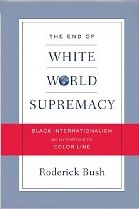
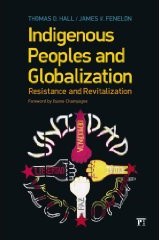
The following two books connect history with the emerging 21st century from the point of view of African American and indigenous groups, respectively.
The End of White World Supremacy explores a complex issue— integration of Blacks into White America—from multiple perspectives: within the United States, globally, and in the context of movements for social justice. Roderick Bush locates himself within a tradition of African American activism that goes back at least to W.E.B. Du Bois. In so doing, he communicates between two literatures—worldsystems analysis and radical Black social movement history—and sustains the dialogue throughout the book.
Bush explains how racial troubles in the U.S. are symptomatic of the troubled relationship between the white and dark worlds globally. Beginning with an account of white European dominance leading to capitalist dominance by White America, The End of White World Supremacy ultimately wonders whether, as Myrdal argued in the 1940s, the American creed can provide a pathway to break this historical conundrum and give birth to international social justice.
The issues native peoples face intensify with globalization. Through case studies from around the world, Hall and Fenelon demonstrate how indigenous peoples? movements can only be understood by linking highly localized processes with larger global and historical forces.
The authors show that indigenous peoples have been resisting and adapting to encounters with states for millennia. Unlike other anti-globalization activists, indigenous peoples primarily seek autonomy and the right to determine their own processes of adaptation and change, especially in relationship to their origin lands and community. The authors link their analyses to current understandings of the evolution of globalization.
Here are some more announcements and links out that have come my way relating to Asians or Asian Americans. As always, links to other sites are provided for informational purposes and do not necessarily imply an endorsement of their contents:
The Alaska Federation of Natives, in partnership with the National Congress of American Indians and the Council for Native Hawaiian Advancement, has launched “Native Insight: Thoughts on Recession, Recovery & Opportunity,” a writing competition designed to encourage Native Americans to share their perspectives on the challenges and opportunities in the current economic and political landscape.
The competition is open to Alaska Natives, Native Hawaiians, and American Indians of all ages. Deadline: September 15, 2009. Award Amount: $10,000.
East West Magazine, the premiere lifestyle magazine focusing on celebrating the cultural experiences of Asian, South Asian, and Middle Eastern Americans, is getting ready to re-launch into a print issue this fall.
We’re holding a cover design contest, where artists can create a work of art that answers the questions “What is your interpretation of East West today” and “What does the merging of cultures look like to you?” The art can take any form, as long as it’s not black and white, and will be featured as our magazine cover.
Asian American Legal Defense and Education Fund: Volunteers Needed for Asian American Election Protection and Poll Monitoring and Defending Asian American Voting Rights
New York City Primary Elections — Tuesday, September 15, 2009
Boston, MA Preliminary Elections – Tuesday September 22, 2009
General Elections — Tuesday, November 3, 2009
In past elections, Asian Americans have faced a series of barriers in exercising their right to vote. For example, poll workers were hostile and made racist remarks, poll sites had too few interpreters to assist Asian American voters, and translated voting materials were missing. When the media reports on election results by specific groups, Asian American voters are often overlooked.
In response, the Asian American Legal Defense and Education Fund has conducted a non-partisan survey of Asian American voters to document Asian American voting patterns. AALDEF has also monitored the elections for compliance with the federal Voting Rights Act, which mandates bilingual ballots and forbids anti-Asian voter discrimination.
On September 15 and 22, 2009 and November 3, 2009, AALDEF along with several other Asian American groups will be monitoring the elections and conducting non-partisan voter surveys at polling sites in Asian American neighborhoods across New York City and Boston, Massachusetts. We need your help.
Volunteers are needed to administer a multilingual voter survey in 3-hour shifts and document voting problems on Election Day. Polls are open from 6:00 AM to 9:00 PM in New York and 7:00 AM to 8:00 PM in Boston. There will be a one-hour training session for all volunteers (90 minutes for trainings taking place at law firms). All volunteers must be non-partisan during the time they help.
To sign up as a volunteer and for a training schedule, go to www.aaldef.net. Thank you!
For more information, contact:
Glenn D. Magpantay, Bryan Lee, or Julia Yang
Asian American Legal Defense and Education Fund
99 Hudson Street, 12th Floor
New York, NY 10013
800-966-5946
votingrights@aaldef.org
Co-Sponsors:
Asian American Bar Association of New York
Asian American Lawyers Association of Massachusetts
Chhaya CDC – NY
Greater Boston Legal Services: Asian Outreach Unit
Hunter College/CUNY, Asian American Studies Program
Korean American Association of Greater New York
Korean American League for Civic Action – NY
Korean American Voters’ Council of NY/NJ
Muslim Bar Association of New York
The Sikh Coalition – NY
South Asian Bar Association of New York
South Asian Youth Action! – NY
YKASEC: Empowering Korean American Community – NY
APIAVote is now accepting applications for interns in the Washington, D.C. office. The APIAVote Internship Program strives to encourage and cultivate young AAPI student leaders to explore a career in the public sector or the political arena. This internship program will also provide hands on experience and training on how to organize and implement civic engagement activities to increase the participation of AAPIs in the electoral process.
General Internship – Year-Round
The internship program is tailored per organizational needs and intern skills. Interns may work on any of the following areas: Communications/Technology (new media and traditional), Field (working with APIAVote partners in field campaigns), Policy (research and advocate for policy recommendations), Training (Norman Y. Mineta Leadership Training Institute), or Youth (engaging and organizing our youth coalitions.)
Requirements:
College or graduate student
Oral and written communication skills
Dedicated to promoting civic participation of AAPIs in the electoral and public policy processes
Applications must include:
Application form
Resume including Education, Work Experience, Political Experience, Extracurricular Activities, Awards/Honors
Copy of most current academic transcript
One page typed essay on your interest in the internship program and describe “What does civic engagement meant to you?”
Two letters of reference
Send your complete application via e-mail or snail mail to:
APIAVote, Attn: Alvina Yeh
1666 K St NW, Suite 440
Washington, DC 20006
alvina@apiavote.org
Deadlines:
Rolling Deadline – Fall, Winter & Spring Internships
As our world becomes increasingly globalized and interconnected in the 21st century, what happens in one country is more likely than ever to affect what happens in other countries. The global recession that started here in the U.S. is direct proof of that. But in addition to political and economic matters, globalization also involves the diffusion of culture, attitudes, and beliefs from one country to another.
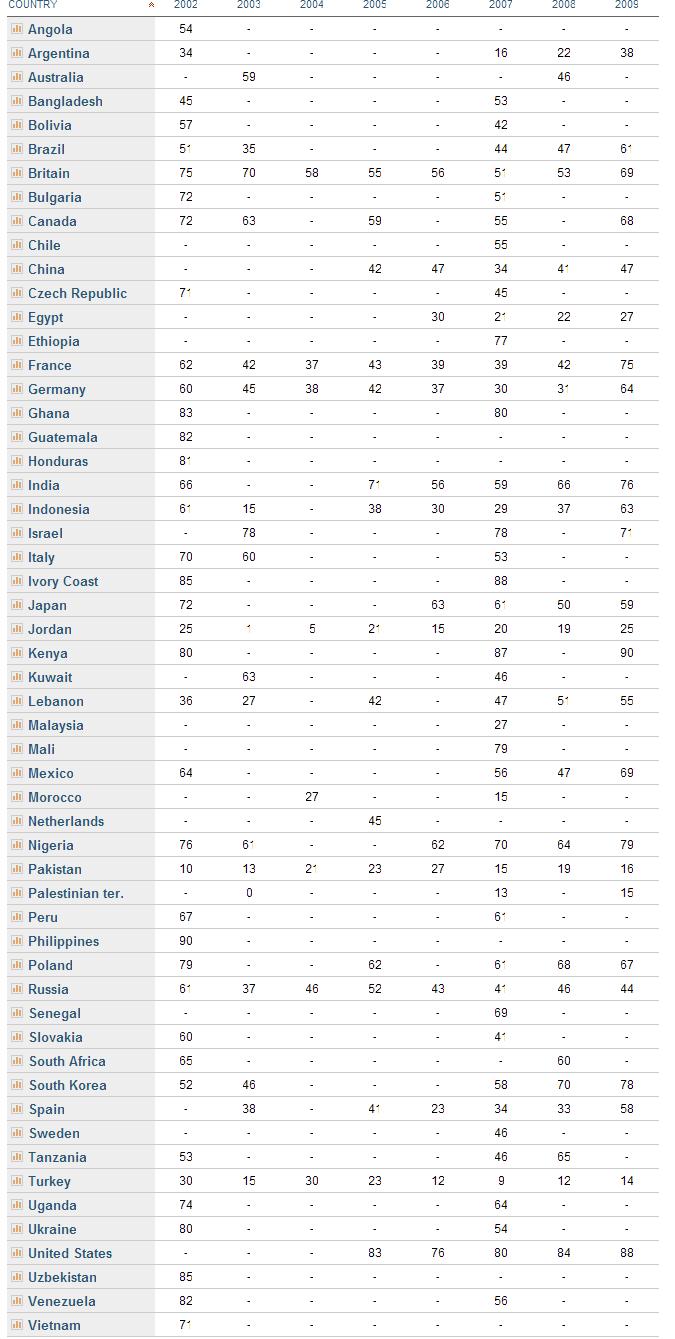
Within this context, it’s in everybody’s interests — particularly for Americans — to understand what citizens from people of different countries around the world feel about various global issues. To help in that process, the well-respected Pew Research Groups has released an interactive compilation of their Global Attitudes Project Key Indicators Database that compares international attitudes on a variety of issues:
This interactive database allows users to explore public opinion trends in 55 countries on topics ranging from attitudes toward the U.S. to people’s assessments of their own lives to views about globalization, democratization, extremism and other important issues.
Data can be searched by question, by topic or by country – and results can be displayed in map, table or chart formats. The findings are from eight surveys conducted by the Pew Global Attitudes Project from 2002-2009 among a total of more than 200,000 respondents.
Perhaps the most telling result whether citizens around the world have a favorable or unfavorable attitude overall towards the U.S. As shown below, the results show some wide fluctuations between countries and in some cases, within the same country across time (click on the graphic below to see a full-size version):
For example, European countries such as Britain, France, and Germany had high favorable attitudes of the U.S. in 2002, then declined roughly 50% in just a couple of years, then have rebounded to even higher levels in 2009 with the election of President Obama.
On the flip side, three of the U.S.’s key allies — Japan, Pakistan, and Russia — experienced a slight decline in favorable attitudes toward the U.S. between 2007/2008 and 2009 (some of which probably relates to the U.S. plunging the world into a global recession).
So what’s the take-home message here? These particular results (of course, there are many others to peruse) go to show that international attitudes can change rather quickly and can be influenced by a wide variety of reasons.
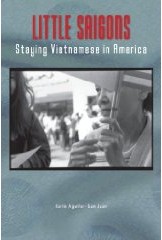
As part of this blog’s mission of making academic research and data more easily accessible, understandable, and applicable to a wider audience and to practical, everyday social issues, I highlight new sociological books about Asian Americans and other racial/ethnic groups as I hear about them. This time around, two new books examine the history and contemporary dynamics of two sets of Asian American enclaves: Chinatowns and Little Saigons.
Karin Aguilar-San Juan examines the contradictions of Vietnamese American community and identity in two emblematic yet different locales: Little Saigon in suburban Orange County, California (widely described as the capital of Vietnamese America) and the urban “Vietnamese town” of Fields Corner in Boston, Massachusetts. Their distinctive qualities challenge assumptions about identity and space, growth amid globalization, and processes of Americanization.
With a comparative and race-cognizant approach, Aguilar-San Juan shows how places like Little Saigon and Fields Corner are sites for the simultaneous preservation and redefinition of Vietnamese identity. Intervening in debates about race, ethnicity, multiculturalism, and suburbanization as a form of assimilation, this work elaborates on the significance of place as an integral element of community building and its role in defining Vietnamese American-ness.
Staying Vietnamese, according to Aguilar-San Juan, is not about replicating life in Viet Nam. Rather, it involves moving toward a state of equilibrium that, though always in flux, allows refugees, immigrants, and their U.S.-born offspring to recalibrate their sense of self in order to become Vietnamese anew in places far from their presumed geographic home.
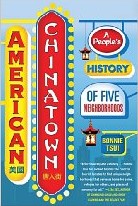
In American Chinatown, acclaimed travel writer Bonnie Tsui takes an affectionate, attentive look at the neighborhood that has bewitched her since childhood, when she eagerly awaited her grandfather’s return from the fortune cookie factory.
Tsui visits the country’s four most famous Chinatowns — San Francisco, New York, Los Angeles, Honolulu — and makes her final, fascinating stop in Las Vegas; in her explorations, she focuses on the remarkable experiences of ordinary people. Tsui beautifully captures their vivid stories, giving readers a deeper look into what “Chinatown†means to its inhabitants, what each community takes on from its American home, and what their experience means to America at large. American Chinatown is an all-access pass.
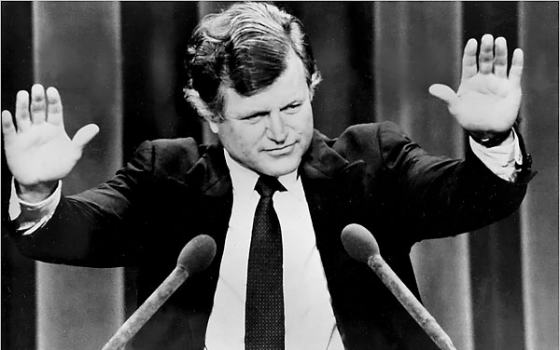
As all major news organizations are reporting, Massachusetts Senator Edward Kennedy passed away last night at the age of 77. Other news sites and blogs will offer a comprehensive review and description of his personal and professional life, so I would just like to share my own thoughts on his legacy as it relates to racial/ethnic relations and civil rights, but also what it means to be a “liberal.”
Even though he grew up in wealth and privilege, he always stood up for the less privileged and powerful among us. Among his many causes while in Congress were his championing of the Patients’ Bill of Rights and perhaps most famously, his tireless efforts toward passing universal healthcare coverage. Indeed, in his four-plus decades of service in the Senate, he amassed quite an impressive record of legislation and public service.
I will also remember his work on behalf of racial equality and justice. He was an early, consistent, and strong advocate for civil rights, exemplified by his record on supporting and sponsoring legislation on voting rights, education, labor rights, and poverty that helped all Americans but disproportionately benefited people of color and the poor the most. As the New York Times notes:
He led the Congressional effort to impose sanctions on South Africa over apartheid . . . . His most notable focus was civil rights, “still the unfinished business of America,†he often said. In 1982, he led a successful fight to defeat the Reagan administration’s effort to weaken the Voting Rights Act. In one of those bipartisan alliances that were hallmarks of his legislative successes, Mr. Kennedy worked with Senator Bob Dole, Republican of Kansas, to secure passage of the voting rights measure, and Mr. Dole got most of the credit. . . .
At a pivotal moment in the 2008 Democratic presidential primaries, Mr. Kennedy endorsed Senator Obama for president, saying Mr. Obama offered America a chance for racial reconciliation and an opportunity to turn the page on the polarizing politics of the past several decades.
“He will be a president who refuses to be trapped in the patterns of the past,” Mr. Kennedy told an Obama rally in Washington on Jan. 28, 2008. “He is a leader who sees the world clearly, without being cynical. He is a fighter who cares passionately about the causes he believes in without demonizing those who hold a different view.”
But ultimately, I will remember Senator Kennedy for his uncanny and natural ability to balance two seemingly contradictory identities — on the one hand, being a true liberal Democrat and on the other hand, being able to cross ideological boundaries and to genuinely collaborate with Republicans on bipartisan causes.
Until recently and especially during the presidencies of Reagan, Bush I, and Bush II, due to the ideological clashes and culture wars within American society, it was a derogatory term to be called a “liberal.” Nonetheless, there are many of us, including me, who are proud to be liberal and I saw Senator Kennedy as a model for being a true liberal. As I mentioned, his congressional and public service record on behalf of traditionally “liberal” causes is unquestioned. Even when it was considered an insult to be called a liberal, Senator Kennedy never backed down from his beliefs and passion to achieve meaningful equality and justice for all Americans.
But in order to get things done and achieve results, the practical reality is that it requires collaboration. Understanding that, Senator Kennedy was extremely skilled at working with fellow Republicans and reaching compromises that still retained his core ideals. The New York Times again summarizes:
Although he was a leading spokesman for liberal issues and a favorite target of conservative fund-raising appeals, the hallmark of his legislative success was his ability to find Republican allies to get bills passed. Perhaps the last notable example was his work with President George W. Bush to pass No Child Left Behind, the education law pushed by Mr. Bush in 2001. He also co-sponsored immigration legislation with Senator John McCain, the 2008 Republican presidential nominee. One of his greatest friends and collaborators in the Senate was Orrin Hatch, the Utah Republican.
In the end and for me personally, Senator Kennedy will always embody the Buddhist-like, yin-and-yang ideal of achieving balance in how we conduct our lives. He came from wealth and privilege but he never wavered in standing up for the downtrodden and underprivileged. His personal life was not without controversy but he worked tirelessly in excelling in his professional life. And he always stood proud and true to his liberal convictions but also knew when and how to collaborate with others to get results and move forward as a nation.
Senator Edward Kennedy’s legacy is one that we can all learn from as Americans, today and always. In his own famous words from the 1980 Democratic convention,
The work goes on, the cause endures, the hope still lives, and the dream shall never die.