The views and opinions expressed on this site and blog posts (excluding comments on blog posts left by others) are entirely my own and do not represent those of any employer or organization with whom I am currently or previously have been associated.
Academic Version: Applying my personal experiences and academic research as a professor of Sociology and Asian American Studies to provide a more complete understanding of political, economic, and cultural issues and current events related to American race relations, and Asia/Asian America in particular.
Plain English: Trying to put my Ph.D. to good use.
If you’ve read more than a few articles on Asian-Nation, you already know that I rely a lot on Census data and statistics for this website and blog. In addition, as an academic, I also use Census data heavily for my own research studies, as do thousands of other sociologists, demographers, statisticians, analysts, and others in all kinds of disciplines and fields.
It’s with this in mind that many of us are eagerly anticipating the 2010 Census. After the questionnaires and data collection start this spring, the actual data won’t be completely tabulated and released to the public until 2013 or so. Nonetheless, as a recent Time magazine article describes, diverse racial and ethnic groups around the country understand how important it is that the federal government has an accurate count of their population numbers and the overall importance of these Census data to American society in general:
The U.S. Census is gearing up for its once-a-decade tally of America’s population. And so are thousands of groups with a vested interest in being fully counted — since the Census determines not just seats in the House of Representatives but also how some $400 billion in annual federal funding gets divvied up, the way companies think about where to build factories and stores, and the shape of political and social discourse about issues like race, ethnicity and urban vs. rural America. . . .
Brazilians in Boston are creating public-service announcements to run on Portuguese-language radio stations. The state of California is handing out maps of neighborhoods with low participation rates in the last Census so community groups can target where to knock on doors. . . . “The Census,” says Melanie Campbell of the National Coalition on Black Civic Participation, “is all about financial resources and power.” . . .
To think about what’s at stake — beyond $3 billion in unemployment funds, $4 billion worth of rural-electrification loans, $6 billion in Head Start money and hundreds of billions of other federal dollars — consider the Burmese. Some 17,000 people living in the U.S. identified themselves as Burmese in the 2000 Census, but “we know that’s not the right number,” says Aung Naing, chairman of the Burmese Complete Count Committee. . .
In Southern California alone, there are seven or eight Burmese Buddhist temples, he says. So since the fall, Naing has been traveling the country, explaining to Burmese groups that the Census counts everybody — citizen or not — and that the data collected aren’t shared with other parts of the government, like immigration or taxing authorities (common fears that drive down response rates among many minority groups, including blacks and Hispanics).
The Time article acknowledges that there have been instances in the past where Census data has been used against particular racial/ethnic groups, such as during World War II when they were used to identify neighborhoods that had large Japanese American populations, so that they could more easily be rounded up and placed in prison camps.
There are also many Americans who don’t trust the federal government in general and will refuse to complete a Census form based solely on those grounds. As I’ve also written about, the Census Bureau has also experienced more than a few bureaucratic glitches that it will hopefully resolve under the guidance of its new boss, Secretary of Commerce Gary Locke.
For people and community organizations interested in learning more about the Census’s importance to Americans of all backgrounds, or in helping to promote participation in their own community, there are some excellent resources at CivilRights.org and NonProfitsCount.org. The Census Bureau also has numerous informational material translated in dozens of languages for downloading. As with the Time magazine article, these resources emphasize that an accurate count of the U.S.’s population forms the basis for many important but often overlooked political, economic, and social decisions that are made that end up affecting our daily lives.
As it relates to Asian Americans, the Asian American Justice Center has a nice summary of the Census’s importance to APAs. Also, the Census Bureau has produced some short videos introducing and promoting the 2010 Census, with the embedded clip below aimed specifically at Asian Americans (the clips are a little elementary but are a good way to start the discussion):
[The APACIC] was established to serve the census data needs of the national, regional, and local Washington metropolitan area Asian Pacific American communities. In September 2006, APACIC was designated as a Census Information Center (CIC) by the U.S. Census Bureau. As a member of the U.S. CIC Program, APACIC serves underserved and disadvantaged Asian Pacific American communities especially in the mid-Atlantic region by providing access to U.S. Census Bureau products.
The APACIC page linked to above also contains numerous resources and reports on various Asian American ethnic groups and other aspects of the Asian American population for those who are interested. I hope all Americans, and particularly Asian Americans, will complete and return the Census questionnaire that they’ll receive soon so that we have as accurate as possible a picture of our society and population.
As part of this blog’s mission of making academic research and data more easily accessible, understandable, and applicable to a wider audience and to practical, everyday social issues, I highlight new sociological books about Asian Americans and other racial/ethnic groups as I hear about them. As always, please remember that I highlight them for informational purposes only and do not necessarily endorse their entire content or arguments.
This incisive, authoritative work offers a global perspective on the nature of migration flows, why they take place, and their consequences for states and societies around the world. Chapters provide up-to-date descriptions and comparative analyses of major migration regions in the North and South. The role of population movements in the formation of ethnic minority groups is examined, as is the impact of growing ethnic diversity on economies, cultures, and political institutions. User-friendly features include accessible boxed examples, tables, and maps.
New to This Edition: Fully revised and expanded with current information and analysis; New chapters on development and on security; Covers national and international policy developments; Incorporates new approaches, such as transnational theory; The companion website features an online-only chapter, additional case studies, migration studies links, and periodic updates.
The Migration Policy Institute has a sample chapter from the book, titled “Migration in the Asia-Pacific Region,” which gives a nice summary of recent migration trends inside of Asian-Pacific countries (as opposed to immigration of Asians to countries outside of Asia):
Since the 1990s, migration within Asia has grown, particularly from less-developed countries with massive labor surpluses to fast-growing newly industrializing countries.
Indeed, all countries Asia experience both emigration and immigration — and often transit migration. But it is possible to differentiate between mainly destination countries (Brunei, Hong Kong, Japan, Singapore, South Korea, Taiwan), countries with both significant immigration and emigration (Malaysia and Thailand), and mainly source countries (Bangladesh, Burma, Cambodia, China, India, Indonesia, Laos, Nepal, Pakistan, Philippines, Sri Lanka, and Vietnam).
Migration agents and labor brokers organize most recruitment of Asian migrant workers both to the gulf and within Asia. . . . Asian governments seek to strictly control migration, and migrants’ rights are often very limited. Policymakers encourage temporary labor migration but generally prohibit family reunion and permanent settlement. While most migration in the region is temporary, trends toward long-term stay are becoming evident in some places.
The sample chapter on migration within Asian-Pacific countries is quite informative and also provides a very interesting contrast with immigration (legal and undocumented) to the United States. As the chapter describes, in almost all ways, immigrants to the U.S. experience a much easier and prosperous experience than migrants within Asia.
I suppose that’s why so many people around the world want to immigrate to the U.S. and will try to do so through whatever means possible to make a new life for themselves and their family.
If you haven’t heard already, this past Sunday, South Korean Y.E. Yang won the Professional Golf Association (PGA) Championship by stunning heavy favorite Tiger Woods. This was Yang’s first ‘major’ PGA win (there are four tournaments each year that are considered “majors” — the Masters, the U.S. Open, the British Open, and the PGA Championship) and only his second overall PGA victory, while Tiger had been undefeated when leading a major PGA tournament going into the final round. As Sports Illustrated points out, this was also the first major PGA victory by an Asian-born player:
[Yang’s victory was] memorable as much for his clutch shots as the player he beat. Woods was 14-0 when he went into the final round of a major atop the leaderboard. He had not lost any tournament around the world in nine years when leading by two shots.
None of that mattered to Yang, a 37-year-old South Korean who hit the shots everyone expected from Woods. Leading by one on the final hole, Yang slayed golf’s giant with a hybrid 3-iron that cleared the bunker and settled 12 feet from the cup. Yang made the birdie putt and shouted with joy as he pumped his fist. That gave him a 2-under 70, and a three-shot victory. . . .
His victory is massive for Asia, the fastest-growing market in golf. Perhaps even more significant is that the way he stood up to Woods, the world’s No. 1 player whose heritage is half-Asian through his Thai-born mother. Yang and K.J. Choi are the only PGA Tour players who learned golf in South Korea before coming to America. South Koreans have had far more success on the LPGA Tour, with seven players combining to win 11 majors. . . .
Asian-born players had come close in the majors – Liang-Huan Lu of Taiwan finishing one shot behind Lee Trevino at the 1971 British Open, and T.C. Chen’s famous two-chip gaffe that cost him a chance at the 1985 U.S. Open, where he was runner-up to Andy North. This could be a big breakthrough for Asian players, especially with a World Golf Championship starting this year in China.
First, Yang’s victory is a significant individual achievement for him as a professional golfer. Not only is this victory his first major win, but it was just his second overall PGA win. Very few golfers are able to win a major with such a relatively short victory list. He was ranked just 110th in the world (with Tiger ranked at #1) and actually had to do well in supplemental tournaments in order to qualify to play in a major such as this PGA Championship. So a win like this is certainly significant for him personally.
Secondly, Yang’s victory is also representative of a larger emerging trend — how golf is increasingly become more Asian and Asian American. It was Tiger Woods (who is half Asian and half Black) who first started this trend when he burst on the scene 13 years ago. Then women’s professional golf (the Ladies’ Professional Golf Association, LPGA) saw an influx and emergence of several successful Asian and Asian American golfers (many from South Korea), with Se Ri Pak being the first. Then last year, Asian American Anthony Kim had his coming out party, helping the U.S. team beat the Europeans in dramatic fashion at the prestigious Ryder Cup.
The video clip from CNN discusses the recent emergence of golf in Asia:
I would not be surprised to see more Asian and Asian American golfers emerge and achieve consistent success in the next few years. In fact, in addition to Anthony Kim, another South Korean, K.C. Choi, has been making a name for himself recently as well. It remains to be seen whether such Asian and Asian American golfers can achieve the same level of success as their female counterparts in the LPGA and whether any of them can dethrone Tiger Woods as the number one golfer on the planet (no player has for any extended amount of time in the past 13 years).
Nonetheless, I’m confident we’ll be hearing names like Yang, Choi, Kim, and other Asian surnames more often in the years to come.
You might be interested to read the following posts from August of years past:
2008: Professional Women’s Golf: English Only Critique of the LPGA’s policy requiring its players to be fluent in English and the penalties against them if they are not.
2007: The Downside of Diversity A new study questions whether racial/ethnic and cultural diversity actually produces a net benefit for American society.
2006: Latest ACT Scores by Racial Group The latest statistical breakdown of ACT scores across different racial/ethnic groups sheds some light on one aspect of the model minority image for Asian Americans.
2005: Asian Names: Americanize or Not? Examining a common dilemma among Asian Americans: whether to keep using their given Asian name, or switch to an “easier-to-pronounce” Americanized name.
As part of this blog’s mission of making academic research and data more easily accessible, understandable, and applicable to a wider audience and to practical, everyday social issues, I highlight new sociological books about Asian Americans and other racial/ethnic groups as I hear about them.
This time, I mention three books that focus on the issue of White privilege, an emotional but often misunderstood issue, particularly as it relates to White Americans, many (i.e., a large number but not all) of whom feel that when the topic is mentioned, they are being personally accused of being racist. As the following books describe in detail, it’s much more complicated than that and in fact, White privilege is rooted at the institutional level.
In this book Joe R. Feagin extends the systemic racism framework in previous Routledge books by developing an innovative new concept, the white racial frame. Now four centuries-old, this white racial frame encompasses not only the stereotyping, bigotry, and racist ideology accented in other theories of “race,” but also the visual images, array of emotions, sounds of language, interlinking interpretations, and inclinations to discriminate that are still central to the frame’s everyday operation.
Deeply embedded in American minds and institutions, this white racial frame has for centuries functioned as a broad worldview, one essential to the routine legitimation, scripting, and maintenance of systemic racism in the United States. Here Feagin examines how and why this white racial frame emerged in North America, how and why it has evolved socially over time, which racial groups are framed within it, how it has operated in the past and in the present for both white Americans and Americans of color, and how the latter have long responded with strategies of resistance that include enduring counter-frames.
Wise, a white anti-racism activist and scholar (and author of White Like Me), pushes plenty of buttons in this methodical breakdown of racism’s place in the wake of Barack Obama’s victory. In the first of two essays, the author obliterates the canard of the US as a post-racial society; bigotry and institutionalized discrimination, he contends, have simply morphed into “Racism 2.0,” in which successful minorities are celebrated “as having ‘transcended’ their blackness in some way.”
While racial disparities in employment and income, housing, education and other areas persist, Obama has become an amiable sitcom dad like Bill Cosby, putting whites at ease by speaking, looking and acting “a certain way”-not to mention avoiding discussion of race. In his second, more incendiary essay, Wise concludes that whites must take responsibility for racism.
What the majority of whites fail to grasp, he says, is that they continue to benefit from a system of “entrenched privileges” centuries in the making, and that racism remains a serious obstacle for millions of African Americans. There’s no sugar coating here for whites, nor are there any news flashes for Americans of color, but Wise bravely enumerates the unpalatable truths of a nation still struggling to understand its legacy of racist oppression.
Vivid and engaging, Silent Racism persuasively demonstrates that silent racism – racism by people who classify themselves as not racist – is instrumental in the production of institutional racism. Trepagnier argues that heightened race awareness is more important in changing racial inequality than judging whether individuals are racist. The collective voices and confessions of non-racist; white women heard in this book help reveal that all individuals harbor some racist thoughts and feelings.
Trepagnier uses vivid focus group interviews to argue that the oppositional categories of racist/not racist are outdated. The oppositional categories should be replaced in contemporary thought with a continuum model that more accurately portrays today’s racial reality in the United States. A shift to a continuum model can raise the race awareness of well-meaning white people and improve race relations. Offering a fresh approach, Silent Racism is an essential resource for teaching and thinking about racism in the twenty-first century.
Studies of racism often focus on its devastating effects on the victims of prejudice. But no discussion of race is complete without exploring the other side—the ways in which some people or groups actually benefit, deliberately or inadvertently, from racial bias. This is the subject of Paula Rothenberg’s groundbreaking anthology, White Privilege.
The new edition of White Privilege once again challenges readers to explore ideas for using the power and the concept of white privilege to help combat racism in their own lives, and includes key essays and articles by Peggy McIntosh, Richard Dyer, bell hooks, Robert Jensen, Allan G. Johnson, and others. Three additional essays add new levels of complexity to our understanding of the paradoxical nature of white privilege and the politics and economics that lie behind the social construction of whiteness, making this edition an even better choice for educators.
Brief, inexpensive, and easily integrated with other texts, this interdisciplinary collection of commonsense, non-rhetorical readings lets educators incorporate discussions of whiteness and white privilege into a variety of disciplines, including sociology, English composition, psychology, social work, women’s studies, political science, and American studies.
A reader sent me a link to a recent article from the Seattle Weekly that follows and describes in detail the late-night activities of young Asian American hip-hop club goers in the Seattle area. The article itself is relatively long and to understand the debate that I’m going to discuss below, you should read it in its entirety. Here are just a few excerpts:
Pham is Vietnamese. He’s invited several friends to his Tukwila townhome that Friday to pre-funk before going out to one of their favorite Seattle clubs: Venom. All the 20-somethings pre-funking at his house are also Asian—most of them Vietnamese or Cambodian. Almost every weekend, they hit up Venom, a Belltown dance club that draws a predominately Asian crowd. . . .
“I have some white friends who won’t even go [to Venom],” [22 year old Cambodian American Somealear] Mom says, laughing. “It’s too Asian for them. For us, it’s like family. Everybody knows each other there.”
That’s exactly what club promoters targeting the Asian demographic are going for. The nights that draw the most Asians are the ones that have a crowd within “two to three degrees of separation,” according to Tony Truong, managing partner of the Seattle office of Visionshock, the largest Asian-American nightlife company in the country. . . .
“Asians are like neon tetra fish—they travel in schools,” Truong says. “You always see masses of them together. Once you get the group leader to come, you get the entire group. Then you get the friends of people in that group, and so forth.”
The trend has become increasingly visible in Seattle’s Asian nightlife scene over the past several years. Promoter Nam Ho of Steady Productions organizes weekly parties at Venom, War Room, and Sea Sound Lounge—all notorious hot spots for Asian club-goers. He attributes the rise in popularity of these parties to the fact that Asians have long had to create their own nightlife scene.
“A lot of Asian-Americans that you see out there don’t go to a four-year university or have a scene they really fit into,” Ho explains. “They aren’t going to frat parties or dive bars or sports bars. But many of them have been born and raised here, so they’re incredibly in tune to the city. The club is a good comfort zone for them to go out with other Asian-Americans.”
It may be familiar territory now, but the club scene is a far cry from the atmosphere in which many of these 20-something Asians were raised. They grew up accustomed to having their strict first-generation parents forbid them from engaging in the social activities of their teenage peers. . . .
“Traditional Asian culture is very conservative. Our parents teach us to study hard and to work hard. They want us to be doctors or lawyers or to start families. Sometimes, they forget to teach us to live. That’s why Asians get extravagant at the bar. We’re constantly going out and pounding Grey Goose like there’s no tomorrow because we’re playing catch-up,” [Truong says].
As I said, the article includes many more details about the activities of these young Asian Americans, which as the article’s author writes, includes using the stereotype that all Asians look alike to get underage patrons into a club. Overall, the article spends a lot of time implicitly and explicitly focused on this “neon tetra fish” analogy — how young Asian Americans clustering together during the weekends has developed into this emerging trendy club scene in the Seattle area.
Therein lies the controversy. As illustrated by the readers’ comments at the end of it, this article seems to have unleashed a debate about whether it promotes racial/ethnic diversity by publicizing the real-life activities of an institutionally underrepresented ethnic group such as Asian Americans (particularly Vietnamese Americans) who have been traditionally ignored by the mainstream media, or whether the article promotes cultural stereotypes and a one-sided view of Asian Americans as clannish and materialistic alcoholics?
As a Vietnamese American myself who is also a sociologist specializing in Asian American Studies, I will first say that, at the risk of copping out, the answer is quite complicated and that ultimately, it does both.
On the one hand, I have to give the Seattle Weekly credit for doing a story that specifically profiles Asian Americans. It is indeed true that even in areas where Asian Americans are increasingly becoming more prominent demographically, politically, economically, and culturally, they are still frequently ignored by the mainstream media and other social institutions.
In other words, sadly we are still the “invisible minority” in a lot of areas of American society. With that in mind, articles like this at least show the rest of American society that in many ways, Asian Americans are just like everybody else — after a week of working hard at their jobs, we want to cut loose on the weekends, have a good time with our friends, and from time to time, indulge in some drinking and partying.
I also credit the article’s author for quoting the Vietnamese American party promoters and their observations that in many areas of mainstream American social life, Asian Americans have felt left out, unwelcomed, and even excluded. With that in mind, the party-goers in this article have sought to develop their own sense of community. In fact, their actions continue the long history of Asian Americans reacting to systematic discrimination by forging their own communities and institutions.
However, creating their own communities have paradoxically led to and perpetuated the stereotype that Asians are insular and cliquish and only want to hang out with “their own kind.” What this criticism doesn’t acknowledge however, is that Asian Americans had to associate within their own group because they were directly excluded from participating in mainstream American society in many cases. In other words, they had to choice but to cluster together.
Fast forward to today and we can recognize that almost all examples of direct, systematic segregation against Asian Americans are a thing of the past (although not entirely, at least when it comes to other groups of color). Nonetheless, in many instances where Asian Americans congregate together, we are still accused of being cliquish. The other point to consider is that in almost all cases, these young Asian Americans spend their entire workweek completely integrated and assimilated into mainstream American society. Nonetheless and sadly, old stereotypes are hard to kill.
So, like I said, I think that this article can serve a positive purpose in promoting the wider inclusion of Asian Americans in mainstream American society and to make other Americans think hard about this sociological question of what it means to hang out within your own ethnic/cultural group.
On the other hand, the picture that this particular article promotes may not be a positive one for the Asian American community. Specifically, a casual reader might read this article and come away with reinforced stereotypes that Asian Americans are like cliquish “neon tetra fish” as I just discussed, but also that we’re superficial and materialistic, closet alcoholics who can’t hold their liquor and like to relieve ourselves in parking lots, and/or that we all look alike.
That is exactly the drawback of this particular article — it presents only one picture, one example of Asian American life. In other words, it is only one set of observations about the Asian American community. But in its defense, it was not meant to be anything more than that — it was not intended to be a comprehensive portrayal of all Asian Americans, young Asian Americans, or even young Asian Americans in the Seattle area.
Nonetheless, the danger that some Americans will see this as representative of all Asian Americans is real.
In other words, the potential that this article will perpetuate stereotypes is especially pronounced precisely because Asian Americans have been and continue to be ignored by mainstream American media. Because of this exclusion, many Americans do not have a diverse picture of who Asian Americans are and therefore, are more likely to rely on the few images and portrayals that do exist, many of whom are rather biased or, at least with this particular article, unrepresentative of Asian Americans as a whole.
I just wanted to add my heartfelt congratulations to Sonia Sotomayor, who was just confirmed by the U.S. Senate to be our country’s first Latino Supreme Court Justice (FYI, she is also just the third woman and third non-White Supreme Court Justice).
Justice Sotomayor’s personal story is very inspiring and pretty well-known by now, as are the racially-tinged attacks on her by some conservatives and critics. Nonetheless, her appointment is a monumental step forward in terms of breaking the glass ceiling one person at a time, toward achieving racial equality.
It is also a significant moment of pride for Latino Americans and just as important, for the entire country, regardless of our racial, ethnic, religious, or cultural background. This video segment from ABC’s Nightline describes how Sotomayor’s appointment connects all of us as Americans.
For a while now, I’ve written about how the demographic increase in the size of the Latino American and Asian American populations will inevitably also lead to increased political, economic, and cultural power and influence as well. I also hypothesize that one example of this burgeoning political power was how Latinos and Asians voted overwhelmingly for Barack Obama in the presidential election and as a result, helped to put him over the top.
In other words, Latino and Asian American voters are becoming increasingly important as voting blocs — a sizable constituency group that, if mobilized to voter overwhelmingly for a particular candidate, can make the difference between victory and defeat in a close election. For years, groups such as African Americans, Jewish Americans, and “NASCAR dads” have been important voting blocs.
Latinos represented 7.4% of all Americans who voted in the 2008 election (about 9,745,000 out of 131,144,000 total voters). This represents an increase from being 5.4% (about 5,934,000) of all voters in the 2000 election.
Asian Americans represented 2.8% of all Americans who voted in the 2008 election (about 3,627,000 out of 131,144,000 total voters). This represents an increase from being 1.8% (2,045,000) of all voters in 2000.
Non-Hispanic Blacks comprised 12.3% of all voters in the 2008 election, an increase from 11.5% in the 2000 election.
Conversely, non-Hispanic Whites made up 76.3% of all voters in 2008, a decline from 80.7% in 2000.
The data comparisons between 2000 and 2008 clearly show that Latinos and Asian Americans (and to a slightly lesser extent African Americans) comprise an ever-increasing proportion of the American electorate. Just as important, their power as a voting bloc are increasingly becoming evident as well, as noted by the following quote from the Immigration Impact blog post:
In Indiana, Obama won by roughly 26,000 votes, and received the votes of nearly 24,000 more Latino New Americans than John McCain. Similarly, in North Carolina, Obama won by approximately 14,000 votes, yet received the votes of nearly 26,000 more Latino New Americans than McCain.
We should note that Whites are still the largest racial voting group by far. Nonetheless, the rise of Latinos and Asian American is likely to become even more pronounced as both both groups continue to increase in population size, particularly among those who become naturalized citizens and the second generation (the U.S.-born).
The other interesting trend to note is data that shows Latino and Asian American voters are increasingly voting Democratic as well.
With these demographic and cultural shifts in mind, the fundamental nature of the American political landscape is likely to continue to change for generations to come.
Here are some more announcements and links out that have come my way relating to Asians or Asian Americans. As always, links to other sites are provided for informational purposes and do not necessarily imply an endorsement of their contents:
A Legislative Summit is an opportunity to set goals/identify and prioritize legislative issues that are most pressing to the Asian communities so collectively we can create an action plan to influence future executive and legislative government activities and decisions that are favorable to our communities.
Summit Objectives:
To Increase awareness of today’s and future Asian American generations’ issues and needs such as economic development, immigration, language access, voting rights, and discrimination.
To improve cooperation and mutual understanding by bringing diverse ethnic Asian American communities together.
To raise the visibility of the Asian community and later to present its concerns to the two (2) gubernatorial candidates and members of the General Assembly.
To gather and disseminate data about Asian American communities.
To bring the energy and vision of different Asian community members from all social, educational, age, and business sectors background together so that collectively we can create real and productive change.
To identify new Asian community leaders to effectively build issues-based community coalitions.
To make the case for Asian American inclusion in public contracting programs and to advance the participation of Asian Americans in minority contracting programs in the private sector.
To help empower Asian families to understand their rights and responsibilities with regard to their student’s enrollment at local public schools.
To create opportunity for creating bills that represent long-term solution to foster respect for Asian American & Pacific Islanders’ vast contributions to the nation.
Wednesday, August 5th, 2009
5:30 PM -8:00 PM
Ukrops Headquarters Office
2001 Maywill Str., Suite 100, Richmond, VA 23230
Registration required: aabac@aabac.org or Tel: 804-798-3975 PDF Event Flier
Call for Entries: 2010 San Francisco International Asian American Film Festival
The San Francisco International Asian American Film Festival (SFIAAFF) is pleased to announce its open call for entries for its 28th edition, scheduled for March 11-21, 2010. The SFIAAFF accepts films of all genres and lengths, and is looking for exceptional films made by or about Asians and Asian Americans.
Postmark Deadlines:
Early — September 4, 2009
Late — October 2, 2009
Attention All Filmmakers:
The San Francisco International Asian American Film Festival (SFIAAFF) is now accepting submissions for the 2010 Festival. A presentation of the Center for Asian American Media (formerly NAATA), the SFIAAFF is the largest event in the nation dedicated to screening Asian American and Asian films. The Festival accepts films and videos of all lengths and genres that are made by and/or about Asian Americans and Asians of any nationality. To submit online or for more information, visit www.asianamericanmedia.org.
87 Minute documentary on the Vietnam War. Shows how the U.S. government killed more than 3 million Vietnamese in their War of Independence. Starts with the history of the conflict from WWII, the defeat of the French, how the American people were lied into the conflict in the Gulf of Tonkin. Then shows how the killing was done. Includes testimony from soldiers and Vietnamese. Narrated by Martin Sheen. Written, produced and directed by Clay Claiborne.
This year, State Farm’s Youth Advisory Board expanded its disaster preparedness issue area to include grants addressing societal disasters like nutrition, exercise, bullying, abuse and diversity.
Applicants may request any amount from $25,000 to $100,000 based on a required budget which outlines project expenses. Request for Proposals (RFP) must be submitted online by Oct. 2. Complete details and contact information is available at www.statefarmyab.com.
The five issues that grant requests must focus on are:
Natural and Societal disaster preparedness
Driver safety
Accessing higher education/closing the achievement gap
Financial education
Environmental responsibility
To be eligible to receive a grant from the Board, applicants should be either an educator who currently teaches in a public K-12, charter, or higher education institution, or a school-based service-learning coordinator whose primary role is to coordinate service-learning projects in a public, charter, or higher education institution. Non-profit organizations are also eligible if they are able to demonstrate how they plan to actively engage students in public K-12 schools in meaningful service-learning programs.
The number of grants awarded will depend on the number and quality of requests received. Grant amounts will vary according to the nature of the proposal and availability of funds. At least one service-learning project will be funded in each of the 13 State Farm zones. As of June 2009, four years after the initial launch of the YAB, the board has awarded more than $12 million in grants to organizations in the U.S. and Canada and touched about 1.8 million lives.
Thirty high school and college aged youth oversee the granting of $5 million for student-led service-learning projects in the United States and in the Alberta, New Brunswick and Ontario provinces of Canada. The process is unique in the responsibility and resource decisions that the youth are given. It is the Board who come together to research issues they would like to solve, review grant applications, and ultimately decide the grant winners.
Nikki Randhawa Haley, 37, who is in the fray for the post of governor of South Carolina in the US, says she is in the race to win. If she gets elected, Nikki will be the first Indian American woman to become governor in the US, and the second Indian after Bobby Jindal of Louisiana state. A member of the South Carolina state assembly since 2004, Nikki is one of the three candidates to seek nomination from her Republican party for the 2010 elections. . . .
Asked whether her Indian background will matter in the race, she said: “What matters most in South Carolina — and I imagine elsewhere in the country — is not the personalities of the candidates but the message they carry.” . . . Reminded of her maiden campaign in 2004 when her opponents had raised the issue of her ethnic background, she said: “I imagine my opponents will throw everything they can and more at me over the course of the campaign.
“That said, those opponents will not be the focus of our campaign — we will keep our focus on reforming the backward way South Carolina’s government operates and bringing good government back to the people.” Nikki added: “I am very proud of my background and how I was raised. Just as in 2004 I will hold my head high and focus on what I can do for the people of this state.”
To be honest, this is the first that I’ve heard of Nikki Randhawa Haley. It is interesting to see that like Louisiana Governor Bobby Jindal, she is both Indian American and a Republican. As with Jindal, being a Republican makes her a minority within her own ethnic group, who strongly lean Democratic and with the overall political preferences of Asian Americans in general.
Nonetheless, as with Jindal, I think it’s great that more Asian Americans are participating in the political arenas on the state and federal levels and that they are increasingly vying for — and achieving — the highest political offices and positions available (as a reminder, in addition to Jindal, we have Secretary of Energy Steven Chu, Secretary of Veterans Affairs Eric Shinseki, Secretary of Commerce Gary Locke, Joseph Cao (the first Vietnamese American elected to Congress), Michelle Rhee (high-profile Chancellor of Washington DC’s public schools), and most recently, Councilman Sam Yoon running for Mayor of Boston, Judy Chu, the first Chinese American woman elected to Congress), and Jacqueline Nguyen, recently nominated by President Obama to become our country’s only current Asian American federal judge.
I find it very encouraging that Asian Americans are becoming more fully integrated into mainstream American institutions such as politics. This actually leads me to the second news story that caught my eye: I was watching the CBS Evening News the other day and the following segment came on, profiling Edward Tom, Principal at the Bronx Center for Science and Math, a magnet school in New York City:
After watching the segment, I basically thought, “Hey, that’s pretty cool — a principal who gave up a cushy job to work with inner-city kids and to try to help them succeed in life and overcome the obstacles in front of them. Good for him.”
It only dawned on me a little bit later that he was Asian American.
I had to take a few minutes to reflect on this quick realization. Combined with the first part of this post about the emergence of new Asian American politicians, I struck me that perhaps I am now beginning to see what I hoped I would see one day in my lifetime: Asian Americans are so much an integral part of American society that it’s no longer a surprise when I see them in the news or in other media.
In other words, perhaps we are beginning to see that mainstream American society no longer thinks of Asian Americans as perpetual foreigners, as “the other,” or as completely invisible altogether. Instead, with the recent examples of Randhawa Haley, Jindal, Chu, Shinseki, Locke, Rhee, Cao, Yoon, Chu, Nguyen, Tom, and other Asian Americans increasingly attaining high-level and high-profile positions, maybe we as a community have turned the corner in our quest for true integration into American society.
Having said that, I am under no illusions that we no longer experience racial prejudice or outright discrimination or that our identities as “real” Americans will no longer be questioned (you only have to read my recent posts for examples of that). There is still plenty of statistical and anecdotal evidence that Asian Americans are still underrepresented and under-appreciated in many aspects and institutions of American society.
Nonetheless, I think these are very positive developments and it gives me hope that despite the struggles still to come, American society is moving in the right direction.
Below is another announcement about an online survey in need of Chinese American respondents:
Greetings. My name is William Nguyen, MA and I am a Ph. D Candidate at Alliant International University: CSPP. I am conducting a study that explores the beliefs, attitudes, and behaviors of Chinese American-identified undergraduate students attending a 2 or 4 year college/university in regards to their career decision-making process. I believe that the career theories currently in the literature fail to fully capture the Asian American experience and often neglect key facets of who we are: our culture, our experiences of acculturation, and the influence of honor and family.
If you are interested in participating, you will complete a 20 – 30 minute survey that asks you a myriad of questions related to your career decision-making process. All responses and identifying information will be kept confidential. As incentive for your participation, all participants that provide contact information will be entered in a raffle for either a $75, $50, or $25 gift card to Gap, Inc. (or any other department store of choice).
Should you have any questions about the research please contact: William Nguyen at wnguyen@alliant.edu. If you would like to participate, please click go to https://www.surveymonkey.com/s.aspx?sm=DQKGz8ZQQ58Uuyq4aROxvA_3d_3d. Also, if you are interested in receiving results to this study, please contact William Nguyen with that request. Thank you for your time and consideration.
In Peace,
William W. Nguyen, MA, Ph. D Candidate
Alliant International University: California School of Professional Psychology
San Francisco, CA
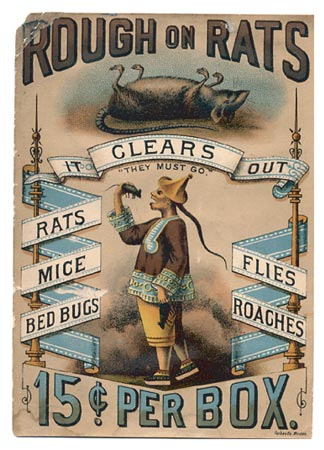
My fellow sociologist blogger Joe Feagin at Racism Review mentions that David Segal over at Slate has a very interesting and informative slideshow of racist commercial caricatures over the years. For those who are too young to remember, blatantly derogatory and stereotypical images of Blacks, Latinos, Native American Indians, and Asians were routinely used to sell products not too long ago. Below is just one example:
Nasty stereotypes have helped move the merchandise for more than a century, and the history of their use and abuse offers a weird and telling glimpse of race relations in this country. Not surprisingly, the earliest instances were the most egregious.
This circa-1900 ad for a rodent-control product called “Rough on Rats” doesn’t just exploit the then-popular urban legend that Chinese people eat rats. It also underscores the intensity of American xenophobia of the day. There were anti-Chinese riots at the time, as well as legislation like the Chinese Exclusion Act, a federal ban on immigration passed in 1882. (It was on the books until 1943.) In the ad, “They must go” refers both to the rodents and the Chinese.
For those interested in the sociology of media and cultural images, my colleagues at Contexts magazine host a very interesting blog titled “Sociological Images” that you should definitely check out.
Unfortunately, as the Slate slideshow and captions point out, there are a few racist caricatures that are still with us today and you may be surprised at what they are.