The views and opinions expressed on this site and blog posts (excluding comments on blog posts left by others) are entirely my own and do not represent those of any employer or organization with whom I am currently or previously have been associated.
Academic Version: Applying my personal experiences and academic research as a professor of Sociology and Asian American Studies to provide a more complete understanding of political, economic, and cultural issues and current events related to American race relations, and Asia/Asian America in particular.
Plain English: Trying to put my Ph.D. to good use.
As part of this blog’s mission of making academic research and data more easily accessible, understandable, and applicable to a wider audience and to practical, everyday social issues, I highlight new sociological books about Asian Americans and other racial/ethnic groups as I hear about them. A book’s inclusion is for informational purposes only and does not necessarily mean a full endorsement of its complete contents.
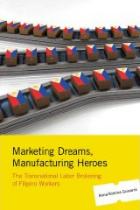
In Marketing Dreams, Manufacturing Heroes Anna Romina Guevarra focuses on the Philippines — which views itself as the “home of the great Filipino worker” — and the multilevel brokering process that manages and sends workers worldwide. The experience of Filipino nurses and domestic workers — two of the country’s prized exports — is at the core of the research, which utilizes interviews with employees at labor brokering agencies, state officials from governmental organizations in the Philippines,and nurses working in the United States.
Suspended Apocalypse is a rich and provocative meditation on the emergence of the Filipino American as a subject of history. Culling from historical, popular, and ethnographic archives, Dylan RodrÃguez provides a sophisticated analysis of the Filipino presence in the American imaginary. Radically critiquing current conceptions of Filipino American identity, community, and history, he puts forth a genealogy of Filipino genocide, rooted in the early twentieth-century military, political, and cultural subjugation of the Philippines by the United States.
Suspended Apocalypse critically addresses what RodrÃguez calls “Filipino American communion,” interrogating redemptive and romantic notions of Filipino migration and settlement in the United States in relation to larger histories of race, colonial conquest, and white supremacy. Contemporary popular and scholarly discussions of the Filipino American are, he asserts, inseparable from their origins in the violent racist regimes of the United States and its historical successor, liberal multiculturalism.
RodrÃguez deftly contrasts the colonization of the Philippines with present-day disasters such as Hurricane Katrina and Mount Pinatubo to show how the global subjection of Philippine, black, and indigenous peoples create a linked history of genocide. But in these juxtapositions, RodrÃguez finds moments and spaces of radical opportunity. Engaging the violence and disruption of the Filipino condition sets the stage, he argues, for the possibility of a transformation of the political lens through which contemporary empire might be analyzed, understood, and perhaps even overcome.
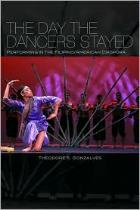
Pilipino Cultural Nights at American campuses have been a rite of passage for youth culture and a source of local community pride since the 1980s. Through performances—and parodies of them—these celebrations of national identity through music, dance, and theatrical narratives reemphasize what it means to be Filipino American. In The Day the Dancers Stayed, scholar and performer Theodore Gonzalves uses interviews and participant observer techniques to consider the relationship between the invention of performance repertoire and the development of diasporic identification.
Gonzalves traces a genealogy of performance repertoire from the 1930s to the present. Culture nights serve several functions: as exercises in nostalgia, celebrations of rigid community entertainment, and occasionally forums for political intervention. Taking up more recent parodies of Pilipino Cultural Nights, Gonzalves discusses how the rebellious spirit that enlivened the original seditious performances has been stifled.
Here are some more announcements and links out that have come my way relating to Asians or Asian Americans. As always, links to other sites are provided for informational purposes and do not necessarily imply an endorsement of their contents.
My name is Reimar Macaranas and I am the Community Program Manager at Leadership Education for Asian Pacifics (LEAP). I wanted to ask for your help in outreaching to your Asian and Pacific Islander students in regards to the paid summer internship we have offered each year for the past 13 years.
This is a two-month summer internship where we put interns in Asian and Pacific Islander community-based organizations (a full list of past
organizations we have worked with is on the website link provided) for 4 days of the week, where they would be working hands-on with communities on specific projects the organizations have proposed to us. The other day of the week, they would be at LEAP, going through workshops, community dialogues and panels to not only increase personal development, but community development as well.
Reimar Macaranas
Community Program Manager
Leadership Education for Asian Pacifics, Inc. (LEAP)
(213) 485-1422×4102
(213) 485-0050 (fax)
rmacaranas@leap.org
www.leap.org
Call for Applications: “Settling Into Motion“ – The Bucerius Ph.D. Scholarships in Migration Studies. The ZEIT-Stiftung Ebelin und Gerd Bucerius Ph.D. scholarship program in migration studies “Settling Into Motion” offers up to eight scholarships for Ph.D. theses addressing migration in changing societies.
For 2010, research applications on “Migration, Diversity and the Future of Modern Societies†are especially welcome. Qualified Ph.D. students of – in a broad sense – social sciences can apply until 25 February 2010. Please find further information as well as the online application on the program’s website.
Migration leads to increasing diversity in many countries all over the world. Sometimes this results in challenges of established institutions as well as cultural practices of modern societies. Current migrant populations are more heterogeneous than ever before: migrants and their descendants have not only different religious, cultural and ethnic roots, but they also differ with regard to their citizenship status, as well as their professional and economic backgrounds.
At the same time, governments in receiving societies frequently react to this phenomenon with integration schemes that implicitly address a non-existent homogeneous “migrant populationâ€. On the other hand, there are examples where diversity and cultural pluralism are seen as strength and advantage. We encourage the following topics, but will also consider other approaches:
Diversity and political order
Migration and cultural, ethnic and religious diversity
Integration policies
Cultural policy and the management of diversity
Concepts and categories in migration and integration debates
Innovative approaches both in terms of subject matter and methodology are highly encouraged.
Re-SEAing SouthEast Asian American Studies. Memories & Visions: Yesterday, Today, and Tomorrow.
San Francisco State University
March 10-11, 2011
The third tri-annual interdisciplinary Southeast Asians in the Diaspora conference will take place at San Francisco State University. The San Francisco Bay Area is home to sizable populations of Burmese, Cambodian, Filipino, Hmong, Indonesian, Lao, Malaysian, Singaporean, Thai, and Vietnamese Americans. This conference will foreground the large Southeast Asian American communities of the Bay Area, Silicon Valley, and the Pacific Northwest, as well as continue to build momentum and grow just as the Southeast Asian American demographics increase in size and visibility here in the U.S. and in particular, on the West Coast.
The main objectives of this conference are:
to encourage the interdisciplinary and comparative study of Southeast Asian
American peoples and their communities
to promote national and international cooperation in the field
to establish partnerships between academia and the community
This two-day conference explores memories (e.g., memories of homeland; memories of war; memories of childhood and growing up American; historical memories; embodied memories; intergenerational memories; technologies of memories; and imagined/created memories) and visions (actual sightings and sites of Southeast Asian Americans and their communities, both real and imaginary). Because this conference takes place after the constitutionally mandated 2010 census, the focus will be on locating/situating Southeast Asian American Studies for the 21st century.
The conference invites proposals for panels, workshops, and individual papers from all disciplines and fields of study that explore the dialectical relationship between memories and visions related to the following topics:
Southeast Asian American health and wellness
Southeast Asian American social justice
Southeast Asian American and critical pedagogy
Southeast Asian American youth cultures
Southeast Asian American folklore, folklife, and religions
Southeast Asian American families, relationships, and communities
Southeast Asian American queer cultures and spaces
Southeast Asian American sexualities
Southeast Asian Americans of mixed heritage/race
Southeast Asian American transnationality, transnationalization, and transnationalism
Sino-Southeast Asian Americans
Explorations of how artists (writers, filmmakers, visual artists) “see†and envision themselves and their communities as Southeast Asian Americans
The location and relationship of Southeast Asia to Southeast Asian America
The shifting demographics of Southeast Asian Americans vis-Ã -vis (in)visibility
Papers will also be considered on any related topics in Southeast Asian American Studies. 250 word abstracts should be submitted by June 15, 2010 to Dr. Jonathan H. X. Lee at jlee@sfsu.edu with the following information: a) author(s), b) affiliation, c) email address, and d) abstract with title.
All papers will go through an internal review process and decisions regarding acceptance of papers for the conference will be communicated by October 15, 2010. Information on previous conferences:
Jonathan H. X. Lee, Ph.D.
Assistant Professor of Asian American Studies
San Francisco State University
Department of Asian American Studies
1600 Holloway Ave, EP 103
San Francisco, CA 94132
Do you know of any non-profit organizations which benefit the Asian American community? If so, please encourage their Executive Director to consider spending a week at Harvard to sharpen their leadership skills and make their organizations more effective.
For the 5th consecutive year, the Harvard Business School Asian American Alumni Association (HBS4A) will be sponsoring a full tuition, room, board, and materials scholarship for a non-profit organization executive director to attend the Strategic Perspectives in Non-Profit Management program at HBS this July. Alaric Bien, last year’s HBS4A Scholarship recipient and Executive Director of the CISC had this to say after completing the program last year:
“The SPNM experience was truly amazing! Scary and somewhat intimidating at first to be part of a group of such high powered, incredibly sharp and dedicated nonprofit executives from literally all over the world, but what a wonderful privilege to have access to all those resources and knowledge.
The professors were awesome – incredibly expert in their fields, inspiring, great teachers, and they really understand what it’s like to work in the real world of the nonprofit sector. I came back to CISC charged up and eager to put into practice what we learned during that short, but oh so intense week at HBS. This was a once in a lifetime opportunity!”
Previous organizations which have benefited from the HBS4A scholarship include the New York Asian Women’s Center in 2006, the Chinese Community Center in Houston in 2007, the Southeast Asian Mutual Assistance Association of Philadelphia in 2008, and the Chinese Information and Service Center of Seattle in 2009.
If you know of an Executive Director at a non profit organization which benefits the Asian American community, please direct them to the scholarship website for more information! Thanks to all the HBS4A dues-paying members for helping make this empowering program possible!
2008: Handbook for Young Muslim Americans A new book helps young Muslim Americans in negotiating the challenging racial, religious, and cultural terrain of contemporary American society.
2006: Changing Names Among Asian Americans An article from Northwestern University explorers a question that many young Asian Americans wrestle with — whether or not to change their Asian names.
2005: Further Proof Against Spying Recent dismissals of charges of espionage against Asian Americans highlight prosecutor misconduct and the dubious nature of such allegations in the first place.
First, I hope everyone had a nice holiday season and that your new year is off to a good start.
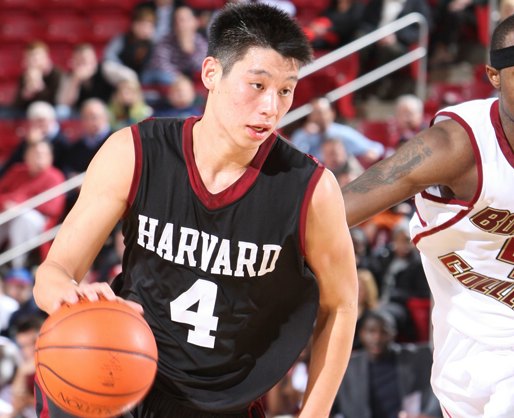
As reflected in the origin of its name (Janus, the Roman god of beginnings and endings), the first month of the new year is traditionally a time to reflect on two “opposite” ideas. In this case, I’d like to use a recent Time magazine article profiling Harvard University basketball player Jeremy Lin as an opportunity to explore opposing and contradictory racial presumptions in college and professional basketball.
First, the article describes the success Jeremy is having as Harvard’s star player:
It’s been 64 years since the Crimson appeared in the NCAA tournament. But thanks to senior guard Jeremy Lin, that streak could end this year. Lin, who tops Harvard in points (18.1 per game), rebounds (5.3), assists (4.5) and steals (2.7), has led the team to a 9-3 record, its best start in a quarter century.
Lin, a 6 ‘3″ slasher whose speed, leaping ability, and passing skills would allow him to suit up for any team in the country, has saved his best performances for the toughest opponents: over his last four games against teams from the Big East and Atlantic Coast Conference, two of the country’s most powerful basketball leagues, Lin is averaging 24.3 points and shooting nearly 65% from the field.
“He’s as good an all-around guard as I’ve seen,” says Tony Shaver, the head coach of William & Mary, which in November lost a triple overtime game to Harvard, 87-85, after Lin hit a running three-pointer at the buzzer. “He’s a special player who seems to have a special passion for the game. I wouldn’t be surprised to see him in the NBA one day.”
I think it’s important to first recognize Jeremy’s success. He’s worked hard academically and athletically to be in the position he’s in right now. In many ways, he represents a nice example of how Asian Americans can balance both model minority expectations with a physical or extracurricular passion on the way to a well-rounded sense of personal balance.
The article later acknowledges the elephant in the room and points out why Jeremy’s success is unique — he’s Asian American. Unfortunately, he’s also experienced some racism from opposing fans based on his racial identity:
A Harvard hoopster with pro-level talent? Yes, that’s one reason Lin is a novelty. But let’s face it: Lin’s ethnicity might be a bigger surprise. Less than 0.5% of men’s Division 1 basketball players are Asian-American. . . . Some people still can’t look past his ethnicity. Everywhere he plays, Lin is the target of cruel taunts.
“It’s everything you can imagine,” he says. “Racial slurs, racial jokes, all having to do with being Asian.” Even at the Ivy League gyms? “I’ve heard it at most of the Ivies, if not all of them,” he says. Lin is reluctant to mention the specific nature of such insults, but according to Harvard teammate Oliver McNally, another Ivy League player called him a c-word that rhymes with “ink” during a game last season.
Just last week, during Harvard’s 86-70 loss to Georgetown in Washington, D.C., McNally says one spectator yelled “sweet and sour pork” from the stands. In the face of such foolishness, Lin doesn’t seem to lose it on the court. “Honestly, now, I don’t react to it,” he says. “I expect it, I’m used to it, it is what it is.”
It would be simple enough to point out the obvious contradiction in Jeremy’s situation — why is it apparently acceptable (or at least tacitly tolerated) to hurl racial slurs at an Asian American basketball player but not at say, African American players?
How would bystanders, teammates, coaches, security personnel, and even opposing players react if a fan in the stands yelled the N-word at a Black basketball player at a game? Chances are, that “fan” would immediately face backlash and would be ejected from the building faster than you can say “codes of conduct.” In fact, Dartmouth recently issued an official apology to Harvard in the wake of anti-Semitic and homophobic slurs hurled at some of its squash players at a recent match.
But in Jeremy’s case, there doesn’t seem to be any sense of collective backlash or outrage over the racist comments he routinely receives on the court. Apparently it’s another sad example of Asian Americans being seen as the invisible minority, perpetual foreigners, or as easy targets for racism.
But beyond that, I have to wonder whether his status as an Asian American — as opposed to an Asian — player plays a role as well. In other words, we have seen an influx of professional athletes from Asia in basketball (Yao Ming, Yi Jianlian) and baseball (Hideo Nomo, Ichiro, Daisuke Matsuzaka, etc.) recently but unfortunately, there is still a glaring underrepresentation of Asian American professional athletes in the highest-profile sports such as football, basketball, and baseball.
Although it’s a documented fact that many Americans can’t or won’t distinguish “Asians” from “Asian Americans,” my question is, are Americans (or in this case, sports fans) likely to accept Asian athletes more readily than Asian American ones?
Perhaps fans consciously or unconsciously are more comfortable with the idea that Asian athletes are likely to remain “foreigners” and therefore will eventually return to “their own” country and won’t settle down in the U.S. and be in direct competition with Americans for jobs, etc., while Asian American athletes are in fact homegrown and are perceived to be a greater economic “threat” to “real” Americans. After all, many already perceive Asian Americans to be “taking over” other areas of American life such as colleges and universities.
So based on these perceptions, perhaps fans are unconsciously spewing racism — or at least remaining silent when such slurs are made — at Asian American athletes as another form of backlash against the ongoing socioeconomic success of Asian Americans.
The mentality and contradictions of racism are always subject to speculation but the examples keep adding up.
= = = = = = = = =
Update: If you’re reading this, you probably know that in January 2012, Jeremy was signed by the New York Knicks. He promptly seized this opportunity and has since blown up the basketball scene and is now a national and international sensation. To read my sociological take on this “Linsanity” phenomenon, check out my recent post “Jeremy Lin Mania and How to Relates to Colorblindness.”
As we near the end of 2009, it’s fitting to review the major events, developments, and trends in U.S. racial/ethnic relations in 2009. Therefore, below is my look back at some of the positive highlights as well as the setbacks in terms of achieving racial/ethnic equality, with a particular focus on Asian Americans (my area of expertise). This list is not meant to be an exhaustive review of all racial/ethnic news in 2009, but rather the ones that I covered in this blog and ones that I believe have the most sociological significance.
The Best
King, Obama, Tet, and the Diversity of Change A new year brings new hope as we connect Martin Luther King, Barack Obama’s historic election, and Tet the Vietnamese Lunar New Year, around the theme of change, rebirth, and renewal.
Gary Locke and the Future of Asian American Identity How Gary Locke’s confirmation as Secretary of Commerce represents the forging of a new identity for Asian Americans as they contribute to strengthening American society in the 21st century.
Jim Yong Kim: First Ivy League President Korean American Dr. Jim Yong Kim is named Dartmouth’s next President, becoming the first Asian American president of an Ivy League school.
Kimchi Quesadillas and Korean BBQ Tacos The fusion of Korean and Mexican food in Los Angeles represents another melding of different cultures in contemporary American society.
Recession Can Lead to Better Race Relations The current recession has certainly led to a lot of hostility and conflict, but can also help bring Americans together and bridge racial divides as they support one another.
How Immigrants Contribute to American Society Within the partisan an emotional debates on the cultural and economic effects of immigration, several new studies point out that immigrants ultimately make several important contributions to American society.
Asian Americans Celebrate Several Congressional Achievements The “End of Year Report” from the Congressional Asian Pacific American Caucus summarizes the major achievements by Asian Americans in the federal government, including renewing the White House Initiative on Asian Americans and Pacific Islanders, the diversity of federal appointments by President Obama, and several significant legislative proposals.
The Worst
Asian Americans and Workplace-Employment Discrimination New data describes employment and workplace discrimination against Asian Americans who work for the federal government and notes that while Asian Americans have the highest rates of experiencing discrimination, they are the least likely to formally report them and to file complaints.
Blacks and Latinos Hurt More by Recession Data shows that Blacks and Latinos are the racial groups hardest hit by the current recession, based on several institutional disadvantages they face.
The Degrees of Immigrant Bashing Examining the different ways in which Americans blame and attack immigrants for the political and economic problems that we face.
Swimming Pools and Modern Day Segregation The racial discrimination at a swimming pool in suburban Philadelphia sadly reveals the limits of being colorblind and unfortunate persistence of American racism.
Economic Competition and Intra-Minority Tensions Examining both the individual motives and institutional factors that have contributed to a pattern of recent physical attacks against Asian American students in Philadelphia.
New York Marathon Winner: Not a ‘Real’ American? Questions about Meb Keflezighi’s ‘American’ identity after winning the New York City Marathon is the latest example of anti-immigrant and anti-minority backlash among many White Americans.
Escalation of Student Racial Violence in Philadelphia An escalation of violence between African American and Asian American students in Philadelphia highlights not just racial tensions but also the utter failure of school leaders.
As we turn the page on 2009 and the entire decade (one that many Americans would like to forget), let’s hope that 2010 and the new decade will lead to more prosperity, equality, and harmony for Americans from all racial, ethnic, and cultural backgrounds.
As part of this blog’s mission of making academic research and data more easily accessible, understandable, and applicable to a wider audience and to practical, everyday social issues, I highlight new sociological books about Asian Americans and other racial/ethnic groups as I hear about them. A book’s inclusion is for informational purposes only and does not necessarily mean a full endorsement of its complete contents.
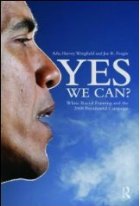
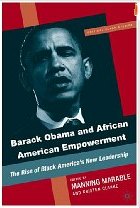
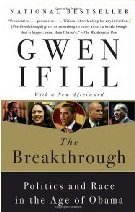
A year after Barack Obama’s historic election as President of the United States of America, the following books examine the larger sociological context of his campaign and election, with a particular focus on the question of to what extent does his election signify any important change or improvement in race relations in the U.S.
This book offers one of the first sociological analyses of Barack Obama’s historic 2008 campaign for the presidency of the United States. Elaborating on the concept of the white racial frame, Harvey Wingfield and Feagin assess the ways racial framing was deployed by principal characters in the 2008 election. This book counters many commonsense assumptions about race, politics, and society, particularly the idea that Obama’s election ushered in a post-racial era. Readers will find this book uniquely valuable because it relies on sound sociological analysis to assess numerous events and aspects of this historic campaign.
Barack Obama and the African-American Empowerment examines the evolution of black leadership and politics since the Civil Rights Movement. It looks at the phenomenon of Barack Obama, from his striking emergence as a successful candidate for the Illinois State Senate to President of the United States, as part of the continuum of African American political leaders. The reader also examines the evolving ideals about the roles of government and the economy in addressing the historic disadvantages experienced by many African Americans. Here, some of the nation’s most influential intellectuals bring together original scholarship to look at the future of national politics and American race relations.
In The Breakthrough, veteran journalist Gwen Ifill surveys the American political landscape, shedding new light on the impact of Barack Obama’s stunning presidential victory and introducing the emerging young African American politicians forging a bold new path to political power.
Ifill argues that the Black political structure formed during the Civil Rights movement is giving way to a generation of men and women who are the direct beneficiaries of the struggles of the 1960s. She offers incisive, detailed profiles of such prominent leaders as Newark Mayor Cory Booker, Massachusetts Governor Deval Patrick, and U.S. Congressman Artur Davis of Alabama (all interviewed for this book), and also covers numerous up-and-coming figures from across the nation.
Drawing on exclusive interviews with power brokers such as President Obama, former Secretary of State Colin Powell, Vernon Jordan, the Reverend Jesse Jackson, his son Congressman Jesse Jackson Jr., and many others, as well as her own razor-sharp observations and analysis of such issues as generational conflict, the race/ gender clash, and the “black enough” conundrum, Ifill shows why this is a pivotal moment in American history.
Below are two announcements about online surveys in need of Asian American respondents.
Our names are Mindy Markham, Jessica Troilo, Marilyn Coleman, and Lawrence Ganong and we are graduate students and faculty members at the University of Missouri – Columbia. We are inviting you to participate in a research study about how mothers and fathers with different marital statuses are viewed. Participation is voluntary and completely confidential.
The survey is available online and can be accessed at any time that is convenient for you. We would appreciate it if you would take the time to answer this survey in the next two weeks.
If you are uncomfortable with online technology or are experiencing technological difficulties, we would be happy to assist you at any time by talking you through the process. If you have any questions or concerns at any point, please contact us directly by e-mail, umcheshdfs@missouri.edu
Thank you for your participation,
Mindy Markham, M.S.
Jessica Troilo, M.S.
Marilyn Coleman, Ed.D.
Lawrence Ganong, Ph.D.
University of Missouri Institutional Review Board Approval #1061098
The University of Memphis’ Gay, Lesbian, Bisexual, and Transgender (GLBT) Research Team is conducting a GLBT-affirmative study on Same-Sex Parenting, and we are looking for participants. The purpose of this study is to learn about the experiences of same-sex parents in relationship to legal parenting rights. We believe this research is important in advocating for parents to be fully recognized in their family role and to not be discriminated against in family concerns.
Participants must be 18 years or older, currently be in a relationship with the same-sex partner with whom they have planned and created a family, and have at least one child under the age of 18 living in their home. The study should take approximately 20 minutes to complete online and meets human subjects approval by our university Institutional Review Board (E10-43).
If you wish to see our past work, please read about our research on the effects of anti-GLBT amendments on GLBT individuals and their families, which is available on the American Psychological Association’s website. An overview of our research areas can be found on our school webpage.
Thank you for your consideration in supporting our advocacy for same-sex parents and their families.
Sharon G. Horne, Ph.D. & Heidi Levitt, Ph.D., Directors
GLBT Research Team
Counseling, Educational Psychology & Research
The University of Memphis
glbtresearch.uofm@gmail.com
Back in September, I wrote about a pattern of racial violence between predominantly African American and Asian American groups of students in schools in the South Philadelphia area. Unfortunately in recent weeks, the violence seems to have escalated, as described in the news video segment below:
In my previous post, I covered the sociological background of these kinds of racial violence incidents includes demographic changes taking places in many Philadelphia neighborhoods and the cultural instability that arises from having to adjust to new neighbors and a changing racial/ethnic landscape. This situation is further complicated by economic insecurity leading to scapegoating and displaced aggression on the part of the attackers.
However, there is one important point that I did not discuss in great detail in regard to these particular incidents (but did in a previous post on similar incidents of racial violence in New York City), and which the Asian American students themselves emphasized in their public testimony and descriptions. Specifically, that point is that the violence itself is bad enough. What makes it even worse is that many school officials, staff, teachers, and security personnel have repeatedly ignored the students complaints and concerns and in some cases, have even cheered on the attackers:
” ‘As soon as we open our mouths and speak, they treat us like we’re animals,’ ” Ellen Somekawa, executive director of Asian Americans United quoted a Vietnamese student. ” ‘Where are you from?’ ‘Hey, Chinese.’ ‘Yo Dragon Ball.’ ‘Are you Bruce Lee?’ ‘Speak English!’ ” Somekawa said the students are told.
Those aren’t the words of the students who harass Asians, she said. “They are the words of the adult staff at South Philadelphia High. So stop blaming the children and start owning the responsibility.” . . . The protesters carried signs, some reading: “Stop School Violence,” “It’s Not a Question of Who Beat Whom, but WHO LET IT HAPPEN” and “Grown-ups Let Us Down.” . . .
Over and over again, Asian community leaders said the real problem is “not just a bunch of bad kids,” but the school’s leadership.
Xu Lin, community organizer for the Philadelphia Chinatown Development Corp., said community members were upset during a meeting with school officials last Friday “to see the principal playing with her cell phone when the students and their parents were giving statements about the violence that had occurred the day before. We were even more offended to see the safety manager . . . sleeping during the meeting in front of the whole community.”
A number of Asian students pointed out that they have African-American friends who have helped them with their English and have been nice to them. . . At one point, a multiracial contingent of South Philadelphia High students asked the Asian students to come back to school.
It is truly sad to see that those whose job it is to promote a positive learning environment and racial tolerance are actually a big part of the problem and make such racial tensions worse. In order to effectively address this situation, we need to find those responsible for such attacks, regardless of what racial/ethnic background they are, and deal with them in a way that punishes their actions without criminalizing them and turning them into “repeat racists.”
But just as important, the school officials, teachers, staff, and security personnel who failed in their jobs to protect these students need to be disciplined as well, including being fired if necessary. I personally have no tolerance for officials who shirk their paid responsibilities and in some cases, apparently misuse their authority and actually contribute to the bullying taking place.
In the same way that we chastise and clamor for the termination of government officials who fail to do their jobs and in fact engage in various forms of misuse of power or malfeasance, these school officials and other adults involved have failed miserably in their professional duties and moral obligations and can no longer be trusted and therefore deserve to be fired.
Sometimes, it is only when you “clear house” and start from scratch that true change and healing can begin. I wish everyone involved, especially the Asian American students, the best success in resolving these differences and healing their physical and emotional wounds.
You might be interested to read the following posts from Decembers of years past:
2008: The Impact of Racial Diversity on College Students A new study shows that having a college roommate of a different race increases overall racial tolerance, except when your roommate is Asian American.
2007: The Rise of the Nguyens New Census data points out that one of the fastest-growing surnames in the U.S. is the most common one among Vietnamese Americans.
2006: Rejected Asian American Applicant Sues Princeton An Asian American applicant sues Princeton University for rejecting his admissions application and how his suit has evolved into another battle over affirmative action.
2005: Model Minority Expectations and Suicide The intense pressure from families and society of living up to standards of high achievement can be overwhelming and has led many young Asian Americans to take their own lives.
2004: Inter-Asian Sentiments Examples from popular culture in both Japan and South Korea illustrate the contradictory nature of inter-ethnic relations between Asians of different ethnic groups.
We all know that immigration — legal and unauthorized — has been a hot-button topic for a while now. This is the case even before President Obama has even seriously tackled the question of immigration reform. One of the key points of contention has been whether immigrants contribute more to American society than they receive in social services.
In recent weeks, a few new studies try to shed some more light on this question and in the process, inject a little objectivity and data into an otherwise emotionally-charged debate. The first report comes from the non-partisan Fiscal Policy Institute and as described at the Immigration Impacts blog at the Immigration Policy Center, the economic contributions of immigrants constitute a net benefit for their communities:
The report studies the 25 largest metro areas (by population) which produce nearly one half of the total gross domestic product of the country. It shows that in the country’s main metropolises, the share of the immigrant population stacks up neatly against their share of economic output. For example, immigrants are responsible for 20% of economic output and make up 20% of the population in these 25 metropolitan areas. In other words, immigrants pull their own weight.
From the report: . . . “From the Pittsburgh metro area, where immigrants make up 3 percent of the population and 4 percent of economic output, to the Miami metro area, where immigrants represent 37 percent of all residents and 38 percent of economic out¬put, immigrants are playing a consistently proportionate role in local economies.”
The overall impact of illegal immigration on the U.S. economy is small. According to [Economics Professor Gordon Hanson, the report’s author], “Illegal immigration produces a tiny net gain to the U.S. economy after subtracting U.S.-born workers’ losses from U.S. employers’ gains. And if we account for the small fiscal burden that unauthorized immigrants impose, the overall economic benefit is close enough to zero to be essentially a wash.”
Enforcement against illegal immigration is expensive. The U.S. spends approximately $15 billion annually enforcing immigration laws. A simple cost-benefit analysis indicates that the high level of spending on enforcement is not justified. . . .
MPI policy analyst Marc Rosenblum and Jeanne Butterfield of the National Immigration Forum largely agreed with Hanson, but took the argument a step further, making a strong case for legalization . . . Rosenblum pointed out that the net fiscal impact of illegal immigrants improves over time—immigrants are not only workers, but consumers, entrepreneurs, and investors, and their contributions improve over time.
This particular report basically confirms earlier research that show that legal immigrants constitute a notable net gain for American society and its economy and that taken together, unauthorized immigrants also contribute more both in the short term (through paying sales taxes, income taxes, overall purchasing power, and entrepreneurial activities) and long term (by becoming productive citizens and not having to rely on public assistance).
Finally, at New America Media, a third article on the contributions of immigrants points out that as the laws currently exist, legal immigrants are prohibited from using Medicaid (the federal healthcare program for low-income Americans), even though they pay federal taxes that help to fund such programs and that in essence, recent legal immigrants are subsidizing healthcare for everyone else:
Currently, legal immigrants, who work and pay taxes that contribute to our health care system will continue to be ineligible to receive federally-funded Medicaid services for five years. In this case, we are not talking about those who make at least 133 percent of federal poverty level and could access affordability credits like everyone else for purchasing insurance in the exchange. We are talking about immigrants with the lowest incomes. It is unreasonable and saddening that under the current health reform proposals, the people who really need it will not get it.
I am under no delusions that these reports and data will change the mind of hard-core or extremist opponents of immigration (legal and unauthorized) anytime soon. Rather, for those who are willing to consider valid, reliable, and nonpartisan research, these studies are useful in wading through some of the political ideology and seeing what the actual numbers say.
With that in mind, the time for comprehensive immigration reform has come. By comprehensive, it means that we need to focus on more than just reinforcing our border with Mexico. Instead, it also means overhauling our immigration detention system, which, a new bipartisan report finds, has a long and documented history of bureaucratic lapses, with the detainees routinely denied basic rights such as being told why they are being held.
It also means providing unauthorized citizens already in country with a path toward eventual citizenship and access to opportunities to achieve social and economic mobility, such as the DREAM (Development, Relief and Education for Alien Minors) Act (currently being debated in Congress) that would allow young immigrants without legal status who demonstrate “good moral character” to apply for citizenship.
Both a revelation and a call-to-action, Immigrant, Inc. explores the uncommon skill and drive of America’s new immigrants and their knack for innovation and entrepreneurship. From the techies who created icons of the new economy — Intel, Google, eBay and Sun Microsystems — to the young engineers tinkering with solar power and next-generation car batteries, immigrants have proven themselves to be America’s competitive advantage . . . [and] will create the American jobs of the future — if we let them.
That last part seems to be the key — immigrants have much to contribute to American society and our economy, if only we let them do so, rather than trying to get rid of them.
Here are some more announcements and links out that have come my way relating to Asians or Asian Americans. As always, links to other sites are provided for informational purposes and do not necessarily imply an endorsement of their contents. (Previous similar posts were titled “Miscellaneous Links”).
The New York Asian Women’s Center (NYAWC) has taken an improbable yet powerful new tack in their efforts to combat domestic violence: music videos. Recently, NYAWC lent its resources and non-profit status to the production of ‘Someday,’ a song by artist May Ling about a woman’s experience in an abusive home. The video, directed by award-winning video producer Scott Gabriel, will be used to raise awareness of domestic violence and promote the initiatives of the NYAWC.
“Domestic violence is often hidden behind the closed doors of perfectly ordinary, middle-class American homes,†says Gabriel. “We want to bring the issue into the public forum and make sure that people are aware that resources exist to help. We were ecstatic that the NYAWC were willing to be the first organization to help us reach the broad internet audience.â€
“Music has the special ability to communicate issues that people normally do not want to discuss,†said singer/songwriter May Ling. “In the 70’s, many popular songs were about changing the world for the better. . . . My hope is that Someday will inspire social dialogue and positive change.†. . . Other songs, in May Ling’s collaboration with Bennett Media Studios, deal with child trafficking, the Khmer Rouge, and victims of the Sichuan Earthquake.
The music and clips from ‘Someday’ will be featured in a new public service announcement for NYAWC on NY 1. The group has also completed a Chinese PSA and is currently working to find a station interested in donating air time. They also hope to translate the PSA into other languages and make it available in other regions to help spread the word.
During their life time one hundred thousand Asian women in New York City will be abused by their partner – emotionally, financially, physically, or sexually. NYAWC helps victims overcome violence and govern their own lives, free of abuse. . . . The group’s 24 hour, multi-lingual help line provides assistance in 11 different languages and can be reached at 1-888-888-7702. Songs with a Voice is a collaboration of artists, who combine the mediums of film and music to reach those in need and inspire activism.
The Japanese American Citizens League (JACL) is seeking to innovate and progress to keep up with the needs of the community. In order to do this, there must be an upsurge of young members to reinvigorate and redirect the organization on the local level. The JACL views the new reduced-rate Active Choice health insurance plan as a viable stimulus in the JACL’s efforts to develop its membership.
Furthermore, the JACL hopes to insure as many young members of the greater community as possible by providing an affordable health insurance option. By introducing the Active Choice Plan, the JACL hopes to mitigate the negative consequences of the uninsured lifestyle among this high-risk demographic and encourage social responsibility.
The Active Choice Intern will assist the JACL in the efforts outlined above. The position will be part-time with a negotiable time frame beginning the week of January 4, 2010; receive a stipend of $1,000 per month; and will report to the JACL National Membership Coordinator at the National JACL Headquarters in San Francisco.
Intern Tasks:
Create a database documenting all UC and CSU SHIP costs, contrasting them to comparable plans in the market and the JACL Active Choice Plan
Coordinate with JACL Membership Coordinator and JACL Health Benefits Trust Blue Shield Office to create a comprehensive marketing plan
Engage potential student subscribers in on-campus meetings
Work with Consul General’s office in reaching out to exchange students, and the Shin-Issei community
Pursue an aggressive social media campaign utilizing online networking sites
Develop language-specific advertising in coordination with the JACL Health Benefits Trust office
Some travel will be required
Outcomes/Goals:
Recruit 1,000 new JACL members through an appeal to the Active Choice PPO Plans
Promote social responsibility and wellness among the 18-39 year old demographic
Skills Required:
Good written and oral communication skills
Experience with spreadsheets and database management
Familiarity and comfort with public speaking and good one on one interactive skill
Peace Scholar Dissertation Fellowship: The Jennings Randolph (JR) Program for International Peace awards approximately ten Peace Scholar Dissertation Fellowships each year to support the research and writing of doctoral dissertations addressing the sources and nature of international conflict and strategies to prevent or end conflict and to sustain peace.
The Peace Scholar Fellowship is meant to assist emerging scholars at one of the most crucial points in their career. Awards may be used to support writing and research at their home institution or for field-work abroad. USIP welcomes proposals from all disciplines, however, they should be consistent with the Institute’s mandate and present a research agenda with clear relevance to policy issues. Peace Scholars receive $20,000 for 10 months.
Deadline is January 5, 2010.
Blakemore Freeman Fellowships for Advanced Asian Language Study: Blakemore Freeman grants are awarded to individuals pursuing professional, academic, or business careers that involve the regular use of an East or Southeast Asian language. The grants fund a year of advanced language study at an institution in Asia such as the Inter-University Center for Japanese Studies at Tsinghua University in Beijing, the International Chinese Language Program at National Taiwan University in Taipei, or similar structured programs in Asia. Deadline is December 30, 2009.
Registration for the ECAASU National Conference 2010 at the University of Pennsylvania is up! Register now until December 15th for the best rate. Get your friends to join you and the rest of your school at the largest intercollegiate Asian American conference in the country.
When? March 4-6, 2010
Where? University of Pennsylvania
Why? Because you want to meet all the great workshop facilitators, phenomenal speakers, artists, writers, and student leaders across the country
How? Go to the ECAASU website
We’re not just coming together because we’re Asian Americans, but we’re at the forefront of larger minority and leadership movement that is closing the gap between ethnic minorities and the divide between the majority and minority, to make those contemporary issues that concern the minority the priorities of our country and our future, to make the face of Asian Americans in the realms of art, literature, politics, business, social media, academia, etc… the norm rather than the exception.
As many of you presumably already know, “Blackface” is the practice of non-Blacks using dark-colored makeup or other materials to darken their face and skin so that they appear to be Black, usually for the purpose of impersonating a Black person in a public setting. The history of this practice is a long and sad one and almost always is associated with reinforcing and perpetuating racist stereotypes about Blacks. In fact, I recently wrote about a high-profile Blackface incident in Australia and commended entertainer Harry Connick Jr. (who is White) for calling it out as racist.
Similarly, “Yellowface” is the practice of non-Asians impersonating Asians in a public setting, usually by dressing them up in traditional “Asian” garments, altering their eyelids, or donning some other prop such as buck teeth, all of which again serve to reinforce and perpetuate racist stereotypes against Asians and Asian Americans.
Recently, there was a skit on Saturday Night Live (SNL) that included actor Will Forte impersonating Chinese President Hu Jintao, along with Iranian American actor Nasim Pedrad playing the role of an interpreter. The video of the skit is below:
Since Will Forte is in fact White and is portraying an Asian character, this is technically Yellowface. But the question then becomes, is this racist and offensive? I know that many Asian Americans do find this particular portrayal offensive and they certainly have a right and reason to do so.
For me however, I will go out on a limb and say that I personally don’t think this particular portrayal was that offensive. It would be one thing if SNL had an Asian male cast member who could have played Hu Jinato but was passed over in favor of Forte, but obviously this was not the case (although it would be nice if SNL eventually had an Asian American male cast member). Further, Forte’s portrayal of Hu did not include the racist characteristics usually found with offensive Yellowface portrayals.
In other words, Forte did not artificially alter his eyes or eyelids or wear traditional garments to look more “Oriental.” Nor did he use racist caricature features such as buck teeth. Further, even though Forte did impersonate Hu speaking Chinese, it was very muted and not a central part of his portrayal, as opposed to the traditional exaggerated and blatantly offensive “ching chong” artificial dialog that we’ve seen in the past.
Further, the SNL skit did not include any elements or activities that have been associated with offensive Asian characters through the years, such as performing kung fu, working as a cook or waiter, or as an evil villain. Also, Forte did not try to portray Hu speaking English with a Chinese accent, which would have been much more offensive. Further, Pedrad’s portrayal of the interpreter did not include an exaggerated Chinese accent either.
In fact, fellow sociologist blogger Lisa at Sociological Images has just compiled an excellent video retrospect of White actors playing Asian characters through the years. If you watch the videos included in her post, you will see that all of them include at least one of these offensive characteristics that I listed above.
The larger point I am trying to make is that there are different degrees of offense when it comes to Asian Americans. Regular readers to this blog know that I’ve spent plenty of time pointing out different individual- and institutional-level incidents and examples of that I have found offensive and racist toward Asians and Asian Americans. But ultimately, American society and the world in general are not simple either-or, black-or-white, yes-or-no dichotomies. Instead, we need to realize that there are varying degrees of oppression, inequality, and in this case, potentially offensive media portrayals.
Asian American actors are likely to tell you the same thing when it comes to which roles they accept or reject. As this clip from the Turner Classic Movie series “Race in Hollywood: Asian Images in Film” shows, even well-respected Asian American actors will take on roles that have them playing a sweatshop worker or one that has them speak with an Asian accent, if other aspects of their character are more nuanced and substantive:
Similarly, even Asian American writers and filmmakers have been criticized when it comes to how they portray members of their community. Relatively recent examples include when author Amy Tan and director Wayne Wang were criticized for promoting gender stereotypes in the otherwise critically-acclaimed and watershed Asian American book and movie The Joy Luck Club, or when director Justin Lin was criticized for his less-than-model-minority portrayals of Asian American high school students in another breakthrough Asian American film Better Luck Tomorrow.
In the end, yes, it would have been nice if SNL had an Asian American male cast member who could have played Hu in this particular case. But given that limitation, I did not find their skit to be nearly as offensive as past portrayals that have made me wince in disgust. Maybe this just means that I’ve been desensitized by so many blatantly racist portrayals through the years. But more likely, I think it just shows that there are different levels of offense when it comes to how Asians and Asian Americans are portrayed.