The views and opinions expressed on this site and blog posts (excluding comments on blog posts left by others) are entirely my own and do not represent those of any employer or organization with whom I am currently or previously have been associated.
Academic Version: Applying my personal experiences and academic research as a professor of Sociology and Asian American Studies to provide a more complete understanding of political, economic, and cultural issues and current events related to American race relations, and Asia/Asian America in particular.
Plain English: Trying to put my Ph.D. to good use.
As I’m sure almost everybody has heard about, these past few months have not been good for Toyota. Due to a variety of quality control issues, accident reports, and several fatalities involving many of their models, Toyota has recalled over 8.5 million vehicles worldwide, one of the largest mass automotive recall in history. With each passing day, new media scrutiny, and every piece of bad publicity, Toyota’s reputation continues to plummet.
In looking at the larger sociological context of Toyota’s struggles, there are a couple of questions that come up. First, as many observers have wondered, to what extent are Toyota’s problems due to them basically becoming too arrogant and viewing themselves and their products as invincible? That is, Toyota (along with several other Asian automakers) have weathered the current recession and in fact, the past several years, much better than U.S. automakers such as General Motors, Chrysler, and Ford, mainly by producing many high-quality, fuel-efficient cars. But did Toyota’s success make them complacent? As one example of this criticism, AutoBlog reports:
U.S. Transportation Secretary Ray LaHood has absolutely blasted the Japanese giant, calling it “a little safety deaf” and noting he was upset that NHTSA officials had to fly to Japan “to remind Toyota management about its legal obligations.” That’s just the tip of the spear stuff, too. Check out the shaft:
Since questions were first raised about possible safety defects, we have been pushing Toyota to take measures to protect consumers. While Toyota is taking responsible action now, it unfortunately took an enormous effort to get to this point. We’re not finished with Toyota and are continuing to review possible defects and monitor the implementation of the recalls.
In fact, as MSNBC reports, Toyota’s apparent initial lack of urgency to respond to the growing criticisms may be characteristic of many large Japanese who have also risen to the top of their industries, only to find that when you’re on top, there’s only one way to go — down:
Toyota is the latest Japanese corporate icon making headlines for all the wrong reasons. News of the automaker’s massive vehicle recalls over faulty gas pedals in the U.S. came just days after Japan Airlines, a once proud flag carrier, filed for bankruptcy, saddled with billions in debt.
Sony has lost its lead in consumer gadgets to the likes of Apple Inc. and has suffered its own quality mishaps. Honda, Japan’s No. 2 automaker, is recalling 646,000 cars worldwide because of a faulty window switch. . . . Taken together, Japan Inc.’s stellar reputation for quality has taken a hit — just as China is about to overtake it as the world’s No. 2 economy and rising South Korean companies compete ever more aggressively.
What went wrong with the economic giant that arose from the ashes of World War II? The problems that confront Toyota, Sony and JAL differ, but experts say their struggles have some common themes: the perils of global expansion, a tendency to embrace the status quo, and smugness bred from success or a too-big-to-fail mentality.
“Arrogance and some complacency came into play, driven by the idea that their ranking as No. 1 producer of quality goods wasn’t at risk,” said Kirby Daley [chief strategist at Newedge Group]. . . . The global economic crisis helped to expose weaknesses, he said. “There was nowhere to hide.”
Clearly, Toyota has a lot of work to do in order to regain customers’ trust and to rebuild their image for making safe and reliable cars. But beyond that, does Toyota’s recent problems affect Asian Americans?
In my classes, I often use Toyota as an analogy and metaphor for the Asian American community as a whole — both have been in the U.S. for a while but early on, were looked upon with curiosity, derision, and even hostility. Toyota and Asian Americans as a whole were seen as strange foreigners who probably had no future in the U.S. and pesky nuisances to “traditional” Americans.
Nonetheless, both were persistent and determined and after years of mostly quiet hard work, were able to eventually establish themselves as mainstream Americans and in many ways, outperform their “traditional” American counterparts. Nowadays, both Toyota and Asian Americans are poised to make unique contributions to American society and its economy as globalization continues to evolve in the 21st century.
But now that Toyota is in a major consumer and public relations crisis, do its struggles reflect negatively on Asian Americans? With racial/ethnic tensions heightened during the recession, will some Americans use these recent events to launch or intensify some kind of anti-Toyota, anti-Japan, anti-Asian, or anti-foreigner backlash movement?
Inevitably, I suppose there will be some Americans with that kind of mentality and motivation. It’s also likely that Toyota’s sales will take a while to rebound, both as a result of this particular crisis and because of the recession in general. But ultimately, and perhaps in contrast to some of my past pessimistic posts about racial/ethnic relations in the near future, I predict that Toyota will recover and become even stronger, just like the recent history and successes of Asian Americans as a community.
I believe this because Toyota has decades of experience and history behind them — they are not new to this industry, and they have weathered recessions before. Let us remember that Toyota is not the only automaker that has experienced mass recalls or bad publicity before. For example, just in the last decade, Ford has recalled over 14.5 million vehicles for various defects and for those who remember, back in the 1980s, Audi’s U.S. sales and overall corporate image virtually collapsed over high-profile allegations of unintended acceleration involving their 5000 model.
To put Toyota’s situation into further perspective, Toyota is firmly established in the U.S. as an American company — it currently employs around 150,000 American workers in their factories, offices, and dealerships. If Toyota were to fail, so would many American workers, families, and communities. Finally, part of Toyota’s culture is built around a collective mindset that focuses on long-term progress and shared participation that has resulted in sustained growth and prosperity through the years.
In other words, Toyota — like Asian Americans as a whole — has accomplished too much to give up now. As a metaphor for Asian Americans, I expect Toyota to learn from their mistakes, overcome the difficulties they face, be patient and aggressive in pushing forward, and continue their long record of success. They still have much to contribute to American society and we as Americans still have much to gain from them in many ways.
As part of this blog’s mission of making academic research and data more easily accessible, understandable, and applicable to a wider audience and to practical, everyday social issues, I highlight new sociological books about Asian Americans and other racial/ethnic groups as I hear about them. A book’s inclusion is for informational purposes only and does not necessarily mean a full endorsement of its complete contents.
This time around, I highlight several recently-released books that focus on different elements and examples of Asian American popular culture:
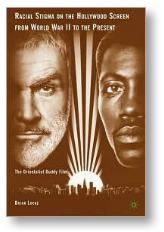
Racial Stigma on the Hollywood Screen from World War II to the Present charts how the dominant white and black binary of American racial discourse influences Hollywood’s representation of the Asian. The Orientalist buddy film draws a scenario in which two buddies, one white and one black, transcend an initial hatred for one another by joining forces against a foreign Asian menace. Alongside an analysis of multiple genres of film, Brian Locke argues that this triangulated rendering of race ameliorates the longstanding historical contradiction between U.S. democratic ideals and white America’s persistent domination over blacks.
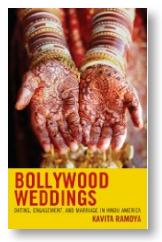
Bollywood Weddings examines how middle to upper class second-generation Indian-American Hindus negotiate wedding rituals, including the dating and engagement processes. Many of these couples are (in Ramdya’s neologism) “occasional Hindus” who display their Hindu religious background only on important occasions such as the rite of passage that is marriage.
These couples (and their extended families) negotiate two vastly different cultures and sets of values inside a community that has itself largely predetermined how to mix American and Indian/Hindu elements into this ritual. As a rule, the first generation organizes the wedding, which is largely Hindu, and their children coordinate the American-style reception. Instead of choosing either India or America, or arriving at a compromise in between the two, this community takes a “both/and” approach, embracing both cultures simultaneously.
For more than a century, sporting spectacles, media coverage, and popular audiences have staged athletics in black and white. Commercial, media, and academic accounts have routinely erased, excluded, ignored, and otherwise made absent the Asian American presence in sport. Asian Americans in Sport and Society seeks to redress this pattern of neglect. This volume presents a comprehensive perspective on the history and significance of Asian American athletes, coaches, and teams in North America.
The contributors interrogate the sociocultural contexts in which Asian Americans lived and played, detailing the articulations of power and possibility, difference and identity, representation and remembrance that have shaped the means and meanings of Asian Americans playing sport in North America. This volume will be of interest to students and scholars of the Asian American experience, ethnic relations, and the history of sport.
For South Asians, food regularly plays a role in how issues of race, class, gender, ethnicity, and national identity are imagined as well as how notions of belonging are affirmed or resisted. “Culinary Fictions” provides food for thought as it considers the metaphors literature, film, and TV shows use to describe Indians abroad. When an immigrant mother in Jhumpa Lahiri’s “The Namesake”, combines Rice Krispies, Planters peanuts, onions, salt, lemon juice, and green chili peppers to create a dish similar to one found on Calcutta sidewalks, it not only evokes the character’s Americanization, but also her nostalgia for India.
Food, Anita Mannur writes, is a central part of the cultural imagination of diasporic populations, and “Culinary Fictions” maps how it figures in various expressive forms. Mannur examines the cultural production from the Anglo-American reaches of the South Asian diaspora. Using texts from novels – Chitra Divakaruni’s “Mistress of Spices”, and Shani Mootoo’s “Cereus Blooms at Night” – to cookbooks such as Madhur Jaffrey’s “Invitation to Indian Cooking” and Padma Lakshmi’s “Easy Exotic”, she illustrates how national identities are consolidated in culinary terms.
The other day, I was flipping around the network evening news broadcasts and landed on CBS News. Apparently, they have a regular segment titled “Everybody Has a Story” in which they randomly pick a location in the U.S., travel there, and then the reporter takes out a phonebook and randomly flips to a page and puts his finger on a name on that page, and then they profile that randomly-chosen person and tell his/her story.
Also apparently, CBS News expanded this segment to “Everybody in the World Has a Story” and enlisted the help of an American astronaut to randomly point to a location on a globe where they would go and repeat the same procedure to profile the randomly-chosen person. In the segment I watched the other day, they ended up in Rewari, India (just outside Delhi). The video of their segment and the person they profiled is below:
As seen in the video clip, the person they profiled is Khushi Ram Goyal, a 78 year-old patriarch of a four-generation family who all live in the same house. Mr. Khushi also happens to be blind. But instead of being debilitated and resentful (although I am not suggesting that all blind people feel that way), Mr. Khushi actually leads a very fulfilling life. This is possible because his children and extended family members share everything — one house, one bank account, and one set of eyes as family members take turns watching over Mr. Khushi, not to do everything for him, but to give him a hand in case he needs it.
In watching this segment, I was very touched by Mr. Khushi, his family, and how they work together to share in their collective success as a family. Although it’s a different matter to generalize one example to an entire society, I suppose Mr. Khushi’s life does reinforce the notion that traditional Asian cultures such as India do indeed place a higher priority on familial duties and the importance of the family unit over the individual.
Nonetheless, in this case, Mr. Khushi’s story is a nice example that sometimes, there are more important things in life than maximizing an individual’s economic success. Instead, his story shows us that the sharing of success and responsibilities throughout an extended family can be just as rewarding and nurturing for a person’s soul.
I just wanted to add my congratulations to the New Orleans Saints for decisively winning Super Bowl 44 over the Indianapolis Colts. As a football fan, and like most people, I expected the Colts would prevail. But after being down 10-0 early in the game, the Saints stayed patient, made some gutsy calls, took control of the game, and ultimately came out on top.
As a sociologist, and again like many people have been saying, this victory is more than just a single game — it is a celebration for the entire city of New Orleans, a city that was devastated a few years ago by Hurricane Katrina and in many ways, is still trying to recover. This win by their home team brings much joy and inspiration to the residents of the city from all racial/ethnic backgrounds and should go a long way in restoring New Orleans’ spirits and economic prospects.
Much of the attention on New Orleans since the Katrina episode has been focused on its African American residents and rightfully so — despite making up a majority of the city’s population, they suffered much inequality and neglect before Katrina and its aftermath only made matters worse. Like the rest of the city, African American residents of New Orleans are on their road to recovery and this win by the Saints is a fitting symbol of their community’s resurgence.
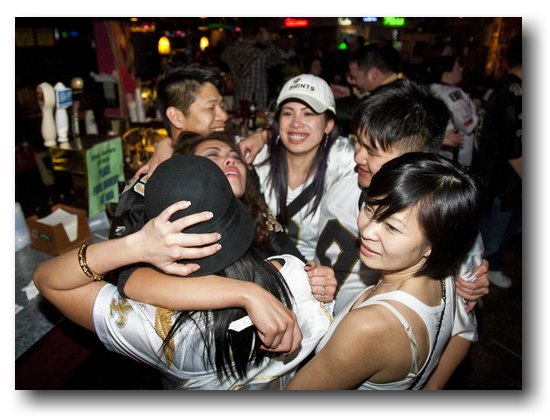
At the same time, I would also like to remind everyone that there is a large Vietnamese American population in New Orleans and that they have not received much attention at all since Katrina. In fact, shortly after Katrina, the Vietnamese community had to fight their own city over a proposed toxic landfill that was going to be located adjacent to their neighborhood.
In the years since, the Vietnamese American community in New Orleans has rebuilt their lives, their neighborhood, and have continued to contribute to the economic and cultural rebuilding of the city. Let us now forget them as we as Americans from all racial, ethnic, cultural, and ideological celebrate the Saints’ Super Bowl win and its sociological significance for the city and all of its residents.
You might be interested to read the following posts from Februarys of years past:
2009: New University of California Admissions Rules Changes to University of California’s admissions rules are predicted to lead to declines in the number of Asian Americans admitted.
2008: The Good and Bad at College Campuses Two incidents involving Asian Americans on college campuses highlight the “two steps forward, one step back” process of achieving racial equality.
2006: The Rise of India A Newsweek article describes some of the opportunities and challenges facing India as it strives to become a global superpower in the 21st century.
2005: Report on Asian American LGBT A new comprehensive report on Asian American LGBT highlights how many face multiple challenges based on their race/ethnicity, gender, and sexual identity.
For those who are unfamiliar, “Orientalism” is a term used by academics and cultural critics that generally refers to a set of biases, stereotypes, cultural images, and popular portrayals of Asians and/or Asian Americans — individually, nationally, or institutionally — as exotic, hypersexual, submissive, effeminate, dangerous, and/or inferior. Orientalism is frequently manifested in the overrepresentations of Asians and Asian Americans in mainstream TV shows and movies as one-dimensional geisha, ninja, prostitute, or martial arts characters.
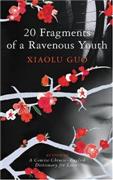
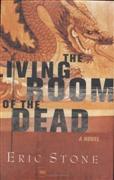
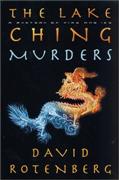
As another examples, my fellow sociologist bloggers at Sociological Images alerted me to an interesting post by Caustic Cover Critic (CCC) that examines stereotypical elements in mainstream books and novels about China or Japan:
If you’re designing a cover for a book by a Chinese or Japanese writer, or with a Chinese or Japanese setting, it seems that there are some compulsory elements which must be included. For variety’s sake, there are four elements, but you MUST use at least one of them. Advanced designers, of course, may use two or more.
To summarize CCC’s post, the four elements (with some example covers) are:
#1: Blossoms
#2: Fans
#3: Dragons
#4: A Woman’s Neck
As you can see, these elements are present in books that are written by both Asians/Asian Americans and non-Asians. In other words, even Asian and Asian American writers are not immune to Orientalist tendencies. In those cases, my guess is that such Asian/Asian American authors are “encouraged” (or perhaps even “compelled”) by their publishers (who are almost always American) to create these kinds of Orientalist covers to appeal to American perceptions and stereotypes of China, Japan, and other Asian countries and societies.
Either way, it is indeed sad to see that at least judging by these book covers, mainstream American society sees Asian and Asian American culture in such a one-dimensional and stereotypical way. As one of my colleagues once said to me, “It’s exhausting to be exotic.”
Here are some more announcements and links out that have come my way relating to Asians or Asian Americans. As always, links to other sites are provided for informational purposes and do not necessarily imply an endorsement of their contents.
The Asian American Studies Program at Hunter College, The City University of New York, currently seeks candidates to teach Asian American Studies courses in History, Political Science, Economics, Community Studies, and Psychology. Applicants must have an M.A. or ABD in a relevant field, as well as a record of successful undergraduate teaching.
The Asian American Studies Program (AASP) at Hunter College was founded in 1993 on the initiative of students and faculty. Today, we are a small but dynamic program with a growing number of minors, and we offer approximately 12 courses per semester, ranging from our interdisciplinary survey courses to more advanced courses in Literature, Cultural Studies, and Diasporic community formations — West Asian American, Chinese American, and Korean American in particular.
Located in the heart of New York City, the AASP works closely with Asian American organizations to build and sustain ties to local communities and concerns. Affiliated full-time faculty in the College are located in areas as diverse as Urban Studies, Film and Media, Sociology, English, and Dance.
Applicants should ideally be prepared to teach the interdisciplinary survey course as well as relevant courses within the scope of their fields of research. The majority of our courses are taught by adjunct faculty, and as a result, the work you will do in our program is crucial to the process of introducing undergraduates to concepts concerning Asian American history and experience; we hope to work with dedicated, effective, and intelligent educators, and we seek to provide a welcoming and supportive work environment for our faculty.
Please visit the department website for more information concerning our course offerings, faculty, or student activities. Please send CV, letter of intent, and contact information for at least 3 references to:
Jennifer Hayashida, Acting Director
Asian American Studies Program
Hunter College, CUNY
695 Park Avenue, Room 1037HE
New York, NY 10065
The University of North Carolina Chapel Hill offers the Moore Undergraduate Research Apprentice Program (MURAP) for rising junior and seniors who are interested in pursuing a career in academia. I have served as a MURAP faculty mentor last summer — they have traditionally not received many applications from Asian American students and/or students hoping to pursue Asian American research topics; hence, I am trying to solicit all of you for your best and brightest undergraduate students interested in one day getting into the PhD pipeline.
Best,
Jennifer Ho
UNC Chapel Hill
Short-Term Research Positions on Census 2010
The U.S. Census Bureau is seeking up to 18 ethnographers to do short-term research in nine race/ethnic research sites during Census 2010 field data collection operations as contractors for 4-6 months. Past research has shown that race/ethnic minority subpopulations are differentially miscounted, with implications for possible imbalances in congressional representation and allocation of federal funds.
Examples of miscounts include persons not included on the census form who should be counted in the household, persons counted in more than one place or in the wrong place, and missed housing units. The study aims to document how and why miscounts happen, who is affected, and what can be improved to reduce miscounting in future censuses.
This comparative qualitative study of enumeration methods and coverage in nine race/ethnic sites will be conducted in 2010 in three census operations. The objectives are to identify 1) types of coverage error; 2) sources of coverage error (e.g., questionnaire issues, interviewer error, residence rules, socio-cultural and/or language factors, complex households, etc.); and 3) characteristics of households and persons with coverage error; and to 4) assess the extent to which these are similar or different across the race/ethnic groups, and to 5) recommend how to improve coverage of race/ethnic groups.
Current Summary of Scope of Work: Each researcher will receive training at Census Bureau headquarters in Suitland, Maryland. Each researcher will go to his/her designated race/ethnic site for 7-9 continuous days during one of three specific census data collection time periods to accompany census interviewers as they conduct 35 interviews. The researcher will tape and unobtrusively observe and listen to the census interview for cues of possible coverage errors and/or household relationships not identified with the census relationship question.
If there is such a cue, the researcher will conduct an immediate targeted semi-structured debriefing with the respondent to resolve questions as to where each person should be counted, according to the census residence rules, and to clearly delineate household composition. The researcher will transcribe interviews (perhaps at a Census secure location), analyze data, write case studies, write a site report addressing the objectives and other factors identified in the research, and give a Census Bureau talk. The methodology may change somewhat before it is finalized.
Race/ethnic subpopulations: We seek 2 ethnographers to do studies in each group: American Indian (reservation), Alaska Native, African American, Asian, Hispanic/Latino, Middle Eastern, Native Hawaiian/Other Pacific Islander, White (non-Hispanic), and Generalized site. Research sites will be designated by the Census Bureau.
Specific Time Periods for Field Research: Census operations are on a strict timetable and just one researcher will be in each site in each operation. To ensure each site and operation is covered, all selected researchers must commit in writing to full-time work for 7-9 continuous days in their designated sites during one of the following time periods: March 29 – April 9: American Indian reservation; May 5 – May 22: Sites other than the Indian reservation; August 30 – Sept. 30: All sites.
Compensation will be determined soon. If you are interested and would like to learn more, compile the following:
Cover letter, including information directly relevant to this study and its methodology:
Any experience with past censuses and/or surveys
Experience with unobtrusive observation and debriefings
Identification of the race/ethnic subpopulation with which you have done past research, and the specific US research locations (preference will be given to those with past or present race/ethnic research sites in the US)
Any foreign language fluency, with level of fluency in conversation
State your US citizenship status (you must be a US citizen)
Attachments:
Current resume or CV
Brief summary of your past research with the race/ethnic group you have chosen, including research design and methods employed. Identify the specific US location(s) where you conducted your past research
Please specify if you are/are not of the same race/ethnicity as the group you wish to study
Representative paper or report showing methodology and/or results relevant to this proposed study (less than 25 pages)
Dates of observation in this study: State which of the three observation time period(s) listed above when you will be available to spend 7-9 continuous days of observation at the site (you will need to commit to one of these time periods in writing in order to be selected for this study).
Send these materials: 1) if by e-mail, send to all contact people below, OR 2) if by regular mail, send to just one: Laurel Schwede, Matt Clifton, or Rodney Terry:
By regular mail:
U.S. Census Bureau
Statistical Research Division
4600 Silver Hill Road
Washington, D.C. 20233
By FEDEX or UPS:
U.S. Census Bureau
Statistical Research Division
4600 Silver Hill Road
Suitland, MD 20746
Deadlines: American Indian site: February 1, 2010. Other sites: February 10, 2010.
The Program in Asian American Studies and the Institute for Advanced Study at the University of Minnesota invite applications for the 2010-2011 Postdoctoral Fellowship in Hmong Studies.The fellowship is for work in any field of Hmong Studies and is generously funded by a grant from the Henry Luce Foundation.
Applicants should conduct research germane to Hmong Studies. Proposed research projects should have the potential to make a significant contribution to the field. During their stay at the University of Minnesota, postdoctoral fellows will be expected to participate in research, teaching, and service. While research is the primary responsibility, fellows will be expected to teach one course related to their research interests and consonant with the curricular needs of the Asian American Studies program. In addition, fellows are expected to give one talk on campus on their research project.
The stipend for 2010-2011 year will be $45,000, with full fringe benefits. The Institute for Advanced Study will provide the fellow with office space and routine office support for photocopying, faxing, mailing, etc. A doctoral degree in hand is required by August 30, 2010. Preference will be given to applicants who have completed their degrees in the past five years. The postdoctoral fellowship will begin on August 30, 2010, is for one year, and is non-renewable.
Applications should be completed on-line through the University of Minnesota Job Site. Search for requisition #164296 and follow instructions. Review of applications will begin on February 8, 2010. If you have any questions, please contact Ann Waltner (waltn001@umn.edu) or Erika Lee (erikalee@umn.edu.
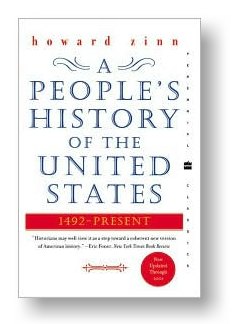
Earlier this week, well-renowned and respected professor, author, and social activist Howard Zinn passed away at the age of 87. Professor Zinn is most famously known for writing A People’s History of the United States and for being a vocal and active anti-war and civil rights activist. The New York Times’s obituary provides more details of his life:
Published in 1980 with little promotion and a first printing of 5,000, “A People’s History†was, fittingly, a people’s best-seller, attracting a wide audience through word of mouth and reaching 1 million sales in 2003. Although Professor Zinn was writing for a general readership, his book was taught in high schools and colleges throughout the country . . .
“A People’s History†told an openly left-wing story. Professor Zinn accused Christopher Columbus and other explorers of committing genocide, picked apart presidents from Andrew Jackson to Franklin D. Roosevelt and celebrated workers, feminists and war resisters. . . .
He attended New York University and Columbia University, where he received a doctorate in history. In 1956, he was offered the chairmanship of the history and social sciences department at Spelman College, an all-black women’s school in segregated Atlanta.
During the civil rights movement, Professor Zinn encouraged his students to request books from the segregated public libraries and helped coordinate sit-ins at downtown cafeterias. He also published several articles, including a rare attack on the Kennedy administration, accusing it of being too slow to protect blacks.
He was loved by students — among them a young Alice Walker, who later wrote The Color Purple — but not by administrators. In 1963, Spelman fired him for “insubordination.†(Professor Zinn was a critic of the school’s non-participation in the civil rights movement.) His years at Boston University were marked by opposition to the Vietnam War and by feuds with the school’s president.
Professor Zinn retired in 1988, spending his last day of class on the picket line with students in support of an on-campus nurses’ strike. Over the years, he continued to lecture at schools and to appear at rallies and on picket lines.
I never had the privilege of meeting Professor Zinn or seeing him speak, but he was still a strong influence in my life and my career. Professor Zinn was a role model of an activist academic — someone who did not try to pretend that everything he taught, researched, or write about would be completely objective or unbiased.
Instead, he was not afraid to take a stand on controversial issues and just as important, Professor Zinn was willing and indeed eager to get out of the isolation of the college campus (the “ivory tower” as many call it) and go out into the cities, neighborhoods, and communities where discrimination was taking place and to physically contribute to the struggle for social equality.
It is also notable, at least for me, that as a White American, Professor Zinn acknowledged and personally owned how the legacy of racial inequality in the U.S. had benefited him and that because of his racial identity, he was privileged in many ways. But rather than just implicitly recognizing his privilege, he used it to give back to the less-privileged.
Professor Zinn’s example is one that I have tried to follow, with this website and blog being one way for me to try to continue his legacy of using your knowledge to make a contribution to the cause of true human equality — to not just talk the talk, but also walk the walk.
Thank you Professor Zinn, may you rest in peace, and may your life continue to inspire others.
It seems that every successive generation of Americans has to have a name or label. I’m sure you’re already familiar with the “Baby Boomer” generation that was born in the two decades after World War 2. Most have presumably also heard of “Generation X” (to which I belong), who were born between 1965 and 1980.
Most recently, we have the “Millennial” generation — those born between 1981 and 2000. Growing up in the age of computers, the Internet, cellphones, social networking, and multimedia proliferation, in many ways the Millennials represent a milestone generation within American society. To capture and describe some of their characteristics, the Pew Research Center recently conducted a series of reports on various demographic and cultural traits and attitudes of this generation. Below are some highlights of their report that relate to the cultural and racial/ethnic views and composition of the Millennial generation:
They are the most ethnically and racially diverse cohort of youth in the nation’s history. Among those ages 13 to 29: 18.5% are Hispanic; 14.2% are Black; 4.3% are Asian; 3.2% are mixed race or other; and 59.8%, a record low, are White.
They are starting out as the most politically progressive age group in modern history. In the 2008 election, Millennials voted for Barack Obama over John McCain by 66%-32%, while adults ages 30 and over split their votes 50%-49%. In the four decades since the development of Election Day exit polling, this is the largest gap ever seen in a presidential election between the votes of those under and over age 30. . . .
They are the least religiously observant youths since survey research began charting religious behavior. . . .
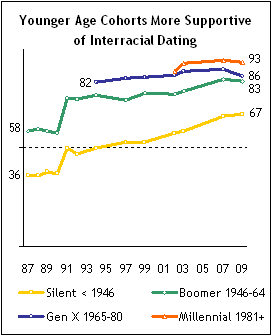
The graph shows the percentage approving of interracial dating for each of four cohorts (or generations), tracking their responses across the 13 separate waves of polling between 1987 and 2009. Several things are evident from the graph. One is that there is an upward trend in acceptance of interracial dating in most cohorts as time passes. . . .
Another conclusion from the graph is that each younger cohort is more supportive than the cohorts that preceded it. Baby Boomers were more supportive in 1987 than members of the Silent Generation, and remained that way throughout. Generation X (at 82%) was more supportive than the Baby Boomers when it first appeared in the surveys. And the Millennial cohort is the most supportive of all.
The part of the Pew reports about the racial/ethnic composition of the Millennials was not surprising, although I expected the proportion Asian American to be a little higher. Nor am I surprised that the Millennials tend to be the least religious of all the generations, although I expect their levels of religious participation to increase as they get older.
I am also not surprised that the Millennials are the most supportive of interracial dating, as the graph illustrates. However, in looking at the graph, it shows that somewhere around 2007, the approval rates for interracial dating actually declined slightly for Baby Boomers, Generation X, and the Millennials. Further, at this point, we do not yet know whether the approval rate for interracial dating will continue to decline, or whether it will rebound and continue its upward trajectory.
I find this recent development a little perplexing, particularly considering that was when Barack Obama, the child of an interracial couple, began his rise in popularity on the way to the Presidency. I am left to wonder, could it be due to the subtle rising White backlash against the increasing levels of racial/ethnic diversity in this country?
In other words, as I’ve written about before, starting even before Barack Obama’s rise in popularity and even accelerating ever since, there were indications, events, and incidents that showed how racial/ethnic relations in the U.S. were becoming increasingly polarized, with a rising group of White Americans increasingly feeling resentful and threatened by such demographic and cultural changes taking place in “their” community and “their” country.
If that is indeed the case, the Millennial generation indeed represents a watershed moment in the evolution of American society. On the one hand, they might replicate the racial/ethnic and cultural splintering of the country that may lead to the de facto split of American society into a White part and a non-White part. On the other hand, the Millennials have the opportunity to draw upon their shared institutional beliefs and cultural practices and help the country heal its racial/ethnic divides and lead us toward coalescing into a true multicultural nation.
I believe that this will be the primary challenge — and ultimate legacy — of this Millennial generation.
Below is an announcement about a research project and online survey in need of Asian American respondents.
Seeking Volunteers for Online Survey Study
My name is Nellie Tran, and I am a psychology doctoral student at the University of Illinois at Chicago. I am conducting a study to understand experiences of discrimination, racial consciousness, and their effects on their mental health for Asian Americans. Your voice and experiences could contribute greatly to an understanding the experiences of different racial/ethnic groups and those of different generational statuses. If you are interested in completing the survey, please access the survey at the following link.
Participation in this survey is voluntary and open to all individuals. The survey will take about 20-25 minutes to complete. You will be asked for an email address at the end of the survey in order to be entered into a random drawing for one $50 Amazon.com Gift Card. This research has been reviewed and approved by the University of Illinois at Chicago Institutional Review Board. If you have any questions, please feel free to contact me at the information below. Thank you so much!
Looking forward to hearing from you,
Nellie Tran, M.A.
Doctoral Candidate, Psychology
University of Illinois at Chicago
Ntran2@uic.edu
As part of this blog’s mission of making academic research and data more easily accessible, understandable, and applicable to a wider audience and to practical, everyday social issues, I highlight new sociological books about Asian Americans and other racial/ethnic groups as I hear about them. A book’s inclusion is for informational purposes only and does not necessarily mean a full endorsement of its complete contents.
This is the first week of classes for many colleges and universities around the country, including here at the University of Massachusetts, Amherst. This semester I am teaching a new course: “The Sociology of Immigration” (in case you’re curious, you can download a PDF of the syllabus). It’s a topic that is central and directly relevant to many issues that I cover in this blog, and a course that I have always wanted to teach but haven’t had the opportunity to do so until now.
President Obama has also recently suggested that immigration reform is one of the next major policy issues that he and his administration want to address next (although he said this before the upset victory of Republican Scott Brown in MA). Presuming that he follows through on this promise, immigration is set to again move to the front burner of American discussion and controversy.
With these things in mind, I plan on writing a more detailed post about immigration reform soon but in the meantime, I would like to highlight some new books on different aspects of the immigration issue that I will be using as source material for my “Sociology of Immigration” course and that will hopefully provide some sociological data and analysis to help us tackle the question of immigration reform.
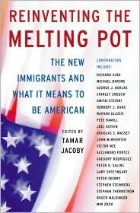
The first book, Reinventing the Melting Pot, is the textbook that I have assigned to my students in my “Sociology of Immigration” course.
In Reinventing the Melting Pot, twenty-one of the writers who have thought longest and hardest about immigration come together around a surprising consensus: yes, immigrant absorption still works-and given the number of newcomers arriving today, the nation’s future depends on it. But it need not be incompatible with ethnic identity-and we as a nation need to find new ways to talk about and encourage becoming American.
In the wake of 9/11 it couldn’t be more important to help these newcomers find a way to fit in. Running through these essays is a single common theme: Although ethnicity plays a more important role now than ever before, today’s newcomers can and will become Americans and enrich our national life-reinventing the melting pot and reminding us all what we have in common.
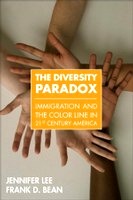
African Americans grappled with Jim Crow segregation until it was legally overturned in the 1960s. In subsequent decades, the country witnessed a new wave of immigration from Asia and Latin America—forever changing the face of American society. In The Diversity Paradox, Jennifer Lee and Frank Bean take these two poles of American collective identity—the legacy of slavery and immigration—and ask if today’s immigrants are destined to become racialized minorities akin to African Americans or if their incorporation into U.S. society will more closely resemble that of their European predecessors.
The Diversity Paradox uses population-based analyses and in-depth interviews to examine patterns of intermarriage and multiracial identification among Asians, Latinos, and African Americans. Lee and Bean . . . show that Asians and Latinos with mixed ancestry are not constrained by strict racial categories. Racial status often shifts according to situation. Individuals can choose to identify along ethnic lines or as white, and their decisions are rarely questioned by outsiders or institutions. These groups also intermarry at higher rates, which is viewed as part of the process of becoming “American†and a form of upward social mobility.
African Americans, in contrast, intermarry at significantly lower rates than Asians and Latinos. Further, multiracial blacks often choose not to identify as such and are typically perceived as being black only—underscoring the stigma attached to being African American and the entrenchment of the “one-drop†rule. Asians and Latinos are successfully disengaging their national origins from the concept of race—like European immigrants before them.
The Diversity Paradox is an extensive and eloquent examination of how contemporary immigration and the country’s new diversity are redefining the boundaries of race. The book also lays bare the powerful reality that as the old black/white color line fades a new one may well be emerging—with many African Americans still on the other side.
As the authors state in Chapter 1, “[T]he movement of people across national borders represents one of the most vivid dramas of social reality in the contemporary world.†This comparative text examines contemporary immigration across the globe, focusing on 20 major nations.
Noted scholars Peter Kivisto and Thomas Faist introduce students to important topics of inquiry at the heart of the field, including: (a) Movement: explores the theories of migration using a historical perspective of the modern world; (b) Settlement: provides clarity concerning the controversial matter of immigrant incorporation and refers to the varied ways immigrants come to be a part of a new society; and (c) Control: focuses on the politics of immigration and examines the role of states in shaping how people choose to migrate.
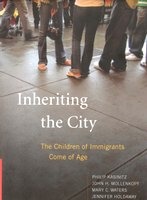
Immigrants and their children comprise nearly three-fifths of New York City’s population and even more of Miami and Los Angeles. But the United States is also a nation with entrenched racial divisions that are being complicated by the arrival of newcomers. While immigrant parents may often fear that their children will “disappear” into American mainstream society, leaving behind their ethnic ties, many experts fear that they won’t—evolving instead into a permanent unassimilated and underemployed underclass.
Inheriting the City confronts these fears with evidence, reporting the results of a major study examining the social, cultural, political, and economic lives of today’s second generation in metropolitan New York, and showing how they fare relative to their first-generation parents and native-stock counterparts. The authors studied the young adult offspring of West Indian, Chinese, Dominican, South American, and Russian Jewish immigrants and compared them to blacks, whites, and Puerto Ricans with native-born parents.
They find that today’s second generation is generally faring better than their parents, with Chinese and Russian Jewish young adults achieving the greatest education and economic advancement, beyond their first-generation parents and even beyond their native-white peers. Every second-generation group is doing at least marginally—and, in many cases, significantly—better than natives of the same racial group across several domains of life. Economically, each second-generation group earns as much or more than its native-born comparison group, especially African Americans and Puerto Ricans, who experience the most persistent disadvantage.
Inheriting the City shows the children of immigrants can often take advantage of policies and programs that were designed for native-born minorities in the wake of the civil rights era. Indeed, the ability to choose elements from both immigrant and native-born cultures has produced, the authors argue, a second-generation advantage that catalyzes both upward mobility and an evolution of mainstream American culture. . . . Adapting elements from their parents’ cultures as well as from their native-born peers, the children of immigrants are not only transforming the American city but also what it means to be American.
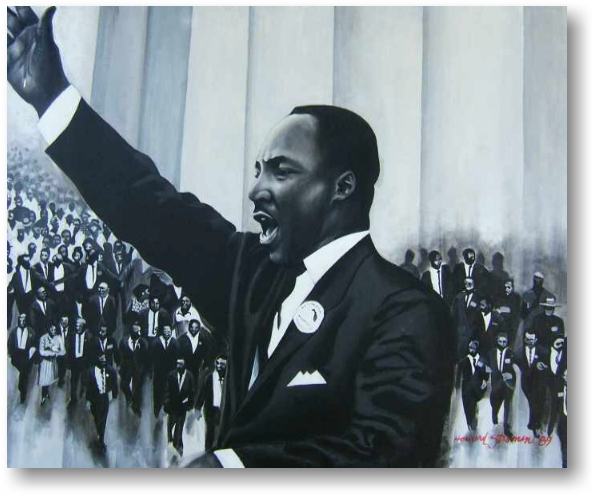
Today we celebrate Dr. Rev. Martin Luther King Jr.’s birthday and legacy as a national holiday. I would like to use this occasion to reflect a little bit on one part of Dr. King’s dream and how far we have come toward accomplishing it.
Specifically, I refer to Dr. King’s wish that one day soon, we would live in a society in which, as he eloquently put it, people “would be judged not by the color of their skin but by the content of their character,” a vision that we commonly refer to as a “colorblind” society. This ideal has remained an ultimate goal for many in American society, from a wide variety of racial and ethnic backgrounds. But are we there yet? How close are we to achieving that dream?
Many Americans thought that Barack Obama’s election was the culmination of Dr. King’s dream and concrete proof that we have evolved into a “post-racial,” colorblind society. Unfortunately, as I and many other sociologists and commentators have argued, even in this past year, we have seen numerous incidents that illustrate just how prevalent racial distinctions and racism still are in American society.
As another example, just recently, there was the uproar over Senator Harry Reid’s comments from the presidential campaign that Barack Obama had a good chance of being elected because he was “light-skinned” and had “no Negro dialect, unless he wanted to have one.” Many conservatives charged that Senator Reid’s comments were racist and that similarly due to the racist comments uttered by former Senator Trent Lott, Reid should resign. Others pointed out that conservatives were being hypocritical in pointing out this particular example of “racism” while basically ignoring other examples of racism directed toward Barack Obama over the past few years.
Similarly, others like Professor Joe Feagin point out that Harry Reid was just verbalizing an implicit reality that still operates within American society — the “backstage” racism that still exists among many White Americans who are reluctant or unwilling to vote for an African American candidate (or even any candidate of color) unless that candidate looks and acts as “White” as possible.
The point of these examples is to illustrate that in contrast to what many Americans had hoped, unfortunately we are not yet close to living in a colorblind society. While Dr. King’s dream remains the ideal, the realities of the U.S. racial/ethnic landscape are quite different.
With this in mind, I would also argue that allies and supporters of anti-racism and racial equality should accept this reality, that race is still a significant marker of differentiation in our county, rather than naively proceeding with the assumption that being colorblind is the best approach within this context.
In other words, many Whites (and other Americans of different racial/ethnic identities) try to fight back against racism by trying to be colorblind in their daily lives. They try to treat everybody they meet, interact with, or hear about, solely as an individual rather than as a member of a racial group. They genuinely believe that ignoring race is the best way to move forward toward a colorblind society. Even worse, many Americans who otherwise consider themselves “progressive” criticize people of color for “obsessing” over race and that we somehow create our own oppression by recognizing race.
While trying to be colorblind is indeed a noble and well-intended idea on the individual, interpersonal level, the problem is that the idea of colorblindness is not reinforced on the institutional level and therefore, it is just not practical given how American society continues to be racialized, as I described above, and how racism continues to largely operate independently of individual motivations. In other words, ignoring the problem will not make it go away, nor will it solve anything.
As many educators point out, if anything, trying to be colorblind only makes racism worse because people then mistakenly and naively believe that all forms of racial inequality and discrimination have been eliminated, that everybody is now on an equal playing field with equal access to all social opportunities, and that American society is a true meritocracy.
More generally, the fundamental problem is not racial differences themselves. Instead, the root of racism is that certain racial markers or characteristics have been assigned institutional value judgments of “good” versus “bad,” “normal” versus “abnormal,” and “human” versus “sub-human.” This process has led to certain racial groups being privileged and systematically advantaged over others. Or in the words of Audre Lorde, “It is not our differences that divide us. It is our inability to recognize, accept, and celebrate those differences.”
Ultimately, the best way for us to work toward achieving the ultimate colorblind ideal is to recognize, accept, and understand that racial distinctions still matter and that they are still the basis for continuing discrimination and inequality in American society today. Only by doing so will we move forward on achieving Dr. King’s final ideal — true racial equality.