The views and opinions expressed on this site and blog posts (excluding comments on blog posts left by others) are entirely my own and do not represent those of any employer or organization with whom I am currently or previously have been associated.
Academic Version: Applying my personal experiences and academic research as a professor of Sociology and Asian American Studies to provide a more complete understanding of political, economic, and cultural issues and current events related to American race relations, and Asia/Asian America in particular.
Plain English: Trying to put my Ph.D. to good use.
Lunar New Year is just around the corner. On February 3, 2011, we enter the Year of the Rabbit/Cat (Chinese astrology celebrates the Rabbit while the Vietnamese, as part of their Tet festivities, celebrate the Cat). Thanks to the generous support of American Express, Asian-Nation is giving away a $50 gift card to ten (10) lucky readers!
American Express makes it easy to give family, friends, and business associates what they want for the Chinese Lunar New Year, while celebrating the rich culture of the Chinese community. The new limited edition Year of the Rabbit Gift Card, exclusively from American Express, is available for purchase online with a free-shipping offer at americanexpress.com/rabbit. The limited-edition Year of the Rabbit Gift Card from American Express follows the success of last year’s Year of the Tiger Lunar New Year, Diwali and ¡Felicidades! Gift Cards.
“Working in collaboration with our internal Asian Network at American Express, we are excited to introduce this Gift Card celebrating Chinese culture,” said Alpesh Chokshi, president of Global Payment Options, American Express. “I, along with American Express, wish the Chinese-American community a happy, healthy and prosperous Year of the Rabbit.”
With its traditional paper-cut depiction of a peaceful rabbit, the Year of the Rabbit Gift Card offers a unique gift option which can serve as an exciting and special alternative to the cash usually placed in red envelopes.
To enter, all you have to do is leave a comment at the end of this post about what you hope for in the new year — that’s all. On January 27, I will randomly choose 10 lucky winners to receive one of the $50 American Express gift cards. Only one entry per person and be sure to include an email address where I can contact you in case you’re chosen as a winner.
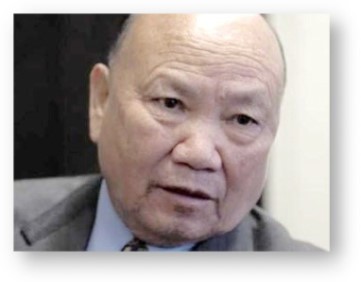
Over the last few days, news about two prominent Asian American community leaders caught the attention of many Americans around the country. First is the passing of General Vang Pao, the longtime and high-profile leader of the Hmong and Laotian American community, passed away at the age of 81. Commentator Mai Der Vang at New American Media summarizes his personal history and significance to Asian Americans:
During the 1960s, the U.S. government recruited him to command guerrilla forces against communist Laos in a covert war in which tens of thousands of Hmong soldiers were killed and hundreds of thousands of civilians forced into exile. . . .
Many of us also recalled the arrest of Vang Pao and ten other men in 2007 as they were charged with attempting to overthrow the Lao government. Rally after rally, hundreds of his devout supporters participated in demonstrations here in Fresno and Sacramento. They put intense pressure on the US government to release Vang Pao, and put together 1.5 million dollar bail for him. In 2009, charges were dropped. . . .
Many in the Hmong community viewed him as a leader, but Vang Pao also represented for them their lost homeland. When his supporters saw him in public, they saw him not as an aging man in a three-piece suit but, rather, the young valiant war commander he once was. For them, he was the manifestation of a home they once knew and the memories of a life they once lived. . . .
For others in the community, Vang Pao’s passing marks an end to a contentious era. Despite galvanizing support among the masses, there were some who remained skeptical about his leadership perhaps due to his politics, his personal life, or the fallout from histories tied to Laos. Yet whether a person admired him or held their reservations, there is no arguing the fact that he was one of the most prominent figures in Hmong modern history, essentially serving through the decades as the unelected leader of the global diaspora.
I am not an expert on General Vang’s life but it was clear that he was both admired and disliked by many Laotian and Hmong Americans. In either case, he had a significant impact on many of their lives and transnational history, both in southeast Asia and here in the U.S. Inevitably, his passing creates an environment and opportunity for new leaders to emerge in the Hmong and Laotian American communities. In the process, we are likely to see Asian Americans continue the gradual transition from lives focused primarily on Asia to one focused more on America.
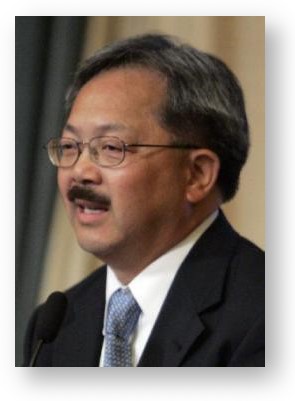
The other notable Asian American leader to make the news recently is Ed Lee who, for all intents and purposes, is on track to become the new mayor of San Francisco and thus one of the first Asian American mayors of a major U.S. city. The San Francisco Chronicle summarizes the recent events that led to this momentous event:
The Board of Supervisors voted 10 to 1 today to appoint City Administrator Ed Lee as interim mayor, but the decision is not official until Mayor Gavin Newsom steps down and is sworn in to the lieutenant governor’s job he won in November. Newsom has refused to resign until the new Board of Supervisors with four new members is sworn in at noon Saturday. The new board is scheduled to vote Tuesday on Newsom’s successor, who will fill out the year remaining on his term.
As for Lee’s chances to get the nod from the new board, he has it all but locked up. Seven of the supervisors who voted in favor of Lee today will still be on the board Tuesday, providing the majority Lee would need to get the job even without their new colleagues. . . . Voters will elect a new mayor in November.
Although Ed Lee’s presumed position as San Francisco’s new mayor appears to be only an interim position for now, this is still a very historic event for American society. Following on the heels of Jean Quan’s election as Mayor of Oakland, it is personally refreshing and sociologically notable to see that Asian Americans are gradually emerging as political leaders and attaining political power.
Up to this point, even though Asian Americans made up 10% of California’s population and 33% of the population in the Bay Area, we have been consistently underrepresented as political leaders in these areas. There are numerous external and internal factors that influence much of this historical underrepresentation, but as we move forward into the 21st century, as I’ve described in several posts on this blog, there are numerous ways in which the Asian American population can make significant contributions that reflect the political, economic, and cultural changes taking place in the world in general and American society in particular.
With this in mind, there are also many compelling reasons why politicians need to take Asian Americans (along with other immigrant groups and communities of color) seriously as not just a constituent group but also as a major emerging cultural and demographic force in the years to come.
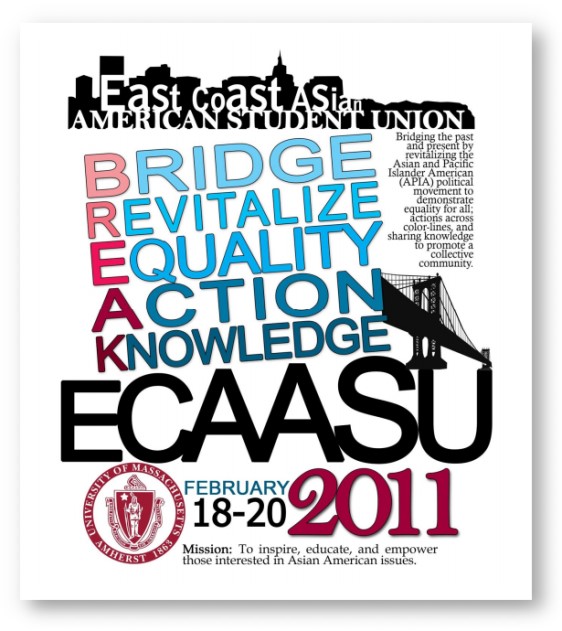
For those who are not yet familiar, the East Coast Asian American Student Union (ECAASU) is the largest Asian American student organization in the U.S. Founded in 1977, its main activity is putting on the largest Asian American intercollegiate student annual conference in the country. For 2011, the conference will be held at my college, the University of Massachusetts, Amherst from Friday Feb. 18 through Saturday Feb. 19.
I and my colleagues in Asian American Studies at UMass Amherst and around the Five College area (this includes Amherst College, Smith College, Mt. Holyoke College, and Hampshire College) are very pleased and excited to see that UMass Amherst is hosting the ECAASU conference this year. It’s shaping up to be a very rich and interesting schedule of workshops, presentations, social and cultural activities, and entertainment focused on a wide range of issues, so I encourage everyone to register and attend. Below is the announcement from the ECAASU organizers:
The mission of ECAASU is to:
Strengthen Asian American student organizations through intercollegiate communication to serve the educational and social needs of Asian American students
Advance the social equality of minorities by eliminating prejudice and discrimination, defending human and civil rights, and combating racism and hate crimes through activities permissible under section 501(c)(3) of the Internal Revenue Code
Encourage Asian Americans to participate in the electoral process through nonpartisan voter education/registration and “get out the vote†drives that are not restricted to one election period and are executed in more than five states
Promote community-building and understanding among Asian Americans with different nationalities and people of color.
Since its inception during the late 1970s the conference has expanded to serve multiple purposes. Conference organizers have offered educational workshops, leadership training seminars, professional career counseling, facilitated social networking opportunities, and featured various rising talents in our ceremonies. To further inspire attendees, prominent keynote speakers have been brought in to address pertinent issues within the Asian American community. Due to these many offerings, the conference has skyrocketed in popularity attracting anywhere from 1,200 to 1,500 students per assembly.
One of the primary objectives of the conference is to encourage intergenerational dialogue between members of the Asian Pacific American community and also facilitate increased cross cultural dialogue between all members of the African, Latino, Asian, and Native American (ALANA) populations. This conference was designed to be a haven for learning and cooperation. Through various approaches, conference organizers have strived to inspire our guests to recognize and appreciate the relationships in our connected backgrounds,
experiences, and perspectives.
For more information on speakers, workshops, entertainers, accommodations, logistics, and how to register please feel free to visit the ECAASU 2011 website. Registration is $55 up to December 31, $60 up to January 31, $65 up to February 1-4, and TBA for February 5 and later. The registration fee covers three meals, one midnight snack, workshops, performers, speakers, and facilities rental/maintenance.
Some of the conference’s presenters and speakers that I have written about in my blog include Vijay Prashad, Eric Byler, Curtis Chin, Phil Yu, and Miliann Kang. I will be conducting a workshop on “Bridging Asian, American, and Asian American Identities in the 21st Century.”
You can also click on any of the following for a PDF with more information on:
2008: What Muslims Want to Tell the World A short video illustrates that, contrary to many media images, Muslim Americans want peace just as much as anybody else.
2006: Growing Up Asian American A Time magazine article does a good job at describing many of the trials and tribulations young Asian Americans experience.
2005: Outsourcing in Reverse How ‘insourcing’ — Asian companies investing in the U.S. and creating American jobs — can have both positive and negative consequences.
2004: Shutting Down Karaoke Private Rooms Racial stereotyping and scapegoating leads a city council to unfairly punish Asian American small business owners.
2003: Unity, Brotherhood, and Murder Misguided masculinity leads members of two Asian American fraternities to engage in a violent brawl with tragic consequences.
Here are some more announcements, links, and job postings about academic-related jobs, fellowships, and other related opportunities for those interested in racial/ethnic/diversity issues. As always, the announcements and links are provided for informational purposes and do not necessarily imply an endorsement of the organization or college involved.
Call for Participants: Study on Chinese, Korean, & Vietnamese Women
The Asian-American Women’s Health Initiative Project (AWSHIP) invites you to participate in a confidential, federally-funded research study of Chinese, Korean, and Vietnamese women. Participants will be asked to complete a 45 minute user-friendly computer survey about family life, relationships, culture, and values. You will be compensated $20 for your time, and will be given the opportunity to participant in a follow-up in-depth interview for another $30. All interviews will take place at a location convenient and comfortable for you. You are eligible to participate if you:
Are an unmarried woman
Are between 18 to 35 years old
Identify as Chinese, Korean, or Vietnamese
Are a child of an immigrant family (1.5 and 2nd generation)
For more information, please email the project coordinator, Yut Yang, at awship@bu.edu or visit: http://www.bu.edu/awship.
Call for Participants: Study on Relationship Satisfaction Among LGBT
Looking for lesbian, gay, or bisexual individuals of ethnic diversity who would like to participate in a research study on Relationship Satisfaction with a focus on Personal, Relational Resources and Support Systems. The purpose is to add to the limited literature on the subject, and to be of assistance to psychologists, case workers, counselors, and social workers.
This research study is done as part of my final graduate project under the Social Work Master program at the California State University of Northridge. Those interested in participating can contact me at: amets65@hotmail.com; Subject: “MyCSUN Survey”, so I can send them a link to the survey. All information will remain confidential. Thank you for your interest and your participation!
American Sociological Association Minority Fellowship Program
The American Sociological Association’s Minority Fellowship Program (MFP) provides a pre-doctoral training program that delivers national coordination for minority students in institutions of higher education throughout the U.S. From recruitment and placement to training, mentoring, and monitoring, MFP offers graduate students support that complements and extends the education and professional development provided by their home departments. MFP takes seriously the need to train and mentor minority graduate students in their area of interest and to mobilize sociologists in graduate departments and research settings to make this ambition a reality. Deadline: January 31, 2011.
Job Announcement: Race & Science, Emory University
Emory University seeks nominations and applications for an open-rank faculty position — tenured or tenure-track — with research interests in Race and Science. We recognize the importance of complex and critical examinations of the social, political and ethical challenges raised by the use and misuse of concepts of race in the sciences. We are interested in scholars whose work bridges the sciences and the humanities and investigates socio-political concepts of race as they historically and currently have intersected with, and been constituted by, the biological sciences, medicine, and health more generally.
This new position will be located in the department(s) appropriate to the successful candidate’s research interests and background. While preference will be given to senior scholars, we will consider applicants at all ranks. In addition to playing a leadership role in his or her home department(s), the successful candidate is expected to work closely with Emory University’s university-wide strategic initiative on Race and Difference. This Initiative seeks to promote understanding of and generate new knowledge about race and other intersecting forms of human difference.
This new position will work closely with the leadership of the Race and Difference Initiative (RDI) to support the development of new research, campus programs, and undergraduate and graduate courses focusing on all aspects of race and difference. Candidates should have a distinguished academic reputation, demonstrated teaching and mentoring skills and an interest in or record of external funding (PhD or other terminal degree required). Salary is competitive and commensurate with experience.
Please mail applications or nominations to: Co-Director, Race and Difference Initiative, Professor Dorothy A. Brown, Emory University, Gambrell Hall, 1301 Clifton Road, Atlanta, GA 30322-2770. Interested applicants should submit a letter of application, curriculum vitae, and names of three recommenders. Review of applications will begin on February 1, 2011. Preliminary inquiries may be directed to RDI co-director Amanda Lewis (amanda.evelyn.lewis@emory.edu).
The Grinnell College Young Innovator for Social Justice Prize is a new annual awards program to honor individuals under the age of 40 who have demonstrated leadership in their fields and who show creativity, commitment, and extraordinary accomplishment in effecting positive social change.
The Grinnell College Young Innovator for Social Justice Prize directly reflects Grinnell’s historic mission to educate men and women “who are prepared in life and work to use their knowledge and their abilities to serve the common good.” The Social Justice Action Group works towards peace, justice, and positive social change with efforts that fight hunger, promote volunteerism, and build understanding. The Wall Alumni Service Awards provide financial support for Grinnell alumni to engage in service projects, programs, and organizations dedicated to improving the lives of others.
Under Grinnell’s Expanding Knowledge Initiative, the College has introduced curricular innovations in the areas of environmental challenges, human rights, and human dignity. Now with the creation of the Grinnell College Young Innovator for Social Justice Prize, the College is extending its educational mission beyond the campus and alumni community to individuals anywhere who believe innovative social justice programs create a better world.
Up to three individuals will be honored annually. Each prize carries an award of $100,000, half to the winning individual and half to an organization committed to the winner’s area of social justice, for a total of up to $300,000 in prize awards each year.
The deadline for 2011 nominations is Feb. 1. The first prize recipients will be announced in May 2011. For additional information about the program, please visit the program website at Grinnell College.
Boren Fellowship for Graduate Language Study
Boren Fellowships provide up to $30,000 to U.S. graduate students to add an important international and language component to their graduate education through specialization in area study, language study, or increased language proficiency. Boren Fellowships support study and research in†areas of the world that are critical to U.S. interests, including Africa, Asia, Central & Eastern Europe, Eurasia, Latin America, and the Middle East. Deadline: February 1, 2011.
Minority Graduate Scholarships, Society for the Study of Social Problems
The Society for the Study of Social Problems (SSSP), in keeping with its philosophy of active engagement with social problems, participation in social problem solutions, and advancement of knowledge through study, service and critical analysis, established the Racial/Ethnic Minority Graduate Scholarship at its annual meeting in August 1993. The purpose of the scholarship is:
To identify and support developing minority scholars who exemplify and give fresh voice to the SSSP history and commitment to scholar activism
To give renewed energy and wider lenses to diversity in scholarship
To increase the pool of minority social and behavioral scientists
To establish a formal commitment to diversity through support of a minority doctoral student in the social and/or behavioral sciences inclusive of course work or dissertation research support who demonstrates a commitment, through his or her scholarly examination, of any aspect of inequality, injustice and oppression
A $12,000 scholarship will be funded to one student with an additional $500 awarded for attendance at the annual meeting. Payments will be made in equal installments in September 2011 and January 2012. SSSP believes that the support of students will foster the commitment required to enable the student to fund living arrangements as well as academic or research costs. Deadline: February 1, 2011.
Call for Submissions: 4th Annual Mixed Roots Film & Literary Festival
Now is your chance to submit your film, writing, workshop proposal, or performance act. There is NO submission fee if you submit your work by Feb. 14, 2011! So don’t wait — send us your stories of the Mixed experience NOW! For complete submission information visit the Festival website. You’ll find the submission forms on the left navigation bar.
The Mixed Roots Film & Literary Festival is a non-competitive, annual arts festival dedicated to sharing and nurturing storytelling of the Mixed experience. The Mixed experience refers to interracial and intercultural relationships, transracial and transcultural adoptions, and anyone who identifies as having biracial, multiracial, Hapa or Mixed identity.
Sally Casanova Pre-Doctoral Scholars Program
The program is designed to increase the pool of university faculty by supporting the doctoral aspirations of individuals who are: current upper division or graduate students in the California State University system, economically and educationally disadvantaged, interested in a university faculty career, U.S. citizens or permanent residents, and leaders of tomorrow.
Students who are chosen for this prestigious award are designated Sally Casanova Scholars as a tribute to Dr. Sally Casanova, for whom the Pre-Doctoral scholarship is named. These scholars are exposed to unique opportunities to explore and prepare to succeed in doctoral programs. CSU and UC faculty members are an integral component of this program as they work closely with scholars to prepare them for graduate studies. Deadline: no later than March 25, 2011.
Along the same lines, other writers and bloggers around the internet have also posted their own end-of-year stories, articles, and lists related to Asian Americans, so I list and summarize the ones that I have recently come across (thanks to 8Asians for taking the lead on mentioning these lists):
Asian Pop’s 2010 Year in Review
My colleague and pop culture expert Jeff Yang reviews the most newsworthy stories about Asian and Asian American popular culture from this past year.
Top 10 Asian Americans in Pop Culture
Columnist Keith Chow at Pop Culture Shock counts down the top 10 Asian Americans who made newsworthy achievements this past year in mainstream American pop culture.
The Most Underreported Stories of the Decade
The good folks at New America Media compile their list of stories about people and communities of color that were largely ignored by the mainstream American media.
20 Essential Works of Asian-American Literature
A blog that promotes graduate education opportunities compiles a list of the 20 most important literary works related to Asian Americans.
Asia Pacific Arts’ Best of 2010
The writers of the online magazine Asia Pacific Arts (published by the University of Southern California U.S.-China Institute) select their favorite Asian and Asian American performers, film, music, TV dramas, choreography, video games, behind-the-scenes artists, etc. of 2010 (thanks to AngryAsianMan.com for mentioning this).
Top 10 Asian American Bachelors of 2010
The folks at Asiance make their case for the 10 hottest Asian American bachelors of 2010.
Best Asian American Songs of 2010
Over at Hyphen magazine, Los Angeles-based soul/R&B musician Dawen recounts his favorite songs from each month of 2010.
Top 10 Amazing Asian American Achievers of 2010
Columnist Nina Huang at Northwest Asian Weekly recounts the stories of 10 Asian Americans who made remarkable achievements this past year.
10 Best Asian Films of the Year
Again at Northwest Asian Weekly, Andrew Hamlin summarizes his list of the 10 best Asian films/movies of 2010.
Top 10 Asian American Sports Figures of 2010
The crew at Northwest Asian Weekly have been quite busy apparently, turning out another top 10 list, this time of the most newsworthy Asian American athletes and sports personalities of 2010.
Top 10 Asian American Cities
The best cities for Asian Americans to live in, as compiled by the blog Amped Asia.
Have you heard the hub-bub about the National Football League’s (NFL) decision to postpone the recent game between the Philadelphia Eagles and Minnesota Vikings due to the snowstorm that hit the east coast over the weekend? There’s a lot of debate about whether whether that was the right call — the NFL argues that they postponed the game due to concerns about fans safely getting to and leaving the stadium in the middle of a snowstorm.
On the other hand, others argue that football has a long history of being played in rough weather, with fans braving the elements in order to enjoy the experience involved in attending such games. For example, the Governor of Pennsylvania, Edward Rendell (a Democrat if it matters) said that the NFL’s decision shows that we’re becoming a nation of “wusses.” But as shown in the video clip from NBC News below, what got the attention of many Asian Americans was his comment comparing the U.S. to China:
We’re becoming a nation of wusses. The Chinese are kicking our butt in everything. If this was in China, do you think the Chinese would have called off the game? People would have been marching down to the stadium, they would have walked and they would have been doing calculus on the way down.”
I’m still trying to decide what to make of Rendell’s comments. In the meantime, let me ask you (you can answer in the online poll below): Are Rendell’s comments about the Chinese offensive to Asian Americans?
As part of this blog’s mission of making academic research and data more easily accessible, understandable, and applicable to a wider audience and to practical, everyday social issues, I highlight new sociological books about Asian Americans and other racial/ethnic groups as I hear about them. A book’s inclusion is for informational purposes only and does not necessarily mean a full endorsement of its contents.
The start of a new year represents a renewal of hope for many people. In this case, one of my hopes is that, as a nation and society, we as Americans can continue to strive toward racial/ethnic justice and equality and to overcome the individual-, group-, and institutional challenges that get in the way of recognizing and internalizing the many benefits that a diverse and multicultural society provides us. To help in this process, these new books give us some examples of how we as Americans can become more united across racial, ethnic, and cultural divides.
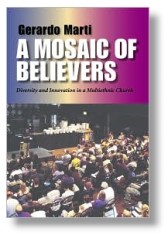
Mosaic in southern California is one of the largest and most innovative multiethnic congregations in America. Gerardo Marti shows us how this unusual church has achieved multiethnicity, not by targeting specific groups, but by providing multiple havens of inclusion that play down ethnic differences. He reveals a congregation aiming to reconstruct evangelical theology, personal identity, member involvement, and church governance to create an institution with greater relevance to the social reality of a new generation.
Autobiography of a Recovering Skinhead is Frank Meeink’s raw telling of his descent into America’s Nazi underground and his ultimate triumph over drugs and hatred. Frank’s violent childhood in South Philadelphia primed him to hate, while addiction made him easy prey for a small group of skinhead gang recruiters. By 16 he had become one of the most notorious skinhead gang leaders on the East Coast and by 18 he was doing hard time.
Teamed up with African-American players in a prison football league, Frank learned to question his hatred, and after being paroled he defected from the white supremacy movement and began speaking on behalf of the Anti-Defamation League. A story of fighting the demons of hatred and addiction, Frank’s downfall and ultimate redemption has the power to open hearts and change lives.
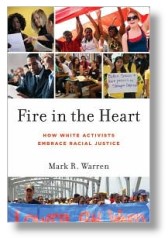
Fire in the Heart uncovers the dynamic processes through which some white Americans become activists for racial justice. The book reports powerful accounts of the development of racial awareness drawn from in-depth interviews with fifty white activists in the fields of community organizing, education, and criminal justice reform.
Drawing extensively on the rich interview material, Mark Warren shows how white Americans can develop a commitment to racial justice, not just because it is the right thing to do, but because they embrace the cause as their own. Contrary to much contemporary thinking on racial issues focused on altruism or interests, Warren finds that cognitive and rational processes alone do little to move whites to action.
Rather, the motivation to take and sustain action for racial justice is profoundly moral and relational. Warren shows how white activists come to find common cause with people of color when their core values are engaged, as they build relationships with people of color that lead to caring, and when they develop a vision of a racially just future that they understand to benefit everyone — themselves, other whites, and people of color. Warren also considers the complex dynamics and dilemmas white people face in working in multiracial organizations committed to systemic change in America’s racial order, and provides a deeper understanding and appreciation of the role that white people can play in efforts to promote racial justice.
The first study of its kind, Fire in the Heart brings to light the perspectives of white people who are working day-to-day to build not a post-racial America but the foundations for a truly multiracial America rooted in a caring, human community with equity and justice at its core.
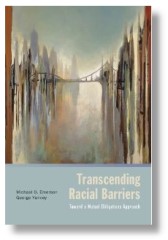
Despite recent progress against racial inequalities, American society continues to produce attitudes and outcomes that reinforce the racial divide. In Transcending Racial Barriers, Michael Emerson and George Yancey offer a fresh perspective on how to combat racial division. They document the historical move from white supremacy to institutional racism, then look at modern efforts to overcome the racialized nature of our society. The authors argue that both conservative and progressive approaches have failed, as they continually fall victim to forces of ethnocentrism and group interest.
They then explore group interest and possible ways to account for the perspectives of both majority and minority group members. They look to multiracial congregations, multiracial families, the military, and sports teams-all situations in which group interests have been overcome before. In each context they find the development of a core set of values that binds together different racial groups, along with the flexibility to express racially-based cultural uniqueness that does not conflict with this critical core.
Transcending Racial Barriers offers what is at once a balanced approach towards dealing with racial alienation and a bold step forward in the debate about the steps necessary to overcome present-day racism.
Earlier this week, the Census Bureau released its first official data from the 2010 census. They also produced the interactive graphic below where you can get more detailed numbers by state (you can visit the Census’s site for a full-screen version), but the main findings are:
As of April 1, 2010, the U.S.’s population is officially 308,745,538 — an increase of 9.7% from the 2000 census.
This 9.7% increase is much smaller than the 13.2% increase from 1990-2000 and actually is the smallest increase since 1940.
Nonetheless, the U.S.’s population is still growing faster than other industrialized nations: in the past decade, the populations in France and England each increased about 5%, about 6% in China, and 10% in Canada. Japan’s population is largely unchanged and is actually declining in Germany.
As news organizations such as MSNBC report, the 2010 Census data shows that several states in the South and West are gaining population (and some new seats in the House of Representatives) while a few states in the Northeast and Midwest are losing population:
The most populous state was California (37,253,956); the least populous, Wyoming (563,626). The state that gained the most numerically since 2010 was Texas (up 4,293,741 to 25,145,561); the state that gained the most as a percentage was Nevada (up 35 percent to 2,700,551).
Politically, Texas will gain four House seats due to a burgeoning Hispanic population and a diversified economy that held up relatively well during the recession. Other winners are GOP-leaning Arizona (1), Florida (2) . . . Georgia (1), South Carolina (1), Utah (1) and Washington (1).
States that lose seats are: Illinois (1), Iowa (1), Louisiana (1), Massachusetts (1), Michigan (1), Missouri (1), New Jersey (1), New York (2), Ohio (2), Pennsylvania (1). The Ohio and New York losses typify many of the Democratic strongholds carried by Barack Obama in 2008 that saw declines in political influence. And, for the first time in its history, Democratic-leaning California did not gain a House seat after a census after losing many of its residents in the last decade to neighboring states.
It would seem that these latest Census numbers favor Republicans in the 2012 election. But as the New York Times points out, much of the population increase is due to the fast-growing Latino population:
[P]opulation gains in the South and West were driven overwhelmingly by minorities, particularly Hispanics, and the new districts, according to the rules of redistricting, will need to be drawn in places where they live, opening potential advantages for Democrats, who tend to be more popular among minorities. . . . [T]he most lasting political impact for Republicans and Democrats alike is the rise in the influence of Hispanic voters, particularly across Arizona, Nevada and Texas, which underscores the urgency facing both parties in finding new ways to appeal to Hispanics. In future presidential races, Democrats believe they can make inroads into Arizona and Texas, which are traditionally carried by Republicans, particularly if voters speak out against Arizona’s tough immigration law.
The way it’s shaping up, it looks like the Latino population will play a big role in determining who wins or loses many elections in the South and West. Given that, just last week, Republicans fought hard to defeat the DREAM Act and given their history of supporting (or at least being largely indifferent to) numerous anti-immigrant movements and legislation, it’s too early to say that Republicans will have an easy time in the 2010 elections.
Not only are we nearing the end of the year but also the end of the first decade of the new millennium. I recently posted about the best and worst news events of 2010. In this post, I would like to take an even broader look at news events and other political, economic, cultural, and demographic trends of the last 10 years to identify what I consider the most important and significant issue that has affected racial/ethnic relations in the U.S. so far in the 21st century.
There are certainly many potential issues, trends, and events from which to choose. An obvious one are the 9/11 Attacks and the resultant War on Terrorism. As I’ve detailed since that fateful day in 2001, lives of Americans from all racial/ethnic backgrounds were literally changed overnight, not the least of whom were and are Arab and Muslim Americans, who have to balance their dual identities of being both Americans while also frequently being seen as “enemies in our own backyards.”
Another clear choice would have been the election of Barack Obama as the U.S.’s first non-White President. His campaign and eventual victory were certainly very historical moments in the racial/ethnic landscape of American society. For good and for bad, they further brought many underlying racial issues to the surface of American society and resulted in both more cohesion and divisions across racial/ethnic lines.
Further, a third good choice could be the emergence of Unauthorized Immigration as a divisive, hot button issue within American society. As the need for cheap labor increased, so did the numbers of immigrants from all over the world but particularly from Mexico and Central America arriving in the U.S. to fill that need. In the process, their presence led to numerous and ongoing debates and conflicts over whether their presence is good and bad for the country.
But in the end, I believe that one racial/ethnic issue in particular is even more significant than the others. This issue has become a underlying political, economic, and cultural dynamic that has exacerbated, intensified, and reinforced the effects of the other three that I mentioned above. In many ways, this issue has become a fundamental factor upon which many contemporary forms of racial/ethnic inequality and controversy are now based. That issue — the most significant racial/ethnic issue of the decade — is Globalization.
Globalization: Its Forms & Effects
Of course, there are different definitions of globalization. For my purposes, I define it as the contemporary and ongoing institutional process involving increasingly frequent and complex political, economic, and cultural interconnections and competition between countries and groups of citizens around the world.
Globalization can also take many specific forms. As I detail below, those that have had significant effects on racial/ethnic relations in the U.S. this first decade of the 21st century include demographic change, outsourcing and postindustrial occupational shifts, increased economic competition in the global marketplace, and decreased economic stability on the institutional and individual levels.
In taking each form one at a time, the first significant effect of globalization on American society and racial/ethnic relations is demographic change. For some time now, due to the continuation of high levels of immigration from non-European countries and the relatively high birth rates of non-White racial/ethnic groups, the U.S.’s population is gradually shifting from overwhelmingly White to more racially diverse and multicultural. In fact, the Census Bureau projects that if current trends are sustained, Whites will cease to be the majority population somewhere around 2050. Whites will still be the largest racial/ethnic group by far but for the first time in several centuries, non-Whites will comprise more than 50% of the U.S.’s population.
These demographic changes have already transformed the racial/ethnic composition of numerous cities, metropolitan areas, and states around the country. Further, such shifts have inevitably led to political and cultural transformations as well in these locations as well, such as the creation of new ethnic enclaves and communities where the majority of the population are Asian American, as one example. As social disorganization theory describes, such demographic changes have inevitably led to some resentment and tension between more established residents (predominantly White) and “newcomer” groups (who are predominantly non-White).
Globalization has also resulted in accelerating postindustrial trends in the occupational structure of the U.S. While the U.S.’s economy has been gradually shifting from one dominated by manufacturing to one focused more on services, in the past two decades, globalization seems to institutionalized a segmented labor market in which almost all new jobs that are created are located either near the top of the occupational structure (involving knowledge management and information technology, requiring high levels of education and job skills, and resultant high pay) or near the bottom (manual labor service sector jobs that require little education or job skills and involving low pay and job security). New middle-level (for example, “blue collar” skilled manufacturing) jobs are much less common these days.
The New Normal: Economic Instability
What this means for racial/ethnic relations is that there is more economic competition for jobs that offer some opportunity for social mobility. In the past, White workers were able to count on these mid- and high-level jobs that would propel them and their families into the middle and upper classes through succeeding generations. But today, due to globalization (and other factors), Whites face more frequent and more intense competition for such jobs from immigrants and non-Whites.
This is important because one of the most consistent sociological patterns through the years has been that whenever you have economic competition, almost always it will eventually lead to racial/ethnic hostility. Taken together, this increased economic competition seems poised to become the norm in the near future due to the ongoing effects of globalization and related forces.
However, because many White Americans have grown accustomed (perhaps even feeling entitled) to economic security and a middle class standard of living, these fundamental institutional changes and feelings of economic insecurity are likely to be the biggest shock to them. Feeling destabilized themselves and perceiving that others (particularly immigrants, American non-Whites, and international non-Whites) to be benefiting at their expense, it is not surprising that many Whites would ultimately feel threatened, angry, and engage in some form of backlash or scapegoating.
Therefore, it is within this context that I feel that globalization is the most significant racial/ethnic issue of this past decade. The demographic shifts and economic instability brought on by globalization and felt by many Americans, but particularly White Americans, forms the foundation upon which much of the anti-immigrant and anti-minority tensions, hostility, and backlash of the past 10 years is based, along with magnifying its political, economic, and cultural effects.
The war on terrorism and much of the anti-Arab and anti-Muslim suspicions involve the conscious or unconscious fear of America’s majority White and Christian cultural dominance being threatened. In many ways, Barack Obama’s election as our first non-White President also symbolizes a loss of power for the majority White establishment. And much of the vehement opposition to unauthorized immigration again is based on the direct and indirect fear that non-Whites are “taking over” or “invading” the U.S., determined to “overthrow” its majority White culture.
So while there have been many notable and important news events in this past decade that have affected racial/ethnic relations, from a sociological point of view, one significant common thread among them all is that, to a large extent, they are based on the demographic, political, economic, and cultural effects of globalization and how such effects are perceived to be a threat to the institutional power and hegemony of the U.S. White majority population.
Many Asian cultures believe that there are several different factors that influence an individual’s personality. In Japanese culture, one set of influences involved a person’s blood type. The following infographic from Phlebotomist.net describes traditional and contemporary beliefs of how your blood type may influence your personality and your overall life.
In case you’re the nostalgic type, here are some posts in this blog from December of years past:
2009: How Immigrants Contribute to American Society Within the partisan an emotional debates on the cultural and economic effects of immigration, several new studies point out that immigrants ultimately make several important contributions to American society.
2002: North Korea Stirs Up Trouble Again The more things change, the more they stay the same — the ongoing saga of North Korea and its threats of war against its Asian neighbors and the U.S.