The views and opinions expressed on this site and blog posts (excluding comments on blog posts left by others) are entirely my own and do not represent those of any employer or organization with whom I am currently or previously have been associated.
Academic Version: Applying my personal experiences and academic research as a professor of Sociology and Asian American Studies to provide a more complete understanding of political, economic, and cultural issues and current events related to American race relations, and Asia/Asian America in particular.
Plain English: Trying to put my Ph.D. to good use.
Here are some more announcements, links, and job postings about academic-related jobs, fellowships, and other related opportunities for those interested in racial/ethnic/diversity issues. As always, the announcements and links are provided for informational purposes and do not necessarily imply an endorsement of the organization or college involved.
The Asian American Justice Center Youth Advisory Council is launching a campaign to highlight the rich, unique family histories within the Asian American Pacific Islander community through the What’s Your Story Campaign. This campaign is a response to this nation’s ongoing debate on immigrant rights and immigration.
Despite this collective recognition that our immigration system is broken, too little attention has been paid to protect and improve the cornerstone of American immigration policy – family reunification. Your stories will help show members of Congress the importance of the family immigration system to Asian Americans community. Please take a a few minutes to fill out this survey and let your story be heard.
Behind every person, there is a story. Together our stories will depict America’s rich diversity but we cannot paint this picture without your story. Take a few minutes to fill out our survey and join our movement to celebrate where we come from and where we are going. You can also send your story and content (ie stories, videos, pictures, etc) to Huyen Cao at huyen.cao1@gmail.com.
The deadline for submissions is July 1. Thank you very much.
The Korematsu Institute advances pan-ethnic civil and human rights through education, activism and leadership development. The Institute is founded in the name of American civil rights hero Fred T. Korematsu. In 1942, at the age of 23, he refused to go to the government’s incarceration camps for Japanese Americans. After he was arrested and convicted of defying the government’s order, he appealed his case all the way to the Supreme Court. In 1944, the Supreme Court ruled against him, arguing that incarceration was justified due to military necessity.
In 1983, a group of young lawyers re-opened Korematsu’s case on the basis of government misconduct, leading his conviction to be overturned. Until his death in 2005, Fred Korematsu remained a tireless advocate for civil rights, including the rights of Arab and Muslim Americans after 9/11. In 2011, California commemorated its first Fred Korematsu Day, the first day in US history named after an Asian American.
Korematsu Institute internships offer unique opportunities for students interested in civil rights, education & exhibits, design and technology, documentary film and media, event planning and fundraising, and archival research. The program will also help students develop leadership skills in order to foster understanding among different minority communities whose rights have been threatened by racial and religious profiling. There are many internship projects to work on during this early, exciting period of the Institute. Some project areas include:
Education: help design school curriculum about Fred Korematsu’s story and the current relevance of his case. Work with the Institute’s director on introducing curriculum to schools and preparing exhibits for museums
Design and Technology: design fliers and marketing materials for events, enhance web site design, work on technology-related curriculum, such as interactive games
Documentary Film and Media: help produce short films projects, archive historical footage, work with filmmakers to set up film screenings. Track and analyze media coverage
Events and Fundraising: coordinate events, including fundraising and outreach events, museum exhibitions, and collaborations with other civil rights groups across the country. Assist in fundraising research and outreach
Research: research historical archives to supplement/organize our Fred Korematsu library
Depending on your background and interest, we may be able to dedicate most of your internship to one or two of these project areas, however interns are expected to be flexible and willing to take on additional tasks, including some administrative work. Compensation: Our internships are unpaid, but very often, undergraduates can receive college credit for fulfilling their intern assignments.
Requirements:
Fall/Winter internships: Because of Fred Korematsu Day every January 30, the fall/winter internships are longer, running from Sept/Oct to mid-February (we understand that students may be out of town during winter holidays). Please note that start/end dates are relatively flexible to accommodate class schedules. You must be available during regular office hours from 9am-5pm.
We need individuals who are passionate about our cause and committed to following through on every task to contribute to our Institute’s mission. We are looking for extremely organized team members who are skilled at multitasking. Multimedia, web or layout design, and leadership skills are a plus.
Application: Please email the following materials to info@korematsuinstitute.org:
Completed internship application form (available at korematsuinstitute.org )
1-page resume
Name, title, phone number and email address for two school or work references
Deadlines: Fall/Winter 2011-2012 internship application deadline: Friday, July 8, 2011. You will be contacted for an interview within one month if we have decided to advance your candidacy.
Post Doc: Social Justice, Saint Louis University
Social Justice Post-Doctoral Fellow Position
Saint Louis University, a Catholic Jesuit Institution dedicated to student learning, research, health care, and service seeks a full-time postdoctoral research fellowship position in Social Justice Studies which will begin in August of 2011. This is a two-year position with the second year renewal contingent on a satisfactory annual review. Applicants must be a recent doctoral graduate (degree obtained in 2008 or later) who is highly motivated in developing a research portfolio in immigration, aging, and health care, is able to work effectively with ethnically diverse populations, and possesses strong methodological (quantitative and/or qualitative) and communication skills. Individuals who have completed a doctoral degree in psychology, sociology, anthropology, counseling, health care ethics, social work, or other area in the social sciences are welcome to apply.
The postdoctoral fellow will work with an interdisciplinary team on a series of projects designed to investigate immigrants’ experiences with the health care system. The fellow will receive intensive research training under a faculty mentorship model to develop as an independent investigator. Fellowship training opportunities include, but are not limited to, leading project activities, enhancing research and analytic skills, achieving independent research goals, co-authoring peer-reviewed journals, presenting findings at professional conferences, and writing grants.
The position will include a competitive salary for 12-month contract plus health care benefits. Applications will be accepted beginning immediately and reviewed until the position is filled. Applications should include a cover letter, curriculum vitae, one writing sample, and three references. Letters are not required. The application must be made online at http://jobs.slu.edu.
For more information, contact:
Hisako Matsuo, Ph.D., Professor, Sociology and Criminal Justice, matsuoh@slu.edu, 314-977-2536
Lisa Willoughby, Ph.D., Assistant Professor, Psychology, willoulm@slu.edu, 314-977-2531
Fellowship Cultivates New Generation of Asian Pacific American Filmmakers
Applications Due July 29th
Visual Communications is now accepting applications for its10th annual Armed With a Camera Fellowship. The fellowship fosters the education, training and professional development of up-and-coming Asian Pacific American filmmakers. In doing so, it seeks to shed light on the experiences of communities traditionally underrepresented by visual media.
The fellowship is open to filmmakers under 30-years-old of Asian Pacific descent. South Asian, Southeast Asian and women filmmakers are strongly encouraged to apply. From November 2011 to March 2012 Visual Communications will provide the support and resources for ten fellows to each to create a five-minute digital video. These resources will include:
$500 cash grant
Training, workshops and mentoring from industry professionals
Opportunity for collaborative work with other fellows
Access to equipment and editing facilities
World premiere of completed film in the “VC Digital Posse†showcase of the 2012 Los Angeles Asian Pacific Film Festival
All-access pass to films, panels and events of the 2012 Los Angeles Asian Pacific Film Festival
Opportunity to network with professional filmmakers and Visual Communications staff and supporters
In the past decade, Visual Communications has supported 70 filmmakers through the fellowship. Last year’s portfolio represents a characteristic diversity of topics. One documentary traces the disappearance of a Filipino-American R&B star. Another tells the emigration story of a filmmaker’s Vietnamese father. Several narrative works explore family relationships. In one, a South Asian lesbian woman spends the Hindu New Year with her partner. In another, a Japanese woman questions her marriage to an American. Settings range from a World War II battlefield in France to a sci-fi future.
Applications are available at www.vconline.org. The Armed with a Camera Fellowship is partially funded by the James Irvine Foundation, the Los Angeles County Arts Commission, and the Morgan Stanley Foundation. Please contact Daina Solomon (daina@vconline.org or 213 680-4462 ext. 30) for more information.
The 2011 Advancing Justice Conference will be held in beautiful San Francisco on October 27-28, 2011. This year’s conference will pay tribute to the rich history of activism that makes the Bay Area such a special place for all communities, but especially Asian Americans and Pacific Islanders. This year, the Asian Law Caucus, a member of the Asian American Center for Advancing Justice, will be the local host for the conference, with APALC co-hosting.
Registration is now open!
This year’s conference will include exciting and diverse workshops on:
Civil & Human Rights
Capacity Building
Youth Leadership & Community Organizing
Immigrant Integration & Civic Participation
There will also be five engaging plenary sessions focusing on veteran Asian American activists, emerging Asian American geographic communities, social entrepreneurship, Pacific Islanders, and cross-racial alliance building. The Advancing Justice Conference will be an exciting opportunity to discuss the pressing immigrant and civil rights issues of today and to network with peers. We hope that you will join us in October in San Francisco.
A limited number of scholarships & travel stipends are available to conference participants. Factors taken into consideration include: financial need, geography, ethnic diversity, and area of expertise. Apply today! Deadline to apply is 5 pm PST on Friday, August 21, 2011. Applicants will be notified by Monday, August 31, 2011.
Many of you have probably seen The Hangover Part 2, the sequel to the surprise hit of 2009. I recently watched the first Hangover film and mostly enjoyed it, although it was not quite as uproariously hilarious as many of my friends hyped it up to be. I have yet to see Hangover 2 and now my motivation has declined even further, after reading my friend Jeff Yang’s recent article about it in his column for the San Francisco Chronicle. Some excerpts:
“H2” made an absurd $103 million over the three-day weekend — an all-time record for a live-action comedy, despite near-universal excoriation by critics, who called it “uninspired and unoriginal,” “unclean and mostly unfunny,” and “rancid and predictable.” What few pointed out was that, in seeking to top the already over-the-top comic sensibilities of the original, the filmmakers chose the sleaziest, easiest possible solution, unleashing a relentless bastinado of abuse at the expense of Asians, a group that they presumably felt could be targeted with minimal concern about potential backlash.
If you’re an Asian who swallowed hard upon hearing that the sequel would be set in Bangkok, you’ll need to swallow harder just to keep down your gorge at what they’ve produced. The film’s depiction of Thailand transforms the “Land of Smiles” into a bizarro realm of brute violence, grim depravity and unfettered libido, populated entirely by broad racial stereotypes: Thuggish gangsters. Wizened monks. Lascivious ladyboys. Not to mention whiz-kid pre-meds, infinitely forgiving lotus-blossom brides and the Father of All Tiger Dads. . . .
As an Asian American who enjoyed the first film, I found the sequel bluntly and inexplicably offensive — with the fact that the movie opened in the waning days of May [Asian Pacific American Heritage Month] being soy sauce in the wound.
Jeff Yang could have ranted on about the various ways in which he found Hangover 2 offensive but most of his article actually focuses on what Asian Americans can actually do about this ongoing problem of Asians and Asian Americans consistently being portrayed using racist stereotypes in mainstream Hollywood films. Specifically, he offers some thoughts about the possibility of not only creating an alternative set of filmmakers who would portray Asian Americans more accurately, but also creating an alternative audience that would be able to sustain such independent efforts. But along the way, Jeff raises some important challenges that still need to be addressed:
For an indie filmmaker, you simply can’t make money with theatrical distribution. But if you’re talking a target not of theatrical distribution but direct-to-DVD, a film with a guerrilla $250,000 budget can make back its costs and return a healthy profit if it sells 20,000 units at $20 a pop. . . .
Now, there are currently more than a million Asian Americans enrolled in college — two-thirds of whom are concentrated in eight states. It would only take two percent of them collectively purchasing a book or DVD or CD to make it solidly profitable — supporting the work of a creative artist, and enabling that creator to continue doing what he or she does, with full freedom to make art that’s appealing and authentic and true to an Asian American experience.
This is the gist of something that, in our conversations, cultural critic and academic Oliver Wang has dubbed The Two Percent Project. Here’s how it might work: Get together a group of smart, influential tastemakers — journalists, critics, student leaders, bloggers. Have them select five indie Asian American creators — writers, filmmakers, musicians — from an open call that includes anyone with a brand-new, brashly different and commercially viable product.
Send these creators on a collective national barnstorming tour of the college campuses with the biggest Asian American student representation — reading, performing, speaking, and showing their work and their potential. The costs of the tour would be covered by student organization funds and corporate sponsors.
Here’s the kicker: Although attendance at these events would be free, every attendee would have to purchase one of the five products these artists are promoting on the spot, while enrolling in an online community that gives the artists long-term engagement with their consumers. The goal? Constructing an independent audience. Reinventing the Asian American brand. And creating recorded proof that Asian American artists are marketable and that a market exists to sustain them.
Jeff’s idea sounds plausible to me, especially if Asian Americans, young and old, keep railing against movies rife with racial stereotypes like Hangover 2. Jeff’s idea doesn’t even take into consideration the growing numbers of Asian American professionals who are making good money and actually have the financial means to support such independent efforts even more than college students. If there is a plan that can incorporate them into this movement, it would certainly produce positive results.
Either way, I applaud Jeff Yang, Oliver Wang, and others who are doing more than just complaining about injustices against Asian Americans — they’re proposing potential plans of action and solutions to the problem. Their specific ideas may or may not bear fruit immediately but at the least, they get the conversation started, get ideas rolling, and will hopefully lead to some innovative thinking and action to get something done.
Even if it’s a small step, at least it’s a step in the right direction.
Here are some more announcements, links, and job postings about academic-related jobs, fellowships, and other related opportunities for those interested in racial/ethnic/diversity issues. As always, the announcements and links are provided for informational purposes and do not necessarily imply an endorsement of the organization or college involved.
Asian Pacific Partners for Empowerment, Advocacy and Leadership (APPEAL) is a leading, national non-profit organization working toward social justice in the Asian American, Native Hawaiian and Pacific Islander (AA and NHPI) communities. The organization’s mission is to champion social justice and achieve parity and empowerment for Asian Americans, Native Hawaiians and other Pacific Islanders by supporting and mobilizing community-led movements through advocacy and leadership development on critical public health issues.
Under the supervision of the APPEAL Executive Director and Program Manager, the Program Coordinator is responsible for coordinating activities of the ADEPT Project, a data dissemination project funded by the Tobacco-Related Disease Research Program and some activities of the APPEAL PROMISE Network, a national network of individuals and organizations working towards a tobacco-free AA and NHPI community. This position will include the following duties and responsibilities:
Compile and analyze data on AA and NHPI tobacco control and related social justice issues
Disseminate data on AA and NHPI tobacco control to community organizations, policymakers and ethnic and mainstream media
Plan, implement, monitor and troubleshoot project activities and progress
Assist with the production and distribution of Network materials including factsheets, toolkits and case studies
Provide ongoing technical assistance, support, and follow-up to partner organizations
Write and submit required program and documentation of progress and participate in regular communication with funders
Represent APPEAL at conferences, meetings and other events
Work effectively with diverse communities and marinating consistent communication with community partners, coalitions, and community leaders
Coordinate meetings and trainings with other staff and partners (e.g. scheduling, locating meeting venues, coordinating travel, etc.)
Commitment to the philosophy of APPEAL, to build community capacity and to provide technical assistance and training in a community competent manner
Other duties as requested by the Program Manager and Executive Director
Qualifications:
Bachelor’s degree in public health or other relevant field, plus three years work experience or commensurate experience required
Understanding of and experience working with Asian American, Native Hawaiian and Pacific Islander communities (and other diverse communities) required
Experience in program coordination required
Ability to work effectively with cross-cultural communities. Experience working with communities of color and LGBT communities is desired
Ability to advocate for AA and NHPI communities on issues including those related to tobacco and its risk factors and other social justice areas
Strong research and analytical skills desired
Excellent interpersonal skills and ability to establish positive relationships with community members and organizations required
Self-motivated and having the ability to balance working independently and part of a diverse team
Ability to multi-task, provide consistent follow-up, and prioritize effectively
Strong verbal communication and writing skills required
Proficiency with PC-based computers and Window, experience with Microsoft Office suite: Word, Excel, Outlook and Internet required, PowerPoint desired
Some travel may be required
Email resume and cover letter to: PCposition@appealforhealth.org Please include position title in subject line.
OR
Send resume and cover letter to: APPEAL—Program Coordinator
Hiring Committee:
300 Frank H. Ogawa Plaza, Ste. 620
Oakland, CA 94612
Interviews will be granted according to the qualifications of the applicant. APPEAL is an equal opportunity employer. Women and people of color are encouraged to apply.
To honor the 29th anniversary of the death of Vincent Chin (June 23, 2011), an online version of “Vincent Who?” can be viewed for free. This limited-time offer (until the end of July 2011) is brought to you by Asian Pacific Americans for Progress (APAP) and the producers of “Vincent Who?”
Also on the new site is the latest touring schedule for 2011-12, more research material on the Vincent Chin case and ordering information for your very own V. Chin t-shirts from Blacklava.
Please note that this new site, vincentwhomovie.com, along with the APAP website, are the only sites affiliated with the non-profit efforts of APAP and the film’s producers, including the documentary’s writer/producer, Curtis Chin. Because there may be unaffiliated, for-profit sites, we encourage you to turn to vincentwhomovie.com and APAP.
May we continue to learn from, and honor the memory of, Vincent Chin! Thanks for your continued support!
2009: Internet Technology, White Supremacy, & Racial Tolerance The growing popularity of social networking sites such as Facebook, MySpace, and YouTube has helped White supremacists broadcast their message to a larger audience.
2008: Professors Who Walk the Walk A group of professors show us how to turn your beliefs about social justice and equality into practice.
2007: Asianization of Queens, New York A profile of demographic and cultural changes in Queens, New York — can it serve as a model for the U.S. in general?
2005: Asian Women Small Businesses A new report focuses on the motivations, challenges, and success of small businesses owned by Asian American women.
2004: Who’s the More Ignorant? Reactions to a racial slur from Bill Parcells highlights the historical and ongoing differences between being ‘Asian’ and ‘Asian American.’
2003: Abercombie & Fitch in Trouble Again Retailer Abercrombie & Fitch shows its true (White) colors once more as it’s accused of discriminating against people of color — again.
To highlight the continuing growth and vitality of Asian American Studies, the following is a list of recent journal articles and doctoral dissertations from scholars in the social sciences and humanities that focus on Asian Americans. As you can see, the diversity of research topics is a direct reflection of the dynamic and multidimensional nature of the Asian American population.
The academic journal articles are generally available in the libraries of most colleges and universities and/or through online research databases. The dissertation records are compiled by Dissertation Abstracts International. Copies of the dissertations can be obtained through your college’s library or by addressing your request to ProQuest, 789 E. Eisenhower Parkway, P.O. Box 1346, Ann Arbor, MI 48106-1346. Telephone 800-521-3042, email: disspub@umi.com. As always, works included in this list are for informational purposes only and do not imply an endorsement of their contents.
Farrell, Chad R. and Barrett A. Lee. 2011. “Racial Diversity and Change in Metropolitan Neighborhoods.” Social Science Research 40:1108-1123.
Abstract: This study investigates the changing racial diversity and structure of metropolitan neighborhoods. We consider three alternative perspectives about localized racial change: that neighborhoods are bifurcating along a white/nonwhite color line, fragmenting into homogeneous enclaves, or integrating white, black, Latino, and Asian residents into diverse residential environments. To assess hypotheses drawn from these perspectives, we develop a hybrid methodology (incorporating the entropy index and majority-rule criteria) that offers advantages over previous typological efforts.
Our analysis of 1990–2000 census tract data for the 100 largest US metropolitan areas finds that most neighborhoods are becoming more diverse and that members of all groups have experienced increasing exposure to neighborhood diversity. However, white populations tend to diminish rapidly in the presence of multiple minority groups and there has been concomitant white growth in low-diversity neighborhoods. Latino population dynamics have emerged as a primary force driving neighborhood change in a multi-group context.
Reitz, Jeffrey G., Heather Zhang, and Naoko Hawkins. 2011. “Comparisons of the Success of Racial Minority Immigrant Offspring in the United States, Canada and Australia.” Social Science Research 40:1051-1066.
Abstract: The educational, occupational and income success of the racial minority immigrant offspring is very similar for many immigrant origins groups in the United States, Canada and Australia. An analysis based on merged files of Current Population Surveys for the United States for the period 1995–2007, and the 2001 Censuses of Canada and Australia, and taking account of urban areas of immigrant settlement, reveals common patterns of high achievement for the Chinese and South Asian second generation, less for other Asian origins, and still less for those of Afro-Caribbean black origins.
Relatively lower entry statuses for these immigrant groups in the US are eliminated for the second generation, indicating they experience stronger upward inter-generational mobility. As well, ‘segmented assimilation’ suggesting downward assimilation of Afro-Caribbean immigrants into an urban underclass in the US, also receives little support.
Robnetta, Belinda and Cynthia Feliciano. 2011. “Patterns of Racial-Ethnic Exclusion by Internet Daters.” Social Forces 89:807-828.
Abstract: Using data from 6070 U.S. heterosexual internet dating profiles, this study examines how racial and gender exclusions are revealed in the preferences of black, Latino, Asian and white online daters. Consistent with social exchange and group positions theories, the study finds that whites are least open to out-dating and that, unlike blacks, Asians and Latinos have patterns of racial exclusion similar to those of whites.
Like blacks, higher earning groups including Asian Indians, Middle Easterners and Asian men are highly excluded, suggesting that economic incorporation may not mirror acceptance in intimate settings. Finally, racial exclusion in dating is gendered; Asian males and black females are more highly excluded than their opposite-sex counterparts, suggesting that existing theories of race relations need to be expanded to account for gendered racial acceptance.
Haller, William, Alejandro Portes, and Scott M. Lynch. 2011. “Dreams Fulfilled, Dreams Shattered: Determinants of Segmented Assimilation in the Second Generation.” Social Forces 89:733-762.
Abstract: We summarize prior theories on the adaptation process of the contemporary immigrant second generation as a prelude to presenting additive and interactive models showing the impact of family variables, school contexts and academic outcomes on the process. For this purpose, we regress indicators of educational and occupational achievement in early adulthood on predictors measured three and six years earlier. The Children of Immigrants Longitudinal Study, used for the analysis, allows us to establish a clear temporal order among exogenous predictors and the two dependent variables.
We also construct a Downward Assimilation Index, based on six indicators and regress it on the same set of predictors. Results confirm a pattern of segmented assimilation in the second generation, with a significant proportion of the sample experiencing downward assimilation. Predictors of the latter are the obverse of those of educational and occupational achievement. Significant interaction effects emerge between these predictors and early school contexts, defined by different class and racial compositions. Implications of these results for theory and policy are examined.
Tran, Nellie and Dina Birman. 2010. “Questioning the Model Minority: Studies of Asian American Academic Performance.” Asian American Journal of Psychology 1:106-118.
Abstract: The current paper reviews literature on the academic performance of Asian Americans with a critical eye toward understanding the influence of discrimination on this process. Speciï¬cally, this study seeks to understand the extent to which researchers have gathered sufï¬cient knowledge to dispel “conventional knowledge†of Asian Americans as model minorities. We questioned the extent to which studies explicitly measured student performance as a product of individual effort and Asian cultural influences, while simultaneously measuring the impact of exposure to discrimination.
We present a review of studies on Asian American academic performance published 1990–2008. Our analysis suggests that social science research has continued to perpetuate the stereotype of Asian Americans as a “model minority.†The majority of the reviewed studies did not differentiate among Asian American ethnic and generational groups. These studies also tended to infer culture as an explanation for the high achievement of Asian Americans without examining the impact of sociopolitical factors, such as racial discrimination.
In fact, many of the reviewed studies reported that Asian Americans were deï¬cient relative to Whites on attributes thought to be related to culture (e.g., personality characteristics, parenting behaviors) while ï¬nding that they achieved academically at levels similar to or higher than Whites. Finally, the majority of these studies have not used culturally appropriate methods to test their hypotheses and research questions. Thus, we recommend that studies embrace emic/population-speciï¬c and sociopolitical (Sasao & Sue, 1993) approaches to understand and explore factors that contribute to academic achievement in this group.
Dissertation: Relation of Depression to Substance Use, Chronic Illnesses and Asian American and Pacific Islander Adults in Hawaii
Aczon-Armstrong, Marife Celebre (University of Hawai’i at Manoa)
Abstract: Asian Americans (AA) are often portrayed as the model minority but it is also known that both AA and Pacific Islanders (PI) are least likely to seek help for mental disorders. Few studies have focused on AAPI, and even fewer have reported findings for each AAPI subgroup separately despite the unique characteristics of each subgroup. Using the aggregate group makes identifying actual differences in health and mental health of these subgroups difficult. As a result, little is known about the specific characteristics of APPI subgroups.
To fill this gap in knowledge, the purpose of this study was to (a) identify the prevalence of current depression, substance use (smoking and alcohol use) and chronic illnesses (diabetes, cardiovascular disease and asthma) among AAPI adults in Hawaii; (b) determine if there are significant differences in the prevalence of current depression, substance use, and chronic illnesses between AA and PI adults in Hawaii, and (c) determine if there is a relationship between current depression, substance use, chronic illnesses and individual characteristics (such as age, gender, employment status, educational level, frequency of emotional support, life satisfaction and healthcare access) among AAPI adults in Hawaii.
Using the 2008 data from Hawaii Behavioral Risk Factor Surveillance System (HBRFSS), significant differences in prevalence of current depression between AA and PI were found. PIs in Hawaii were two times more likely to have severe/moderately severe depression compared to AAs. The prevalence of moderate and mild depression, among AA and PI did not differ significantly. Several factors affect these prevalence rates. The results of the multiple logistic regression cumulative model indicated that smoking, chronic illness, gender, level of education completed, employment status, frequency of emotional support, life satisfaction, health care coverage and age were strongly associated with current depression.
Dissertation: Asian American Sexual Politics: The Construction of Race, Gender, and Sexuality
Chou, Rosalind Sue (Texas A&M University)
Abstract: Why study Asian American sexual politics? There is a major lack of critical analysis of Asian Americans and their issues surrounding their place in the United States as racialized, gendered, and sexualized bodies. There are three key elements to my methodological approach for this project: standpoint epistemology, extended case method, and narrative analysis. In my research, fifty-five Asian American respondents detail how Asian American masculinity and femininity are constructed and how they operate in a racial hierarchy. These accounts will explicitly illuminate the gendered and sexualized racism faced by Asian Americans.
The male respondents share experiences that highlight how “racial castration” occurs in the socialization of Asian American men. Asian American women are met with an exotification and Orientalization as sexual bodies. This gendering and sexualizing process plays a specific role in maintaining the racial status quo. There are short and long term consequences from the gendered and sexualized racist treatment. The intersected racial and gender identities of the respondents affect their self-image and self-esteem. For the women, femininity has been shaped specifically by their racial identity. “Orientalization” as a colonial concept plays a role in these racialized and gendered stereotypes of Asian American Women. The gendered and sexualized racialization process and “racial castration” has impacted Asian American men in a different way than their female counterparts. Violence is a prevalent theme in their gendered and racial formation.
Asian American men begin as targets of violence and sometimes become perpetrators. I also analyze how romantic and sexual partners are chosen and examine the dynamics of Asian American intraracial and interracial relationships. While Asian American “success” as “model minorities” is challenging white supremacy, gender and sexuality become “regulating” forces to maintain both the racial and gendered order. Finally, I offer and discuss the resistance strategies against gender and racial hierarchy utilized by my respondents. Asian Americans must be creative in measures that they take for group and individual survival. Respondents resist in intimately personal ways against ideologies.
Dissertation: The Warrior Women of Transnational Cinema Gender and Race in Hollywood and Hong Kong Action Films
Funnell, Lisa (Wilfrid Laurier University, Canada)
Abstract: In The Warrior Women of Transnational Cinema, I consider the significance of transnational Asian action women in the post-1997 Hong Kong cinema; more specifically, I explore how Pan-Asian (e.g. Michelle Yeoh, Pei Pei Cheng, Ziyi Zhang), Asian American (Lucy Liu, Maggie Q, Marsha Yuen), and Asian Canadian (e.g. Francoise Yip, Charlene Choi, Kristy Yang) warrior women function as a source of transnational female identity for local, Pan-Asian (Le. East and Southeast Asian), and diasporic Asian audiences. I argue that the post-1997 Hong Kong cinema — and not Hollywood — has offered space for the development of Pan-Asian and Asian North American screen identities which challenge the racial stereotypes historically associated with the Asian female body in the West.
In the new millennium, Hollywood has redefined its representation of transnational Asian action women by incorporating Hong Kong choreographers, action aesthetics, and/or female stars into its blockbusters. In these films, however, the representation of Pan-Asian and Asian North American action women caters to the tastes of American/Western audiences and relates American/Western ideals of gender, race, and heroism. Furthermore, I argue that Hollywood’s recent investment in Hong Kong and/or Mainland Chinese co-productions reflects America’s attempt to tap into the burgeoning Asian film market and wield significant political, economic, and social power particularly in Mainland China.
Dissertation: Performance of Japanese Americans on Selected Cognitive Instruments
Kemmotsu, Nobuko (University of California, San Diego and San Diego State University)
Abstract: There is ample evidence that African Americans and Hispanic Americans demonstrate lower scores on widely used neurocognitive tests, compared to non-Hispanic Caucasians. However, there is a scarcity of empirical data for Asian Americans. This study aimed to examine cognitive test performance of one of the Asian American subgroups: Japanese Americans. Seventy-one Japanese Americans (JAs) and 71 Caucasian Americans (CAs), ages between 45-91, participated in the study. The Boston Naming Test-2 (BNT), San Diego Odor Identification Test (SDOIT), Controlled Oral Word Association test (COWA-FAS), category fluency test (Animal Fluency), California Verbal Learning Test (CVLT), California Odor Learning Test (COLT), and Brief Visuospatial Memory Test-Revised (BVMT-R) were administered. We collected data on levels of acculturation, quality of educational attainment (Wide Range Achievement Test-4 Reading and Math Computation subtests), bilingual status, and generation status in the U.S.
There were no significant differences between the two ethnic groups on the battery of neuropsychological tests. However, the two groups showed somewhat different patterns in the associations between the test performance, and age and gender. JAs tended to show a stronger age-score relationship on the BNT, SDOIT, BVMT-R total recall, and COLT total recall. With regard to gender, JA men tended to score lower than JA women and than CA men on CVLT Trial 5. Additionally JA men tended to score lower than JA women on the CVLT Long Delay Cued Recall. When the raw scores of the JAs were converted into demographically corrected scores using the Caucasian norm, JAs had more measures that yielded larger “impairment” rate compared to theoretically driven rate (15.6%) compared to Caucasian Americans. The second-generation JAs showed a much larger proportion of “impaired” compared to the third-generations, on the BVMT-R Total Recall and BVMT-R Delayed Recall.
The results indicated that some neuropsychological test results need to be interpreted with caution in the older JAs, at least until culturally appropriate norms become available. Future studies are needed to investigate if this pattern would persist in the succeeding generations, and in the descendants of the post-war immigrants from Japan.
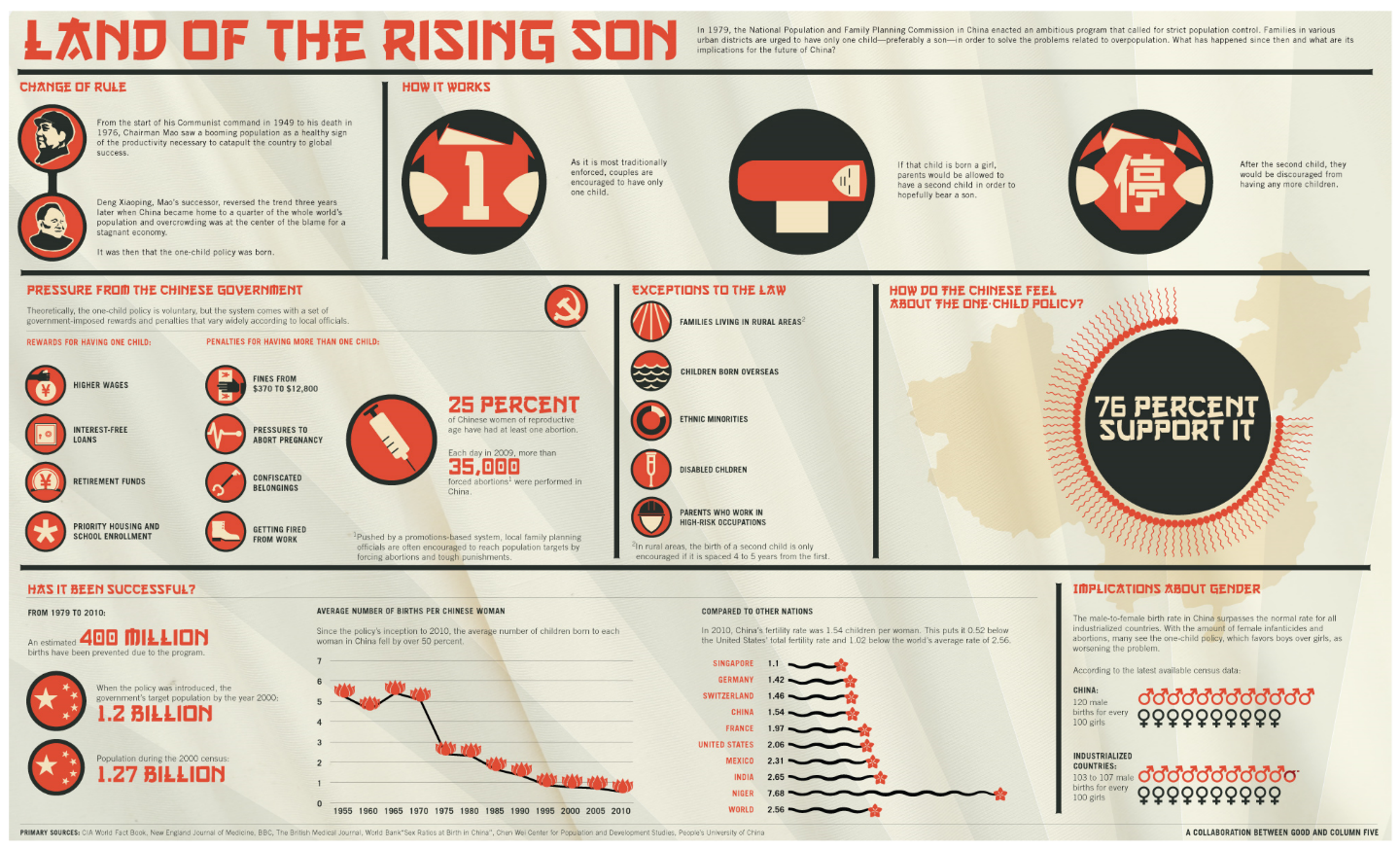
A number of recently-published books, media articles, and an infographic provide some interesting and useful information about China and Chinese Americans, summarized below:
China’s One Child Policy
Throughout the last couple of decades, there has been much discussion about China’s One Child Policy that was implemented back in the 1970s to “encourage” Chinese families from having, as the name suggests, just a single child as a way to slow China’s population growth. However, most Americans know little about the details, especially as there are increasing calls for China to change the policy. Fortunately, Good Transparencies has created an infographic that visually illustrates the main highlights of the One Child Policy (click on the thumbnail below for a larger version):
Over the past 30 years, China’s red-hot economic growth has lifted hundreds of millions of people out of poverty, reshaped the global economy and given rise to a new power on the global stage. But that breakneck growth has also created an expanding wealth gap, major environmental problems, widespread corruption, a growing imperative to innovate and popular pressure for political reforms. . . .
But as this phase of China’s economic development draws to an end, a new phase has begun. Call it China 2.0. . . . China’s leaders worry about growing too fast. Premier Wen Jiabao said in March the expansion is “unbalanced, uncoordinated and unsustainable.” To address that, the next five-year plan incorporates reforms already under way and charts a roadmap designed to keep the economy from veering off the track. . . .
The goal is to keep the economy growing, spread wealth from the industrial coastal cities to inland provinces and rural areas, encourage more domestic spending, spur innovation and deliver expanded social services to sparsely populated areas that lack them.
Eating dogs and cats–which is an age-old delicacy in China–could soon be against the law. Currently, dog and cat meat is viewed as promoting bodily warmth. But if the law passes, people who eat either animal could face fines of up to $730 or 15 days in jail. Organizations involved the practice would face fines up to 100-times as much.
“I support this proposal. Whether you judge this as a question of food security or emotions, there is absolutely no necessity in China for people to eat dogs and cats,” said Zeng Li, the founder of the Lucky Cats shelter in Beijing. . . . The law has been in the draft stage for over a year and will be submitted to higher authorities come April. But draft legislation can take years to approve. . . .
The economic impact of this law would be small as China’s affluent don’t partake in the delicacy. In fact, such traditions have received much scrutiny from affluent, pet-loving, urban middle class. And online petitions against dog and cat consumption have attracted tens of thousands of signatures.
Every week a new book title announces an “irresistible†tilt east, the emergence of “Chimerica†and a not-too-distant future when China “rules†the planet. The mainstream media, and especially the business press, are gripped by the narrative of China taking over the world. . . .
But the coverage of China’s global inroads has been profoundly short on context, particularly when it comes to how China is—and is not—surpassing the U.S. as a global power. There are plenty of stories of a Chinese-sponsored infrastructure project or a Chinese company cutting a deal to feed its “insatiable thirst†for raw materials, while Western involvement of similar or greater magnitude is lucky to make a headline at all.
Meanwhile, a close look at the key economic metrics and the subtler shades of power, such as cultural influence and humanitarian aid, reveals that while China is indeed one of the great powers in the world now (late last month it officially overtook Japan as the world’s second-largest economy), its influence is mixed, and often undercut by America’s.
Cutting-edge programs like those at the immersion charter school Yu Ying in Washington, D.C., and reports of Chinese-language courses popping up in heartland America would all seem to suggest that Americans are on the fast track to learning Chinese—and ultimately understanding China. . . . You’ll be hard-pressed, the reasoning goes, to find anyone who doesn’t think grasping the language of the world’s fastest-growing economy is a good idea.
But the sad fact is that Americans are not learning Mandarin, the main tongue spoken in mainland China, in droves. Just take a look at the numbers. According to the Center for Applied Linguistics, in 2008 only 4 percent of middle and high schools that offer foreign-language instruction included Mandarin. That’s up from 1 percent in 1997.
While that initially seems like respectable growth, the same survey reveals that 13 percent of schools still offer Latin and a full 10-fold more schools offer French than Mandarin. How is it that one a dead language and the other a language primarily used to impress your dinner companion can trounce one spoken by 1.3 billion natives and many millions more expats and immigrants abroad?
The US administration seems to be trying to convince its public of another untruth: that China is the true cause of America’s economic woes — and that China possesses “weapons of mass economic destruction.” What is that weapon of mass economic destruction? The humble yuan, which the US says has been manipulated to hurt the American economy. . . .
Economist Paul Krugman recently said China’s trade surplus with the US had grown in the past decade even without the yuan rising sufficiently against the dollar. Before America’s economic 9/11, however, its consumers seemed happy to get affordable Chinese goods year after year and its businesspeople were busy making profits from lucrative partnerships with Chinese companies. . . .
China’s stimulus for its economy has created opportunities for Western countries’ exports, too. . . . China would readily buy more advanced technologies from America, but Washington is reluctant to sell them. . . . . Hopefully, [Americans] will see through their politicians’ desperate attempt to shift the blame for the country’s problems to China in order to cover their own failures.
U.S. Army veteran Joaquin Lim sensed something was amiss with the troop that had popped up at civic events in Southern California’s Chinese-American communities. At a flag raising ceremony honoring a Chinese holiday, the Walnut city councilman stopped one of the recruits and asked to see his military ID. “There were actually typos on the ID card,” Lim said. “Right away, I knew something was wrong.”
Those suspicions came into the spotlight Tuesday when authorities arrested the so-called “supreme commander” of the U.S. Army/Military Special Forces Reserve unit and charged him with duping Chinese immigrants into thinking they had truly enlisted in the American armed forces.
Prosecutors say Yupeng Deng, 51, recruited 100 other Chinese immigrants . . . at the cost of several hundred dollars, to help improve their chances of obtaining green cards and U.S. citizenship. . . . The case — which was investigated by the FBI and Department of Defense — highlights the vulnerability of immigrants desperately seeking to belong in a new country and naive to the norms of a society in which, for example, military recruits don’t pay to enlist.
skilled immigrants are leaving the U.S. in droves. This is because of economic opportunities in countries like India and China, a desire to be closer to family and friends, and a deeply flawed U.S immigration system. It doesn’t matter whether we call this “brain drain†or “brain circulationâ€â€“ it is a loss for America. Innovation that would otherwise be happening here is going abroad. . . .
Surprisingly, 72% of Indian and 81% of Chinese returnees said that the opportunities to start their own businesses were better or much better in their home countries. Speed of professional growth was also better back home for the majority of Indian (54%) and Chinese (68 percent) entrepreneurs. And the quality of life was better or at least equal to what they’d enjoyed in the United States for 56% of Indian and 59% of Chinese returnees.
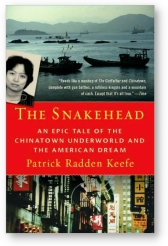
In the 1980s, a wave of Chinese from Fujian province began arriving in America. Like other immigrant groups before them, they showed up with little money but with an intense work ethic and an unshakeable belief in the promise of the United States. Many of them lived in a world outside the law, working in a shadow economy overseen by the ruthless gangs that ruled the narrow streets of New York’s Chinatown.
The figure who came to dominate this Chinese underworld was a middle-aged grandmother known as Sister Ping. Her path to the American dream began with an unusual business run out of a tiny noodle store on Hester Street. From her perch above the shop, Sister Ping ran a full-service underground bank for illegal Chinese immigrants. But her real business—a business that earned an estimated $40 million—was smuggling people.
As a “snakehead,†she built a complex—and often vicious—global conglomerate, relying heavily on familial ties, and employing one of Chinatown’s most violent gangs to protect her power and profits. Based on hundreds of interviews, Patrick Radden Keefe’s sweeping narrative tells the story not only of Sister Ping, but of the gangland gunslingers who worked for her, the immigration and law enforcement officials who pursued her, and the generation of penniless immigrants who risked death and braved a 17,000 mile odyssey so that they could realize their own version of the American dream.
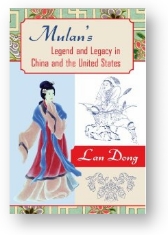
Mulan, the warrior maiden who performed heroic deeds in battle while dressed as a male soldier, has had many incarnations from her first appearance as a heroine in an ancient Chinese folk ballad. Mulan’s story was retold for centuries, extolling the filial virtue of the young woman who placed her father’s honor and well-being above her own. With the publication of Maxine Hong Kingston’s The Woman Warrior in the late 1970s, Mulan first became familiar to American audiences who were fascinated with the extraordinary Asian American character. Mulan’s story was recast yet again in the popular 1998 animated Disney film and its sequel.
In Mulan’s Legend and Legacy in China and the United States, Lan Dong traces the development of this popular icon and asks, “Who is the real Mulan?” and “What does authenticity mean for the critic looking at this story?” Dong charts this character’s literary voyage across historical and geographical borders, discussing the narratives and images of Mulan over a long time span—from premodern China to the contemporary United States to Mulan’s counter-migration back to her homeland.
As Dong shows, Mulan has been reinvented repeatedly in both China and the United States so that her character represents different agendas in each retelling—especially after she reached the western hemisphere. The dutiful and loyal daughter, the fierce, pregnant warrior, and the feisty teenaged heroine—each is Mulan representing an idea about female virtue at a particular time and place.
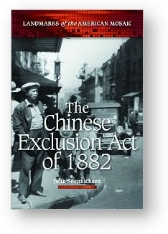
The Chinese Exclusion Act of 1882 was a historic act of legislation that demonstrated how the federal government of the United States once openly condoned racial discrimination. Once the Exclusion Act passed, the door was opened to further limitation of Asians in America during the late 19th century, such as the Scott Act of 1888 and the Geary Act of 1892, and increased hatred towards and violence against Chinese people based on the misguided belief they were to blame for depressed wage levels and unemployment among Caucasians.
This title traces the complete evolution of the Exclusion Act, including the history of Chinese immigration to the United States, the factors that served to increase their populations here, and the subsequent efforts to limit further immigration and encourage the departure of the Chinese already in America.
Here are some more announcements, links, and job postings about academic-related jobs, fellowships, and other related opportunities for those interested in racial/ethnic/diversity issues. As always, the announcements and links are provided for informational purposes and do not necessarily imply an endorsement of the organization or college involved.
Hello, I have an exciting opportunity that you or your viewers might be interested in! I am from an organization called Campus Progress in Washington D.C., and in conjunction with Colorlines.com, we have opened up a Keynote Speaker Contest for our upcoming National Conference in July.
To enter, contestants are asked to submit a 1-3 minute long video addressing the question: “In your own life, how are you changing the rules of our race conversation, and creating real solutions for racial and social justice?â€
We are expecting over 1,000 young progressive in attendance, so this will be a great event for politically minded young people (18-30 yrs) who are specifically passionate about issues of racial justice. If you are interested in applying to the Keynote Speaker Contest, or if you would be interested in making a blog post about it on your site, then please check out this link.
The deadline for submissions is 12am EST May 13, 2011.
The Lawyers’ Committee for Civil Rights Under Law (Lawyers’ Committee) is seeking a bright, creative, highly qualified individual to serve as Special Projects Coordinator for our Legal Mobilization Project (LMP). In general, the Legal Mobilization Project works to address civil rights issues beyond a litigation only model, including the involvement of large scale pro bono lawyers, technology, advocacy, education, as well as a variety of enforcement options, while working with other Lawyers’ Committee expert lawyers on particular issues. This includes developing overall organizational plans, protocols, volunteer and client materials, management tools, and volunteer recruitment and training.
In the midst of the recent economic turmoil and associated foreclosure crisis, millions of distressed homeowners have become vulnerable targets for unscrupulous and sometimes criminal third party scams. Minorities and low income people are particularly targeted by bogus companies that seek fees and promise assistance in addressing mortgage arrears, only to refer homeowners to resources they could have accessed for free or, in far too many cases, to provide no services at all. The Loan Modification Scam Prevention Network (LMSPN) mobilizes a nationwide network to educate distressed homeowners on how to recognize and avoid mortgage scams and their individual rights, work with federal and state authorities on enforcement, and collect a large amount of data on mortgage fraud to put an end to the mortgage rescue scam problem.
The Special Projects Coordinator will work primarily, but not exclusively, on the Lawyers’ Committee’s Loan Modification Scam Prevention Network and Election Protection program. Additionally, a portion of the Special Projects Coordinator’s time will be spent providing support to the Lawyers’ Committee’s Chief Counsel.
As November 2012 approaches, the Special Projects Coordinator will focus more and more of her or his time on the 2012 Election Protection program, which the Lawyers’ Committee leads. Election Protection – the nation’s largest non-partisan voter protection coalition – works throughout the year to break down barriers to the ballot box for traditionally disenfranchised voters. In 2008, Election Protection mobilized over 10,000 legal volunteers, received over 240,000 calls to the 1-866-OUR-VOTE hotline, and organized Election Protection Legal Committees in 46 jurisdictions that worked on the ground throughout the election cycle and on Election Day to support traditionally disenfranchised voters. It is overseen by the Voting Rights Project.
The Special Projects Coordinator’s duties include:
Maintaining the Loan Modification Scam Prevention Network database, including: uploading data from our reporting partners, managing the paper intake system, running statistical reports and analysis, and site maintenance
Serving as a member of the Lawyers’ Committee’s Online Communication Team and will maintain Twitter, Facebook and other social media accounts, and be involved in the organization’s eAdvocacy and fundraising programs
Maintaining Legal Mobilization project’s webpage and various campaign micro-sites by drafting and editing content, formatting text and images, and posting content using a Content Management System (CMS). No HTML or other programming experience is required, but applicants should have a strong affinity for this type of technology
Working with Project Directors, LMP Manager and vendors on the development, implementation and maintenance of all technological Project solutions
Serving as a technical lead for the 866-OUR-VOTE hotline and assist the LMP Manager in the development of hotline call centers and legal field programs
Working with LMP and other Project staff in the development, tracking and formatting of relevant materials
Utilizing computer software such as Excel, databases, Microsoft Project, PowerPoint, and Geographic Information System software to support the work of the project
Using organizing and logistical expertise to support process aspect of LMP’s, assist with other LMP priorities as identified by the Legal Mobilization and Public Policy Directors and the LMP Manager
Assisting with the recruitment, training, and deployment of legal volunteers, particularly for Election Protection
Administrative support for the Legal Mobilization Project and Chief Counsel as needed, including: managing project accounting forms with regard to third party vendors and travel vouchers, taking meeting minutes, mail retrieval, photocopying, arranging conference calls, reserving conference rooms, and providing support for work with the Lawyers’ Committee’s Board and Affiliates
The ideal candidate will have 1-3 years of related work experience, preferably at a non-profit organization or on a political, issue or candidate campaign. The applicant must be detail oriented, have strong personal organizational skills, be able to manage multiple projects at one time, and prioritize tasks effectively. Familiarity with web-based volunteer management and mass communications software and proficiency in MS Excel, PowerPoint, and Word strongly preferred. Familiarity with desktop publishing and graphic design skills are a plus.
The ideal candidate will be a fast-learner who does not shy away from hard work, has a passion for civil rights issues and progressive causes, and a strong head on his or her shoulders. Applicants must be outgoing, affable, have a good sense of humor and be able to work under the pressure of a campaign environment with tight deadlines. Because the position is critical to Election Protection, a commitment is asked through the 2012 elections (November). The Special Projects Coordinator will report directly to the Manager of Legal Mobilization.
To Apply: Please send a letter of interest, resume, and three references to kcoates@lawyerscommittee.org or Kathy Coates, Lawyers’ Committee for Civil Rights Under Law, 1401 New York Avenue, Suite 400, Washington, D.C. 20005. If you are applying by email please include REF#SPC51311 in the subject line of the email. The Lawyers’ Committee is an Equal Opportunity Employer. We encourage applications from minorities, women, and persons with disabilities. The position will remain open until May 13, 2011, and applications will be reviewed as received.
Eric Marshall
Manager of Legal Mobilization
Lawyers’ Committee for Civil Rights Under Law
1401 New York Avenue, NW, Suite 400
Washington, DC 20005
Phone: 202-662-8325
The Institute for Research on Race and Public Policy (IRRPP) at the University of Illinois at Chicago (UIC) invites applications for a visiting faculty scholar position (with the title of Visiting Senior Associate) in Race/Ethnicity and Public Policy. The applicant must be a tenured faculty affiliated with an institute of higher education in the United States other than UIC, and who has made a significant contribution to their field.
IRRPP promotes, coordinates, and conducts innovative research at the intersection of race, ethnicity and public policy. IRRPP represents a major commitment on the part of UIC to better understand racial and ethnic diversity in Chicago, the nation, and the world. One of our central aims is to increase the quantity, quality and relevance of research on racial and ethnic groups facing persistent inequalities and inequities.
The Institute pursues a comprehensive multiracial, multiethnic and multicultural agenda that includes African Americans, Latinos, American Indians, Asian Americans and other groups confronted with systematic racial, ethnic, and class barriers, with the primary goal of improving both the understanding and conditions of these groups. In addition to working on broad issues of race and public policy, each year IRRPP organizes its activities around a theme. For the 2011-2012 academic year, the focus will be on issues of criminalization and mass incarceration as racial justice issues.
We are seeking applicants whose work addresses issues of race/ethnicity and injustice in the criminal legal system. The focus might include: the impact of law enforcement, immigration, and incarceration policies on communities of color, the criminalization of disadvantaged youth, the disproportionate impact of criminal sanctions, or state and other forms of structural violence as a means of social control. Work at the intersection of race/ethnicity and other markers of social disadvantage (such as class, sexuality, immigration status, age) is of particular interest to IRRPP. We are specifically seeking applicants whose work has an engaged social justice perspective and who have experience working with communities and in collaboration with community organizations. The applicant must be a tenured faculty affiliated with an institute of higher education in the United States other than UIC, and who has made a significant contribution to their field.
The specific duties of the visiting faculty scholar will include:
Completing a policy-oriented research project on a problem related to race/ethnicity, inequality and criminal legal policy as discussed above
Writing a policy paper on the results of the research project with policy recommendations
Presenting a public lecture .Collaborating with the IRRPP research team on projects related to their proposed research
Teaching a graduate seminar or Honors College class on their work
Serving as a resource to community groups in Chicago working on similar issues
The position runs from August 16, 2011 to May 15, 2012. The scholar must be in residence in Chicago during the entire length of the position. The salary ranges from $50,000 to $85,000 plus benefits, based on current salary. In addition, the scholar is eligible for $2,000 to fund research and conference travel, and up to $2,000 for allowable relocation expenses.
All application materials must be received by May 20, 2011. For questions about the position please contact Francesca Gaiba, Associate Director for Research at gaiba@uic.edu. To apply, go to jobs.uic.edu, find job ID number 7263 and submit: 1) a cover letter describing your proposed research project; your work in relation to the field; and your experience with community-engaged research and social justice projects; 2) a curriculum vitae; 3) a writing sample (either a chapter or an article).
Redefining Asian Americans: Youth, Culture, and Community in Multicultural Queens, NYC.
The Asian American Studies Center at Queens College CUNY is delighted to announce its 2011 Summer Institute: “Redefining Asian Americans: Youth, Culture and Community in Multicultural Queens, NYC.” This weeklong institute provides participants a unique opportunity to learn about the social and cultural experiences of Asian American youth in culturally diverse communities of Queens. Being home to immigrants from over 150 countries, Queens offers a fascinating setting to study intersections of individual, ethnic, and global identities, and to re-examine the changing nature of Asian American communities.
The program will include meeting scholars/leaders with expertise on various Asian American topics, discussions on related issues, and field trips to community-based organizations and neighborhoods with large Asian American concentrations.
The registration fee for the Summer Institute is $150. This non-refundable deposit is due upon admission to the program by cashier’s check or money order. Room and Board will be provided at the Queens College dormitory, The Summit, for the duration of the program. Expenses for air or ground travel will be reimbursed on approval of estimated cost with the submission of receipts. Students will receive a stipend of $500, which will be disbursed upon completion of the Summer Institute.
For more information, eligibility requirements, and to download the application form, go to www.qc.cuny.edu/Academics/Centers/Asian and go to “Related Links.”
The National Korean American Service & Education Consortium (NAKASEC) seeks a hardworking, highly skilled, talented, and committed individual to serve as the Policy Analyst focusing on economic security and civic engagement of low-income seniors for its Washington D.C. office.
NAKASEC is a dynamic grassroots-based organization founded in 1994 by local community centers to project a progressive voice and promote the full participation of Korean Americans within the social justice movement. NAKASEC has offices in Los Angeles and Washington, DC. NAKASEC has affiliates in Los Angeles (The Korean Resource Center) and in Chicago (The Korean American Resource & Cultural Center) and works in partnership with local community based organizations across the nation. Major program areas: Civic Engagement (Redistricting, Elections and Census), Civil Rights (LGBTQ, Hate Crimes, Language Access, Voting Rights), Financial Empowerment, Immigrant Rights (Immigration Reform, Immigrant Integration, and Enforcement), Youth Organizing, and Technical Assistance.
Major Responsibilities
Be a part of a local-national team that implements a multi-pronged education, advocacy and organizing project to strengthen elder civic engagement in economic security issues
Develop and implement a policy agenda focused on economic security for low-income communities
Advocate for policies and measures to enhance and address the economic security needs of low-income seniors
Conduct research and analyze existing data and studies to identify priority concerns and economic status of low-income seniors
Produce relevant educational materials
Represent NAKASEC at constituent and coalition partner meetings, events, and conferences. Develop and maintain strong relationships with key national and local groups
Speak on behalf of NAKASEC at conferences and events. Help coordinate media relevant activities including the development of messaging points and spokespersons
Oversee project evaluation activities
Provide ongoing technical assistance and program support to NAKASEC affiliates and partners
Work with NAKASEC staff as a team to create a strategic plan for developing new programs and building organizational capacity that will advance the organization’s mission and objectives
Produce and maintain relevant work & grant reports and other documentation
Qualifications:
Bachelor’s degree and 5 or more years experience working on Korean American, Asian American & Pacific Islander, or economic security/empowerment policy initiatives. Excellent writing, editing, and oral communication skills. Strong research and analytical capacity. Experience in policy and legislative advocacy desired. Ability to work independently, meet deadlines, think creatively, and prioritize multiple tasks. Ability to work collaboratively in local-national or multi sectoral/ethnic partnerships. Some experience in working with ethnic and/or mainstream media desirable. Experience in community organizing and electoral campaigns an asset. This position requires occasional travel and ability to work some weekends.
To apply: Send cover letter, resume, writing sample, and salary history and requirement to Yeon-Ok Suh, NAKASEC, 1628 16th Street, Suite 306, Washington D.C. 20009 or via email at jobs@nakasec.org. Put “NAKASEC POLICY ANALYST SEARCH†in the subject line if applying via e-mail.
Since 1998, The Asian American Writers’ Workshop has presented the highest literary honor for writers of Asian American descent. We believe we are the only national organization that actively solicits entries, to ensure that a comprehensive list of the year’s Asian American books are entered into competition. Past winners of the award include Pulitzer Prize winner Jhumpa Lahiri, National Book Award winner Ha Jin, Pulitzer Prize Finalist Susan Choi, Booker Prize Finalist Amitav Ghosh, American Book Award winner Mei-Mei Berssenbrugge, and Guggenheim Fellow Arthur Sze, among many others. As these writers show, Asian American literature is not just a niche genre, but a central chapter in our nation’s literature.
The Annual Asian American Literary Awards honor Asian American writers for excellence in three categories: (1) fiction, (2) poetry, and (3) nonfiction. Literary awards recipients are determined by a national panel of judges who are selected on the basis of expertise in a literary genre and/or experience in academic environments relevant to Asian American literature; residence in the U.S. and ethnic background as to create a diverse committee.
To qualify for our next award, a work must have been written by an individual of Asian descent living in the United States and published originally in English during the calendar year preceding the award year (for example, works published in 2010 are eligible for the 2011 Literary Awards). No self-published works will be considered. Award submissions are accepted in spring, with award recipients announced in Fall, and publicly presented during our Winter awards ceremony and literary festival.
Applications for the upcoming Fourteenth Annual Asian American Literary Awards are due June 28, 2011. Please view the guidelines and fill out the online application to apply.
Hello! I’m a Commissioning Editor for The History Press, and I’m looking for West Coast authors who have an interest in their community history. I would like to develop book projects on the history of Japanese Americans in West Coast communities — especially during World War II. I came across your website, and I’m writing to ask if you can recommend local authors who might be interested in this type of project.
To tell you a bit about The History Press, we are a traditional publisher that focuses exclusively on local and regional history. We publish a wide range of accessible, text-driven history books, from the story of a town or landmark, to local food and sports culture, to a city’s haunted or criminal past. We handle all stages of the publishing process—financing, editorial, design, production, sales, marketing, and distribution—and compensate in the form of royalties.
Can you recommend any authors who might be a match for our local history approach? I welcome your input. I look forward to hearing from you.
Warm Regards,
Aubrie Koenig
Commissioning Editor
The History Press
aubrie.koenig@historypress.net
843.577.5971 ext. 117
I’m sure you have all heard by now that last week, after dealing with increased media publicity about questions regarding his U.S. citizenship, President Obama felt compelled to petition the state of Hawai’i to publicly release his long form Certificate of Live Birth that verifies that he was in fact born in the U.S. and is therefore eligible to be President. Below is a news clip of the story from NBC News:
As many observers point out, this release of the long form Certificate of Live Birth should appease many Americans who may have had a slight doubt about President Obama’s birthplace. However, it is not likely to convince “hardcore” birthers who will undoubtedly continue to question Obama’s status as an American, no matter what the evidence.
So let’s just cut to the chase: this “birther” movement is not really about Obama’s eligibility to be President. Rather, it just another example of the White Backlash that I have been describing for a while now and illustrates the resistance and difficulty that a number of White Americans still have about having a person of color as President and the larger context of demographic and cultural changes taking place in U.S. society. To summarize some of my earlier posts, several institutional trends are fundamentally changing U.S. society:
The changing demographics of the U.S. in which non-Whites increasingly make up a larger proportion of the population and the projection that in about 35 years, Whites will no longer be a majority in the U.S.
The political emergence of non-Whites, best represented by the election of President Obama, and also illustrated by the growing Latino population.
The continuing evolution and consequences of globalization, the growing interconnections between the economies of the U.S. with other countries, and the economic rise of China and India.
The “normalization” of economic instability and how, even after this current recession ends, Americans will likely still be vulnerable to economic fluctuations that affect the housing market, stock market, and overall unemployment.
The unease about the U.S.’s eroding influence and military vitality around the world.
In basic terms, these institutional trends have led many (as always, meaning a large number but not all) White Americans to feel destabilized as their implicit and taken-for-granted position at the top of the U.S. racial hierarchy is increasingly being threatened — politically, economically, and socially. They are also afraid that, as the U.S. is starting to lose its position of being the dominant political, economic, and military superpower in the world, their standard of living — and hence, their identity — are being threatened in the process.
As social scientists document, whenever anybody or any group feels threatened, they tend to get defensive, reactive, and attempt to cling on to their privileges as much as possible. One mechanism by which they do so is to assert a more rigid cultural boundary between them and “others” — insiders vs. outsiders, us vs. them. In the case of the birther movement, this attempt revolves around differentiating between “real” Americans (in the traditional image of U.S. society — White, middle class, and Protestant) and those perceived as “fake” Americans — immigrants, people of color, and specifically, President Obama.
The birthers usually counter with accusations that critics like me are just “playing the race card” and that their questions about Obama’s status as an American have nothing to do with his race. Unfortunately the evidence is not in their favor. As observers and critics like Tim Wise have argued elsewhere, the racial overtones of the birther movement and the larger White backlash movement are overwhelming.
At this point, it is almost exasperating to list and recount every single example of the racist aspects of the birther and White backlash movement. So for now, perhaps the best way to illustrate this further is to use humor and satire. For that, I will turn to Stephen Colbert and his recent observations about this issue below — make sure you view the video through to the end — punchline is well worth it:
Time magazine has released its annual Top 100 Most Influential People in the World for 2011. This year’s list includes a number of Asians and Asian Americans, some well-known while others not as well-known (until now I suppose):
Feisal Abdul Rauf, 63, has moderate, colloquial eloquence, still relatively rare among American Muslim religious leaders. That didn’t stop the attacks on him and his wife Daisy Khan when they teamed with a developer to propose a community center near Ground Zero. They still hope to realize that vision, knowing it won’t come without further attacks. — Rev. William M. Tully
Ambani, 54, took the firm his father founded — Reliance Industries — and turned it into India’s largest private-sector company, a $45 billion petrochemicals giant. It’s a new kind of Indian company, built through adroit manipulation of governments and the stock market but also enriching millions of shareholders. “We have taken money from ordinary Indians, and we are their trustees,” he says. As long as the money keeps coming, they may forgive his excesses. — Suketu Mehta
In 2009 the chinese government, concerned about how information could spread rapidly among millions of people over microblogs, blocked Twitter and shuttered domestic equivalents. Amid those obstacles, Charles Chao saw an opportunity. A journalist turned accountant who rose through the executive ranks to head Sina, China’s largest Internet portal, he backed the company’s own microblog service [Sina Weibo] . . . [and] Beijing approved it. . . . It reached 100 million users in March, vs. 200 million for Twitter. . . . It is censored, Chao acknowledges, but it is also one of the freest online platforms in China. — Austin Ramzy
Amy’s book is a nuanced story of how her parenting had to evolve to take into account the differences between her children. Parenting is hard and humbling for all of us. If there were a right way to raise your kids, everyone would do it. Clearly that’s not the case. In China, this book is being marketed as a tale about the importance of giving children more Western freedom. Few have the guts to parent in public. Amy’s memoir is brutally honest, and her willingness to share her struggles is a gift. Whether or not you agree with her priorities and approach, she should be applauded for raising these issues with a thoughtful, humorous and authentic voice. — Sheryl Sandberg
As a spiritual guru, Cheng Yen, 73, has an ethereal quality. Yet the Buddhist nun is also the well-grounded, no-nonsense head of a non-profit humanitarian machine with divisions in 50 countries and nearly 10 million supporters and volunteers. The Tzu Chi Foundation (tzu chi means compassionate relief) is known for the astonishing speed and efficiency with which it brings aid to victims of natural disasters. Wherever calamities occur, Tzu Chi volunteers and experts arrive promptly, dispensing food, medicine, blankets and warm clothing (as they did recently in Japan) and, in the long term, rebuilding homes, clinics and schools. — Zoher Abdoolcarim
Hu founded Caijing [and] shook up China’s media landscape with courageous investigative pieces on corruption and fraud. After a dispute with her publisher, Hu left the magazine in 2009 and set up Caixin Century, now a paragon of reporting brilliance in China. In February it ran a commentary on Egypt that any savvy reader would link to China. “Autocracy creates turbulence,” it read, “democracy breeds peace.” — Adi Ignatius
Hung spent her teenage years going to school in New York City and college at Vassar. These days Hung, 49, is hugely influential in Chinese culture, tweeting with humor and intelligence to 2.5 million people. She runs a fashion magazine called iLook, owns a store featuring Chinese designers and recently became the director of the first design museum in China. What makes Hung unique is that she understands America, its pragmatism and practices, yet she remains a true Chinese patriot. She works hard to bring her country’s culture into the 21st century. — Diane Von Furstenberg
The 31-year-old doctor was on duty at the Shizugawa public hospital in the Japanese town of Minami Sanriku when he heard the tsunami alert. He immediately began moving patients to the highest floor. . . When the wall of water arrived, Kanno watched it swallow the street in three minutes, taking the patients he couldn’t move with it. . . . Over the next two days, Kanno refused to leave those he’d helped survive. When evacuation helicopters arrived, he waited until the last of his patients had gone before he too left. Three days after the quake, he at last made it back to his wife, just hours before the birth of their second child, a boy they named Rei. The name evokes two meanings: in English, a beam of light; in Chinese and Japanese, the wisdom to overcome hardship. — Krista Mahr
Nobody’s sure if Kim Jong Un is 28 or 29. There are only a handful of photos of him in circulation. Until a couple of years ago, few North Koreans knew anything about him. But he’s been picked to succeed his dad and granddad as absolute ruler of his impoverished, nuclear-tipped nation, which means that though he may not be known, he will be feared.
Few Americans have heard of Liang Guanglie, but his name comes up a great deal in discussions within the U.S. national-security establishment. Liang, 70, is a career military officer and since 2008 has been China’s Defense Minister . . . He is presiding over the rapid rise in Beijing’s defense spending, a subject of increasing concern in Washington. — Bill Powell
A pioneer of India’s IT-outsourcing industry, Premji [is] inspired by his belief that a strong educational system is essential to sustaining the economic growth needed to pull millions of Indian citizens out of poverty, Premji, 65, is deeply involved in efforts to provide universal primary education in India. The Azim Premji Foundation supports programs that reach more than 2.5 million children. But it may be his pioneering leadership in India’s nascent field of philanthropy that will be Premji’s lasting legacy. His recent $2 billion donation to his foundation was the largest charitable contribution in the history of modern India. — Bill Gates
The South Korean pop star turned actor Rain, 28, took the top spot in the TIME 100 reader poll for the third year, trouncing competitors from Barack Obama to Lady Gaga. That’s pretty impressive online power for a guy whose main claim to Western fame is a role in the 2009 film Ninja Assassin.
Ramachandran, 59, is best known for developing a therapy for phantom-limb pain in which a mirror is used to reflect the intact limb, creating the illusion that the missing one is still there. That persuades the brain that all is well, and the pain subsides. With his simple, creative and innovative ideas, V.S. Ramachandran is changing how our brains think about our minds. — Thomas Insel
The former chancellor of the Washington, D.C., school system and the founder of the Students First advocacy group, Rhee . . . . set a goal to improve the lot of the nation’s students, and she has stuck to that. And she paid dearly for it, stepping down from her D.C. post in 2010 after Mayor Adrian Fenty lost his bid for re-election, a public rejection that some saw as a repudiation of the tough steps Rhee took to raise the standards of the city’s public schools. Subsequently, she shunned any high-salary job offers that resulted from her high-profile tenure and instead founded her organization. — Davis Guggenheim
Starting from a tiny village in the deserts of Rajasthan in the 1980s, Aruna Roy began a long campaign to bring transparency to India’s notoriously corrupt bureaucracy. Its signal achievement is the 2005 Right to Information (RTI) Act, a law that has given the nation’s poor a powerful tool to fight for their rights and has influenced similar measures in other countries. It has also inspired thousands of RTI activists, who have exposed everything from land scams to bank embezzlement to the misuse of public funds meant for the poor. . . . Roy doesn’t just condemn a broken system; she changes it. — Jyoti Thottam
Within weeks of Lieut. General Ahmed Shuja Pasha’s becoming head of Pakistan’s top intelligence agency, ISI, in 2008, terrorist attacks in Mumbai seriously roiled already stressed U.S.-Pakistani relations. Pasha, 59, has grown progressively more suspicious of U.S. motives and staying power. . . . Pasha, a Pakistani patriot and American partner, now must find these two roles even more difficult to reconcile. — Michael Hayden
[A]s radiation wafted from the earthquake- and tsunami-damaged Fukushima Daiichi nuclear power plant toward the city of Minami Soma, some 15 miles (25 km) away, Mayor Katsunobu Sakurai . . . posted an 11-min. video on YouTube two weeks after the March 11 natural disaster [and] lashed out at Japan’s political and economic establishment, which had ignored his frantic calls and, as a result, left thousands of local residents stuck in a nuclear no-go zone. “With the paltry information given by the government and [plant operator] TEPCO, we are left isolated … and are being forced into starvation,” Sakurai charged. “I beg you from my heart to help us.” His plea resonated across the world, leading many to ask how a country so celebrated for efficiency had failed its most vulnerable citizens. — Hannah Beech
As the leader of Burma’s democracy movement and winner of the 1991 Nobel Peace Prize, Aung San Suu Kyi, 65, is an Asian hero and global inspiration. . . Last November she was released from her latest stint of more than seven years under house arrest. In March her banned party, the National League for Democracy, called again for talks with Burma’s rulers. Even after spending most of the past two decades in detention, Suu Kyi is determined to return to the front lines of the battle for democracy. — Wang Dan
Dhoni is now universally acknowledged as India’s best [cricket] captain ever. He’s also its most likable, exuding both cool confidence and down-to-earth humility. As astonishing as Dhoni’s talent is his background. Indian success stories are usually associated with pedigree, connections and power. Dhoni, from a small-town family of modest means, had none of these, but he’s shown India that you can make it with only one thing: excellence. Dhoni doesn’t just lead a cricket team; he’s also India’s captain of hope. — Chatan Bhagat
Ai Weiwei is the kind of visionary any nation should be proud to count among its creative class. He has drawn the world’s attention to the vibrancy of contemporary Chinese culture. More important, Ai, 53, has shown compassion for his fellow citizens and spoken out for victims of government abuses, calling for political reforms to better serve the people. It is very sad that the Chinese government has seen a need to silence one of its most innovative and illustrious citizens. For the world, Ai continues to represent the promise of China. — John Huntsman
You can make the case that Xi has reformist impulses. His father, once a comrade of Mao Zedong’s, was purged three times. Xi is an engineer, like most of China’s leaders, but he also has a law degree and a breadth of knowledge that many of his colleagues lack. His wife is one of China’s most famous singers. His daughter is at Harvard. Who knows? Maybe he even likes jazz and scotch. — Fareed Zakaria
As part of this blog’s ongoing mission of making academic research and data more easily accessible, understandable, and applicable to a wider audience, and for readers who like to keep on top of the latest academic research, I highlight new research and studies in academic journals about Asian Americans and other racial/ethnic groups as I hear about them. An article’s inclusion is for informational purposes only and does not necessarily mean an endorsement of its contents.
The widely-respected Asian American Pacific Islander Nexis journal has just released a special issue that focuses on various dimensions of mental health among Asian Americans:
The UCLA Asian American Studies Center announces the publication of Asian American Pacific Islander Nexus Journal: Policy, Practice and Community, Special Issue on Mental Health. This issue features select papers presented at the first “State of AAPI Mental Health” conference held in 2010, which was a transdisciplinary gathering on mental health research, treatment, and practice among Asian Americans and Pacific Islanders (AAPIs). The release of the Special Issue on Mental Health is in conjunction with the second conference on Friday, April 22, 2011.
The goals of the two conferences and this special issue are to increase the understanding about mental health and service needs of AAPIs. Research has shown that AAPIs have unique economic, linguistic, and cultural characteristics that require specific mental health services that can adequately address their needs. This issue on Mental Health highlights some of the emerging research for AAPIs with topics ranging from current policies, new research paradigms, to personal and cultural
roadblocks in relation to mental health.
Contextualizing the challenges of addressing AAPI mental health, guest editors, Gilbert C. Gee (UCLA), Phillip D. Akutsu (CSU Sacramento), and Margaret Shih (UCLA), in their introduction illustrate how cultural, historical, and community diversity have led to underutilization of services and a lack of data. They call for new research that seriously considers the theories related to differences among diverse AAPI populations.
Marguerite Ro and Wendy Ho then provide an overview of the current California and Federal policies and legislation related to mental health in “Aligning Policy to the Mental Health Needs of Asian Americans and Pacific Islanders.†The authors propose recommendations on how to better address issues of data and research, culturally competent services, and accountability of existing policies.
Frederick T.L. Leong and Zornitsa Kalibatseva, in “Comparative Effectiveness Research on Asian American Mental Health: Review and Recommendations,†provide an overview of the latest research paradigm called comparative effectiveness research (CER), which evaluates the efficacy of one or more interventions for a specific group. The authors urge researchers to use CER methods in order to stimulate more funding and foster a research environment that is responsive to the various issues in AAPI communities.
In the third manuscript, Phillip Akutsu and his colleagues discuss the issue of clients not showing up to their initial appointment to see a mental health provider in “Pre-Intake Attrition or Non-Attendance of Intake Appointments at an Ethnic-Specific Mental Health Program for Asian American Children and Adolescents.†Their findings show that key factors in motivating attendance involve matching the client’s language and ethnicity with the provider as well as fostering a personal connection between the provider and the client.
Van M. Ta et al. provide an ethnographic study in “Cultural Identity and Conceptualization of Depression among Native Hawaiian Women.†The authors seek to understand the correlation between cultural identity and depression among Native Hawaiian women. Their study across various age groups suggests that stressors resulting from U.S. occupation of Hawai’i such as acculturation, oppression, marginalization, and financial difficulties are important factors related to depression.
The issue closes with a non-theme article by Paul Ong and Albert Lee entitled, “Asian Americans and Redistricting: Empowering through Electoral Boundaries.†The authors contextualize the difficulties of building “communities of common interest†which ultimately helps preserve Asian American neighborhoods. They advocate for the need to bridge gaps and form coalitions to foster political empowerment for the AAPI community.
AAPI Nexus copies are $13.00 plus $4.00 for shipping and handling and 8.25% sales tax for California residents.
Here are some more announcements, links, and job postings about academic-related jobs, fellowships, and other related opportunities for those interested in racial/ethnic/diversity issues. As always, the announcements and links are provided for informational purposes and do not necessarily imply an endorsement of the organization or college involved.
The National Korean American Service & Education Consortium (NAKASEC) seeks a hard-working, highly-skilled, talented, and committed individual to serve as the Program Associate (Civic Engagement Program) to coordinate projects related to community organizing, civic engagement and voter empowerment in its Washington D.C. office.
NAKASEC is a dynamic grassroots-based organization founded in 1994 by local community centers to project a progressive voice and promote the full participation of Korean Americans within the social justice movement. NAKASEC has offices in Los Angeles and Washington, DC. NAKASEC has affiliates in Los Angeles (The Korean Resource Center) and in Chicago (The Korean American Resource & Cultural Center) and works in partnership with local community based organizations across the nation. Major program areas: Civic Engagement (Redistricting, Elections and Census), Civil Rights (LGBTQ, Hate Crimes, Language Access, Voting Rights), Financial Empowerment, Immigrant Rights (Immigration Reform, Immigrant Integration, and Enforcement), Youth Organizing, and Technical Assistance.
Major Responsibilities:
Coordinate a national, non-partisan civic engagement campaign including voter education and research as well as supporting local efforts in voter mobilization and assistance
Advocate for policies and measures to protect voting rights and increase access and participation of minority, new, minority, and Limited English Proficient voters
Represent NAKASEC at constituent and coalition partner meetings, events, and conferences. Develop and maintain strong relationships with key national and local groups
Oversee and manage the NAKASEC internship program including recruiting, training and creating a network
Develop learning projects to build youth leadership and awareness
Develop core curriculum on grassroots organizing, movement building and the Korean American/Asian American & Pacific Islander progressive community for training purposes
Work with executive director to develop the NAKASEC organizational membership program. Strengthen and systematize NAKASEC volunteer component
Speak on behalf of NAKASEC at conferences and events. Help coordinate relevant media activities
Provide ongoing technical assistance and program support to NAKASEC affiliates and partners
Work with NAKASEC staff as a team to create a strategic plan for developing new programs and building organizational capacity that will advance the organization’s mission and objectives
Produce and maintain relevant work & grant reports and other documentation
Qualifications:
Bachelor’s degree and 2 or more years experience working on Korean American, Asian American & Pacific Islander, or immigrant civic engagement initiatives. Excellent writing, editing, and oral communication skills. Strong research and analytical capacity. Ability to work independently, meet deadlines, think creatively, and prioritize multiple tasks. Ability to work collaboratively in local-national partnerships or with multi-ethnic or multi-sector communities. Some experience in working with ethnic and/or mainstream media desirable. Experience in community organizing and electoral campaigns an asset. This position requires occasional travel and ability to work some weekends.
To apply: Send cover letter, resume, writing sample, and salary history and requirement to Yeon-Ok Suh, NAKASEC, 1628 16th Street, Suite 306, Washington D.C. 20009 or via email at jobs@nakasec.org. For more information, please visit our website.
Mr. Edward C. Tang established this award in 2007 to provide financial assistance to lesbian, gay, bisexual and transgender (l/g/b/t) Asian and Pacific Islanders (API) for post-secondary Education. This scholarship is to help LGBT youth proudly achieve educational pursuits and dreams without shame. This scholarship awards up to two outstanding students annually, a combined scholarships totaling up to $15,000. These scholarships are renewable for a maximum of three more years (a total of four years) provided each student annually meets the renewal requirements.
Each applicant must meet all of the following eligibility requirements:
Self-identified as Asian/Pacific Islander and gay, lesbian, bisexual or transgender; (at least 25% API ancestry); and involved in the GLBT community
Graduate from a high school in one of the nine Bay Area counties; Alameda, Contra Costa, Marin, San Francisco, San Mateo, Santa Clara County, Napa, Sonoma or Solano
Scholarship will be awarded for full-time (minimum 12 units for all semesters/quarters) enrollment in an accredited two, four-year university or graduate school; (college, university, community college or vocational school)
United States citizen or legal resident
Demonstrated financial hardship
Demonstrated academic promise
Minimum grade point average 3.0 (on a scale of 4.0)
Be between the age of 17 and 25 on 30 April 2011
To apply, visit the scholarship information site to download the online application form, include all supporting materials listed, and submit by April 30, 2001.
The mission of AAGEN is to promote, expand and support Asian Pacific American (APA) leadership in the Federal, State and Local governments. In accordance with AAGEN’s mission, the scholarship program has been designed for students in their continuing education to better prepare themselves for positions of leadership and trust in the Federal, State and Local governments.
One (1) award for $1,500.00, one (1) award for $1,000, and two (2) awards for $500.00 each will be made annually. AAGEN scholarships are one-time awards — former AAGEN scholarship winners are not eligible. Scholarship checks will be made out to the college or university the recipient will be attending. These checks will be directly deposited into the student’s account.
Applications will be evaluated based on five (5) criteria listed below:
Relationship of courses to be taken (or field of study) with service at the local/state and/or federal government levels
Demonstration of academic achievement and excellence with a copy of either standardized test scores (SAT, ACT, GRE) and/or a 3.3 or better grade point average
School, employment or extra-employment activities that demonstrate a seriousness of purpose in serving at leadership positions in the local/state and/or federal government levels
Letters of nomination and recommendation from a school counselor, teacher, public official or an AAGEN member, who knows the applicant well and is qualified to recommend the applicant. The letters should convey information about the applicant and his/her ability to serve in leadership positions at the local, state or federal government. These letters should not be written by a family member of the applicant
Each applicant is required to respond to at least three of five questions listed below. Each essay must be typed or submitted on a disk or a flash drive or by e-mail; double-spaced, and contain no more than 500 words
Five Essay Topics
Please respond to any three of the five questions listed here. Each essay should contain no more than 500 words. Please submit these with your application.
What does public service mean to you and how does it relate to your future goal of serving in leadership positions at the local, state and/or federal level?
What experience from your own life has influenced your development into ethical leadership?
What are the two special attributes or capabilities that set you apart from other applicants in leadership situations?
What would make public service more attractive to the youth of this country? How could that be accomplished?
What leader at the local, state or federal level has inspired you to public service?
Please send the complete electronic application package to:
Scholarship Awards Committee
Chair: Dr. Glenda Nogami
Glenda.nogami@streufert.net
If you have any questions or for additional information, please leave a message at 717-215-9782.
Postdoc: Vietnamese American Oral History, U.C. Irvine
2011-2012 Vietnamese American Oral History Project at University of California, Irvine Postdoctoral Fellowship
The University of California, Irvine (UCI) Department of Asian American Studies, in collaboration with the UCI Libraries Southeast Asian Archive, invites applications for a postdoctoral fellowship to develop, conduct, organize, and publicize a three-year Oral History project that documents the experiences of Vietnamese Americans in Southern California. The fellowship includes a stipend of $50,000, research and travel support up to $5000, and health benefits. This is a one-year fellowship with the possibility of renewal up to three years. The position will begin on September 1, 2011.
The fellow will be expected to teach one 10-week seminar per academic year for the Department of Asian American Studies, based on the Oral History project. The fellow will work closely with a faculty mentor and will consult with an advisory group to the project. It is expected that by the end of the three-year term of the fellowship that the oral histories assembled and recorded will be made available and accessible for public use, and that the postdoctoral fellow will serve as the principal coordinator for the public unveiling of the project.
Responsibilities include, but are not limited to, identifying and selecting interviewees, conducting oral histories, supervising transcriptions, and producing formats to highlight the oral histories. The fellow will work to create standardized metadata of interviews for inclusion in an online database. Working knowledge of preservation practices and standards for digital video and audio equipment, files and formats, and editing software is preferred. The fellow will also create publicity for the project online, in printed formats, and at community events or exhibits. The fellow will manage the project budget, which includes hiring, training, and supervising research assistants.
Fellows must have valid U.S. work eligibility and hold a Ph.D. from an accredited college or university at the time of appointment. Vietnamese language proficiency is required. Preference will be given to candidates who have subject expertise on Vietnamese Americans, experience conducting Vietnamese American oral histories, and knowledge of principles and practices in oral history methodologies.
Please include with your application: 1) cover letter with your qualifications 2) curriculum vitae 3) three letters of reference under separate cover and 4) writing sample limited to 30 pages. Email application as .doc or .pdf files by May 15, 2011 to:
Ms. Roberta Geier
roberta.g@uci.edu
Manager, Department of Asian American Studies
University of California, Irvine
Job title: Program Coordinator
Monthly salary: starts at $1875 but is negotiable depending on qualifications.
Hiring department Center for Asian American Studies
Essential functions:
Work with the Director, Center staff, UT administrators, faculty and students to develop, plan, implement and evaluate a wide range of programs promoting better understanding of Asian American issues and increasing participation and support for these programs. Help to develop and implement fundraising programs and activities and assistance in grant writing for Center. Advise students about the Asian American studies major and career options. Administer course scheduling and registration for the Center. Participate in campus and community outreach programs by representing the Center at meetings with students, faculty, community members, and administrators.
Coordinate associated programming with community groups and manage co-sponsorship activities. Help to develop, design, and disseminate outreach and publicity materials to students, campus communities, and local and national APA organizations. Update the Center Facebook page and website. Option to teach one course per year in area of expertise, preferably service learning. Possible supervision of student interns, including hiring, evaluation, discipline, discharge, and management of work assignments.
Required qualifications:
BA degree and two-years experience staffing a program or project: developing and running community outreach programs; grantwriting and other forms of development work; teaching, advising or counseling students in an academic program setting or in a student personnel program. Ability to take initiative and work independently. Excellent written and verbal communication skills. Demonstrated ability to work with a variety of individuals and groups in a diplomatic and sustained manner. Experience producing promotional materials. Equivalent combination of relevant education and experience may be substituted as appropriate.
Barbara Jann
Center for Asian American Studies
University of Texas at Austin
1 University Station A2200
Austin, TX 78712
barbaraj@austin.utexas.edu
Phone: (512) 232-6427
Fax: (512) 232-7136
Internship: API Domestic Violence Resource Center
Spring/Summer 2011 Internship at the Asian/ Pacific Islander Domestic Violence Resource Project.
The Asian/Pacific Islander Domestic Violence Resource Project (DVRP) is seeking a spring/summer intern. Founded in 1995, DVRP is a 501c (3) nonprofit organization that works to prevent domestic violence in the Asian and Pacific Islander (A/PI) communities in the Washington, DC metropolitan area. DVRP is a small, non-hierarchical organization supported by a collaborative style of leadership.
Recognizing that A/PI survivors of domestic violence have a variety of needs in order to attain safety for themselves and their children, DVRP Advocates Program provides direct assistance on an individual level, with special consideration for cultural and linguistic needs. The intern will provide assistance to DVRP’s Advocates Program, Community Outreach Program, and the Board of Directors.
Tasks related to the Advocates Program include:
Find resources for Advocates Training and Women’s Group
Assist in administering evaluation surveys
Assist with coordinating Advocates Training
Update resource lists for the Advocates Program
Perform administrative tasks
The Community Outreach Program insures that the A/PI communities in DC/MD/VA area, as well as service providers, know about DVRP’s services by circulating our materials to groups and at events, and offering workshops and trainings. Task include:
Maintaining organization contact list
Identifying opportunities for workshops and training
Assisting with curriculum and attending trainings and events (some evenings and/or weekends)
Circulating DVRP materials in community, at businesses, schools etc.
Assist with recruitment and coordinating Community Outreach Volunteer training
The Board of Directors focuses on fundraising and identifying funding sources to keep DVRP going strong! Tasks include:
Identifying funding resources
Assist with small and large scale fundraisers in October
Perform administrative tasks
Rolling interviews. To apply, please submit your resume, cover letter describing your interest, and one non-personal
reference to betty@dvrp.org.
Since the 1990s, incremental changes in U.S. immigration laws and policies have dramatically changed and complicated migration from Asia and the Pacific Islands to the United States. While the U.S. Office of Immigration Statistics counted over 6.3 million new permanent residents from Asia and the Pacific Islands, even this staggering figure is a poor indicator of the actual volume of Asian-Pacific immigration, for it leaves out persons who are out of status, or persons who are admitted as non-immigrants.
Even though people in these two categories are often represented in the opposite ends of the migration spectrum — former as “illegal” and “invisible” immigrants and the latter as the wealthy investors and skilled workers — the two groups are interrelated: they both live in the same communities; the professional Asian immigrants often depend on the labor of unskilled co-ethnics; and sometimes they are in the same family.
In addition, over the past two decades, we’ve witnessed a significant re-migration to Asia and the Pacific Islands — AAPIs of all generations have “gone back” to continue their education, to pursue a career or to manage investments, or to rejoin their families. Sometimes they stay, sometimes they come back: once exotic terms such as “parachute kids,” “Chinese sea turtles,” and “Korean goose families” are now part of the common lexicon to describe some of the transpacific complexities.
In all these instances, governments have developed immigration policies to pursue a variety of goals — U.S. policies that seek to attract wealthy investors and skilled workers, admit more workers on a temporary or contingent basis, discourage the poor, and facilitate removal and deportation have been adopted by other countries.
In this context of dynamic change, we invite new work that contributes to our understanding of contemporary Asian American and Pacific Islander migrations in all of their complexity, from scholars, activists, and practitioners. Professor Edward Park, Loyola Marymount University and Professor John Park, University of California, Santa Barbara, will be the consulting Guest Editors working with the editorial staff on this volume. The Special Issue is scheduled for publication in Spring 2012.
We encourage paper submissions that provide perspectives of practitioners, academic researchers, and applied policy analysts. If you are interested in submitting a manuscript, please send or email a letter of intent with the title and a very short descriptive paragraph or abstract of the proposed paper to the editors for review. If you have a prepared paper, you may also submit the paper at the same time. For submission guidelines, please visit and click on STYLE SHEET for Article Submissions (PDF Document) at: http://www.aasc.ucla.edu/aascpress/pressresources.asp
AAPI Nexus is a peer-reviewed, national journal published by UCLA’s Asian American Studies Center focusing on policies, practices and community research to benefit the nation’s burgeoning Asian American and Pacific Islander communities. The journal’s mission is to facilitate an exchange of ideas and research findings that strengthens the efforts through policy and practice to tackle the pressing societal problems facing Asian American and Pacific Islander (AAPI) communities.
Since the inception of ethnic studies, the goal of “serving and mobilizing the community” has been at the heart of Asian American Studies and Pacific Islander Studies. Previous issues have focused on Community Development, Civil Rights, and Voting. The table of contents and editors’ notes can be found at: http://www.aasc.ucla.edu/aascpress/nexuscollection.asp
Deadline for Letter of Intent for Immigration issue: June 15, 2011. Deadline for Manuscript Submissions for LA-NY issue: September 15, 2011. Earlier submission of a Letter or Manuscript is encouraged. Internet communication is preferred.
Please address to Managing Editor Melany De La Cruz-Viesca and send to AAPI Nexus Journal at:
Melany De La Cruz -Viesca (nexus@aasc.ucla.edu)
and send an electronic copy to:
Senior Editor Marjorie Kagawa-Singer (mkagawa@ucla.edu)
Guest Editor Professor Edward Park (edward.park@lmu.edu)
Guest Editor Professor John Park (jswpark@asamst.ucsb.edu)
Co-Managing Editor Christina Aujean Lee (aujean@gmail.com)
For regular mail, send all correspondence to:
Christina Aujean Lee, Managing Editor
AAPI Nexus Journal
UCLA Asian American Studies Center
3230 Campbell Hall
Los Angeles, CA 90095-1546
Here are some more announcements, links, and job postings about academic-related jobs, fellowships, and other related opportunities for those interested in racial/ethnic/diversity issues. As always, the announcements and links are provided for informational purposes and do not necessarily imply an endorsement of the organization or college involved.
Lecturer Positions: Asian American Studies, UC Irvine
The Department of Asian American Studies at the University of California, Irvine invites applications for a part-time Non Senate Faculty position with primary responsibility in teaching an upper division interdisciplinary course in Asian American Studies for academic year 2011-12. Minimum base salary per course is $5579. The appointment dates would be as follows: Fall Quarter 2011 (09/19/11 to 12/9/11) or Winter Quarter 2012 (01/04/12 to 03/23/12). We are looking for applicants who can teach the following courses:
Applicants with a Ph.D. preferred. Applicants who are ABD or have a M.A., M.F.A., or equivalent will be considered. UC graduate students must have filed their dissertation or have a degree in hand by mid-August 2011 to be eligible to teach in Fall 2011 and by mid-December 2011 to be eligible to teach in Winter Quarter 2012. Preference will be given to applicants who can teach in the Fall quarter. You may apply for one, some, or all courses, but please note that all course availability is subject to budgetary approval.
The Department of Asian American Studies at the University of California, Irvine offers a major, minor, a graduate emphasis, and contributes to the Ph.D. Program in Culture and Theory. Applications will be accepted until positions are filled. However, to ensure fullest consideration, all applications materials should be submitted by May 6, 2011. Send materials via e-mail attachment to Jim Lee at jkl@uci.edu to include:
Cover letter
Curriculum vitae
Teaching evaluation summaries (no raw data needed)
Two letters of recommendations sent directly from the recommender
Complete sample syllabi of the course(s) you are proposing
Indicate quarters available (Fall/Winter)
The University of California, Irvine is an equal opportunity employer committed to excellence through diversity and has an ADVANCE Program for Faculty Equity and Diversity.
James Kyung-Jin Lee
Chair, Department of Asian American Studies
University of California, Irvine
Irvine, CA 92697-6900
o: 949.824.8716
f: 949.824.7006
Check us out on Facebook at http://www.facebook.com/uciasianam and Twitter @UCIAsianAm
The American Council of Learned Societies (ACLS) invites applications for the inaugural competition of its Public Fellows program. The program will place eight recent Ph.D.s in staff positions at partnering agencies in government and the non-profit sector for two years, beginning in some cases as early as September 2011. Fellows will participate in the substantive work of these agencies and receive professional mentoring. Compensation will be commensurate with experience and at the same level as new professional employees of the hosting agency and will include health insurance.
This program, made possible by a grant from The Andrew W. Mellon Foundation, aims to demonstrate that the capacities developed in the advanced study of the humanities have wide application, both within and beyond the academy. ACLS seeks applications from recent Ph.D.s who wish to begin careers in administration, management, and public service by choice rather than circumstance. Competitive applicants will have been successful in both academic and extra-academic experiences.
Fellowship Details:
Stipend: $50,000 – $78,000 dependent on position. Health benefits will also be provided
Tenure: Two years; start dates will vary but range from September 2011 to as late as February 2012 (if security clearance is necessary)
Summer Youth Career Exploration Program Project Coordinator
Boat People SOS, Inc. (BPSOS) is a national Vietnamese-American community-based organization with 30 years of service. Our mission is to empower, equip and organize Vietnamese-American individuals and communities in their pursuit of liberty and dignity. Our local branch provides programs and services are in the areas of community development, immigration and translation services, health programming, youth programming, and workforce readiness programming.
BPSOS-Delaware Valley seeks a highly motivated, enthusiastic and responsible individual for our part-time Project Coordinator position for our Summer Youth Career Exploration Program (SYCEP). This position will be based out of our Philadelphia office in the BPSOS-Delaware Valley Branch. The SYCEP Project Coordinator is part of a seasonal team designed to provide citywide access to Southeast Asian immigrant youth, ages 16-21, who are interested in exploring career opportunities in a broad array of fields over a six week period. This position requires a flexible schedule and the ability to work nights and weekends from May to August.
Responsibilities:
Recruit, interview and support 25 Southeast Asian immigrant youth in SYCEP Program
Conduct parent/youth informational sessions for the program as needed
Recruit and maintain relationships with employers throughout the program
Conduct youth enrollment sessions in accordance with applicable labor laws and practices
Assess youth readiness for program referrals
Review the quality of youth enrollment files
Enter data files into proprietary database
Maintain filing system for youth and provider files, including payroll, timesheets, and other HR paperwork as necessary
Organize, plan and carry out six professional development for youth on WorkReadiness
Embody and integrate excellent customer service into daily work
Serve as an example of professionalism
Travel to worksites throughout the City of Philadelphia
Translation of brochures, flyers and pamphlets of information as needed
Requirements:
Must have experience in working with immigrant communities and/or high needs communities
Excellent organization skills
Ability to multi-task in a fast-paced, high-pressure environment
Highly-developed interpersonal abilities
Flexible work schedule (some nights and weekends required)
Bilingual in Vietnamese/English preferred
Access to transportation preferred
PC computer literacy, proficient in Word, Excel and Internet usage
Location: Philadelphia, Pennsylvania. Salary: Negotiable, depending on experience and qualifications. Seasonal position. To apply: Send cover letter, resume and list of three professional references to:
Human Resources
Fax: 703-538-2191 – hr@bpsos.org
Hyphen and the Asian American Writers’ Workshop are very excited to present the 2011 Asian American Short Story Contest – the only, national, pan-Asian American writing competition of its kind. Prize: $1,000, publication in Hyphen magazine and the honor of “Short Story of the Year.”
Now in its fourth year, the 2011 Asian American Short Story Contest will name 10 finalists and one grand prize-winner who will win a cash prize of $1000 and have the winning story published in an upcoming issue of Hyphen. Judges for the 2011 contests include renowned Asian American writers:
Yiyun Li, a 2010 MacArthur Genius Award winner; author of “A Thousand Years of Good Prayers,” and, “The Vagrants,” winner of the gold medal of California Book Award for fiction
Porochista Khakpour, author of “Sons and Other Flammable Objects,” a New York Times “Editor’s Choice,” Chicago Tribune “Fall’s Best,” and a 2007
California Book Award winner
Our first contest winner Preeta Samarasan was discovered based on her contest-winning story. She went on to write the acclaimed novel Evening is the Whole Day (Houghton Mifflin), which was long-listed for the Orange Prize.
The deadline for this contest is May 16th. Open to all writers of Asian descent living in the United States and Canada. Please visit http://www.hyphenmagazine.com/shortstory or http://www.aaww.org for more information.
Held in collaboration between San Francisco-based Hyphen, a non-profit news and culture magazine, and The Asian American Writers’ Workshop, the preeminent literary arts organization devoted to Asian American literature — the 2011 Asian American Short Story contest is a unique competition highlighting the amazing literary talent coming out of our communities. Garnering hundreds of submissions from all parts of the country and representing all peoples of Asian America, this contest has proven itself as a major cultural event.
Lecturer Position: Hmong American Studies, Wisconsin – Madison
Visiting Assistant Professor in Hmong American Studies
Asian American Studies Program
University of Wisconsin-Madison
2011-2012
Application Deadline: June 10, 2011 or until filled. PhD required.
Disciplines sought: Hmong Studies, Sociology, American Studies, Asian American Studies, Counseling Psychology, Education, Human Development and Family Studies, Nursing, Community Studies, Public Health, Psychology, Communication Arts, or an interdisciplinary or related discipline.
The Asian American Studies Program at the University of Wisconsin-Madison is hiring a visiting assistant professor for 2011-2012 who will teach courses about Hmong in the United States with a contemporary focus. We are interested in someone who has already completed their PhD and who already has experience teaching at least one college level course. Experience or strong interest with community based research or service learning is desirable but not required.
A critical race, race relations, or ethnic studies perspective is preferred. This position also includes providing consultation about the future of Hmong Studies as a field and involvement in programming (e.g., speakers, conferences, research institute, etc.) in the Asian American Studies Program. The teaching load will be 2 courses per semester.
This will be the fourth year that we are hiring a visiting assistant professor in Hmong American Studies. It is part of a longer term strategy to identify and promote the development of new scholars in this area, with the hope that we will have a pool of scholars to select from for a permanent tenure line in the future.
During the Visiting Assistant Professor’s year at UW, we provide mentoring, professional development support, and opportunities to strengthen one’s academic profile. The visiting assistant professor will have an office in the Asian American Studies Program and have opportunities to meet and work with members of the academic and local Hmong community. Previous visiting assistant professors have gone on to post-docs and tenure track positions.
We have already put two courses in the timetable for the Fall (generically titled so that they can be tailored to the interests of the instructor).
Asian Am 240 Hmong Experiences in the U.S.
Asian Am 540 Hmong American Studies
This is a 33.33% appointment for the Fall 2011 semester, beginning on August 29, 2011 and ending on January 12, 2012. The salary is $5,700 for the one course (33.33% of the full time academic rate of $34,202.) If you are interested in being considered for this position, please send the following:
Your curriculum vita, including names and phone numbers of teaching references listed
A letter describing:
Your teaching perspective
A sample syllabi for either of the two courses listed above
Discussion of your specific area of expertise in teaching about Hmong Americans and what the course content for a topic specific course in this area might be
Please apply BY EMAIL by June 10, 2011 to both:
luttal@wisc.edu
aasp@mailplus.wisc.edu
with the subject line: VAP 2011-2012 YOUR FULL NAME
If you have any questions about this position, please contact: Lynet Uttal, Director, Asian American Studies Program, luttal@wisc.edu