The views and opinions expressed on this site and blog posts (excluding comments on blog posts left by others) are entirely my own and do not represent those of any employer or organization with whom I am currently or previously have been associated.
Academic Version: Applying my personal experiences and academic research as a professor of Sociology and Asian American Studies to provide a more complete understanding of political, economic, and cultural issues and current events related to American race relations, and Asia/Asian America in particular.
Plain English: Trying to put my Ph.D. to good use.
2009: Globalization and Golf: Y.E. Yang, Newest Major Champion Y.E. Yang’s dramatic upset of Tiger Woods at the PGA Championship represents a significant individual achievement and the emergence of a larger global trend in the world of golf.
2008: Spain Basketball Team’s Racist Gesture Racist gesture by Spain’s men’s basketball team highlights how firmly embedded White privilege is around the world.
2007: Asian Intermarriage Patterns in Britain Recent data about marriage and homosexuality attitudes among British Asians shows notable contrasts with U.S. Asians.
2006: Portraying Asian Americans in Video Games Despite being overrepresented as video game programmers and players, Asian Americans see few positive portrayals of themselves as video game characters.
2005: Viet Nam War Reenactments Growing popularity of Viet Nam War reenactments spark some tensions and debates around the racial aspects of such events.
2004: Can Ignorance be More Blatant? Looking at the reasons why conservative Asian American ‘pundit’ Michelle Malkin defends the imprisonment of Japanese Americans during World War II.
The following is a list of recent academic journal articles and doctoral dissertations from scholars in the social sciences and humanities that focus on race/ethnicity and/or immigration, with a particular emphasis on Asian Americans. As you can see, the diversity of research topics is a direct reflection of the dynamic and multidimensional nature of people’s lives, experiences, and issues related to race/ethnicity and immigration.
The academic journal articles are generally available in the libraries of most colleges and universities and/or through online research databases. The dissertation records are compiled by Dissertation Abstracts International. Copies of the dissertations can be obtained through your college’s library or by addressing your request to ProQuest, 789 E. Eisenhower Parkway, P.O. Box 1346, Ann Arbor, MI 48106-1346. Telephone 800-521-3042, email: disspub@umi.com. As always, works included in this list are for informational purposes only and do not imply an endorsement of their contents.
Yamashiro, Jane H. 2011. “Racialized National Identity Construction in the Ancestral Homeland: Japanese American Migrants in Japan.” Ethnic and Racial Studies. 34:9:1502-1521
Abstract: This article examines Japanese Americans in Japan to illuminate how ‘Japanese American’ – an ethnic minority identity in the US – is reconstructed in Japan as a racialized national identity. Based on fifty interviews with American citizens of Japanese ancestry conducted between 2004 and 2007, I demonstrate how interactions with Japanese in Japan shape Japanese Americans’ racial and national understandings of themselves.
After laying out a theoretical framework for understanding the shifting intersection of race, ethnicity, and nationality, I explore the interactive process of racial categorization and ethnic identity assertion for Japanese American transnationals in Japan. This process leads to what I call racialized national identities – the intersection of racial and national identities in an international context – and suggests that US racial minority identities are constructed not only within the US, but abroad as well.
Smith, Sandra Susan and Jennifer Anne Meri Jones. 2011. “Intraracial Harassment on Campus: Explaining Between- and Within-Group Differences.” Ethnic and Racial Studies. 34:9:1567-1593.
Abstract: Using the National Longitudinal Survey of Freshmen (NLSF), we examine both between- and within-group differences in the odds of feeling intraracially harassed. Specifically, we investigate the effects of colleges’ and universities’ racial composition as well as the nature of students’ associations with non-group members, including involvement in racially homogeneous campus organizations, ethnoracial diversity of friendship networks, and interracial dating.
Our findings suggest that although college racial composition appears to have little effect on experiencing intraracial harassment, the nature of students’ involvement with other-race students matters a great deal. For all groups, interracial dating increased odds of harassment. Among black and white students, more diverse friendship networks did as well. And among Asian and Latino students, involvement in any racially homogeneous campus organization was associated with increases in reports of intraracial harassment. Thus, we propose a baseline theoretical model of intraracial harassment that highlights the nature of students’ associations with outgroups.
Sakamoto, Arthur, Isao Takei & Hyeyoung Woo. 2011. “Socioeconomic Differentials among Single-Race and Multi-Race Japanese Americans.” Ethnic and Racial Studies. 34:9:445-1465.
Abstract: Using data from the 2000 US Census, this study investigates various groups of single-race and multi-race Japanese Americans in terms of their schooling and wages. The results indicate that all categories of Japanese Americans tend to have higher schooling than whites. Single-race Japanese Americans tend to have higher schooling than multi-race Japanese Americans, and 1.5-generation Japanese Americans tend to have higher schooling than native-born Japanese Americans.
With the exception of foreign-educated, immigrant Japanese Americans, most of the wage differentials are explained by schooling and a few other demographic characteristics. These results are rather inconsistent with traditional assimilation theory which posits rising socioeconomic attainments with increasing acculturation. Instead, the findings suggest a reverse pattern by which the groups that are more closely related to Japan tend to have higher levels of educational attainment which then become translated into higher wages.
Khattab, Nabil, Ron Johnston, Tariq Modood, and Ibrahim Sirkeci. 2011. “Economic Activity in the South-Asian Population in Britain: The Impact of Ethnicity, Religion, and Class.” Ethnic and Racial Studies. 34:9:1466-1481.
Abstract: This paper expands the existing literature on ethnicity and economic activity in Britain by studying the impact of religion and class. It argues that while the class location of the different South-Asian groups is important in determining their labour market outcomes, it does not operate independently from ethnicity; rather it is highly influenced by ethnicity in the process of determining the labour market participation of these groups.
We use data obtained from the 2001 UK Census on Indian, Pakistani, and Bangladeshi men and women aged between twenty and twenty nine. Our findings confirm that class structure of the South-Asian groups is highly ethnicized, in that the ethno-religious background and class are interwoven to the extent that the separation between them is not easy, if not impossible.
Massey, Douglas and and Monica Espinoza Higginsa. 2011. “The Effect of Immigration on Religious Belief and Practice: A Theologizing or Alienating Experience?” Social Science Research. 40:5:1371-1389.
Abstract: Using data from the New Immigrant Survey, we examine the religious beliefs and practices of new legal immigrants to the United States. We find that Christian immigrants are more Catholic, more Orthodox, and less Protestant than American Christians, and that those immigrants who are Protestant are more likely to be evangelical. In addition to being more Catholic and more Orthodox than American Christians, the new immigrants are also paradoxically less Christian, with a fifth reporting some other faith.
Detailed analysis of reported church attendance at places of origin and in the United States suggest that immigration is a disruptive event that alienates immigrants from religious practice rather than “theologizing” them. In addition, our models clearly show that people who join congregations in the United States are highly selected and unrepresentative of the broader population of immigrants in any faith. In general, congregational members were more observant both before and after emigration, were more educated, had more cumulative experience in the United States, and were more likely to have children present in the household and be homeowners and therefore yield biased representations of all adherents to any faith. The degree of selectivity and hence bias also varies markedly both by religion and nationality.
Jasso, Guillermina. 2011. “Migration and stratification.” Social Science Research. 40:5:1292-1336.
Abstract: Migration and stratification are increasingly intertwined. One day soon it will be impossible to understand one without the other. Both focus on life chances. Stratification is about differential life chances – who gets what and why – and migration is about improving life chances – getting more of the good things of life.
To examine the interconnections of migration and stratification, we address a mix of old and new questions, carrying out analyses newly enabled by a unique new data set on recent legal immigrants to the United States (the New Immigrant Survey). We look at immigrant processing and lost documents, depression due to the visa process, presentation of self, the race-ethnic composition of an immigrant cohort (made possible by the data for the first time since 1961), black immigration from Africa and the Americas, skin color diversity among couples formed by US citizen sponsors and immigrant spouses, and English fluency among children age 8–12 and their immigrant parents.
We find, inter alia, that children of previously illegal parents are especially more likely to be fluent in English, that native-born US citizen women tend to marry darker, that immigrant applicants who go through the visa process while already in the United States are more likely to have their documents lost and to suffer visa depression, and that immigration, by introducing accomplished black immigrants from Africa (notably via the visa lottery), threatens to overturn racial and skin color associations with skill. Our analyses show the mutual embeddedness of migration and stratification in the unfolding of the immigrants’ and their children’s life chances and the impacts on the stratification structure of the United States.
Hersch, Joni. 2011. “The Persistence of Skin Color Discrimination for Immigrants. Social Science Research. 40:5:1337-1349.
Abstract: Under Title VII of the Civil Rights Act of 1964, discrimination in employment on the basis of color is prohibited, and color is a protected basis independent from race. Using data from the spouses of the main respondents to the New Immigrant Survey 2003, this paper shows that immigrants with the lightest skin color earn on average 16–23% more than comparable immigrants with the darkest skin color.
These estimates control for years of legal permanent residence in the US, education, English language proficiency, occupation in source country, Hispanic or Latino ethnicity, race, country of birth, as well as for extensive current labor market characteristics that may be themselves influenced by discrimination. Furthermore, the skin color penalty does not diminish over time. These results are consistent with persistent skin color discrimination affecting legal immigrants to the United States.
Akresh, Ilana Redstone. 2011. “Wealth Accumulation among U.S. Immigrants: A Study of Assimilation and Differentials.” Social Science Research. 40:5:1390-1401.
Abstract: Data from the New Immigrant Survey are used to study wealth differentials among U.S. legal permanent residents. This study is unique in its ability to account for wealth held in the U.S. and that held abroad and yields several key findings. First, relative to immigrants from Western Europe, Australia, Canada, and New Zealand (who have median wealth similar to native born non-Hispanic whites), other immigrant groups have lower levels of total wealth even after accounting for permanent income and life course characteristics.
Second, time in the U.S. is positively associated with the wealth of married immigrants, yet this relationship is not statistically significant for single immigrants. Third, differences in the means of measured characteristics between Western European immigrants and those from most other origin regions account for more than 75 percent of observed wealth disparities. However, for immigrants from Asia and from the Indian subcontinent, much of the wealth differential remains unexplained by these factors.
Lin, Ken-Hou. 2011. “Do Less-Skilled Immigrants Work More? Examining the Work Time of Mexican Immigrant Men in the United States.” Social Science Research. 40:5:1402-1418.
Abstract: Using data from the US Current Population Surveys 2006–2008, I examine the weekly work hours of Mexican immigrants. Mexican immigrant workers on average work 2–4 h less than non-Hispanic whites per week, which contradicts the popular portrait of long immigrant work hours. Four mechanisms to explain this gap are proposed and examined.
Results show that the work time disparity between non-Hispanic white and Mexican immigrant workers is explained by differences in human capital, ethnic concentration in the labor market, and selection process into employment. English proficiency has limited effect on work time after location in labor market is specified, while the effect of citizenship status remains robust.
Here are some more announcements, links, and job postings about academic-related jobs, fellowships, and other related opportunities for those interested in racial/ethnic/diversity issues. As always, the announcements and links are provided for informational purposes and do not necessarily imply an endorsement of the organization or college involved.
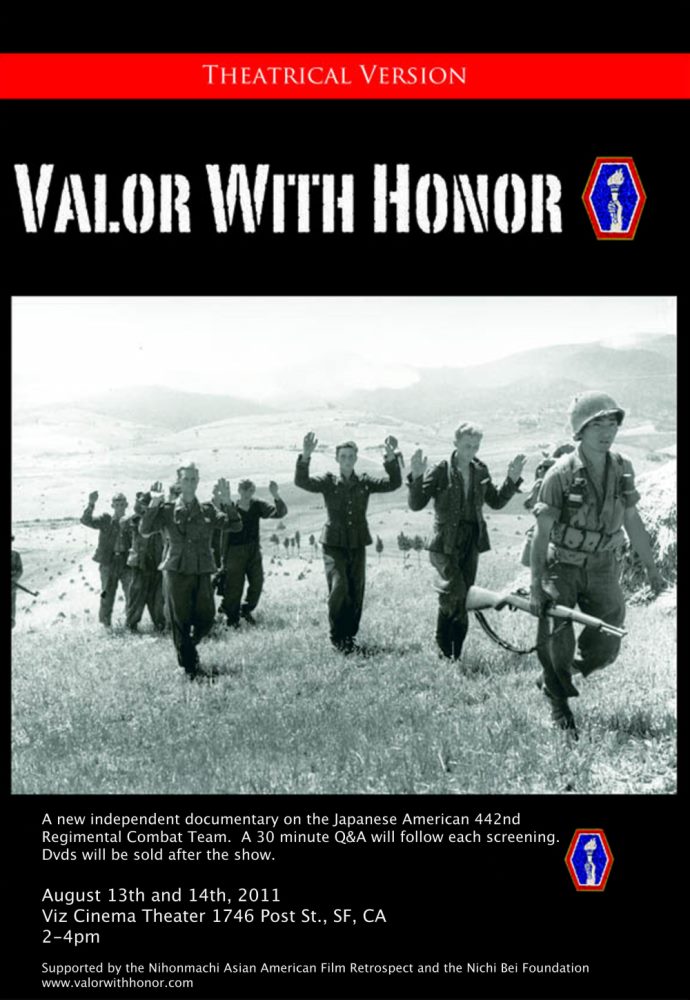
In World War II, the 442nd Regimental Combat Team was composed entirely of Japanese Americans, most of whom were initially imprisoned by the U.S. government after the Pearl Harbor attacks. Despite this racist and xenophobic treatment, these brave Americans volunteered to fight for their country and eventually became the most highly-decorated fighting unit of their size during WWIII.
Burt Takeuchi has devoted most of his life to honoring the bravery and sacrifices of the 442nd and has created “Valor With Honor,” an independent documentary film based on over 35 interviews of Japanese American veterans who served in the 442nd Regimental Combat Team during WW2. The 85 minute feature film describes the harrowing stories of 442nd’s battles in Italy, the Lost Battalion Rescue in France, the assault up Mount Folgorito, and witness to the holocaust at Dachau, Germany at the close of WW2. The film concludes with the vets bittersweet return home to America. The entire film is woven through stories told by the veterans themselves.
Valor with Honor will be shown August 13th and 14th, 2011 at the New Viz Theater in San Francisco’s Japantown (2-4pm). A 30-minute Q&A will follow the screening. DVDs will be sold after the show 25$ per copy. Free autographs. The Nihonmachi Street Fair is also that weekend, so you can enjoy the festival and attend one of screenings. Tickets for the August 13th and 14th (2-4pm) SF Japantown screenings at the New Viz can be purchased online.
Aloha,
Burt Takeuchi
Torasan Films
www.valorwithhonor.com
I wanted to give you advance notice of an international event to inspire and empower Asian women around the globe. The Lotus Blossoming Telesummit would be of interest to your readers visiting the Women & Gender Issues section of your website. This free online event represents the new wave of female empowerment in the Asian community. It begins on August 8, 2011 (6pm PST) and runs for three weeks.
Asia Rising–And She Wears a Skirt
While the spotlight shines on Tiger Mom, an unreported uprising of Asian women is quietly taking place around the globe. There’s a new girl in town and she’s not the demure geisha or cantankerous dragon lady of past. She is the modern empowered Asian woman. While she comes from all walks of life, what she has in common with her yellow sisters is that she embraces her identity–both the good and the bad–and makes choices on her own terms regardless of cultural expectations.
Beginning August 8th, the world will hear her roar. This auspicious day marks the beginning of the first ever Lotus Blossoming Telesummit, a free online event featuring an international line-up of speakers who are on a mission to inspire and empower women around the world.
Each night of the event features a different amazing Asian woman sharing how she reached beyond what she was taught and became who she was destined to be. The Lotus Blossoming Telesummit is free to attend. People can listen in to the event broadcasts by phone or online.
Speakers and topics include:
LA-based solo performer, Kristina Wong, gives a behind-the-curtain peek on what it’s like to live a creative life and eschew a traditional career
Speaker and trainer, Murshidah Said, teaches the importance of self-love and self-respect for women
Award-winning blogger, Stacie Tamaki, shares how she embraces what makes her different to make a difference in the world
Holistic energetic healer, Kim Le, conducts an online healing mediation to cultivate inner and world peace
Relationship expert, Annie Lin, gives the scoop on how to find one’s soulmate by embracing one’s imperfections
Love advocator, Dr. Rose G.S., gives a Malaysian perspective on the Law of Attraction for Asian and Muslim communities–and beyond
Spiritual teacher, Marja West, activates the Divine Feminine Wisdom in listeners–both men and women
Generation Y tech evangelist, Sacha Chua, demystifies how to use social networking as a tool for self-discovery
Soul coach and fourth generation Chinese Canadian, Marielle Smith, kick-starts the creative rebel inside everyone
Ellen Shing, founder of specialty lingerie store, Lula Lu, speaks of finding the perfect fit in both a career and bra size
Holly Tse, creator and host of the Lotus Blossoming Telesummit, lets listeners in on how to use effortless action to make their dreams a reality
The Lotus Blossoming Telesummit runs for three weeks beginning Monday, August 8, 2011, 6pm PST. The event is free and open to everyone. To get the full event details, register at www.lotusblossoming.com.
About Holly Tse:
Holly Tse is the embodiment of the new empowered Asian woman. She left a conventional career in the Internet industry to pursue her passions, which included being a dating coach, reflexologist, Certified Massage Practitioner, cook show host and pitchwoman, published writer and author, cat toy expert, environmental blogger, and full-time mom. She also rode a bicycle across Canada without knowing how to ride a bike. She is an Empress of Effortless Action and teaches people how to make their passions a reality.
I am a doctoral student at Azusa Pacific University in Southern California and am looking for help recruiting biracial individuals for my dissertation research. Specifically, I am looking for individuals who meet the following criteria:
Biracial of non-European heritage (e.g. biracial Black and Hispanic, biracial Asian and Native American, etc.)
Between the ages of 18-33
Born in the United States
Speak English fluently
Have grown up in a home with both parents
I’ll be conducting in-person or phone interviews lasting 1 – 1.5 hours and participants will receive a small token of appreciation. If you know anyone who might meet the criteria, I would appreciate it if you could pass on my email to them or send me their contact information.
Maryland Vietnamese Mutual Association (MVMA) seeks a member of AmeriCorps for the New Americans Citizenship Project of Maryland. Applications are due August 15th by 5pm!
MVMA is currently offering an AmeriCorps State position through the New Americans Citizenship Project of Maryland (NACPM). The program, which will be starting its third year this September, focuses on providing Legal Permanent Residents (LPRs) the necessary services to move forward through the citizenship/naturalization process. As an AmeriCorps member with MVMA your responsibilities will include (but not limited to):
Direct Services:
Coordinate workshops and intake clinics focused on naturalization, financial literacy and economic development, and access to public benefits
Assist LPRs in filling out the citizenship application
Teach and/or coordinate English and citizenship preparation courses
Work one on one with clients for tutoring purposes, when necessary
Client referrals to other agencies or individuals
Information Gathering/Education and Outreach:
Strengthen and develop organizational partnerships with existing community and faith-based organizations that serve immigrant communities in Maryland
Conduct needs assessments, community education within immigrant community
Inform LPRs about the naturalization process and benefits of citizenship
Write press releases for MVMA website and radio announcements
Assist with the publicity of the organization and services through community events and outreach
Community involvement/Volunteer Management:
Organize legal panels
Assist in the planning and hosting of MVMA events
Develop volunteer opportunities, as well as train and coordinate volunteers
Candidates would be required to meet the following qualifications:
Ability to perform all of the duties outlined above
U.S. Citizen or U.S. Legal Permanent Resident (recent naturalized citizens encourage to apply)
At least 17 years old
A high school diploma or GED or agree to obtain one during the service year
Excellent English writing and language skills (bilingual in Vietnamese preferred, but not required)
Ability to work independently and as part of a team
Highly organized and efficient, able to manage multiple ongoing projects, “can-do†attitude, flexibility, teamwork, attention to detail; high degree of initiative
Must be able to commit to 1700 hours of service between September 12th, 2011 and August 2012 (about 40 hours/week)
Excellent administrative, customer service and program management skills
Strong interest in working with adults from various cultural, educational, and ethnic backgrounds
Evening and weekend hours required
Access to personal transportation preferred
Benefits: Living stipend of $12,100, paid out bi-monthly for the duration of service term; health care coverage, childcare assistance, student loan forbearance, a $5,550 education award upon successful completion of program, and professional development training. Applications will be accepted from now through August 15th. The selected candidate will start September 12th.
To Apply:
Complete an application (attached or available at mdvietmutual.org)
Make sure to include Personal Statement and two references
Attach cover letter and resume
Email to info@mdvietmutual.org with “AMERICORPS APPLICATION” in the subject line
Incomplete applications will not be considered for review. Questions?
Contact: Diane Vu, Executive Director
301.588.6862 or info@mdvietmutual.org
Call for Contributions: Asian American Literature and the Legacy of Maxine Hong Kingston
The Asian Pacific American Legal Resource Center (APALRC) is a 501(c) (3) community-based legal organization that works with low income and limited-English proficient Asian immigrant communities across the Washington D.C. metropolitan area. The APALRC provides free legal assistance to low-income Asian immigrants who have limited English proficiency in a linguistically accessible and culturally appropriate manner. It operates a multi-lingual legal intake helpline, a legal interpreter project, and provides legal assistance in immigration, domestic violence and family law, tenants’ rights, and other areas. The APALRC works to improve Asian Americans’ access to the legal system and to address the systemic inequities faced by Asian Americans and immigrants in our region.
The APALRC seeks legal interns/externs for Fall 2011, as well as undergraduate or graduate students and recent graduates interested in working in local communities. Interns will have various responsibilities that include work on one or more of the following projects:
Asian American Multilingual Legal Helpline: (Legal)
The helpline is the first point of contact for potential clients of APALRC. It has separate lines for Mandarin/Cantonese, Korean, Vietnamese, and Hindi/Urdu/Gujarati speakers. Helpline interns will take incoming calls, conduct initial intakes, work with the legal team to identify and outline next steps, conduct legal research, and work on cases under the supervision of a staff attorney.
Crime Victims’ Assistance Project: (Legal/Non-Legal)
This project provides information and assistance to Asian victims of aggravated crimes to ensure that they can access law enforcement services and information about the D.C. Crime Assistance Fund. In addition, this project also works with immigrant victims of crime who may be eligible for T and U Visas. An intern in this project will assist with intake calls, filing applications with eligible community members, and work on the range of issues that a victim of crime may confront.
Domestic Violence Legal Assistance Project: (Legal)
This project provides legal assistance to victims of domestic violence in the areas of abuse prevention, family law and immigration law. Interns will work with staff attorneys and partnering social service organizations in conducting community outreach and education, legal research and case preparation to provide comprehensive legal assistance to assist victims of domestic violence to rebuild their lives.
Housing and Community Justice Project: (Legal/Non-Legal)
This project focuses on unlawful evictions, substandard housing conditions issues, admission to subsidized housing, tenant organizations, and other local advocacy efforts. The ideal candidate(s) has interest and/or experience in housing, poverty law, and work with local immigrant communities. Undergraduate and graduate students in urban planning and Asian American Studies also encouraged to apply.
Fundraising Internship: (Non-Legal)
The APALRC seeks an undergraduate or recent graduate intern with an interest in developing fundraising skills in a nonprofit organization committed to advancing social justice. Under the supervision and guidance of the Executive Director and development staff, the development intern will assist with fundraising tasks involving grant research, grant writing, marketing donor relations, and special event planning.
Communications Internship: (Non-Legal)
The APALRC seeks an undergraduate or recent graduate with an interest or degree in journalism, public relations or marketing to apply for an internship to assist with various communications tasks including drafting media advisories and press releases, monitoring media coverage and maintaining media files, updating and maintaining media lists, and preparing marketing materials.
Ideal Candidates will have (for appropriate positions):
Written and oral communication skills
Initiative, ability to multitask and meet deadlines
Experience working with Asian or other immigrant communities
Interest and experience in nonprofit and/or community-based work
Fundraising or nonprofit communications experience
Experience working with interpreters
Oral and written proficiency in Bangla, Cantonese, Korean, Mandarin, Nepali, Urdu, and/or Vietnamese
To apply:
Please send a single email with the following attachments in PDF format by September 9, 2011:
Cover Letter (1 page): listing the specific project(s) in which you are interested and explaining your interest in working in a nonprofit organization that serves the local Asian immigrant community
Resume (1 page max): include relevant course/clinical work, experience, all language skills
Writing Sample (up to 5 pages): that shows legal writing skills and/or ability to convey legal issues in plain English (for non-legal positions, please send a writing sample that demonstrates strong writing and critical analysis skills)
For general inquiries and internship application, please send an email to:Admin@apalrc.org. Internship application should mark in the subject line “Internship Application for Fall 2011.” No Phone Calls, please. We will contact all applicants via email regarding their application status. Candidates will be interviewed and offered positions on a rolling basis, so early applications are encouraged. Not all applicants will be contacted for interviews, and incomplete applications will not be considered. The APALRC is an equal opportunity employer.
Are you interested in advocating on behalf of survivors of domestic violence? DVRP is currently recruiting bilingual and volunteer advocates! Bilingual advocates work with limited English proficient survivors, providing peer support, court accompaniment, interpretation/translation assistance and referral to social and legal services. Bilingual advocates must be fluent in at least one other language and are also required to be available on an on-call basis during regular business hours. Volunteer advocates also provide similar services but work mainly with English-speaking survivors and are not required to provide services during regular business hours.
All advocates must attend a 55 hour training prior to starting and be able to make a commitment of 1 year to the program. Advocates who speak at least one of the following languages are highly preferred: Urdu, Hindi, Nepali, Mandarin, Mongolian, Bahasa Indonesia, Arabic, Korean, Japanese, Thai, Vietnamese and Sinhala.
Advocates Program Training Dates (10am-5pm): 8/27, 8/28, 9/11, 9/17, 9/18, 9/24, 9/25, 10/1, 10/2
To apply: www.dvrp.org and click on “Get Involved.”
2012 Joint Conference of Librarians of Color Conference — Call for Proposal.
The 2012 Joint Conference of Librarians of Color, JCLC 2012: Gathering at the Waters: Celebrating Stories and Embracing Communities will take place from September 19-23, 2012 in Kansas City, Missouri. The mission of JCLC is to advance the issues affecting librarians of color within the profession and to also explore how best to serve the incredibly diverse and changing communities that use our libraries.
The Joint Conference of Librarians of Color is a conference for everyone and brings together a diverse group of librarians, library staff, supporters, trustees and community participants to explore issues of diversity inclusion in libraries and how they affect the ethnic communities who use our services. JCLC deepens connections across constituencies, creates spaces for dialogue, promotes the telling and celebrating of one’s stories, and encourages the transformation of libraries into more democratic and diverse organizations.
This groundbreaking event is sponsored by the five ethnic caucuses: the American Indian Library Association (AILA), Asian/Pacific American Librarians Association (APALA), Black Caucus of the American Library Association (BCALA), Chinese American Librarians Association (CALA), and the National Association to Promote Library and Information Services to Latinos and the Spanish Speaking (REFORMA). JCLC 2012 follows the first gathering in 2006 in Dallas, Texas.
We are now accepting session proposals! Please visit our website to learn more and to submit your proposal.
Andrew W. Mellon Postdoctoral Fellowship In Asian-American Studies
Wellesley College invites applications for a two-year Mellon Postdoctoral Fellowship in Asian-American studies, to begin Fall 2012. Candidates should have received the Ph.D. within the past three years (ABD considered). Preference will be given to the fields of history, ethnic studies, American Studies, anthropology, and sociology.
The Fellow will be in residence at the Newhouse Center for the Humanities the first year and will be expected to take an active role in its intellectual community. In the first year year, the Fellow will teach one course, and in the second year one course each semester, including an introductory course in Asian American Studies. The Fellow will also be expected to advise students and participate in programming for American Studies. The fellowship includes support for research and travel.
Please submit only in electronic form the following: a letter of application, a c.v., a graduate school transcript, three letters of recommendation (the online application will request names/email address so that recommenders or dossier services may submit the letters directly), a brief statement of teaching experience and research interests, and a writing sample to https://career.wellesley.edu.
Applications must be received by October 15, 2011. If circumstances do not allow you to submit materials through our on line application system, please email us at working@wellesley.edu. Wellesley is an Affirmative Action/Equal Opportunity Employer, and we are committed to increasing the diversity of the college community and the curriculum. Candidates who believe they can contribute to that goal are encouraged to apply.
The following is a list of recent academic journal articles and doctoral dissertations from scholars in the social sciences and humanities that focus on race/ethnicity and/or immigration, with a particular emphasis on Asian Americans. As you can see, the diversity of research topics is a direct reflection of the dynamic and multidimensional nature of people’s lives, experiences, and issues related to race/ethnicity and immigration.
The academic journal articles are generally available in the libraries of most colleges and universities and/or through online research databases. The dissertation records are compiled by Dissertation Abstracts International. Copies of the dissertations can be obtained through your college’s library or by addressing your request to ProQuest, 789 E. Eisenhower Parkway, P.O. Box 1346, Ann Arbor, MI 48106-1346. Telephone 800-521-3042, email: disspub@umi.com. As always, works included in this list are for informational purposes only and do not imply an endorsement of their contents.
Yasuike, Akiko. 2011. “Economic Opportunities and the Division of Labor among Japanese Immigrant Couples in Southern California.” Sociological Inquiry 81:353-376.
Abstract: Based on 36 in-depth interviews conducted with 18 Japanese couples who live in Southern California, this study examines the impact of differential economic opportunities on the division of labor among Japanese immigrant couples. Three main factors facilitate Japanese professional and businessmen’s mobility to and settlement in Southern California: (1) the gender-based stratification of the workplace in Japan; (2) U.S. immigration policies that favor foreign nationals with strong corporate ties and business experience; and (3) the strong presence of Japanese corporations in Southern California.
Whereas these conditions enable men to maintain their earning power, they do not benefit women in employment opportunities. The difference in economic opportunities encourages Japanese couples to preserve a breadwinner and homemaker division of labor, and women continue to do a bulk of housework and childcare even when women reenter the labor force later in their lives.
Xiea, Yu, and Emily Greenman. 2011. “The Social Context of Assimilation: Testing Implications of Segmented Assimilation Theory.” Social Science Research 40:965-984.
Abstract: Segmented assimilation theory has been a popular explanation for the diverse experiences of assimilation among new waves of immigrants and their children. While the theory has been interpreted in many different ways, we emphasize its implications for the important role of social context: both processes and consequences of assimilation should depend on the local social context in which immigrants are embedded. We derive empirically falsifiable hypotheses about the interaction effects between social context and assimilation on immigrant children’s well-being.
We then test the hypotheses using data from the National Longitudinal Study of Adolescent Health. Our empirical analyses yield two main findings. First, for immigrant adolescents living in non-poverty neighborhoods, we find assimilation to be positively associated with educational achievement and psychological well-being but also positively associated with at-risk behavior. Second, there is little empirical evidence supporting our hypotheses derived from segmented assimilation theory. We interpret these results to mean that future research would be more fruitful focusing on differential processes of assimilation rather than differential consequences of assimilation.
Thomas, Kevin J. A. 2011. “What Explains the Increasing Trend in African Emigration to the U.S.?” International Migration Review 45:3-28.
Abstract: In this study, data from the U.S. State Department on visas issued abroad and information from other sources are used to examine trends in African emigration to the U.S. The results suggest that, on average, moderate increases in African Gross Domestic Product between 1992 and 2007 had a buffering effect on emigration trends. Yet, emigration to the U.S. increased much faster from the poorest than wealthiest countries in Africa. Contrary to expectations, larger emigration increases were found in Africa’s non-English than English-speaking countries.
Despite the increasing overall trend, however, critical differences were observed in the impacts of specific types of flows. For example, overall trends were driven by increases in Diversity Visa migration, refugee movements, and the migration of immediate relatives. However, significant declines were observed in employment-related emigration from Africa to the U.S. The results further suggest that impact of trends in African fertility, urbanization, and phone use are circumscribed to specific contexts and types of migration flows. The findings, therefore, provide an empirical basis for concluding that the dynamics of African migration to the U.S. are becoming increasingly more complex.
Taylor, Marylee C., and Peter J. Mateyka. 2011. “Commuity Influences on White Racial Attitudes: What Matters and Why?” Sociological Quarterly 52:220-243.
Abstract: Tracing the roots of racial attitudes in historical events and individual biographies has been a long-standing goal of race relations scholars. Recent years have seen a new development in racial attitude research: Local community context has entered the spotlight as a potential influence on racial views. The race composition of the locality has been the most common focus; evidence from earlier decades suggests that white Americans are more likely to hold anti-black attitudes if they live in areas where the African-American population is relatively large.
However, an influential 2000 article argued that the socioeconomic composition of the white community is a more powerful influence on white attitudes: In low-socioeconomic status (SES) locales, “stress-inducing†deprivations and hardships in whites’ own lives purportedly lead them to disparage blacks. The study reported here reassesses this “scapegoating†claim, using data from the 1998 to 2002 General Social Surveys linked to 2000 census information about communities. Across many dimensions of racial attitudes, there is pronounced influence of both local racial proportions and college completion rates among white residents. However, the economic dimension of SES exerts negligible influence on white racial attitudes, suggesting that local processes other than scapegoating must be at work.
Son, Deborah, and J. Nicole Shelton. 2011. “Stigma Consciousness Among Asian Americans: Impact of Positive Stereotypes in Interracial Roommate Relationships.” Asian American Journal of Psychology 2:51-60.
Abstract: The present research examined the intrapersonal consequences that Asian Americans experience as a result of their concerns about appearing highly intelligent, a positive stereotype associated with their racial group. A daily diary study of Asian-American college students (N = 47) revealed that higher levels of stigma consciousness were associated with greater anxiety, contact avoidance, perceived need to change to fit in with a roommate, and concerns about being viewed as intelligent for Asian Americans living with a European-American (vs. racial minority) roommate.
Further, among Asian Americans with a European-American roommate, concerns about appearing intelligent partially mediated the relationships between stigma consciousness and the outcomes of anxiety and perceived need to change to fit in. In sum, these findings demonstrate that positive stereotypes about the group—not just negative stereotypes—may lead to undesirable intrapersonal outcomes.
Ruzek, Nicole A., Dao Q. Nguyen, and David C. Herzog. 2011. “Acculturation, Enculturation, Psychological Distress and Help-Seeking Preferences among Asian American College Students.” Asian American Journal of Psychology July 4, 2001.
Abstract: We examined the relationship between Asian American college students’ levels of acculturation, enculturation, and psychological distress. We also explored the methods Asian American college students prefer when seeking help for psychological concerns. The sample included 601 Asian American students from a large public university in Southern California. Respondents completed an online questionnaire, which included instruments assessing acculturation and enculturation levels as well as psychological distress and help-seeking preferences.
Regression analyses indicated that when Asian American students hold a greater degree of European values they are less likely to experience psychological distress. A repeated-measures ANOVA found that Asian American students prefer more covert approaches to mental health treatment. These findings both compliment and contradict previous studies of acculturation, enculturation, psychological distress and help-seeking among the Asian American college student population.
Hunt, Geoffrey, Molly Moloney, and Kristin Evans. 2011. “‘How Asian Am I?’ Asian American Youth Cultures, Drug Use, and Ethnic Identity Construction.” Youth & Society 43:274-304.
Abstract: This article analyzes the construction of ethnic identity in the narratives of 100 young Asian Americans in a dance club/rave scene. Authors examine how illicit drug use and other consuming practices shape their understanding of Asian American identities, finding three distinct patterns. The first presents a disjuncture between Asian American ethnicity and drug use, seeing their own consumption as exceptional. The second argues their drug consumption is a natural outgrowth of their Asian American identity, allowing them to navigate the liminal space they occupy in American society.
The final group presents Asian American drug use as normalized and constructs identity through taste and lifestyle boundary markers within social contexts of the dance scenes. These three narratives share a sense of ethnicity as dynamic, provisional, and constructed, allowing one to go beyond the static, essentialist models of ethnic identity that underlie much previous research on ethnicity, immigration, and substance use.
Howard, Tiffiany O. 2011. “The Perceptions of Self and Others: Examining the Effect Identity Adoption has on Immigrant Attitudes toward Affirmative Action Policies in the United States.” Immigrants & Minorities 29:86-109.
Abstract: While there exist several studies devoted to evaluating the political attitudes of US citizens, very little has been done to distinguish between the political attitudes of immigrants and citizens of the same racial or ethnic group. Using data from the Multi-City Study of Urban Inequality, 1992-94, this study evaluates the role identity adoption plays in highlighting the distinctions which exist between the political attitudes of immigrants and those of US citizens from the same racial/ethnic group.
The results reveal that despite pronounced cultural distinctions between immigrants and US citizens, in many cases race and ethnicity are important unifiers on opinions regarding public policy issues, specifically that of affirmative action. This is an important finding because it suggests that there is some homogeneity of attitudes and public
A lot of people are stressed out right now and understandably so. Our federal government is deadlocked over the debt ceiling issue, the economy is still stagnant, people are mourning the recent murders in Norway, and just yesterday, a Muslim American soldier was arrested for an alleged murder plotting at Fort Hood.
What can we do to deal with all this stress? One thing that people can try is meditating. People throughout Asia have been doing so for thousands of years and little by little, others around the world have found this technique and have enjoyed its benefits.
Here in the U.S., meditation has been around for a while but as this news segment from ABC’s NightLine shows, it is increasingly becoming part of mainstream U.S. society:
As this story notes and as research increasingly documents, this example of east-west convergence is not just the latest pop culture trend — it can actually improve your quality of life.
The recent mass murder tragedy in Norway has once again focused attention on ongoing sociological issues related to Islam in general and Muslim Americans in particular. As we approach the 10th anniversary of the 9/11 attacks, the debate and controversy surrounding the present and future dynamics of Muslim-west relations will only intensify. With this in mind, the following news articles and recently-released books shed more light on these important issues facing not just Muslim Americans, but all of U.S. society and indeed, the entire world.
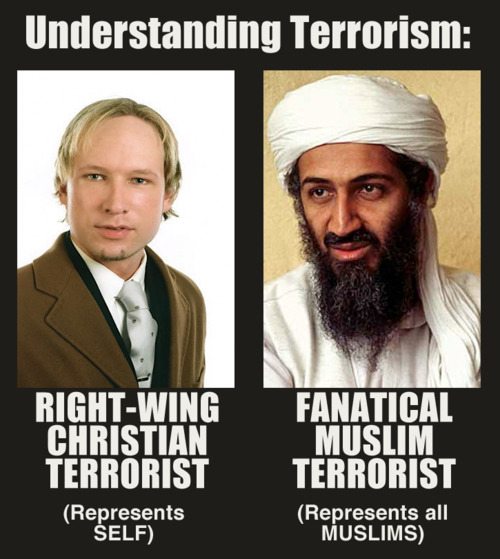
Difference Between a Christian and Muslim Terrorist
This graphic (I found it on Digg.com but am not sure who the creator of it is) caught my attention and I think makes a powerful statement about how criticism of religious extremism seems to differ according to which religion is implicated:
As the 10th anniversary of the 9/11 attack approaches, new data from the Pew Research Group shows that unfortunately, tensions and suspicions still exist between the west and Muslim populations.
Muslim and Western publics continue to see relations between them as generally bad, with both sides holding negative stereotypes of the other. . . . However, the latest Pew Global Attitudes survey finds somewhat of a thaw in the U.S. and Europe compared with five years ago. A greater percentage of Western publics now see relations between themselves and Muslims as generally good compared with 2006.
In contrast, Muslims in predominantly Muslim nations are as inclined to say relations are generally bad as they were five years ago. And, as in the past, Muslims express more unfavorable opinions about Christians than Americans or Europeans express about Muslims. Muslims in the Middle East and elsewhere who say relations with the West are bad overwhelmingly blame the West. However, while Americans and Europeans tend to blame Muslims for bad relations, significant numbers believe Westerners are responsible.
A suspected hate crime in Sacramento CA tragically highlights the inability (or refusal) of some Americans to distinguish between Asian ethnic and religious groups and instead, blindly acting on racist stereotypes to attack innocent Americans.
The traditional [Sikh] headwear might have singled them out late last week when they were gunned down, one fatally, in what police are investigating as a suspected hate crime. On Monday, local religious leaders pleaded for the community to come forward with leads but also said they will not be deterred by violence.
“Our community will continue to wear our turbans proudly,” said Navi Kaur, the granddaughter of Surinder Singh, 65, who died from his wounds. His friend, 78-year-old Gurmej Atwal, remains in critical condition. They were walking through their neighborhood in Elk Grove, just south of the California state capital Sacramento, Friday afternoon when someone in what witnesses described as a pickup truck opened fire.
Monday also marked the start of a trial involving a confirmed hate crime against a Sikh. . . . [Amar Shergill] is the attorney for a Sikh cab driver beaten four months ago by passengers who shouted anti-Islamic slurs at him in West Sacramento, which sits across the Sacramento River from the state capital. The two defendants pleaded no contest Monday to felony assault.
As the 10th anniversary of the Sept. 11 attacks approaches, several people at Monday’s news conference drew links between the Sacramento-area crimes and national and international developments. From unrest in North Africa to congressional hearings on radicalization of Muslims in the U.S., speakers warned of an increasingly hostile climate.
Student enrollment in Arabic, Korean and Chinese classes is showing the fastest growth among foreign language courses at U.S. colleges, even though Spanish remains the most popular by a huge margin, a new study shows.
The survey of more than 2,500 colleges and universities by the Modern Language Assn., or MLA, found that enrollment in Arabic surged by 46% between 2006 and 2009. More U.S. college students are studying Arabic than Russian, a change that officials say reflects a shift of interest from Cold War concerns to current issues involving the Middle East and terrorism.
Last year’s controversy about the location of a Muslim center near Ground Zero has many American Muslims exasperated about if and when they will ever be fully accepted into mainstream U.S. society.
For nine years after the attacks of Sept. 11, many American Muslims made concerted efforts to build relationships with non-Muslims, to make it clear they abhor terrorism, to educate people about Islam and to participate in interfaith service projects. They took satisfaction in the observations by many scholars that Muslims in America were more successful and assimilated than Muslims in Europe.
Now, many of those same Muslims say that all of those years of work are being rapidly undone by the fierce opposition to a Muslim cultural center near ground zero that has unleashed a torrent of anti-Muslim sentiments and a spate of vandalism. . . . Dr. Ferhan Asghar, an orthopedic spine surgeon in Cincinnati and the father of two young girls [says], “In no other country could we have such freedoms — that’s why so many Muslims choose to make this country their own. But we do wonder whether it will get to the point where people don’t want Muslims here anymore.”
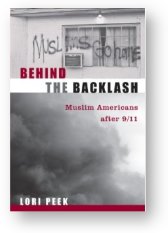
As the nation tried to absorb the shock of the 9/11 attacks, Muslim Americans were caught up in an unprecedented wave of backlash violence. Public discussion revealed that widespread misunderstanding and misrepresentation of Islam persisted, despite the striking diversity of the Muslim community.
Letting the voices of 140 ordinary Muslim American men and women describe their experiences, Lori Peek’s path-breaking book, Behind the Backlash presents moving accounts of prejudice and exclusion. Muslims speak of being subjected to harassment before the attacks, and recount the discrimination they encountered afterwards. Peek also explains the struggles of young Muslim adults to solidify their community and define their identity during a time of national crisis.
Behind the Backlash seeks to explain why blame and scapegoating occur after a catastrophe. Peek sets the twenty-first century experience of Muslim Americans, who were vilified and victimized, in the context of larger sociological and psychological processes. Peek’s book will be of interest to those in disaster research studies, sociology of religion, and race and ethnic relations.
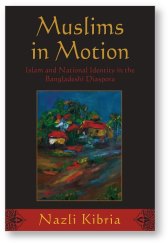
In Muslims in Motion, Nazli Kibria provides a comparative look at Bangladeshi Muslims in different global contexts-including Britain, the U.S., the Middle East, and Malaysia. Kibria examines international migrant flows from Bangladesh, and considers how such migrations continue to shape Islamization in these areas. Having conducted more than 200 in-depth interviews, she explores how, in societies as different as these, migrant Muslims, in their everyday lives, strive to achieve economic gains, sustain community and family life, and realize a sense of dignity and honor.
Muslims in Motion offers fresh insights into the prominence of Islam in these communities, especially an Islam defined by fundamentalist movements and ideologies. Kibria also focuses on the complex significance of nationality-with rich analyses of the diaspora, the role of gender and class, and the multiple identities of the migrants, she shows how nationality can be both a critical source of support and also of difficulty for many in their efforts to attain lives of dignity. By bringing to life a vast range of experiences, this book challenges prevailing stereotypes of Muslims.
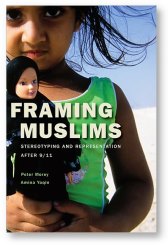
Can Muslims ever fully be citizens of the West? Can the values of Islam ever be brought into accord with the individual freedoms central to the civic identity of Western nations? Not if you believe what you see on TV. Whether the bearded fanatic, the veiled, oppressed female, or the shadowy terrorist plotting our destruction, crude stereotypes permeate public representations of Muslims in the United States and western Europe. But these “Muslims” are caricatures—distorted abstractions, wrought in the most garish colors, that serve to reduce the diversity and complexity of the Muslim world to a set of fixed objects suitable for sound bites and not much else.
In Framing Muslims: Stereotyping and Representation after 9/11, Peter Morey and Amina Yaqin dissect the ways in which stereotypes depicting Muslims as an inherently problematic presence in the West are constructed, deployed, and circulated in the public imagination, producing an immense gulf between representation and a considerably more complex reality. Crucially, they show that these stereotypes are not solely the province of crude-minded demagogues and their tabloid megaphones, but multiply as well from the lips of supposedly progressive elites, even those who presume to speak “from within,” on Muslims’ behalf.
Based on nuanced analyses of cultural representations in both the United States and the UK, the authors draw our attention to a circulation of stereotypes about Muslims that sometimes globalizes local biases and, at other times, brings national differences into sharper relief.
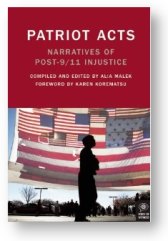
This book seeks to tell the life stories of the innocent men and women who have been needlessly swept up in the “war on terror.†As we approach the ten-year anniversary of 9/11, this collection of narratives gives voice to the people who have had their human rights violated here in the U.S. by post-9/11 policies and actions.
Among the narrators:
Young men of Arab, Muslim, South Asian, and Middle Eastern descent, who were arrested and detained or singled out for voluntary interviews because of their national origin or religion. Scholars who have been blacklisted or subjected to interrogation for their research or writings on Islam and related topics. Muslim women who have suffered from job discrimination, harassment, and assault for wearing a veil or similar head covering.
= = = = = = = = = =
UPDATE
After this post was published, I came across a few more noteworthy articles on Islam and Muslim Americans:
Muslim Americans are now more optimistic about their lives than any other major American faith group as their economic well-being improves and they feel more politically enfranchised. A Gallup study released on Tuesday found 60 percent of Muslim Americans surveyed reported they were “thriving”, slightly higher than for Americans of any other religion except for Jews, who edged them out of the top spot by one percentage point.
Pollsters noted in particular the rapid surge in positive sentiment among Muslim Americans. The percentage of Muslims who were “thriving” grew by 19 points since 2008, double that of any other major faith group. . . .
Authors of the study said they attributed the change in outlook to improved economic conditions and a sense of more political enfranchisement since the election of President Barack Obama, a Christian with Muslim family roots who has reached out to Muslim communities worldwide. The report said Obama’s approval rating among Muslim Americans was 80 percent, and that 46 percent, or a plurality, of Muslim Americans identified as Democrats, compared to only 9 percent who identified as Republicans.
[I]mprovements in Muslim sentiment came despite continuing controversies. Those included a controversy surrounding a plan to build a Muslim cultural center and mosque near the site of New York’s September 11 al-Qaida attack, and hearings on Islamic extremism called by U.S. Representative Peter King, which critics viewed as a witch-hunt.
The same Gallup Organization study mentioned in the above article also notes that among major U.S. religious groups, Muslim Americans are the most likely to oppose individual or military violence against civilians. This particular report would be a very useful resource to contradict ongoing stereotypes that Muslims are more prone to support violence than other religious groups.
Muslim Americans are the staunchest opponents of military attacks on civilians, compared with members of other major religious groups Gallup has studied in the United States. Seventy-eight percent of Muslim Americans say military attacks on civilians are never justified. . . . Respondents from other faith groups, particularly Mormon Americans, are more likely to say military attacks are sometimes justified than never justified.
Like much of the rest of the country, it’s really hot right now. Here in my corner of New England, the heat index is supposed to reach 110 today, making today the hottest day of the year so far. To commemorate this, I reprint David Letterman’s Top 10 list from last night, “Top Ten Signs You’re Too Damn Hot“:
You were just named People Magazine’s “Sweatiest Man Alive”
You begged Rupert Murdoch to hack into a Dairy Queen
You were caught texting photos of your heat rash
Your sunburns have sunburns
Your baby daughter’s first word: “clammy”
Your sweat is sweating
Instead of the maid, you’re spending time with the pool boy (Schwarzenegger only)
Every now and then your ass sizzles and smells like bacon
You sit through a taping of the Late Show just for the air conditioning
Here are some more announcements, links, and job postings about academic-related jobs, fellowships, and other related opportunities for those interested in racial/ethnic/diversity issues. As always, the announcements and links are provided for informational purposes and do not necessarily imply an endorsement of the organization or college involved.
The APIA Spoken Word & Poetry Summit is a biennial gathering of Asian Pacific Islander American community artists and activists. It’s happening August 4-7 in beautiful Minneapolis and Saint Paul, Minnesota. We come together to:
provide space for artists and activists to learn from each other and build community
recognize spoken word performance as a source of new language, new ideas, new dialogues and understandings, and creative fodder for activism and organizing
acknowledge the arts as a critical, elemental component in building, empowering, and transforming our communities and ourselves
The theme for this year’s Summit is “Moving It Forward, Bringing It Back.” We envision the 2011 Summit as a space to foster intergenerational dialogue with an explicit elder presence, a youth component, and activities for all those in between. We will also explore the various ways spoken word has pushed into other genres (theater, music, film) while bringing it back to our poetic roots. Similarly, we will foster a dialogue on past APIA social movements and present possibilities, encouraging participants to bring the conversation back to their own organizations and localities.
The Overseas Young Chinese Forum (“OYCF”), a non-profit organization based in the United States, is pleased to announce that it is now accepting applications for its Teaching Fellowships, which sponsor short term teaching trips by overseas scholars or professionals (Chinese or non-Chinese) to universities or other comparable advanced educational institutions in China. The subjects of teaching include all fields of humanities and social sciences, such as anthropology, art, communication, economics, education, geography, law, literatures, philosophy, political science, sociology, etc.
OYCF will grant 15 fellowship awards to support short term teaching trips during the Academic Year of 2011-12, including six (6) OYCF-Ford fellowships in the amount of $2,500 each and nine (9) OYCF-Gregory C. and Paula K. Chow fellowships in the amount of $2,000 each. The application deadline is August 15, 2011. Awards will be announced on September 15, 2011.
If you have a Ph.D., J.D., J.S.D. or a comparable graduate degree from, or is currently an advanced doctoral candidate (having passed the Ph.D. qualification examination and finished at least three years of graduate studies) in a university in North America or other areas outside China, and are interested in teaching a covered subject in a college or graduate school in Mainland China, please find on line the Information and Application Procedures for the OYCF Teaching Fellowships at http://www.oycf.org/Teach/application.DOC.
Ph.D. students are highly encouraged to apply because an independent teaching experience will add significant weight in the resumes and help build strong connection with China’s academia. We also give preference to advanced Ph.D. student applicants who would combine this teaching opportunity with their dissertational research in China.
As noted therein, preference will be given to teaching proposals that include comparative or interdisciplinary perspectives; are about subjects that China is in relative shortage of teachers; or will be conducted at universities in inland provinces and regions. This year, we dedicate at least 3-4 fellowships as the Central or Western Region Teaching Fellowships to teaching fellows who plan to teach in an inland province or autonomous region. Accordingly, teaching proposals specifically designed for teaching in these regions are especially welcome.
To submit your application, you will need an application form, a brief letter of interest, curriculum vitae or resume, a detailed course syllabus, an invitation letter from your host institution in China. For more information about OYCF or its teaching program, please visit http://www.oycf.org. For questions concerning OYCF Teaching Fellowships or their application process, please contact Qiang Fu at qf6@soc.duke.edu.
OCA-Greater Chicago, one of the fifty chapters of Organization of Chinese Americans, a national nonprofit organization dedicated to advancing the social, political, and economic well-being of Asian Pacific Americans (APAs), is proud to offer six different types of scholarships for APA high school seniors.
Each scholarship is valued at $2,500 and a total of ten scholarships will be awarded. In order to be eligible, applicants must be a permanent resident of the Chicagoland metropolitan area, a current high school senior who identifies as Asian Pacific American entering college or university in Fall 2011, demonstrate financial need, be a permanent resident or US citizen, have a cumulative grade point average (GPA) of 3.0 or above (on a 4.0 scale), and have a strong history and intent of community service.
“OCA-Greater Chicago wishes to thank all of the donors who established these scholarships. Their generosity will help APA high school students overcome financial barriers and attain higher education,” said George Mui, OCA-Greater Chicago chapter president. The six types of scholarships are:
ADI Medical Scholarship (1)
Donated by ADI Medical
Preference for applicants interested in pursuing a pre-med major, with a particular interest in Neurology and focus on moving into medical research, especially as it relates to the development of new treatments for cognitive brain disorders such as Dementia or Alzheimer’s
Alex and Kitty Pon Scholarship (1)
Donated by Alex and Kitty Pon
Preference for applicants who study supply chains, logistics or transportation
Chung Yan Mui Scholarship (4)
Donated by the Mui Family
CPI Solutions Scholarship (2)
Donated by Patrick Chew and Peggy Sim
Grace Lai Memorial Scholarship (1)
Donated by OCA-Greater Chicago
Preference for applicants who are passionate about visual or performing arts
Sue An Yoon Memorial Scholarship (1)
Donated by OCA-Greater Chicago
To learn more and apply for these scholarships, please visit the OCA National website. All applications are due Monday, August 15, 2011 at 11:59 PM CST.
Amerasia Journal invites faculty to nominate exceptional graduate student essays (masters and doctoral level) in the interdisciplinary field of Asian American and Pacific Islander Studies for the Lucie Cheng Prize. The winning article will be published in Amerasia Journal, and $1000 will be awarded.
The Lucie Cheng Prize honors the late Professor Lucie Cheng (1939-2010), a longtime faculty member of UCLA and the first permanent director of the UCLA Asian American Studies Center (1972-1987). Professor Cheng was a pioneering scholar who brought an early and enduring transnational focus to the study of Asian Americans and issues such as labor and immigration.
Submission: Nomination must be submitted via email by the graduate advisor no later than October 1, 2011 and include:
Graduate Advisor Name, Title, Institution, and Contact Information
Graduate Advisor Recommendation (500 word limit)
Graduate Student Brief CV (2 page)
Essay (5000-7000 words) in WORD file according to the Amerasia
The Center for Asian American Media (CAAM) is thrilled to announce our Call for Entries for the 30th Annual San Francisco International Asian American Film Festival (SFIAAFF)! SFIAAFF accepts films and videos made by or about Asian Americans and Asians of any nationality. All lengths and genres will be considered.
SFIAAFF takes place every March in California’s Bay Area and is the nation’s largest showcase for new Asian American and Asian films. Since 1982, SFIAAFF has been an important launching point and advocate for Asian American independent filmmakers and a vital source for new Asian cinema.
————
Center for Asian American Media presents
30th San Francisco International Asian American Film Festival
March 8-18, 2012
San Francisco | Berkeley | San Jose
Call for Entries
Deadlines 2011: Early: September 2 / Late: September 30 / Withoutabox Extended: October 7 Entry Information
The largest showcase of Asian and Asian American cinema in North America. All genres and lengths accepted. Submit online or with a printed entry form.
If you’re the nostalgic type, you might be interested to read the following posts from July of years past:
2010: Harmony and Community in Yosemite An interaction in Yosemite shows how a pine cone can act as a powerful symbol of cross-racial and -national unity.
2009: Reflections on a Multiracial Buddhist Retreat One of my most controversial posts — In an otherwise refreshing and renewing multiracial Buddhist family retreat, two incidents with racial overtones highlight unconscious racial dynamics still present in American society.
2007: New Forms of Assimilation Identifying an inclusive form of assimilation among Latinos and Asians in 21st century U.S. society.
2006: The State of Asian American Politics A new study describes the emerging political power of Asian Americans, both as political representatives and as a political constituency group.
2004: Jumping the Gun Racial paranoia fed by terrorist fears leads to a sad case of racial profiling.
2003: Abercombie & Fitch in Trouble Again Retailer Abercrombie & Fitch shows its true (White) colors once more as it’s accused of discriminating against people of color — again.
In my last post, I looked at books that examine immigration at the institutional level. To complement that list, below are some recently-released books that highlight the issue of immigration on the community and individual level and provides a more ethnographic and personal account of how political, economic, and legal dynamics operate in the daily lives of immigrants and the neighborhoods in which they live. A book’s inclusion is for informational purposes only and does not necessarily mean a full endorsement of its contents.
Can the recent influx of immigrants successfully enter the mainstream of American life, or will many of them fail to thrive and become part of a permanent underclass? Achieving Anew examines immigrant life in school, at work, and in communities and demonstrates that recent immigrants and their children do make substantial progress over time, both within and between generations.
From policymakers to private citizens, our national conversation on immigration has consistently questioned the country’s ability to absorb increasing numbers of foreign nationals–now nearly one million legal entrants per year. Using census data, longitudinal education surveys, and other data, Michael White and Jennifer Glick place their study of new immigrant achievement within a context of recent developments in assimilation theory and policies regulating who gets in and what happens to them upon arrival.
They find that immigrant status itself is not an important predictor of educational achievement. First-generation immigrants arrive in the United States with less education than native-born Americans, but by the second and third generation, the children of immigrants are just as successful in school as native-born students with equivalent social and economic background. As with prior studies, the effects of socioeconomic background and family structure show through strongly. On education attainment, race and ethnicity have a strong impact on achievement initially, but less over time.
Looking at the labor force, White and Glick find no evidence to confirm the often-voiced worry that recent immigrants and their children are falling behind earlier arrivals. On the contrary, immigrants of more recent vintage tend to catch up to the occupational status of natives more quickly than in the past. Family background, educational preparation, and race/ethnicity all play a role in labor market success, just as they do for the native born, but the offspring of immigrants suffer no disadvantage due to their immigrant origins.
Although the picture is mixed and the continuing significance of racial factors remains a concern, Achieving Anew provides compelling reassurance that the recent wave of immigrants is making impressive progress in joining the American mainstream. The process of assimilation is not broken, the advent of a new underclass is not imminent, and the efforts to argue for the restriction of immigration based on these fears are largely mistaken.
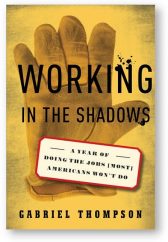
What is it like to do the back-breaking work of immigrants? To find out, Gabriel Thompson spent a year working alongside Latino immigrants, who initially thought he was either crazy or an undercover immigration agent. He stooped over lettuce fields in Arizona, and worked the graveyard shift at a chicken slaughterhouse in rural Alabama. He dodged taxis—not always successfully—as a bicycle delivery “boy” for an upscale Manhattan restaurant, and was fired from a flower shop by a boss who, he quickly realized, was nuts.
As one coworker explained, “These jobs make you old quick.” Back spasms occasionally keep Thompson in bed, where he suffers recurring nightmares involving iceberg lettuce and chicken carcasses. Combining personal narrative with investigative reporting, Thompson shines a bright light on the underside of the American economy, exposing harsh working conditions, union busting, and lax government enforcement—while telling the stories of workers, undocumented immigrants, and desperate US citizens alike, forced to live with chronic pain in the pursuit of $8 an hour.
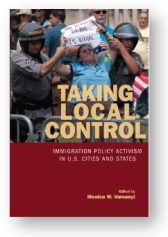
With the number of undocumented immigrants in the United States at an all-time high and Congressional immigration reform seemingly at a standstill, cities and states across the nation have leapt into the fray, creating a wide range of policies—some more controversial than others—to address illegal immigration within their jurisdictions. These policies, both anti- and pro-immigrant in nature, run the gamut. Some call for the involvement of city police in immigration enforcement, debates over day laborer markets, the establishment of employer sanctions laws, and the implementation of anti-immigrant ordinances. Other policies call for cities and states to declare themselves “sanctuaries” for undocumented immigrants, passing laws to extend locally-funded health care and social services, offer English language training, and improve wages and working conditions.
While these state and local immigration policies continue to receive wide coverage in the popular press, they have received very little attention in the scholarly literature. This volume aims to fill the gap by offering perspectives from political scientists, legal scholars, sociologists, and geographers at the leading edge of this emerging field. Drawing on high profile case studies, the contributors seek to explain the explosion in state and local immigration policy activism, account for the policies that have been considered and passed, and explore the tensions that have emerged within communities and between different levels of government.
This timely entrant into the study of state and local immigration policy also illuminates the significant challenges and opportunities of comprehensive immigration reform, highlights the range of issues at stake, and charts a future research agenda that will more deeply explore the impacts of these policies on immigrant communities.
There are now nearly four million children born in the United States who have undocumented immigrant parents. In the current debates around immigration reform, policymakers often view immigrants as an economic or labor market problem to be solved, but the issue has a very real human dimension. Immigrant parents without legal status are raising their citizen children under stressful work and financial conditions, with the constant threat of discovery and deportation that may narrow social contacts and limit participation in public programs that might benefit their children.
Immigrants Raising Citizens offers a compelling description of the everyday experiences of these parents, their very young children, and the consequences these experiences have on their children’s development. It challenges conventional wisdom about undocumented immigrants, viewing them not as lawbreakers or victims, but as the parents of citizens whose adult productivity will be essential to the nation’s future. The book’s findings are based on data from a three-year study of 380 infants from Dominican, Mexican, Chinese, and African American families, which included in-depth interviews, in-home child assessments, and parent surveys.
The book shows that undocumented parents share three sets of experiences that distinguish them from legal-status parents and may adversely influence their children’s development: avoidance of programs and authorities, isolated social networks, and poor work conditions. Fearing deportation, undocumented parents often avoid accessing valuable resources that could help their children’s development such as access to public programs and agencies providing child care and food subsidies. At the same time, many of these parents are forced to interact with illegal entities such as smugglers or loan sharks out of financial necessity. Undocumented immigrants also tend to have fewer reliable social ties to assist with child care or share information on child-rearing.
Compared to legal-status parents, undocumented parents experience significantly more exploitive work conditions, including long hours, inadequate pay and raises, few job benefits, and limited autonomy in job duties. These conditions can result in ongoing parental stress, economic hardship, and avoidance of center-based child care which is directly correlated with early skill development in children. The result is poorly developed cognitive skills, recognizable in children as young as two years old, which can negatively impact their future school performance and, eventually, their job prospects.
Immigrants Raising Citizens has important implications for immigration policy, labor law enforcement, and the structure of community services for immigrant families. In addition to low income and education levels, undocumented parents experience hardships due to their status that have potentially lifelong consequences for their children. With nothing less than the future contributions of these children at stake, the book presents a rigorous and sobering argument that the price for ignoring this reality may be too high to pay.
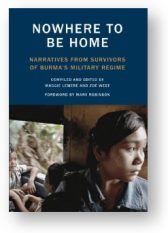
Decades of military oppression in Burma have led to the systematic destruction of thousands of ethnic minority villages, a standing army with one of the world’s highest number of child soldiers, and the displacement of millions of people. Nowhere to Be Home is an eye-opening collection of oral histories exposing the realities of life under military rule. In their own words, men and women from Burma describe their lives in the country that Human Rights Watch has called “the textbook example of a police state.”
Below are some recently-released books that highlight the issue of immigration on the institutional level and how political, economic, and legal dynamics operate at the level of social institutions. A corresponding overview of books that look at immigration at the community and individual level is coming shortly. A book’s inclusion is for informational purposes only and does not necessarily mean a full endorsement of its contents.
The ease of transportation, the opening of international immigration policies, the growing refugee movements, and the increasing size of unauthorized immigrant populations suggest that immigration worldwide is a phenomenon of utmost importance to professionals who develop policies and programs for, or provide services to, immigrants. Immigration occurs in both the wealthy nations of the global North and the poorer countries of the global South; it involves individuals who arrive with substantial human capital and those with little. It has far-reaching implications for a nation’s economy, public policies, social and health services, and culture.
The purpose of this volume, therefore, is to explore current patterns and policies of immigration in key countries and regions across the globe and analyze the implications for these countries and their immigrant populations. Each of its chapters, written by an international and interdisciplinary group of experts, explores how country conditions, policies, values, politics, and attitudes influence the process of immigration and subsequently affect immigrants, migration, and the nation itself.
No other volume explores the landscape of worldwide immigration as broadly as this does, with sweeping coverage of countries and empirical research, together with an analytic framework that sets the context of human migration against a wide backdrop of experiential factors that take shape long before an immigrant enters a host country. At once a sourcebook and an applied model of immigration studies, Immigration Worldwide is a valuable reference for scholars and students seeking a wide-ranging yet nuanced survey of the key issues salient to debates about the programs and policies that best serve immigrant populations and their host countries.
The international mobility of people and elites is a main feature of the global economy of today and yesterday. Immigration augments the labor force in receiving countries and provides many of the bodies and minds that are essential to any vibrant economy. Talented people are critical to the transfer of knowledge, ideas, fresh capital, contacts, and entrepreneurial capacities. This book is based on a blend of theory, varied country examples, and rich historical material ranging from the mid-nineteenth century to the early twenty-first century.
It discusses the conceptual underpinnings of the push and pull factors of current migration waves and their impacts for development on the source and receiving countries. The analysis reviews the historical context under which various migration experiences have taken place – both in periods of internationalism and in periods of nationalism – in order to contribute to debates on the desirability of and tensions and costs involved in the current process of international migration and globalization. These issues are relevant during both times of economic slumps and times of economic growth.
At first glance, the U.S. decision to escalate the war in Vietnam in the mid-1960s, China’s position on North Korea’s nuclear program in the late 1990s and early 2000s, and the EU resolution to lift what remained of the arms embargo against Libya in the mid-2000s would appear to share little in common. Yet each of these seemingly unconnected and far-reaching foreign policy decisions resulted at least in part from the exercise of a unique kind of coercion, one predicated on the intentional creation, manipulation, and exploitation of real or threatened mass population movements. In Weapons of Mass Migration, Kelly M. Greenhill offers the first systematic examination of this widely deployed but largely unrecognized instrument of state influence. She shows both how often this unorthodox brand of coercion has been attempted (more than fifty times in the last half century) and how successful it has been (well over half the time). She also tackles the questions of who employs this policy tool, to what ends, and how and why it ever works.
Coercers aim to affect target states’ behavior by exploiting the existence of competing political interests and groups, Greenhill argues, and by manipulating the costs or risks imposed on target state populations. This ‘coercion by punishment’ strategy can be effected in two ways: the first relies on straightforward threats to overwhelm a target’s capacity to accommodate a refugee or migrant influx; the second, on a kind of norms-enhanced political blackmail that exploits the existence of legal and normative commitments to those fleeing violence, persecution, or privation. The theory is further illustrated and tested in a variety of case studies from Europe, East Asia, and North America. To help potential targets better respond to–and protect themselves against–this kind of unconventional predation, Weapons of Mass Migration also offers practicable policy recommendations for scholars, government officials, and anyone concerned about the true victims of this kind of coercion–the displaced themselves.
In a book of deep and telling ironies, Peter Schrag provides essential background for understanding the fractious debate over immigration. Covering the earliest days of the Republic to current events, Schrag sets the modern immigration controversy within the context of three centuries of debate over the same questions about who exactly is fit for citizenship. He finds that nativism has long colored our national history, and that the fear–and loathing–of newcomers has provided one of the faultlines of American cultural and political life.
Schrag describes the eerie similarities between the race-based arguments for restricting Irish, German, Slav, Italian, Jewish, and Chinese immigrants in the past and the arguments for restricting Latinos and others today. He links the terrible history of eugenic “science” to ideas, individuals, and groups now at the forefront of the fight against rational immigration policies. Not Fit for Our Society makes a powerful case for understanding the complex, often paradoxical history of immigration restriction as we work through the issues that inform, and often distort, the debate over who can become a citizen, who decides, and on what basis.
In her research on popular culture of the Vietnamese diaspora, Nhi T. Lieu explores how people displaced by war reconstruct cultural identity in the aftermath of migration. Embracing American democratic ideals and consumer capitalism prior to arriving in the United States, postwar Vietnamese refugees endeavored to assimilate and live the American Dream. In The American Dream in Vietnamese, she claims that nowhere are these fantasies played out more vividly than in the Vietnamese American entertainment industry.
Lieu examines how live music variety shows and videos, beauty pageants, and Web sites created by and for Vietnamese Americans contributed to the shaping of their cultural identity. She shows how popular culture forms repositories for conflicting expectations of assimilation, cultural preservation, and invention, alongside gendered and classed dimensions of ethnic and diasporic identity.
The American Dream in Vietnamese demonstrates how the circulation of images manufactured by both Americans and Vietnamese immigrants serves to produce these immigrants’ paradoxical desires. Within these desires and their representations, Lieu finds the dramatization of the community’s struggle to define itself against the legacy of the refugee label, a classification that continues to pathologize their experiences in American society.
Today is Independence Day, the U.S.’s 235th birthday, and the day that we all celebrate what it means to be an American. In contrast to the usual posts that I have written on this subject, instead, I would like reprint David Letterman’s recent Top 10 list, “Top Ten Reasons I, Dave Letterman, Am Proud To Be An American“:
The complimentary TSA groping
Land of the free, home of the brave, and the fattest people on Earth
Our wise and learned Founding Fathers, such as Thomas Jefferson and John Quincy Gotti (joke provided by Michele O’Bachmann)
All our presidents were born in America . . . or possibly Kenya
The United States has the best damn extreme couponers in the world
We live in a country where our politicians text photos of their junk
Forget all this, have you seen the news story about Florence Henderson?
Kim Kardashian X-rayed her ass
What other country would let me get away with doing this crap?