The views and opinions expressed on this site and blog posts (excluding comments on blog posts left by others) are entirely my own and do not represent those of any employer or organization with whom I am currently or previously have been associated.
Academic Version: Applying my personal experiences and academic research as a professor of Sociology and Asian American Studies to provide a more complete understanding of political, economic, and cultural issues and current events related to American race relations, and Asia/Asian America in particular.
Plain English: Trying to put my Ph.D. to good use.
My sociological journey began in the third grade. On the day in question, I had worked up enough childhood courage to tell my crush, a U.S. born Korean American girl, that I liked her. In my romantic fantasies—fueled by watching “the Little Mermaid†exactly a thousand times on VHS—I was hoping for fireworks and singing crabs to sprout up outside of Mrs. Locke’s room.
During recess, I made the note. It was written in red magic marker, and said “Do you want to go out? [ ] Yes, [ ] No, [ ] Maybeâ€.  Yes, as a 3rd grader I knew to include an “other category,â€â€”I was destined for survey research, but that’s another blog. I walked up the stairs, backed by a half-dozen of excited but jeering boys, following me like scientists follow a test missile.
Palms sweating and heart racing, I handed my crush the note.
She took it. And read it. And gave it back to me without checking a box.
“Umm…†she said, looking to see if anyone else was watching (years of playing hide and seek had paid off for my male conspirators in the stairwell), “I don’t think I can go out with you. I don’t think my mom would like it if I went out with a Filipino.â€
***
That day, more than any other day in memory, has made me want to understand Asian American sociology. So much was happening in that story, and life stories just like it, that I desperately need my sociological lens just to understand it.
From a critical black sociological lens, this was my first experience of double consciousness. W.E.B. DuBois explains double consciousness where my American romantic values (“you can love whoever you want, regardless of creedâ€) were in conflict with my lived reality (“my mom doesn’t like Filipinos, so we shouldn’t date.â€)
From a colonial mentality sociological lens, her mind was thoroughly colonized and it affected how she saw me. According to Fannon, her mind was colonized by western ideas of love, she had been brainwashed into believing that ‘going out’ with a Filipino was undesirable from the start.
From a dramaturgical sociological lens, her front stage behavior had been informed by her back stage interactions with her mother.  Her role, as a good daughter, was to not date Filipinos, and she played that role regardless of my courage, the penmanship on my note, or the fact that it was written in red—her favorite color. She had conformed to her role, and I was just another actor.
I am in love with sociology because it allows me to understand my racialized life, and the way in which it affects Asian and Pacific Islanders. To me, Asian Sociology is the use of sociological tools (theory, data, and analytics—both quantitative and qualitative) to understand the Asian experience.  And, personally, I can’t see myself doing any other type of work.
PS: I would like to thank C.N. for giving me the opportunity to contribute to Asian-Nation. I would also like to recognize Calvin for his contribution to Asian-Nation. I look forward to this endeavor.
Hot on the heels of my earlier announcement about the first of Asian-Nation’s new contributing authors, I would now like to introduce Leighton Vila.
Leighton Vila is a Ph.D. Sociology student at Virginia Tech. He studies Asian American identity in the Pacific and U.S. South. His research interests include Colonial Mentality, Mental Health, and ethnic “Authenticity.” He has presented on Filipino Ghost Stories, Hawaiian Authenticity, and Asian Americans in the Hip Hop Scene.
Welcome aboard to Leighton — I am very happy you’re a part of the expanding Asian-Nation team and I and my readers look forward to reading your posts!
Students at a Chinese language school in Vancouver. Photo by Felex Liu (Flickr/Creative Commons).
Thank you, C.N., for inviting me to write for Asian-Nation. I hope to contribute to this blog a perspective on Asian America that looks both within and beyond the United States. The Asian American experience has been transnational since the very beginning, and has only become more so with economic globalization, the increasing affordability of travel and communications technologies, and the acceptance of multiple citizenship. Though the boundaries of the nation-state have not become irrelevant, I believe that we must look at Asian Americans as situated in the United States and in the larger global context.
With that frame in mind, I would like to introduce you all to some of the transnational dimensions of my current research on extracurricular Chinese language schools. What kinds of influence do the US, Mainland Chinese, and Taiwanese governments have in these schools, and how do the schools handle these influences?
I am currently conducting an ethnography of two Chinese schools. One school is located outside of an ethnic enclave and serves a predominantly upper-middle-class student body. The other, in the heart of an urban Chinatown, serves mainly students from working-class backgrounds.
It is in the interest of the Mainland Chinese and Taiwanese governments to support extracurricular Chinese language programs like these. As anthropologist Gladys Nieto (2007) argues, these schools foment cultural and linguistic ties between children of immigrants and their ethnic homeland. Not only do these programs open up the possibility that these children “return” to their ethnic homeland and invest in the homeland state’s economic and political projects, but they may also make them more sympathetic advocates for the homeland in their country of residence.
The US government has been marginally involved in these schools for decades. For example, many schools do not have their own facilities and will rent public schools or community centers for the day. With the designation of China as the world’s emerging superpower, federal and local government investment in Chinese language programs has increased dramatically. There are national initiatives for teaching and learning “critical languages” such as Chinese, and at least one school district has mandated that all students learn the language. Though these initiatives have generally ignored privately-run extracurricular programs like the ones I am researching, the opportunity is wide open.
These extracurricular programs are often in need of space, financial support, and affordable materials. They will apply for help from the three governments as they are able. What kinds of assistance they seek and from whom they seek this assistance depends on community politics, language ability, and connections (or, in Mandarin, guanxi 關係). How they balance the competing influences coming from the three governments depends on the same three factors.
As regular readers to this site and blog may know already, Asian-Nation has been online for over 11 years now. I have been very proud of the work that I have done on this site and still feel very strongly in using it to bring sociological and academic theories, concepts, historical examples, and data to give as wide of an audience as possible a more comprehensive understanding and appreciation of Asian Americans. I am also very gratified when visitors to Asian-Nation — Asian American and otherwise, students and general readers — tell me how informative, useful, and even enlightening my articles and posts are to them personally.
I only wish I could post more often than I currently do. Alas, with my normal day-to-day schedule, I have only had time to post once or twice a week lately. With that in mind, I have begun inviting some of my colleagues and former students to become contributing authors on this blog. They all come from different backgrounds, but all of them share my passion for applying academic knowledge to better interpret and make sense of issues, news, and current events that relate to Asian Americans and to contribute to the public sociology movement.
I will be introducing them to you in the coming weeks and the first new contributing author to Asian-Nation is Calvin N. Ho.
Calvin N. Ho is a Ph.D. student in sociology at the University of California, Los Angeles. His academic work uses ethnography to explore questions of immigrant transnationalism and diasporic engagement, particularly among overseas Chinese. In addition to Asian-Nation, Calvin also blogs at The Plaid Bag Connection, which aims to bridge the gap between the Asian American blogosphere and Asian bloggers elsewhere in the West. He hopes to bring a transnational comparative dimension to all of these projects.
Here are some more announcements, links, and job postings about academic-related jobs, fellowships, and other opportunities for those interested in racial/ethnic/diversity issues, with a particular focus on Asian Americans. As always, the announcements and links are provided for informational purposes and do not necessarily imply an endorsement of the organization or college involved.
The University of California, Berkeley invites applications for a position as an Assistant, Associate, or Full Professor in any, or some combination, of the following areas: 1) diversity and identity; 2) diversity, civil society and political action; or 3) legal or philosophical frameworks for diverse democracies. The anticipated starting date is July 1, 2013. The position is part of the interdisciplinary Haas Diversity Research Center (HDRC) and will be conducted under the auspices of its Diversity and Democracy cluster.
Candidates are expected to have a Ph.D. or J.D. degree (beginning assistant professor candidates should have completed their degree by July 1, 2013) in one of the following disciplines: sociology, political science, law, or philosophy; they should have a research and teaching portfolio that examines ways in which our political, social, and legal institutions and practices adapt (or fail to adapt) to an increasingly multi-racial, multi-ethnic population. Special consideration will be given to candidates who work in any of the following areas: 1) the content and contestation of group identities; 2) the civic and political engagement of diverse populations within local, national, and transnational contexts; or 3) the normative or legal implications of racial and ethnic diversity within democratic societies.
This search will be conducted with the participation of the Departments of Sociology, Political Science, Philosophy, and the School of Law (including its Jurisprudence and Social Policy Program). The successful candidate will hold a faculty appointment in a department to be determined by the candidate’s preferences, disciplinary training, and departmental fit. Applications must include a letter of interest, a CV, three letters of reference, and up to three significant writing samples.
All letters will be treated as confidential per University of California policy and California state law. Please refer potential referees, including when letters are provided via a third party (i.e., dossier service or career center), to the UC Berkeley statement of confidentiality: http://apo.chance.berkeley.edu/evalltr.html.
All documents should be submitted on-line to the Diversity and Democracy Search Committee at https://aprecruit.berkeley.edu/apply/JPF00034. Applications must be submitted no later than September 17, 2012 to be eligible for consideration.
The Pew Charitable Trusts is driven by the power of knowledge to solve today’s most challenging problems. Pew applies a rigorous, analytical approach to improve public policy, inform the public and stimulate civic life. The Pew Center on the States (PCS) is a division of The Pew Charitable Trusts that identifies and advances effective solutions to critical issues facing states.
We take an in-depth, nonpartisan approach to track and report on what happens across the 50 states and the District of Columbia—using evidence to determine which policies work and which do not. When the facts are clear, Pew and our partners advocate for practical reforms, including federal policies that affect states, in areas such as elections, corrections, children’s dental health, voluntary home-based programs for new and expectant families, pensions, economic mobility and health care costs.
The Pew Center on the States will be launching a new research initiative on immigration. The project will likely focus on two areas: the evolving role that states are playing in establishing immigration policy, and the impacts of high skilled immigrants. The Manager, Strategic Initiatives – Immigration will report to the Director of Strategic Initiatives in PCS. This individual will work with the Director and other staff to explore research opportunities and develop a research agenda on these issues and related topics. This position is based in Pew’s Washington, D.C. office.
The ideal candidate will have substantive work experience in designing and managing public policy-related initiatives and demonstrated ability to effectively research public policy issues and maintain productive relationships across a wide spectrum of organizational staff, external partners and stakeholders. In addition, the ideal candidate will have a background and specialized knowledge on immigration issues, particularly how immigration policies may impact state and national economies.
Responsibilities
Implement and manage comparative research and analysis on three main topics: (1) an in-depth analysis of the changing landscape of immigration policy at the state level, (2) the benefits and costs of immigration, especially as they vary across states, and (3) the demand for and value of highly skilled immigrants
Engage PCS staff and external partners in generating ideas for research and analysis related to immigration; contribute original ideas and explore and evaluate state and federal policy issues surfaced by others
Assist project director with defining project scope and deliverables to develop full-scale project plans for Board approval and estimate the resources and participants needed to achieve project goals
Effectively communicate project expectations to team members and stakeholders in a timely and clear fashion. Liaise with project stakeholders on an ongoing basis
Pro-actively manage changes in project scope, identify potential crises, and devise contingency plans, if necessary
Work with incoming project directors and staff to smoothly transition projects for long-term success
Work closely with the project director to design and apply research methods used for a variety of research products, including empirical analysis, compilation and analysis of data sets, and literature reviews
Develop and manage contracts with wide array of consultants (including high level external researchers on immigration and economic analysis) —ensuring the work is designed to answer relevant policy questions and conducted in a high quality, rigorous and timely manner which contribute to the success of the project
Work closely with Communications staff to design and implement effective dissemination techniques, including written products, online communications strategies, and high-level policy research convenings
Develop and maintain strong, productive relationships with external partners, including policy researchers and national associations whose members are state policy leaders, to produce original research and analysis and convene lawmakers
Present findings internally and externally with policy makers, media, and other stakeholders at workshops, forums, and conferences as appropriate
Cultivate and maintain knowledge of public policy discussions and research methodologies and practices. Participate in conferences, seminars, and other professional development activities to keep current in areas of focus
Build and maintain a network of local, state, and national research contacts to help inform Pew’s research efforts
Work with operations and administrative staff to effectively oversee and manage the project budget
Requirements
Bachelor’s degree required. Graduate degree in a relevant field strongly preferred
Minimum of eight yeas of professional and relevant experience designing and implementing research projects that inform and advance effective public policy
Demonstrated expertise in immigration policy at the federal or state level, including knowledge of current trends, principal theories, leading thinkers and major concerns with state and federal immigration policy arenas
Experience conducting and managing complex projects aimed at informing and advancing effective public policy
Acute political awareness and nonpartisan perspective and approach. Demonstrated ability to build relationships among individuals and organizations with a range of interests and perspectives on immigration issues. Experience cultivating relationships with funding partners a plus
Strong analytical skills; asks probing questions, synthesizes material and focuses quickly on the essence of an issue and the means to address it
Strong interpersonal skills; able to develop and manage productive relationships with internal staff and external partners to gain support for and commitment to initiatives
Excellent written and oral communications skills including presentation and facilitation skills; a clear, effective writing style; and excellent listening skills
Effective public speaking ability, with experience as a media spokesperson preferred
Demonstrated track record of presenting before key audiences, including state and federal policy makers, business leaders, the donor community and other influential groups. Experience designing and executing convenings to reach these audiences a plus
Proven ability to work productively with a wide array of different people and institutions that may disagree and/or be in competition with one another
Significant experience setting and achieving short- and long-term goals aligned with organizational strategy. Able to develop and move projects forward with a high degree of independence and initiative
Ability to think strategically and creatively, juggle multiple priorities, adjust to changing circumstances, organize time efficiently, remain attentive to details, and identify resources for projects
Ability to fit into a fast-paced and highly professional corporate culture which emphasizes excellence, collegiality and teamwork
Travel
Occasional travel, including business meetings and conferences as required.
The Center for Migration Studies is a small, New York-based educational institute devoted to the study of international migration, to the promotion of understanding between immigrants and receiving communities, and to public policies that safeguard the dignity and rights of migrants, refugees and newcomers. CMS was established in 1964 and formally incorporated in 1969 by the Congregation of the Missionaries of St. Charles, Scalabrinians, an order of Catholic priests dedicated to work with migrants. CMS works with scholars and researchers; policy-makers on international, regional, national and local levels; faith-based groups; non-governmental organizations; and community-based organizations. It enjoys consultative status at the United Nations (UN).
CMS seeks a research coordinator to report to its Executive Director (ED). The position will be responsible for assisting the ED in developing, funding, organizing, carrying out, publicizing and reporting on CMS research projects. The position requires at least a master’s degree, preferably a doctorate, in a relevant field; expertise in quantitative data analysis; program evaluation expertise; strong writing skills; a track record of high-quality publications; knowledge of international migration research and public policy issues; and Spanish and English language proficiency. Among other responsibilities, the CMS research coordinator may be asked to:
Work with the ED, Editorial Boards for the International Migration Review (IMR) and the Journal on Migration and Human Security (JMHS), and other CMS constituents to identify research issues that the agency – consistent with its mission, vision and resources – might pursue
Develop grant narrative, interface with funders, prepare grant and contract proposals, manage grants, and report to funders
Play a leading role in research project design, including establishment of advisory group members and development of research methodology
Work with the ED and others to carry out CMS research projects, including: liaising with advisory groups; conducting literature reviews; analyzing data sets and programs; performing field work; and co-authoring papers and reports
Coordinate and staff CMS’s integration, human trafficking, migration and development, refugee protection, and detention initiatives
Assist the ED in initiating, producing and editing the JMHS, including: working with the Editorial Board to identify JMHS article topics and authors; approaching potential authors; publicizing the journal in multiple fora; coordinating the logistics of submission, peer-review, online publication, and production of an annual hard copy volume
Identify and cultivate institutional partners for research projects, as well as potential authors for CMS reports, papers, and journals
Work with the CMS Communications’ Coordinator to organize events, conferences, seminars, symposia, meetings and dialogues that feature CMS research projects and signature policy issues
Participate in conferences and meetings that are germane to research priorities, and that can serve as vehicles to promote CMS’s work and to recruit potential authors, peers reviewers, speakers, and institutional partners
Blog for CMS website on research projects, policy issues, publications, reports and events
Handle routine administrative responsibilities and respond to requests for support from the ED, board and related agencies
This is a full-time position. Salary will be dependent on experience and full benefits will be provided. Interested, qualified candidates should send a cover letter and resume to Donald Kerwin and DKerwin@cmsny.org.
The Sociology and Social Services Department at California State University, East Bay consists of 7 tenured and tenure-track faculty and approximately 7 lecturers, and offers a B.A. in sociology. The department also offers a minor in Asian Studies with an emphasis on the Filipino community, immigration and labor.
Duties: The primary responsibility of the Sociology Assistant Professor faculty position in Race and Ethnic Relations is to teach and develop the core diversity curriculum. Teaching courses in a secondary specialization may occur. Also, the development of new courses on topics, such as, Critical Race Theory; Race and Ethnic Identity; Race, Ethnicity, and Family; Race and Sexuality; Race and Culture/Media; and/or Race and Labor Relations would be welcome additions to the current course offerings. Please note that teaching assignments at California State University, East Bay include courses at the Hayward, Concord and Online campuses.
Qualifications: Doctorate degree; however, preference will be given to candidates who have completed the Ph.D. in Sociology or a closely related field with a specialization in Race and Ethnic Relations. ABD candidates will be given consideration, but the degree must be completed by the date of appointment. The secondary area of specialization is open, but preference will be given to a candidate with a concentration in globalization with an emphasis on teaching courses such as, Immigration, Migration, Refugee Experience, Economic Globalization, Transnational Practices and/or Global Health.
Applicants must have an active research agenda and preference will be given to candidates who demonstrate a global/local dimension to their research and teaching. Candidates with a demonstrated ability to teach, advise and mentor students from diverse educational and cultural backgrounds are preferred. Additionally, applicants must demonstrate a record of scholarly activity. This University is fully committed to serving students with disabilities in accordance with applicable state and federal laws. For more information about the University’s program supporting the rights of our students with disabilities see: http://www20.csueastbay.edu/af/departments/as/
APPLICATION DEADLINE: Review of applications begins October 1, 2012. The position is open until filled. Please submit a letter of application, which addresses the qualifications noted in the position announcement; a complete and current vita; graduate transcripts; copies of major publications; and three letters of recommendation to:
Dr. Patricia Jennings, Chair
Department of Sociology and Social Services California State University, East Bay
25800 Carlos Bee Blvd.
Hayward, CA 94542
Office Phone No.: 510-885-3173
Office Fax No.: 510-885-2390
E-Mail Address: pat.jennings@csueastbay.edu
The Department of Sociology, in collaboration with the Center for Comparative Studies in Race and Ethnicity (CCSRE) at Stanford University, as part of a university-wide Faculty Development Initiative sponsored by the Provost and the Dean of the School of Humanities and Sciences, has announced a tenure-line search for a new faculty position in the area of Asian American studies at the rank of Assistant Professor to begin September 1, 2013. We seek scholars whose work focuses on the experiences of Asian-origin people in the United States.
Ideally this scholar would also have an interest and background in Asian studies and comparative studies in race and ethnicity. Research specializations might include, but are not limited to Asian American identities and racial formations, immigration and immigrant adaptation, and transnational connections among Asian peoples.
Interested applicants should send a letter of intent, including a brief statement of current and future research directions, a curriculum vita, a representative sample of scholarly writing, and three letters of recommendation. The review of applications will begin on October 10, 2012 and applicants are strongly encouraged to submit applications prior to that date; however, applications will continue to be accepted until the position is filled. Stanford is an equal opportunity employer and is committed to increasing the diversity of its faculty. It welcomes nominations of, and applications from, women and members of minority groups, as well as others who would bring additional dimensions to the university’s research and teaching missions.
The Asian & Pacific Islander American Scholarship Fund (APIASF), the nation’s largest non-profit organization devoted to providing college scholarships for Asian American and Pacific Islander (AAPI) students, is now accepting applications for the APIASF Community College Scholarship Program. The organization’s new scholarship opportunity–ranging from $2,250 to $5,000 each during the 2012-13 academic school year–is available to 155 full-time, degree-seeking AAPI students who are enrolled at either City College of San Francisco, Coastline Community College, De Anza College, or South Seattle Community College.
The APIASF Community College Scholarship Program applicants must be of AAPI ethnicity as defined by the U.S. Department of Census and must be a citizen, national, or legal permanent resident of the United States or a citizen of the U.S. Freely Associated States. Other eligibility requirements include applicants submitting a request for federal financial aid using the Free Application for Federal Student Aid (FAFSA)–although applicants do not necessarily need to be recipients of federal financial aid to be eligible for the APIASF Community College Scholarship Program. The application deadline is Oct. 12, 2012.
“We’ve known for some time that the largest population of AAPI college enrollment, at 47.3 percent, is in the community college sector; therefore, our goal has always been to work toward creating significant opportunities at those types of institutions for students to access, complete, and succeed in postsecondary education,” said APIASF President & Executive Director Neil Horikoshi. “For those reasons, we created the APIASF Community College Scholarship Program as a natural extension of our efforts to not only increase overall AAPI student success, but to develop scalable models for training future leaders who will excel in their career, serve as role models in their communities, and will ultimately contribute to a vibrant America.”
Additionally, the APIASF Community College Scholarship Program supports the new Partnership for Equity in Education through Research (PEER) project, which APIASF along with the National Commission on Asian American and Pacific Islander Research in Education (CARE) launched recently to help realize the full degree-earning potential of the AAPI student population. Considered one of the largest investments to date to increase AAPI student success, the PEER project is a three-year, nearly $2 million effort being supported by The Kresge Foundation, USA Funds, and the Walmart Foundation. The PEER project also works collaboratively with three of the APIASF Community College Scholarship Program institutions: De Anza College, City College of San Francisco, and South Seattle Community College.
The APIASF Community College Scholarship Program is being supported by The Coca-Cola Foundation, USA Funds, Walmart, and Wells Fargo. The APIASF Community College Scholarship Program scholarship recipients will be announced in January 2013. To apply or for additional details about the APIASF Community College Scholarship Program, visit APIASF’s website at www.apiasf.org.
Indiana University—Bloomington. The Department of Sociology invites applications for a senior scholar who specializes in race/ethnicity. The position will be at either the rank of Associate or Full Professor with tenure starting in Fall 2013. The candidate will devote half-time to the position of Director of the Center for Research on Race and Ethnicity in Society (CRRES).
The successful candidate will be expected to have an active record of research in the area of race-ethnicity appropriate to the rank of associate or full professor, a strong teaching portfolio and a strong commitment to service. The Director will be expected to work closely with the Advisory Board of CRRES to implement the mission and goals of the Center.
Applications received before October 15, 2012 are guaranteed full consideration; the position will remain open until filled. Applicants should send a letter of application, a statement describing research and teaching interests, Curriculum Vitae, writing samples and the names and addresses for three or more references who will be contacted at a later time for letters of recommendation. Applicants should address their ability and commitment to working with a culturally diverse population.
We prefer materials to be sent electronically to socrace@indiana.edu. Materials sent by mail should be sent to Pamela Braboy Jackson, Search Committee Chair, Department of Sociology, Indiana University, Ballantine Hall 744, 1020 Kirkwood Avenue, Bloomington, IN 47405-7005. Indiana University is an Equal Opportunity/Affirmative Action Employer strongly committed to excellence through diversity. Applications from women and minorities are especially encouraged. The University is responsive to the needs of dual-career families.
The Asian American Studies Program at the University of Wisconsin-Madison seeks to hire a tenure-track assistant professor whose scholarship and teaching focus on Hmong Americans, beginning August 2013. The candidate’s work may be based in any of the following fields of study, including humanities, arts, social sciences, education, social work, or counseling psychology.
The successful candidate should pursue an active research agenda, teach four courses per year (including at least two courses on Hmong American topics), and engage actively with the Hmong community, broadly defined. Doctorate or other terminal degree is required at time of hire. The tenure home will reside in a department appropriate with area of specialization; appointment will be budgeted in the Asian American Studies Program and the tenure home.
To apply, send cover letter, c.v., writing sample, and three letters of recommendation to Professor Lynet Uttal, Director, Asian American Studies Program, at luttal@wisc.edu . To ensure full consideration, application materials must be received by October 31, 2012. AA/EOE/.
A criminal background check will be required prior to appointment.
My name is Brittany Sievers, and I am a research assistant for Dr. Frances Shen, a faculty member at the University of Illinois Springfield. We are conducting a research study on the impact of discrimination on Asian American LGB persons. Dr. Shen and I feel that this research is very important for increasing awareness of the experiences and needs of the Asian American LGB community, and we would greatly appreciate your assistance in sharing our Websurvey with your online community.
The survey takes approximately 30 minutes to complete. As a thank you, participants will be eligible to enter a lottery drawing to win one of four $25 gift certificates, or one of four $50 gift certificates.
This research has been reviewed and approved by the UIS Human Subjects Review Officer, Dr. Lynn Pardie. Dr. Pardie can be reached at 217-206-7230 to answer any questions about your rights as a volunteer participant in this study.
The Department of Sociology at Temple University is hiring a tenure-track Assistant Professor for Fall 2013. We seek a scholar who studies central issues in the area of race and ethnicity, such as urban, ethnic, and racial identities or inequalities, and who can teach quantitative methods and statistics. An active research agenda contributing to central issues in one or more of these areas is required. This faculty member is expected to teach undergraduate and graduate survey courses on race and ethnicity as well as specialized and advanced courses in their interest area(s).
We are a collegial department in a great city and Temple is a wonderful place to practice sociology. Applicants should submit a letter of intent, a curriculum vitae, samples of written work, and a teaching portfolio. Three confidential letters of reference should also be sent to the department chair, Professor Robert Kaufman, c/o Cathy Staples, Coordinator, Department of Sociology, Gladfelter Hall, 7th floor, 1115 Polett Walk, Temple University, Philadelphia, PA 19122. Review of applications will begin October 15, 2012; the deadline for receipt of applications is November 1, 2012.
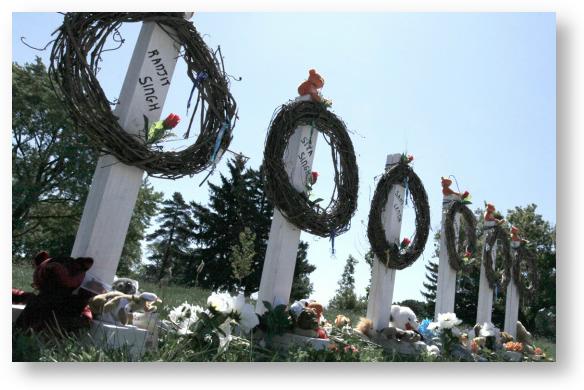
As many of you already know, on August 5, 2012, a gunman opened fire on a worshippers at the Sikh Gurdwara temple in Oak Creek, Wisconsin, killing six and wounding three others before killing himself. The shooter has been identified as Wade Michael Page, an Army veteran and a self-avowed White supremacist.
Clearly, words fail to convey the nature of sadness, loss, and tragedy of this event. My thoughts and heartfelt condolences go out to the families of those killed and wounded, to the Sikh American community in the area, and to all of us as human beings that have to live with the specters of hate and violence all around us.
Many, particularly our political leaders, have called this incident “senseless,” implying that it was an irrational and mindless act of a clearly deranged and mentally ill individual. Unfortunately, this sentiment fails to acknowledge that rather than being an isolated incident, these killings have a cause and origins beyond just the state of mind of the person who pulled the trigger.
In other words, there is an entire sociological context to why the killer did this and multi-level factors that, without a doubt, influenced the killer’s thinking and pushed him to go on his murderous rampage.
War on Terrorism an its Collateral Victims
We can start with the legacy of 9/11 and how the subsequent “war on terrorism” has left thousands, perhaps even millions, of innocent bystanders in its destructive wake. Specifically, I am talking about groups such as Muslim Americans, Indian Americans, and particularly Sikh Americans who have been and continue to be perceived as terrorists. In the case of Sikh Americans, much of this unfortunate association is tied to the turban that the men are required by their religious faith to wear. In other words, in the mind of racists, they’re just another “towelhead” and therefore, a terrorist.
Unfortunately, this is not the first time that Sikh Americans have been murdered as a direct result of 9/11 hysteria — four days after the events of September 11, 2001 and as illustrated in the excellent documentary “A Dream in Doubt,” Balbir Singh Sodhi was similarly gunned down by a person who perceived him to be a Muslim and therefore, a terrorist. On top of that, political “leaders” such as Peter King, Michelle Bachmann, and Joe Walsh continue to use their public positions to fan the flames of suspicion and hostility against all Muslim Americans, all of which lends more credibility to equating Muslim with terrorism.
Combined with the recent killings at Oak Creek WI, these incidents of racial and religious hate against anyone perceived to be Muslim are not isolated. Instead, they are part of a clear pattern of mistaken identity, irrational guilt by visual association, and jingoistic hysteria that unfortunately is still alive and well almost 11 years after 9/11.
Anti-Immigrant Nativism and Xenophobia
Related to this is the nativist and xenophobic climate that has also strengthened since 9/11. Much of this anti-immigrant sentiment is seemingly directed at undocumented immigrants but unfortunately, since hate and intolerance cut a wide path, has also been directed at legal immigrants and racial/ethnic groups that have a large immigrant contingent such as Latinos and Asian Americans.
The foundation of this nativist and xenophobic climate is the belief that immigrants (legal and otherwise) are not “real,” “legitimate,” or “official” Americans. In turn, much of this belief about who is a “real” American is based on the “traditional” image of those who are perceived as “real” Americans — White, Protestant, and born in the U.S. Those who lack one of more of these traits are seen by many who do as being inferior to them and therefore, less deserving of the identity of “American.”
This conscious and unconscious perceived distinction between “real” Americans and “foreigners” exists even though immigrants and groups of color make numerous contributions to the U.S.’s political, economic, and cultural institutions by bridging diplomatic divides across national borders, investing in local communities and creating jobs for Americans, and by connecting the U.S. to an increasingly globalized and transnational world and diverse cultures.
Economic Competition Breeds Racial Hostility
As I tell my students, one of the most time-tested and historically consistent patterns in U.S. society is that whenever there is economic competition, almost always, it will lead to racial/ethnic hostility. This pattern has played itself out over and over again, and has involved basically every group of color throughout American history. Unfortunately, it is also rearing its ugly head once again today as the current recession has led to heightened competition for increasingly scarce economic resources between Whites (who have been used to enjoying a relatively stable standard of living but are now fighting just to stay in the middle class) and groups of color and immigrants (who many Whites perceive to benefiting at their expense).
Unfortunately, the conditions for heightened economic competition seem to be the “new normal” as the gulf between the rich (i.e., the top 1%) and everyone else (i.e., the 99%) widens, as powerful financial corporations continue to exploit their political influence and gain unfair advantages in their quest to maximize profit, and as ordinary Americans fight even more among ourselves for an ever-decreasing piece of the pie. With all of this in mind, the bottom line then becomes more clear — when people feel threatened, they become defensive at guarding whatever they have left and hostile towards those who they feel are try to take what is “rightfully” theirs.
White Backlash
This lashing out is part of a larger “White backlash” movement that I have described before. Faced with changing demographics and how the U.S. population is gradually but surely becoming less White, the emergence of people of color, the continuing consequences of globalization and decline of U.S. superiority around the world, and the normalization of economic instability, it is not hard to see why many Whites have become quite angry that their position at the top of the American racial hierarchy is being politically, economically, and culturally threatened.
At the moment, many White Americans are feeling very threatened and upset by the changes taking place around them — their economic stability and standard of living are on the decline and, unable to see the institutional forces that have created this situation, their immediate reaction is anger and to lash out at “those other people” — minorities and immigrants.
This individual and collective anger has emboldened many Whites to publicly, forcefully, and passionately lash out at people of color and immigrants, with examples across the spectrum of violence. The institutional shifts and societal changes that influence these examples of backlash are not going away any time soon, and unfortunately, neither do I expect such examples of White backlash to decline any time soon.
And Yet, There is Still Hope
In the midst of all this, there is still the bright glimmer of humanity — the power of shared suffering to bring us together and for friends and strangers to unite and help each other out. No doubt you have seen examples of this in the aftermath of natural disasters as our fellow Americans donate what little discretionary funds we have to help those who have lost everything, and for friends, neighbors, and total strangers to help rebuild the devastated communities.
The same thing can happen in the wake of acts of violence like this. As the NBC News clip below shows, the memorial service to honor the six Sikhs killed was attended by about a thousand people, with Sikhs and non-Sikhs united in grief, sympathy, and hope.
Ideally, no, it should not take mass murders and hate crimes like this for us as Americans to wake up, recognize how our social environment and many of our national leaders are fanning the flames of hostility and hate, and to unite as human beings to change things are the better. But it seems that sometimes it takes a spark to light a fire, something Asian Americans have known for a while now.
Maybe this is that spark and hopefully, there will be a silver lining to this tragedy.
Here are some more announcements, links, and job postings about academic-related jobs, fellowships, and other opportunities for those interested in racial/ethnic/diversity issues, with a particular focus on Asian Americans. As always, the announcements and links are provided for informational purposes and do not necessarily imply an endorsement of the organization or college involved.
The George Mason University, Department of Sociology and Anthropology, Institute for Immigration Research (IIR) invites applications for a one-year, renewable position as a Postdoctoral Fellow with a background in sociology, economics, demography, or a related field beginning August 25, 2012. The IIR is a newly formed, privately funded initiative to explore the contributions of immigrants to the U.S. economy.
The successful candidate’s areas of specialization will include immigration, economic, social and political consequences of migration, quality of life, and the overall issues related to immigration policy. Successful applicants must have a working knowledge and background in demography and GIS, as well as knowledge of statistical software—in particular SPSS or Stata.
This position is critical to the success of the IIR and requires the full understanding and active participation in fulfilling the Mission of IIR. Must be able to work collaboratively with IIR faculty/staff and communicate results clearly in oral and written form. For more information contact Jim Witte, Professor of Sociology and IIR Research Director jwitte@gmu.edu or https://jobs.gmu.edu/postings/28324
Skidmore College invites applications for a tenure-track position in Sociology at the Assistant Professor level, to begin September 2013. We seek a sociologist to teach our required statistics course who can also contribute offerings in race and ethnicity. Other areas of teaching expertise are open.
Skidmore’s student population is 25 percent of color or international, and applicants should include in their letter of interest information about how they will effectively engage with issues of diversity in the classroom as well as on campus or in the broader community. Applicants should also demonstrate excellence in teaching, active scholarship, and a strong commitment to undergraduate education at a liberal arts college. Ph.D. required at time of appointment.
Skidmore is on a semester system with a teaching load of five courses per year. Skidmore offers a comprehensive benefits package to employees and their qualified dependents including domestic partners and same sex spouses. In keeping with Skidmore’s strategic initiatives to enhance the diversity of our campus community, we particularly encourage applications from members of historically under-represented groups.
To ensure full consideration, applications should be received by October 1, 2012. Preliminary interviews will be conducted at the ASA meetings in August.
Faculty Position: Sociology, Tufts Univ.
The Department of Sociology at Tufts University invites applications for the position of Assistant Professor, to begin Fall 2013. The successful candidate will have a Ph.D. in sociology or a related discipline, a demonstrated record of academic research and publication, an active research agenda, relevant teaching experience, excellent teaching skills, and a commitment to teaching a highly motivated and diverse student body.
Candidates’ research and teaching will focus on race, racialization, and racial inequality in regard to areas such as media and culture, health and medicine, crime and justice, or work and the economy. Candidates with expertise in quantitative methods are especially encouraged to apply. The successful applicant will be the tenth member of the department. While the appointment will be in the Sociology Department, the candidate hired will have an explicit teaching, advising, and service commitment to an interdisciplinary program being developed in Race and Ethnicity Studies.
Tufts University is a category I research university ranked in the top thirty universities in the country by U.S. News and World Report and is located in the vibrant intellectual community of Boston. The department’s three main areas of specialty are (1) media, culture, and society; (2) social inequalities and social change; and 3) globalization, transnationalism, and immigration. The typical teaching load is 2-2.
Candidates should submit an application letter, CV, three letters of reference, a writing sample, teaching evaluation summaries, and other evidence of teaching and scholarly excellence to: Joan Kean, Department Administrator; Department of Sociology; Eaton Hall 102A; 5 The Green; Tufts University; Medford, MA 02155. Review of applications will begin October 1, 2012 and continue until the position is filled.
The Department of American Studies at California State University, Fullerton invites applications for a tenure-track position at the rank of Assistant Professor to begin August 2013. Desirable specializations include immigration and/or ethnicity in California and the West. The new faculty member will teach undergraduate courses in American Studies as well as upper-division and graduate courses in areas of specialization; advise students; engage in scholarly activities; serve on academic committees and contribute to department and university governance. Positive decisions on tenure and promotion require excellent teaching as well as research, peer-reviewed publications, and participation in the university and the profession.
Qualifications
Ph.D. in American Studies or in American social/cultural history
University teaching experience
Ability to teach Introduction to American Studies, American Studies Theories and Methods, California Cultures, and advanced courses dealing with immigration and/or ethnicity in California and the West
Evidence of effective teaching and potential for successful research and scholarly publication
Ability to interact successfully with a diverse student body and to work effectively within a multicultural environment
Ability to balance excellent teaching with outstanding scholarship and professional service
Rank and Salary
This is a tenure-track position at the rank of Assistant Professor. Salary is competitive and commensurate with rank, experience, and qualifications. Additional teaching in summer and intersession is often available. An excellent comprehensive benefits package is available, which includes health/vision/dental plans; spouse, domestic partner and/or dependent fee-waiver; access to campus child-care as well as affordable housing program; and a defined-benefit retirement through the state system, along with optional tax-sheltering opportunities. For a detailed description of benefits, go to http://hr.fullerton.edu/Benefits/Faculty_Unit_3.pdf.
Application Procedure: To apply, please send (1) a letter of interest; (2) a curriculum vitae; (3) three letters of recommendation; and (4) a writing sample to:
Recruitment Chair
Department of American Studies
California State University, Fullerton
P.O. Box 6868
Fullerton, CA 92834-6868
Fax: (657) 278-5820
Application Deadline: To assure full consideration, application materials must be postmarked by October 1, 2012.
University of Hawai’i at MÄnoa, Department of American Studies, Assistant Professor (Pos. #0082176).
Duties:
Teach American Studies undergraduate and graduate courses
Teach/conduct research in Asian/Pacific American studies with an emphasis on Filipino American studies
Other duties as assigned by chair
Minimum Qualifications:
Ph.D. in American Studies or related area (ABDs will be considered)
Ability to teach American Studies undergraduate and graduate courses
Teach/conduct research in Asian/Pacific American studies with an emphasis on Filipino American studies
To Apply: Send letter of application indicating how you satisfy the minimum qualifications, curriculum vitae, 3 letters of recommendation and graduate school transcripts (copies are acceptable, however official transcripts will be required at time of hire) to the address below. Departmental representatives plan to conduct invited interviews at the annual meeting of the American Studies Association (November 15-18, 2012) in San Juan, Puerto Rico.
Address:
Search Committee, American Studies Department
University of Hawaii at Manoa
1890 East West Road, Moore Hall 324
Honolulu, HI 96822
Inquiries: Prof. Vernadette Gonzalez, Search Committee Chair; 808-956-8587; vvg@hawaii.edu. Closing Date: October 12, 2012.
The University of Maryland Baltimore County (UMBC) invites nominations and applications for the UMBC Postdoctoral Fellows Program for Faculty Diversity. UMBC is dedicated to ensuring a diverse, scholarly environment and encouraging outstanding individuals to enter the academic profession. The purpose of the Program is to support promising scholars who are committed to diversity in the academy and to prepare those scholars for possible tenure track appointments at UMBC. We are particularly interested in receiving applications from individuals who are members of groups that historically have been underrepresented in the professoriate.
UMBC will appoint recent recipients of the Ph.D. as Postdoctoral Fellows for a two-year term beginning July 1, 2013. The fellow will receive a starting stipend of $40,000, health benefits, $3,000 for conference travel and preparation of scholarly work, office space with computer, library and other privileges at the university. During the two-year term of appointment, the fellow will teach one course a year in the host department. All fellows are expected to be in residence during the academic year and participate in departmental seminars and related activities. Each fellow will be provided teaching and research mentors and specialized professional development opportunities across the campus. The remainder of the fellow’s time will be devoted to pursuing research.
Successful candidates for the Program will be selected on the basis of scholarly promise and potential to add to the diversity of the UMBC community. Applicants must have completed their doctoral degree when the term of appointment commences and must be no more than three years beyond receiving the Ph.D. Individuals currently holding a postdoctoral or faculty position at UMBC are not eligible.
Guidelines
Fields
Applications for study in any discipline represented on the campus are welcome. Please specify your discipline of interest.
Stipend
$40,000 a year.
Eligibility
Applicants who will have completed the doctoral degree no later than July 1, 2013 and no earlier than July 1, 2010 are eligible to apply. Preference will be given to U.S. citizens and permanent residents.
Application material:
Cover letter addressed to Ms. Autumn Reed, Program Coordinator for Faculty Diversity Initiatives
Names and contact information for three references
A statement of research agenda (2-3 pages)
A personal statement that includes why you should be selected for this program and which department/programs should review your application (1–3 pages)
A list of UMBC department(s)/program(s) of interest
Deadline
Full consideration will be given to those applicants that submit all materials to Ms. Autumn Reed (autumn2@umbc.edu) by November 16, 2012. A complete submission will consist of a cover letter, curriculum vitae, writing samples, names of three references, a statement of research plans, and a personal statement. Incomplete submissions will not be accepted.
Review and Selection
Applications will be reviewed by the appropriate department(s)/program(s), Dean(s) and the Provost’s Selection Committee. Semi-finalists will be announced in mid-January and finalists will be invited to campus for interviews in mid-February. Awardees will be notified by the first week of March.
Contact Information
Questions regarding the program may be addressed to:
Ms. Autumn Reed, Program Coordinator for Faculty Diversity
Office of the Provost
University of Maryland Baltimore County
Baltimore, MD 21250
410-455-1099/autumn2@umbc.edu
www.umbc.edu/facultydiversity
For those who missed it, the Pew Research Center recently released a report titled, “The Rise of Asian Americans” that, among other things, attempted to provide a demographic, socioeconomic, and cultural summary of the Asian American population, using a combination of Census data and the Pew’s own telephone survey of over 3,500 Asian American respondents. Some of the report’s notable findings are:
In terms of total population, there are over 18 million Asian Americans as of 2011 and they represent 5.8% of the total U.S. population.
Asian Americans are the fastest-growing racial/ethnic group in the U.S. in terms of percentage growth. This is also reflected in the most recently-available data from 2010 that shows that 430,000 Asians (legal and undocumented) immigrated to the U.S., compared with 370,000 Latinos.
Confirming current patterns, Asian Americans also have the highest proportion of adults 25 years or older who have a college degree and have the highest median household income.
The Pew report also spends much of its time discussing the “cultural” characteristics of Asian Americans and unfortunately, it is at this point where things start to hit the fan. As the New York Times summarizes:
In the survey, Asians are also distinguished by their emphasis on traditional family mores. About 54 percent of the respondents, compared with 34 percent of all adults in the country, said having a successful marriage was one of the most important goals in life; another was being a good parent, according to 67 percent of Asian adults, compared with about half of all adults in the general population.
Asians also place greater importance on career and material success, the study reported, values reflected in child-rearing styles. About 62 percent of Asians in the United States believe that most American parents do not put enough pressure on their children to do well in school.
Soon after its release, numerous Asian American scholars, community organizations, and academic associations began roundly criticizing the report. For example, the Japanese American Citizens League stated, “While our community reflects diversity, this research does not; instead, it sweeps Asian Americans into one broad group and paints our community as exceptionally successful without any challenges. This study perpetuates false stereotypes and the model minority.”
Another nationally-recognized Asian American group, the Organization of Chinese Americans, wrote:
“What is particularly disturbing is that these types of broad generalizations can have serious implications in public policy, civil rights, as well as perpetuation of bias, discrimination, and racial tension between communities of color. Even though the study fills a void for more statistics and information on the APA community, the framing of the contextual data in the report is troublesome. . . . The assertions that our community enjoys an exaggerated level of privilege are simply and unfortunately not the case.
Other statements of criticism and even condemnation of the Pew report came from organizations such as the Association for Asian American Studies, the Asian American Pacific Islander Policy and Research Consortium, the Asian & Pacific Islander American Scholarship Fund, the National Commission on Asian American and Pacific Islander Research in Education, Leadership Education for Asian Pacifics, and numerous Asian American Studies departments and programs around the country, to name just a few.
Perhaps the best critique came from Professor Karthick Ramakrishnan, Associate Professor of Political Science at the University of California Riverside, and ironically, a member of the Pew’s faculty advisory board on Asian American issues:
Unfortunately, [the report] prioritized questions asked of Asian Americans — regarding their parenting styles and their own stereotypes about Americans — that seemed more concerned with Amy Chua’s Battle Hymn of the Tiger Mother than with the priorities of Asian Americans themselves, either as revealed in past surveys or as articulated by organizations serving those communities. . . .
More concerning than the Pew report, however, was the sensationalist headline on the press release that introduced the study to news media: Asians Overtake Hispanics in New Immigrant Arrivals; Surpass US Public in Valuing Marriage, Parenthood, Hard Work. These few words carried sway in hundreds of newspaper articles in the first two days of the report’s release, provoking outrage among broad swaths of the Asian American community, including many researchers, elected officials, and community organizations. . . .
As one of 15 advisors to the project, I felt blindsided by the press release. Words failed me as I read it for the first time, as we had not gotten a chance to review it. The dominant narrative in the release reinforced the frame of Asians as a model minority, stereotypes that the advisors had strongly objected to in the only meeting of the group two months ago.
Generally, the Pew Research Institute produces useful, informative, and reliable data and reports. However, as Prof. Ramakrishnan points out in the full text of his critique, this is not the first time that Pew has mischaracterized, sensationalized, or even misinterpreted its own data. Further, as I pointed out before, on occasion, Pew has inexplicably excluded Asian American respondents in some of its previous studies.
With that point in mind, I suppose we should be somewhat thankful that Pew has been more inclusive of Asian Americans as a valuable source of study lately. Nonetheless, simply including Asian Americans is not the same as accurately representing our community.
Pew might argue that their methodology and data are valid. Technically, I suppose they are. But as the above-referenced criticisms consistently point out, many of the questions they asked were sensationalist and not representative of the real, substantive issues and concerns that the Asian American community have identified themselves.
In the end, this Pew report teaches us a couple of valuable lessons. First, that biases can come in many different forms. That is, most of us thinking of biases in the form of direct and blatant statements that clearly favor one ideological viewpoint over another. But the Pew report shows us that biases can also manifest themselves in the questions researchers ask and how they frame the results of their data, based on the misfocused questions, to emphasize certain interpretations over others.
Second, the Pew report shows us that even something that is initially framed as a positive portrayal of Asian Americans can turn out to be just the opposite — a skewed misrepresentation that actually reinforces negative and damaging stereotypes. This lesson is at the core of the model minority image of Asian Americans and how some naively think that they are paying Asian Americans a compliment by commenting how well-educated we are, or how we’re so good at math or science, or how hard we tend to work. While there is obviously some truth to these observations, the problem is that such characterizations are easily and often generalized to the entire Asian American population. When that happens, they mask the demographic, socioeconomic, and cultural diversity among Asian Americans and marginalize the continuing discrimination, inequalities, and injustices we still experience.
The Asian American community deserves to be represented better than this and research organizations such as Pew need to do a better job at asking us about the issues that we, not they, care about.
Here are some more announcements, links, and job postings about academic-related jobs, fellowships, and other opportunities for those interested in racial/ethnic/diversity issues, with a particular focus on Asian Americans. As always, the announcements and links are provided for informational purposes and do not necessarily imply an endorsement of the organization or college involved.
Vietnamese American Community Center, 42 Charles Street Boston MA (near Fields Corner T-stop)
Interested in Asian American activism within Dorchester? Want to develop your leadership skills? Want to organize for social justice?
Join Asian American Resource Workshop (AARW) and the Asian American activist community on July 28, from 11-2:30pm, for the community launch of the exciting and new Dorchester Organizing and Training (DOT) Initiative. We will find free lunch, new friends, and lots of fun!
AARW is launching the “DOT Initiative” to provide a space for young Asian Americans in Fields Corner to build community and organize for social change. After meeting with residents and community leaders, AARW identified and seeks to fill the need for leadership development within young, working-class Asian Americans in Dorchester, in order to increase civic engagement and organize the community to fight against injustices.
Please join us! Don’t miss out on a day that will include:
Food and Socializing – free lunch and good people to talk with.
Activist Training – led by a prominent community organizer, to build your activist skills with a voter registration training Door-knocking session – take action in Fields Corner, putting your training to use right away.
Report on civic engagement within the Asian American community – conducted by the UMass Boston Institute of Asian American Studies.
AARW is a pan-Asian organization that seeks to empower the APA community to work for full participation in US society. Join us for what is shaping up to be an exciting event!
2012 Abe Fellowship Competition
Deadline: September 1, 2012
The Social Science Research Council (SSRC), the Japan Foundation Center for Global Partnership (CGP), and the American Council of Learned Societies (ACLS) announce the annual Abe Fellowship competition. The Abe Fellowship is designed to encourage international multidisciplinary research on topics of pressing global concern. The Abe Fellowship Program seeks to foster the development of a new generation of researchers who are interested in policy-relevant topics of long-range importance and who are willing to become key members of a bilateral and global research network built around such topics.
The Abe Fellowship Research Agenda
Applicants are invited to submit proposals for research in the social sciences and related fields relevant to any of the following three themes:
Traditional and Non-Traditional Approaches to Security and Diplomacy
Topic areas include transnational terrorism, internal ethnic and religious strife, infectious diseases, food safety, climate change, and non-proliferation, as well as the role of cultural initiatives in peace building.
Global and Regional Economic Issues
Topic areas include regional and bilateral trade arrangements, international financial stability, globalization and the mitigation of its adverse consequences, sustainable urbanization, and environmental degradation.
Social and Cultural Issues
Topic areas include demographic change, immigration, the role of civil society and media as champions of the public interest, social enterprise, corporate social responsibility, and revitalization of multicultural urban areas.
Research projects should be policy relevant, contemporary, and comparative or transnational.
Fellowship Terms
Terms of the fellowship are flexible and are designed to meet the needs of Japanese and American researchers at different stages in their careers. The program provides Abe Fellows with a minimum of three and maximum of 12 months of full-time support over a 24 month period. Part-time residence abroad in the United States or Japan is required.
Eligibility
This competition is open to citizens of the United States and Japan as well as to nationals of other countries who can demonstrate a serious, long-term affiliation with research communities in the United States or Japan. Applicants must hold a Ph.D. or the terminal degree in their field, or equivalent professional experience at the time of application. Applications from researchers in professions other than academia are encouraged.
Contact Details
For further information and to apply, go to http://www.ssrc.org/fellowships/abe-fellowship/ or contact SSRC staff at abe@ssrc.org.
My name is Cindy, and I’m writing to let you know that the Center for Asian American Media (CAAM) has announced that its Call for Entries for the 31st San Francisco International Asian American Film Festival, held on March 14-24 2013, is now OPEN!
It is a terrific opportunity for filmmakers to be a part of the largest film festival in North America dedicated to showcasing films by or about Asian Americans and Asians around the world and have the chance to have their film viewed by one of the most sophisticated and enthusiastic audiences in the nation, as well as by many festival programmers, including delegates from nearly every Asian American film festival in North America.
—
31st SF International Asian American Film Festival
March 14-24, 2013
Eligibility
The San Francisco International Asian American Film Festival accepts films, videos and digital and interactive projects that are made by or about Asian Americans and Asians of any nationality. All lengths and genres will be considered.
Deadlines
Your signed entry form, entry fee, screener and press kit must be postmarked by one of these two dates:
* Early Deadline – Sept 3, 2012
* Late Deadline – Oct 1, 2012
* Withoutabox.com Extended deadline –Oct 8, 2012
A presentation of:
Center for Asian American Media
145 Ninth Street, Suite 350
San Francisco, CA 94103-2641
www.caamedia.org
Call for Submissions: Race and the Life Course
“Racing through Life: Readings on Race and the Lifespan” is a collection of readings about race and the life course edited by Drs. Diditi Mitra and Joyce Weil. Holding race and aging constant, the book will incorporate readings that reflect how both these concepts intersect with other elements of social differentiation, such as gender, social class, sexual orientation, and immigrant status to name a few.
Additionally, the project will include works that echo the broad range of social methodologies used in studying the intersecting experiences of race and the life course. Thus, on the whole, the collection of works will include varieties of qualitative and quantitative methodologies. The book will also provide space for personal histories pertaining to the topics of race and the life course perspective that contextualizes those histories within a social scientific framework.
We welcome works on all race and ethnic groups, including whites. Our goal is not to focus on the “other” races, but to include whites, as well, in order to offer meaningful insights into the topics of race and the aging. The readings will be divided among the book’s three parts: the journey to adulthood (Part I), adulthood and midlife (Part II), and aging and latter years (Part III).
Please let us know of your interest and contact us if you would like to discuss a topic. The recommended length of the manuscript is between20 and 25 pages. The deadline for submission is November 1, 2012. Your expert contribution to this edited collection is greatly valued. Dr. Joyce Weil and Dr. Diditi Mitra can be reached at joyce.weil@unco.edu (970.351.1583) and dmitra@brookdalecc.edu (732.224.2537), respectively.
As another followup to my earlier “part one” and “part two” posts, the following is a list of recent academic journal articles and/or doctoral dissertations from scholars in the cognitive sciences that focus on race/ethnicity and/or immigration, with a particular emphasis on Asian Americans.
The academic journal articles are generally available in the libraries of most colleges and universities and/or through online research databases. The dissertations records are compiled by Dissertation Abstracts International and copies can be obtained through your college’s library or by contacting ProQuest at 789 E. Eisenhower Parkway, P.O. Box 1346, Ann Arbor, MI 48106-1346, telephone 800-521-3042, or disspub@umi.com.
The research listed below focus on the cognitive sciences (parts one and two mentioned above focus on the social sciences and humanities), although many of the studies overlap with the social sciences. Some abstracts were edited for length. As always, works included in this list are for informational purposes only and do not imply an endorsement of their contents. Last but not least, congratulations to my new academic colleagues on being “Ph.inally D.one.”
Tran, Nellie. Using Color-Blindness to Understand the Effects of Discrimination on the Well-Being of Asian Americans. Dissertation Abstracts International: Sciences and Engineering, vol. 71, no. 12, pp. 7784, 2011.
Abstract: The purpose of this study was to bring awareness to the concept of color-blindness in the experiences of discrimination among Asian Americans. This study builds on literature pertaining to Asian American experiences of discrimination by considering the influence of color-blind racial beliefs on the relationship between discriminatory experiences and well-being for Asian Americans. Using web-based survey collection with 141 Asian American participants, results showed that high color-blind racial ideology exacerbates the effect of discrimination on both internalized racism and depression levels. High private regard protected Asian Americans from the negative effect of high exposure to discrimination on depression levels. Consequently, it appears that Asian Americans who believe that the U.S. has achieved a color-blind society may be protected against perceiving discrimination, but are paying the price through decreased psychological well-being. Color-blind individuals may not have the ability to externalize discriminatory experiences on the larger society in the same way that racially conscious individuals may. Therefore, they may internalize the discrimination and blame themselves for the negative experiences of discrimination.
Chan, Wing Yi. A Population-Specific Theory of Asian American College Students’ Civic Engagement. Dissertation Abstracts International: Sciences and Engineering, vol. 71, no. 12, pp. 7779, 2011.
Abstract: This is an exploratory study of Asian American college students’ civic engagement. Using grounded theory analysis and a population-specific approach, this study discovered the meanings of civic engagement from the perspective of Asian American college students and developed a theory to explain Asian American college students’ civic engagement. Semi-structured interviews were used to explore whether family, school, and community would influence participants’ decision to participate in civic activities and whether Asian Americans’ collective historical, cultural, social, and political experiences would have an impact on their civic engagement. Findings suggest that Asian American college students defined civic engagement as community involvement for two different purposes: 1) to help those who are in need and 2) to create social and systemic change. The theory that I developed includes four categories of facilitators and barriers to Asian American college students’ civic engagement. The four categories are 1) structural factors, 2) social capital factors, 3) acculturation gap factors, and 4) identity factors. The theory also identifies five categories of consequences of Asian American college students’ civic engagement: 1) career-related skills, 2) leadership skills, 3) social and emotional skills, 4) sense of belonging to school, and 5) knowledge of social issues/commitment to civic engagement. By identifying how contextual factors (i.e. family, peers, school and community) interact with cultural and sociopolitical factors to influence Asian American college students’ pathways to civic engagement, the present study sheds light on the complexity of Asian American college students’ civic development and suggests that research needs to examine Asian American college students’ civic engagement across multiple ecological contexts and consider the cultural and sociopolitical experiences of Asian American college students.
Nguyen, Kathy. Intergenerational Conflict between Emerging Adults and their Parents in Asian American Families. Dissertation Abstracts International: Sciences and Engineering, vol. 71, no. 12, pp. 7732, 2011.
Abstract: Due to a paucity of research, little is understood about the experiences of Asian American emerging adults as they navigate their relationship with their parents. The purpose of the current study was to investigate intergenerational conflict in Asian American families, specifically when emerging adults are living at home with their parents. Acculturation gap, generational status, birth order, gender, and language proficiency were examined as predictors or mediators of conflict. Participants consisted of 350 Asian American emerging adults who were currently living with their parents, who lived with their parents during certain times of the year (e.g., vacations), or who had once lived with their parents as adults. Intergenerational conflict was measured using the Asian American Family Conflicts Scale (Lee, Choe, Kim, & Ngo, 2000) and the Intergenerational Conflict Inventory (Chung, 2001). Acculturation was assessed using the Asian American Multidimensional Acculturation Scale (Chung, Kim, & Abreu, 2004). One-way between-subjects analysis of variance tests were performed to identify group differences in conflict across several demographic factors Correlational and hierarchical multiple regression analyses were performed to study the relationship between the predictors, proposed mediator, and intergenerational conflict. Exploratory statistical analyses were conducted to investigate factors that may predict level of conflict when emerging adults return home after living away for an extended period of time (i.e., boomerang children). A gap in acculturation to White mainstream culture between emerging adults and their parents was found to be the most powerful and consistent predictor of intergenerational conflict and to mediate fully the relationship between generational status and intergenerational conflict. Overall, the findings highlight the multi-faceted and variable nature of intergenerational conflict as it occurs in Asian American families between emerging adults and their parents.
Rivera, Amanda L.Y. Development and Initial Validation of the Biracial Experiences of Discrimination Inventory. Dissertation Abstracts International: Sciences and Engineering, vol. 71, no. 11, pp. 7146, 2012.
Abstract: The purpose of this dissertation was to develop and initially validate an instrument that measures multiracial individuals with Asian and White descent experiences of discrimination. Results from the principal components analysis using data from a web-based sample of 185 multiracial individuals with Asian and White descent yielded a five-factor simple structure of the Biracial Experiences of Discrimination Inventory (B-REDI): Biracial Response to Monoracial Context (6 items), Racial Microaggressions (6 items), Confusion of Interracial Family Relations (4 items), Assumptions of Marginality (3 items), and Internalized Multiracial Racism (3 items). Initial evidences of internal reliability, convergent validity and known-groups validity were found. An evaluation of internal consistency suggested that the B-REDI reflected dimensions of multiracial racism and supported initial evidence of the reliability of the five factors that emerged. In support of convergent validity, multiracial experiences of discrimination were positively correlated with perceived general ethnic discrimination, Asian American racism-related stress, a universal-diverse orientation, awareness and acceptance of others similarities and differences, as well as awareness, sensitivity, and receptivity towards racial diversity and multiculturalism. Also in support of convergent validity, multiracial experiences of racism were negatively correlated with colorblind racial attitudes. Evidence for known-groups validity was demonstrated through statistically significantly higher levels of multiracial experiences reported among multiracial individuals with Asian and White descent (n = 184) than monoracial individuals (n = 325). However, multiracial individuals with Asian and White descent (n = 184) did not report multiracial experiences of racism at a statistically significantly higher level when compared to multiracial individuals of other ethnic backgrounds (n = 263). This finding suggests that having a mixed race background may represent a factor that exerts an overall greater impact compared to the specific ethnic group make-up of an individual. Study limitations as well as research and clinical implications are discussed.
Regalado, Gabriella Ann. Implicit and Explicit Identity, Attitudes and Acculturation among U.S.-Born and First-Generation Latinos and East Asians. Dissertation Abstracts International: Sciences and Engineering, vol. 71, no. 11, pp. 7146, 2011.
Abstract: The purpose of this study was to compare the influence of place of birth upon implicit and explicit identity and ethnic attitudes of 119 U.S.-born and first-generation East Asians and Latinos. The relationships between acculturation, implicit and explicit identity, and attitudes as well as East Asians’ and Latinos’ explicit perceptions of how their ethnic group are regarded by others were also assessed. This study also analyzed whether first-generation groups, in comparison to U.S.-born groups, had positive implicit attitudes toward their ethnic groups which served as a protective factor against implicit out-group bias towards White Americans. Participants completed two timed Implicit Association Tasks: the Stereotype/Attitude IAT, which required participants to match positive and negative words with ethnic surnames as a measure of their ethnic attitudes, and the Identity IAT, which required participants to match American or ethnic cultural icons to personal pronouns as a measure of identity. Reaction times were measured to assess which pairing was more quickly associated. For identity, results indicated that first-generation and U.S.-born groups implicitly identified with their ethnic identity, but explicitly, first-generation groups significantly identified as more American than did U.S.-born groups. For implicit ethnic attitudes, first-generation groups had significantly more implicit positive attitudes toward their ethnic group than did U.S.-born groups. Acculturation showed no relationship to implicit identity or attitudes. Place of birth appeared to significantly affect one’s implicit attitudes and explicit American identity. Practical implications and direction for future research are discussed.
Tan, Edwin T. A Contextual Approach to Understanding Immigrant Asian Fathers’ Educational Involvement in their Children’s Lives. Dissertation Abstracts International: Sciences and Engineering, vol. 71, no. 11, pp. 7126, 2011.
Abstract: The present study examined work-family experiences of Asian immigrant fathers in relation to their personal well-being, their educational involvement, and their children’s school achievement and adaptation. Survey data was collected from 64 immigrant Asian fathers and from 25 teachers of the fathers’ 4th-6th grade children. Ten of the fathers also were interviewed. Fathers were predominately Korean, college-educated, and upper-middle class. Children were reported to perform well academically and be well-adjusted to school. Fathers perceived more work-family facilitation than conflict. Facilitation was related to fathers’ positive well-being and reports of children’s positive school achievement and adaptation. More conflict related to poorer well-being and reportedly poorer school adaptation. Fathers were moderately involved with their children. Greater homework and interpersonal involvement were related to more school enjoyment and better achievement, respectively. Greater direct school involvement was related to higher school anxiety for children. Less acculturated men were less likely to be involved with their children’s education and more likely to have less life satisfaction. Asian fathers are not homogenous in their attitudes or behaviors, and their specific cultural values and time in America should be considered when examining this population. Qualitative interviews revealed that, fathers’ wives were pivotal in facilitating or hindering their work-family balance by providing support. Fathers had desire to be involved and to mentor. However, they felt loss in the cultural pluralism that fails to provide them guidelines on fatherhood. Fathers’ sense of financial responsibility to their families motivated them to do well at work. Those that experienced work-family facilitation were likely to find fulfillment at their work, or learned to draw boundaries between work and family. Those that lacked boundaries often felt frustrated at their ineffective behaviors. Not all conflict was negative in nature, some was the result of intentional greater involvement with their families. Taken together, fathers that perceived work-family facilitation were more likely to be involved and have positive well-being, which were related to children’s achievement and adaptation to school. Additionally, less acculturated fathers may face challenges in defining their father role. Results have implications for educational and economic policies that address the lives of immigrant families.
Cale, Chris. A Case Study Examining the Impact of Adventure Based Counseling on High School Adolescent Self-Esteem, Empathy, and Racism. Dissertation Abstracts International: Sciences and Engineering, vol. 71, no. 11, pp. 7116, 2011.
Abstract: This study investigated the effectiveness of Adventure Based Counseling upon high school adolescents. The goals of this study were to (a) explore the effectiveness of ABC Counseling in increasing levels of self-esteem and empathy among adolescents; (b) study the efficacy of ABC counseling in reducing perceived racial discrimination, racist attitudes, or both; and (c) investigate the correlation between self-esteem, empathy, perceived racial discrimination, and racist attitudes as related to the effects of ABC counseling. In addition, the effects of ABC counseling on the school-related variables such as discipline, attendance, and academics, as well as possible outcome differences caused by demographic variables like gender and ethnicity were measured in relation to the effects of the ABC counseling treatment. Finally, this study also gathered descriptive data from participants through survey questionnaires regarding their prior knowledge and sensitivity to other races, their perception of racism occurring at the study site, and their experience in ABC counseling. . . . Results of the study found significant increases for the ABC counseling group in both self-esteem and empathy, and significant decreases in perceived racial discrimination and racist attitudes. In addition, a significant reduction in discipline referrals occurred from baseline to one-month follow-up. An ancillary analysis showed significance for the variables gender and ethnicity: males experienced a significantly greater increase in self-esteem and empathy as compared to females; Latina/os had the most significant decrease in racist attitudes and highest overall scores on the same measure; African Americans possessed significantly higher perceived racial discrimination scores than Caucasians or Latina/os. Limitations existed concerning the sample, instruments, and analysis. . . . Participating in the program also produced significant decreases in both perceived racism and racist attitudes. . . . In addition, the significant negative relationships found between self-esteem and perceived racism, and empathy and perceived racism verified the prediction that increases in self-esteem and empathy would correlate with decreases in racism.
Kanukollu, Shanta Nishi. Exploring Perceptions of Child Sexual Abuse and Attitudes towards Help-Seeking among South Asian College Students. Dissertation Abstracts International: Sciences and Engineering, vol. 71, no. 11, pp. 7091, 2011.
Abstract: In this dissertation study, I examined perceptions of child sexual abuse (CSA) and attitudes towards psychological help-seeking held by South Asian college students living in the U.S. I conducted an online community survey (N = 349) among South Asian college-aged students (age 18-25) who self-identified as South Asian, South Asian-American or with any subethnic group falling under the South Asian category. More specifically, I examined the effects of Asian American Model Minority (MM) endorsement, idealized gender ideology, and acculturation on perceptions of CSA and attitudes towards help-seeking in a sample of South Asian college students across the United States. I found that MM Ideology was a significant predictor of certain types of CSA myths. Higher endorsement of MM Ideology predicted less Blame Diffusion, greater belief in Culture as Protective Factor (for CSA), and greater belief in Lay Theories of Coping. . . . Idealized gender ideology (AMI & AFI) alone was a significant predictor of attitudes towards help-seeking. Thus, a majority of my hypotheses were supported. Overall, the present research findings point towards the importance of cultural context when conceptualizing CSA amongst immigrants in the U.S. The results of this study have important implications for clinicians working with South Asian CSA survivors and their families, community members and organizations addressing issues related to gender violence, colleges interested in developing culturally competent services, and researchers in the areas of clinical and gender psychology.
Chang, Rita. Interpersonal Factors and Suicidal Ideation in Asian American College Freshmen. Dissertation Abstracts International: Sciences and Engineering, vol. 71, no. 11, pp. 7080, 2012.
Abstract: Despite high rates of suicide among Asian American college students, few studies have examined risk factors for the population. The current study focused on suicidal ideation in Asian Americans at a time of transition: the first year of college. The interpersonal changes (social support, social connectedness and family conflict) associated with freshmen year were expected to predict current ideation as well as ideation one year later. Two-hundred and twenty-four college freshmen (149 women and 75 men) participated at Time 1, and 94 of them (62 women and 32 men) returned usable data at Time 2. Results showed that although all three interpersonal factors at Time 1 predicted current ideation, none of them predicted ideation at Time 2. However, once participants were stratified into groups by acculturation levels, different patterns emerged: The suicidal ideation of highly acculturated individuals was more closely tied to feelings of social disconnectedness. The implications are discussed, along with possible strategies for counseling centers to better identify suicidal students.
Cook, Chyneitha A. Experiences and Perceptions of Racism among Minority Students in Doctoral Psychology Training Programs. Dissertation Abstracts International: Sciences and Engineering, vol. 71, no. 11, pp. 7065, 2011.
Abstract: Research on minority students’ experiences of racism while completing their doctoral education in psychology is scant. This study explored the subjective experiences and perceptions of racism among racial and ethnic minority individuals currently enrolled in psychology doctoral programs in the United States (U.S.), as well as those of program graduates. A total of 14 participants who self-identified as racial and ethnic minority group members were selected for the study. . . . Through qualitative content analysis, themes emerged under the following seven categories: (1) general experiences of racism within everyday life, (2) experiences of racism within the education system, (3) general experiences within psychology doctoral programs, (4) aspects of psychology doctoral programs in which experiences of racism might possibly occur, (5) incidents of racism specific to psychology doctoral programs, (6) future and anticipated experiences within psychology doctoral programs, and (7) themes that transcend the categories of questioning. Findings indicated that racism does exist in psychology doctoral programs in the U.S., in several different forms. The results also suggest that incidents of racism in psychology doctoral programs may be related to participants’ experiences of everyday racism and their prior experiences with racism in the education system, prior to entering their doctoral programs. A discussion was offered, outlining possible ways to combat racism in psychology doctoral programs, to increase student and faculty awareness of the problem, and to create more of a supportive environment for students when completing their psychology doctoral degree programs.
Thikeo, Manivone. Cambodian and Laotian Americans’ Cultural Values and Attitudes Toward Seeking Professional Psychological Services. Dissertation Abstracts International: Social Sciences and Humanities, vol. 71, no. 11, pp. 6686, 2011.
Abstract: Several studies have reported that Asian Americans, including Cambodian and Laotian Americans, tend to under utilize mental health services, both inpatient and outpatient although they display high levels of psychological problems related to significant psychological trauma experienced in their native land or while living in refugee camps. Underutilization may not be related to the lack of need but it may relate to cultural factors such as shame and stigma as well as acculturation and lack of health insurance. Although some Asian American research about help seeking exists, no previous research has specifically addressed this question with a Cambodian and Laotian population. This study was designed to investigate demographic and acculturation variables that might help understand why. This study used data from 108 Cambodians and Laotians adults (18+) living in Rhode Island. Participants completed (1) a demographic questionnaire sheet; (2) the Sin-Lew Asian Self Identity Acculturation Scale (AS-ASIA); (3) the Attitude Toward Seeking Professional Psychological Help Scale (ATSPPHS). Results show that only one demographic variable, gender, demonstrated a robust relationship with help seeking, with females being significantly more likely than males to recognize the need for help, have less stigma about seeking help, be more open to discussing problems and more confident that professional services would be of assistance. In contrast, neither age, nor education having health insurance was significantly related to help seeking. Level of acculturation was strongly related to help seeking, contributing, in hierarchical regression analyses, unique variance over and above the set of demographic variables. Further, acculturation was related to two specific dimensions of help seeking (e.g., openness to discussing problems and confidence in professional help). A discussion of tailoring change efforts to these particular dimensions as well as females is offered as useful in engaging Laotian and Cambodian populations. Further, females are not only likely to seek help but they are also able to influence others, especially males, to seek help through their traditional role as a “wives and mother.” Limitations of this research are discussed and suggestions made for future research efforts.
Koresko, Heeyoung Jane. Korean American Cancer Narrative and Support Group Experience. Dissertation Abstracts International: Sciences and Engineering, vol. 71, no. 09, pp. 5777, 2011.
Abstract: This study explored the experience of first generation monolingual Korean- American breast cancer patients participating in a Korean-language cancer support group. The principal goals were to identify culture-specific themes in participants’ cancer narratives and examine the applicability of an existing service model, which was based primarily on studies of white, middle-class, English speaking, unmarried women. The data were generated through narrative accounts of a five-participant case study utilizing semi-structured interviews and two supplemental questionnaires. Findings from the study indicate that older Korean-born immigrant women often have difficulty exercising agency in a medical context, and often did not recognize a need for basic information about their diagnosis and treatment. The language-specific support group served to dispel despair and isolation among the Korean-American women, but failed to address deeper psychological issues including the women’s passive behavioral response to the medical setting. Finally, participants of this study had extensively utilized the spiritual resources that are widely available in Korean-American communities for coping with their cancer. These results illustrate the influence of a traditional culture mindset that discourages questioning medical authority, the impact of language barriers in medical settings, and cultural resources of spirituality in coping with cancer diagnosis and treatment.
Yamada, Rika. Spirituality and Psychological Well-Being among Asian American Breast Cancer Survivors. Dissertation Abstracts International: Sciences and Engineering, vol. 71, no. 09, pp. 5810, 2011.
Abstract: Breast cancer is the most common cancer and the second leading cause of cancer-related death in women across all races and ethnicities. Despite steady improvement of survival rates, disparity in survivorship persists in Asian American women, as does the understanding of their breast cancer experience. Although there is a growing body of literature showing positive associations between spirituality and psychological well-being, little is known of Asian Americans, particularly among its ethnocultural subgroups. In fact, studies involving Asian breast cancer survivors with sizable, distinctive ethnic subgroups for statistically meaningful comparative analysis are almost non-existent; and therefore, warranted. The present study examines the impact of spirituality, as well as its predictability on psychological well-being, among multiple ethnic subgroups of Asian breast cancer survivors in the United States. Two hundred and six women within 1-5 years of a breast cancer diagnosis and currently cancer free participated in a cross-sectional design utilizing mailed-in questionnaire or telephone survey in English, Korean or Mandarin. . . . Statistically significant between-group variation existed in almost all psychological well-being outcomes (p < .0001), and in relation to spirituality (p < .01). More importantly, Filipino Americans showed a statistical significance in the association between spirituality and psychological well-being (p < .05), which became insignificant when assessed in aggregate. The final model accounted for 42.0% of the total variance in psychological well-being, with acculturation, income, cancer stage, and number of comorbidities as statistically significant predictors (p < .05). Lastly, spirituality predicted psychological well-being, yet the probability was not statistically significant. The current study proffers significant clinical and research implications by demonstrating the importance of cultural and contextual distinction among Asian subgroups to ensure culturally congruent and sensitive efforts in increasing psychological well-being.
Kim, Chong Y. Examining the Influence of Relational Demography and Cultural Values on Leader Member Exchange in Asian American Employee and White Manager Dyads. Dissertation Abstracts International: Sciences and Engineering, vol. 71, no. 09, pp. 5833, 2011.
Abstract: To gain a clear understanding of the factors that predict the most important relationship Asian American employees can have in the workplace, this study tested a comprehensive model of race as relational demography and LMX, with actual and perceived similarity in collectivism as the explanatory variable. Collectivism was hypothesized to influence the “other-interest” dimension of reciprocity, which was expected to predict the LMX of Asian American employees. Due to non-independence in the employee and manager responses, four multilevel models were conducted to test the actor partner interdependence model (APIM) using data from 51 Asian American employee-White manager (same race) and 73 White employee-White manager (different race) dyads. For same and different race dyads, perceived similarity in collectivism had a positive actor effect on both employee and manager reported LMX. For Asian American employees, perceived collectivism of their manager had an actor effect on their LMX. Since Asian American employees were significantly more collectivistic than their White counterparts, this suggests that the manager’s collectivism a however perceived a is a salient factor in determining the quality of the relationship. Contrary to hypothesis, LMX of same race dyads was not significantly higher than those of different race dyads. On the whole, the relationship quality of the sample was high. As for reciprocity, for same and different race dyads, mutual-interest had a positive actor effect on employee and manager LMX. For White employees, self-interest had a negative actor and partner effects on their LMX, while for managers of Asian American employees, there was a partner effect of mutual-interest on their LMX. Other-interest did not predict the LMX of Asian American employees, raising the question of the role that organizational context plays in reciprocity between employees and managers.
Vindua, Kristine I. The Relationship between Acculturation and Adherence to Cultural Values and its Effect on the Mental Health of Philippine-Born and U.S.-Born Filipino Americans. Dissertation Abstracts International: Sciences and Engineering, vol. 71, no. 10, pp. 6455, 2011.
Abstract: This study examined the relationship between acculturation and adherence to cultural values and its effect on the mental health of Philippine-born and U.S.-born Filipino Americans. Socio-demographic information was gathered; and level of acculturation, adherence to Asian cultural values, and mental health were measured from a sample of 96 Philippine-born Filipino Americans (FAs) and 116 U.S.-born FAs. Pearson correlations were conducted to determine the relationship between selected socio-demographic variables, acculturation, adherence to cultural values, and mental health. A hierarchical regression was conducted to identify predictors of mental health. Results indicated that acculturation was not a predictor of mental health for both Philippine-born and U.S.-born FAs. However, adherence to cultural values of collectivism and emotional self-control were predictors of mental health for Philippine-born FAs, while educational level and adherence to the cultural value of conformity to norms were predictors for U.S.-born FAs. The clinical implications of this study’s findings are discussed along with suggestions for future research.
Grammas, Debbie L. Perfectionism, Societal Messages, Gender Role and Race as Correlates of Male Body Image. Dissertation Abstracts International: Sciences and Engineering, vol. 71, no. 10, pp. 6465, 2011.
Abstract: Many men experience psychological distress as they try to obtain the ideal body as constructed by society. . . . Research indicates that body dissatisfaction is increasing in males and even young boys are experiencing body image dissatisfaction. Men with body image concerns are at risk for low self esteem, eating disorders, use of steroids, anxiety and depression. Perfectionism and gender role socialization have been related to a drive for muscularity in men. In addition, viewing images of muscular men and reading fitness magazines have been linked to body dissatisfaction in men. While the relationships between perfectionism, internalization of ideal standards transmitted by the media, and gender role conflict have been examined with body image dissatisfaction in men, no studies have linked these variables together in a single model. . . . Results indicated that identifying as an Asian American, socially prescribed perfectionism, and internalization of societal messages were significant positive predictors of muscle dissatisfaction. Higher levels of socially prescribed perfectionism and internalization of societal messages were related to higher levels of dissatisfaction with the amount of one’s body fat. None of the variables examined served as a predictor for height dissatisfaction. Gender role conflict did not serve as a moderator in the relationship between the variables and male body image dissatisfaction
Zhang, Yanyan. A Cross-Cultural Study of Crime Judgment. Dissertation Abstracts International: Sciences and Engineering, vol. 72, no. 03, pp. 1843, 2011.
Abstract: The current research addressed three possible mechanisms through which culture shapes individuals’ crime judgments: beliefs about punishment functions (i.e., individuals’ motives in punishing), endorsement of moral foundations (i.e., individuals’ beliefs about what is morally right or wrong) and cognitive styles (i.e., individuals’ modes of thought and their social-cognitive tendencies). In two studies, the cultural effects on crime judgments were examined in four different ways: cultural priming, cross-ethnic comparisons, cross-country comparisons, and individual differences. In Study 1, bicultural Asian American (N=213) and European American (N=118) college students underwent cultural priming, performed computer-based cognitive tasks, read legal violation scenarios, and completed various surveys and questionnaires. Study 2 directly compared American college students (N=331) from Study 1 to Chinese (N=295) college students in China. . . . As hypothesized, Chinese held stronger negative attitudes toward the criminal if the victim was an ingroup member. American people, however, reacted more negatively if the victim was a stranger. The individual-differences approach also confirmed the above findings in that the interdependent self-construal was related to more negative attitudes toward crimes related to the “ingroup” moral foundation. In addition, as shown by moderated-mediation analysis, individual differences in crime judgments were explained by individual differences in endorsement of the “ingroup” moral foundations, especially when the crime involved an ingroup member. Finally, culture also influenced individuals’s crime judgments related to the “authority” moral foundation. Supporting my hypothesis, Chinese held stronger negative attitudes toward the criminal if the victim was an authority figure. Americans, however, reacted more negatively if the victim was a person sharing a similar social status.
Devdas, Neetha R. Child Sexual Abuse Myth Acceptance among South Asian American Men and Women. Dissertation Abstracts International: Sciences and Engineering, vol. 72, no. 04, pp. 2458, 2011.
Abstract: In the present study, an attempt was made to determine whether differences existed between South Asian American men and women in their acceptance of child sexual abuse myths. Differences were examined based on gender, levels of acculturation, and past histories of child sexual abuse. The Child Sexual Abuse Myth Scale (Collings, 1997), the Suinn-Lew Asian Acculturation Scale (Suinn, Rickard-Figueroa, Lew, & Vigil, 1987), and a demographic questionnaire were administered on an Internet survey website to participants recruited through advertising on a social networking website. One-hundred and forty-seven participants, including 93 women and 54 men, were included in the final results. An independent samples t-test showed significant differences between South Asian American men and women in their attitudes toward child sexual abuse. An independent samples t-test and a Pearson product-moment correlation coefficient with a scatterplot showed no significant differences in acculturation and past history of child sexual abuse on child sexual abuse myth acceptance.
Obata, Stanley. Organization and Power: How Japanese Americans were Affected by the Internment Camp Experience. Dissertation Abstracts International: Sciences and Engineering, vol. 72, no. 05, pp. 3101, 2011.
Abstract: The purpose of this study was to find answers to questions of how the internment experience affected the Japanese American participants in their lives socially, economically, and psychologically. A qualitative research methodologically was used in this study, utilizing an interview approach, with the reporting of the results presented by the repeating ideas and themes. The interview guide was constructed to support each participant’s sharing of specific, personal internment experience. Each participant was given a detailed explanation of the research project. The interviews were scheduled and conducted in the participant’s home or a comfortable place that he or she selected. In some cases, the interviews were conducted by telephone. Approximately 20 to 25 participants were used to conduct this study. The review of the literature described many instances where the participants had been adversely affected in negative manners. A historical account of the internment experience through the eyes of the participants was revealed to show that they had, in fact, been victims of racial discrimination. During the period in United States history of World War II, wartime hysteria, negative propaganda, and anti-Japanese sentiment most definitely resulted in the ill- mannered effect that the participants experienced. The results of this study were found to correspond to the findings in the review of the literature, and the themes and ideas expressed by the participants were similar in nature. Some of the limitations of this study were the number of participants interviewed, defense mechanisms such as repression used by the participants to protect their emotional well-being, and the unwillingness to talk genuinely about a subject that had been a tragic reminder of their past. Many of the Japanese Americans who were placed into internment camps have passed away as well, so it would be impossible to recover their stories, except through second-hand sources.
Olmos, Natasha Thapar. Public Stigma towards Mental Illness among South Asians in the United States and India. Dissertation Abstracts International: Sciences and Engineering, vol. 72, no. 05, pp. 3102, 2011.
Abstract: The aim of this study was to examine stigma towards depression and psychosis among South Asians in the U.S. and India (N=462). Two theoretical models were applied, the attribution model and a shame-based model. Univariate differences were examined for each variable in the models and path analysis was used to test model fit. Results indicated that in both countries, the models under study fit the data well. Additionally, shame may be a particularly salient construct among South Asians in the U.S. This study provides preliminary evidence of relevant stigma variables among South Asians.
Tiwari, Ashmi. A Comparison of the Parenting Perceptions of Indian Americans and Caucasian Americans. Dissertation Abstracts International: Sciences and Engineering, vol. 72, no. 05, pp. 3107, 2011.
Abstract: The Parent Development Theory (PDT) was developed as a means to conceptualize the parenting perceptions of both parents and non-parents. The PDT, and related assessment instruments, identify six core characteristics that delineate behaviors that parents believe are important and one set of behaviors which are negative or not important. They consist of Bonding, Discipline, Education, General Welfare and Protection, Responsivity, Sensitivity, and Negativity. The present study assessed the parenting perceptions of 119 Indian Americans from the New York, New Jersey, Pennsylvania Metropolitan areas and compared them with a group of 99 Caucasian Americans. . . . Significant differences in parent ratings on the Negativity subscale were found between Indian Americans and Caucasian Americans generally, as well as when generation and acculturation level were accounted for. No significant differences in responses were found between Indian Americans and Caucasian Americans on the Bonding, Discipline, Education, General Welfare and Protection, Responsivity, and Sensitivity subscales. Overall significant differences in parent ratings, based on gender, were found on the Responsivity, Sensitivity, and Negativity subscales. No significant differences were found in parent ratings, based on gender, on the Bonding, Discipline, Education, General Welfare and Protection subscales. Significant differences were found in parenting perceptions of the Education subscale were found between males and females when culture was accounted for. However, no significant differences in parent ratings were found between males and females when gender was accounted for on the subscales of Bonding, Discipline, General Welfare and Protection, Responsivity, Sensitivity, and Negativity. Overall, the present study has a number of implications for the field of school-clinical psychology. For example, this study may aid clinicians in understanding the culture of their client, how parenting perceptions of others may differ from their own, and how Indian Americans may value parenting skills relative to Caucasian Americans. In the end, cultural differences among clients and between clients and clinicians need to be fully appreciated by the professional community in order for services to be effective.
Gong, Fang, Jun Xu, Kaori Fujishiro, David T. Takeuchi. 2011. “A Life Course Perspective on Migration and Mental Health among Asian Immigrants: The Role of Human Agency.” Social Science & Medicine 73:11:1618-1626.
Abstract: The relationship between human agency and health is an important yet under-researched topic. This study uses a life course perspective to examine how human agency (measured by voluntariness, migratory reasons, and planning) and timing (measured by age at immigration) affect mental health outcomes among Asian immigrants in the United States. Data from the National Latino and Asian American Study showed that Asian immigrants (n=1491) with multiple strong reasons to migrate were less likely to suffer from mental health problems (i.e., psychological distress and psychiatric disorders in the past 12 months) than those without clear goals. Moreover, Asian immigrants with adequate migratory planning had lower levels of distress and lower rates of 12-month psychiatric disorders than those with poorly planned migration. Compared with migrants of the youngest age category (six or younger), those who migrated during preteen and adolescent years without clear goals had higher levels of psychological distress, and those who migrated during adulthood (25 years or older) were less likely to suffer from recent depressive disorders (with the exception of those migrating for life-improving goals). Furthermore, we found that well-planned migration lowered acculturative stress, and multiple strong reasons for migration buffered the negative effect of acculturative stress upon mental health. Findings from this study advance research on immigrant health from the life course perspective by highlighting the effects of exercising human agency during the pre-migration stage upon post-migration mental health.
Liang, Juily Jung Chuang. The Process of Decentering: A Phenomenological Study of Asian American Buddhists from the Fo Guan Shan Temple Buddhist Order. Dissertation Abstracts International: Sciences and Engineering, vol. 72, no. 07, pp. 4323, 2012.
Abstract: The current study is an empirical exploration of the Buddhist phenomenon of decentering (letting go of the ego as described in the Four Noble Truths). The researcher explored decentering as a personal process of being open to change in one’s daily Buddhist practice, whereby a person learns to be less attached to worldly experiences, hence reducing suffering that comes with a conditioned mind. A psychological approach underscored by empirical and transcendental phenomenologies was utilized to describe the essence of decentering: 1) criterion sampling to select 6 members of a Buddhist temple in Southwestern United States, 2) in-depth interviewing, and 3) phenomenologically-grounded data analytic techniques. Results showed the process of decentering is a multifaceted experience. It paralleled millennia-old Buddhist training guidelines for achieving decentering: 3-fold training of morality, meditation and wisdom. Conation was an essential component that pervaded the entire process of decentering. Participants gradually reshaped their habitual schema to spiritual schema. Conation served to drive decentering’s mechanism of change, metacognition. Participants focused on changing the way they related to their thoughts over time rather than changing the contents of their thoughts. The pursuit of mental well-being through the use of decentering-related interventions has far-reaching implications for clinical research, training and practice.
Lee, Noelle. The Internalization of the Model Minority Stereotype in Asian American Adolescents and its Psychological Implications. Dissertation Abstracts International: Sciences and Engineering, vol. 72, no. 07, pp. 4351, 2012.
Abstract: The Model Minority image cast upon Asian Americans, specifically Asian American youth today can create psychological implications for them, in that there is a huge discrepancy in what may be their harsh reality and then with what is expected from
them. Some psychological implications can include but may not be limited to: mental health disorders such as depression and anxiety and may affect decisions for choices such as drug use and gang involvement. Within looking at this issue, we may find that for some of the youth, the Model Minority in combination with their cultural values such as bringing honor and pride for family, or the importance of education, may have been
internalized and could potentially manifest itself in a psychological disorder. In order to understand Asian American families, particularly Asian American adolescents, it is important to consider issues related to immigration, generational issues, acculturation, conflict of ideas and values, language, identity development and racism.
Der Bing, Clifton Michael. The Influences of General Perfectionism, Chinese Cultural Values and Acculturation on Depression among Chinese-American College Students. Dissertation Abstracts International: Sciences and Engineering, vol. 72, no. 10, pp. 6380, 2012.
Abstract: The present study investigated the influences of general perfectionism, Chinese cultural values and acculturation on depression among 122 Chinese-American college students at a state university located in the San Francisco Bay Area of California. The results from a linear multiple regression indicated that the three independent variables collectively and significantly explained 22% of depression. A step-wise regression revealed that general perfectionism was the strongest significant predictor for depression, while Chinese cultural values constituted the second highest significant predictor. Acculturation, by contrast, was not found to significantly predict depression. The current study contributed to cultural research by proposing that general perfectionism has a moderately strong significant influence on depression among Chinese-American college students, while Chinese cultural values has a significantly weak influence. The current research supports the importance of clinical psychologists being attentive to factors that may influence depression (e.g., perfectionism, Chinese cultural values) among this ethnic student population, while also respecting these students by providing culturally sensitive methods of counseling. The final section reviews the limitations to the current study as well as the future research possibilities.
Li, Robin. Assessing Racial Identity Attitudes in Asian American Adults: Exploring Factor Structure, Generational Differences, and Ethnic Differences. Dissertation Abstracts International: Sciences and Engineering, vol. 72, no. 10, pp. 6391, 2012.
Abstract: Current racial identity development theories assume similar responses to cultural oppression across all non-dominant racial groups. Considering the unique racialization experiences of Asian Americans in the United States, one would expect that there would be some differences between Asian American racial identity development processes and those of other People of Color. Furthermore, because of the great diversity within the designation “Asian American,” one would expect to find important differences in racial identity development processes based on variables such as generational status and ethnic background. In an effort to refine racial identity theory and assessment as it pertains to Asian Americans, an exploratory factor analysis was conducted on the People of Color Racial Identity Attitude Scale (PRIAS) responses of 673 Asian American adults between the ages of 18-61. . . . In the exploratory factor analysis, four factors emerged These factors were roughly equivalent to the racial identity statuses represented on the original PRIAS scoring key, which seems to support the assumption that racial identity development processes are similar for most non-dominant racial groups regardless of racial group membership. There were also some discrepancies between the two factor structures, however, which may illustrate unique aspects of Asian American racial identity development. Results of the MANOVA and its post-hoc tests indicated that Racial Discomfort and Re-Examination attitudes differentiate Asian American adults across generational status, with immigrant Asian Americans experiencing lower levels of Racial Discomfort and Re-Examination than both American-born Asian Americans and 1.5-generation Asian Americans. These results suggest that Asian American racial identity development theories may be enhanced through further research on how immigrants’ experience of oppression may differ from those of other Asian Americans. No differences based on ethnic background were found in the present study.
Brozyna, Angelica. The Association of Acculturation with Perceived Patient-Centered Cultural Sensitivity and Patient Satisfaction among a National Sample of Ethnic and Racial Minorities. Dissertation Abstracts International: Sciences and Engineering, vol. 72, no. 10, pp. 6411, 2012.
Abstract: The present study was designed to (a) explore the relationships among patient satisfaction, acculturation (i.e., level of identification with the dominant society and with one’s ethnic culture), and the three components of patient-centered culturally sensitive health care (i.e., patients’ perceived levels of patient-centered cultural sensitivity displayed by their health care providers, office staff, and the physical environment and policies at their health care site), and (b) examine whether these relationships differ in association with race/ethnicity, income, generation status, number of clinic visits in the past year, type of clinic utilized, and self-reported quality of health. Participants consisted of a low-income skewed sample of 1,036 health care patients who were part of a research project to assess patient-centered culturally sensitive health care at health care sites in different locations across the nation. This study provided evidence of significant positive relationships between patients’ level of identification with their ethnic culture and patient-centered culturally sensitive health care for Hispanic/Latino and non-Hispanic White American patient participants. Significant positive relationships were also found between patients’ level of identification with the dominant society and patient-centered culturally sensitive health care for Asian American/Pacific Islander and non-Hispanic White American patient participants. Findings also indicated racial/ethnic differences in the components of patient-centered culturally sensitive health care that predicted patient satisfaction. . . . Therefore, findings from this study provide support for the importance of assessing acculturation and considering racial and ethnic differences when conducting culturally sensitive health care research. Conducting such research in private practice and hospitals settings seems particularly needed.
Yee, Curtis Kenmun. How Minorities Perceive and React to Interracial Relationships: Qualitative, Survey and Experimental Evidence from Asian-American Men. Dissertation Abstracts International: Sciences and Engineering, vol. 72, no. 10, pp. 6443, 2012.
Abstract: Asian-American women date and marry Whites about 3 times the rate of Asian-American men. Given this imbalance, I am interested in the perceptions and reactions of Asian-American men, a group that is “left behind.” From previous studies, I suggest that Asian-American men experience three kinds of threat: 1) The threat of competition (scarcity in the dating pool), 2) a threat to their culture (that they are subordinate to Whites), and 3) a threat to their masculinity (that they are not as manly or attractive as Whites). In this dissertation, I conducted focus groups to see if Asian-American men perceive this imbalance in terms of the three threats. In the survey portion, I looked at how their attitudes related to measures of group identity, racism, self-esteem etc. Finally, in the experiment portion, I found that Asian-American men experienced stereotype threat to their masculinity, in the form of doing fewer push-ups, after being exposed to interracial couples. Qualitative and quantitative support for the three threats was found. While interracial romance is a positive thing, the gender asymmetry may be an extension of existing racial inequalities, and that may cause resentment from the minority ethnic group, as well as social marginalization.
Today, June 19, marks the 30th anniversary of the day Vincent Chin was beaten into a coma because he was Asian. As summarized in my article “Anti-Asian Racism,” Vincent Chin was a 27-year-old Chinese American living in Detroit, Michigan. On this date in 1982, he and a few friends were at a local bar celebrating his upcoming wedding. Also at the bar were two White autoworkers, Ronald Ebens and Michael Nitz.
Ebens and Nitz blamed the Japanese for the U.S. auto industry’s struggles at the time and began directing their anger toward Vincent. A fight ensued and eventually spilled outside the bar. After a few minutes, Ebens and Nitz cornered Vincent and while Nitz held Vincent down, Ebens repeatedly bludgeoned Vincent with a baseball bat until he was unconscious and hemorrhaging blood. Vincent was in a coma for four days until he finally died on June 23, 1982.
Ebens and Nitz were initially charged with second degree murder (intentionally killing someone but without premeditation). However, the prosecutor allowed both of them to plea down to manslaughter (accidentally killing someone). At the sentencing, the judge only sentenced both of them to three years probation and a fine of $3,780. The sentence provoked outrage among not just Asian Americans, but among many groups of color and led to a pan-racial coalescing of groups demanding justice for Vincent.
Vincent’s supporters got the U.S. Justice Department to bring federal charges against Ebens and Nitz for violating Vincent’s civil rights. In this trial, Ebens was found guilty and sentenced to 20 years in prison while Nitz was found not guilty. However, the verdicts were thrown out because of a technicality and a second trial was ordered. The defense successfully got the trial moved away from Detroit to Cincinnati OH. In this second federal trial, an all-White jury acquitted both Ebens and Nitz of violating Vincent’s civil rights.
Vincent’s death and the injustices he, his family, and all Asian Americans suffered still stand as a stark and sober reminder that, in contrast to the image of us as the “model minority” and the socioeconomic successes that we have achieved, Asian Americans are still susceptible to being targeted for hostility, racism, and violence. We only have to look at recent incidents in which Asian American students continue to be physically attacked at school, and other examples of Asian- and immigrant-bashing and White backlash to see that we as society still have a lot of work to do before Asian Americans (and other groups of color) are fully accepted as “real” or “legitimate” Americans.
The silver lining in Vincent’s case was that it was a watershed moment in Asian American history because it united the entire Asian American community like no event before. For the first time, different Asian groups began to understand that the discrimination committed against other Asians could easily be turned towards them. In other words, for the first time, Asians of different ethnicities, cultures, and nationalities united around an issue that affected them all.
As a result, the Asian American community mobilized their collective resources in unprecedented ways and Vincent’s death was the spark that led to the creation of a network of hundreds of non-profit organizations working at local, state, and national levels to combat not just hate crimes, but also other areas of inequality facing Asian American (i.e., housing, employment, legal rights, immigrant rights, educational reform, etc.). Vincent’s death has had a powerful legacy on the Asian American community — as a result of the collective action demanding justice, it contributed to the development of the “pan-Asian American” identity that exists today.
This is why it is important for all Asian Americans, and all of us as Americans, to remember Vincent Chin — to mourn the events of his death, to reflect on how it changed the Asian American community forever, and to realize that the struggle for true racial equality and justice still continues today.
As a followup to my earlier “part one” post, the following is a list of recent academic journal articles and/or doctoral dissertations from scholars in the social/cognitive sciences and humanities that focus on race/ethnicity and/or immigration, with a particular emphasis on Asian Americans. As you can see, the diversity of research topics is a direct reflection of the dynamic and multidimensional nature of people’s lives, experiences, and issues related to race/ethnicity and immigration.
The academic journal articles are generally available in the libraries of most colleges and universities and/or through online research databases. The dissertations records are compiled by Dissertation Abstracts International and copies can be obtained through your college’s library or by contacting ProQuest at 789 E. Eisenhower Parkway, P.O. Box 1346, Ann Arbor, MI 48106-1346, telephone 800-521-3042, or disspub@umi.com.
The research listed below focus on the social sciences and humanities (other research that will be presented separately focus on the cognitive sciences). Some abstracts were edited for length. Again, this list is “part two” of my earlier post. As always, works included in this list are for informational purposes only and do not imply an endorsement of their contents. Last but not least, congratulations to my new academic colleagues on being “Ph.inally D.one.”
Quintana, Isabella Seong-Leong. National Borders, Neighborhood Boundaries: Gender, Space and Border Formation in Chinese and Mexican Los Angeles, 1871-1938. Dissertation Abstracts International: Social Sciences and Humanities, vol. 72, no. 03, pp. 1058, 2011.
Abstract: A study of the plaza area in the city of Los Angeles, this dissertation explores how national borders were mapped onto neighborhood geographies in the making of a racially segregated urban landscape. From the 1870s through the 1930s, the plaza area was home to Mexicans, Chinese and others who played varying roles in the formation of community. Places that came to be known as “Chinatown” and “Sonoratown” became not only sites of racial difference but also locations that were designated “foreign” districts; thus, they were located ideologically outside of the geopolitical borders of the U.S. nation-state despite their location within U.S. territory. I argue that the U.S. conquest of former Mexican territories, deportation campaigns, Mexican repatriation, and Chinese exclusion were simultaneous processes of border formation that affected the social relationships of Los Angeles residents. In the making of what I call the “urban borderlands,” multiracial social and spatial configurations of plaza area neighborhoods were shaped not only by the racialization of places known as “Chinatown” and “Sonoratown” but also by the shifting locations and meanings of U.S. nation-state borders, including at times immigration exclusion. Linking race, class, gender and nation, this study offers an understanding of community formation in the context of rapid industrialization and modernization. Plaza area residents made meaning of their local geography through conflicts over space, limited resources, exclusion and deportation movements, and industrialization. Through spatial and material culture analyses of public spaces, home spaces, and city geography, this thesis shows how architecture and street spaces might be used to understand the social relationships of Mexican and Chinese residents. In doing so, it examines the different and sometimes opposing spatial imaginaries of Mexican and Chinese residents, reformers, city officials, and city boosters. By examining both pivotal events in which Chinese and Mexican bodies were removed from urban space, and the everyday lives of these residents, this study contributes to a new understanding of not only working-class, immigrant and urban U.S. history, but also Chicana/o and Asian American Studies. In doing so, it illuminates how U.S. global imperialism took on local manifestations in places such as Los Angeles.
Moloney, Molly. Consuming Identities: Clubs, Drugs, and an Asian American Youth Culture. Dissertation Abstracts International: Social Sciences and Humanities, vol. 72, no. 03, pp. 1085, 2011.
Abstract: Asian American youth are important and active members of many dance scenes and club cultures, yet their involvement in these has generally gone unstudied. This dissertation examines the experiences of young Asian Americans in the dance scenes in the San Francisco Bay Area. This diverse group of young people varies by ethnicity, class, education, gender, and sexual identity. Examining 250 in-depth interviews with participants in this youth culture, I focus on consumption, identity, and symbolic boundaries. This is not a monolithic youth culture, but one comprised of multiple scenes, including raves, underground dance parties, multi-ethnic dance clubs, as well as predominantly Asian dance clubs. These young Asian Americans describe their negotiations and constructions of identities vis-a-vis pan-ethnic Asian American cultural formations, ethnonational cultures, social class, and competing femininities and masculinities. I analyze drug consumption as one case study of the relationship between consumption and the construction of ethnic identities. Drug consumption and participation in the dance scenes are drawn upon in self-narratives to discuss their understanding of what it means to be an Asian American young person today. Three sets of narratives emerged. One discusses drug consumption as a natural outgrowth of the “in-between” position of being an Asian American. The second, which echoes model minority representations of Asian Americans, sees a disjuncture between being Asian American and consuming illicit drugs; respondents telling this narrative cast their own drug consumption as unusual. The third group sees nothing extraordinary about the prominence of club drug use in the Asian American dance scene and instead indicate normalized drug use in the scene. Drug consumption was not the only important form of consumption in the scene, however. Thus I also analyze how music, style, and fashion are drawn upon in establishing, highlighting and maintaining symbolic boundaries between social groups within the dance scenes, focusing particularly on intra-ethnic boundaries that separate different Asian American groups, as the young people attempt to distance themselves from “other” groups of Asian Americans including “FOBs,” “whitewashed” Asian Americans, “thugs,” “squatters,” and more.
Feliciano, Shannon Marie. Understanding Infant Feeding Choices among Hmong-American Women in Saint Paul, MN. Dissertation Abstracts International: Social Sciences and Humanities, vol. 72, no. 04, pp. 1447, 2011.
Abstract: To understand infant-feeding patterns among Hmong women in St. Paul, MN, this qualitative study used a convenience sample of 21 Hmong mothers who had at least 1 child under the age of 2. Drawing on interviews and questionnaires, this researcher explored (a) how participants described their traditional and American cultural traditions, beliefs, and values, (b) their infant-feeding practices, and (c) how their infant-feeding practices are shaped by adaptations to traditional and American cultures. In this sample, those women who had recently immigrated to the United States were more likely to exclusively use formula. Interviews suggest that American norms of breastfeeding in public, hectic lifestyles in a new country, and lack of cultural knowledge about pumping and storing breast milk influenced 1st- and 1.5-generation participants to exclusively use formula. For 2nd-generation participants, the awkwardness of breastfeeding in public was also cited as an important influence on their decision to use formula. However, quite different from 1st- and 1.5-generation women, 2nd-generation women were more educated and more likely to be employed in less segregated and professional occupations, which exposed them to mothers of different backgrounds who were breastfeeding. This exposure to breastfeeding mothers appeared to influence breastfeeding initiation among 2nd-generation Hmong. This study also found that negative social support from participants’ mothers and mothers-in-law, and positive social support from sisters and sisters-in-law had a strong impact on their infant-feeding decisions. Unlike previous research among Hispanic immigrants, this study revealed that 2nd-generation Hmong immigrants were slightly more likely to include some form of breastfeeding in their infant-feeding method. This study also revealed the importance of social support and the role of the ethnic community in infant-feeding choices. More research is needed, however, to further clarify the relationship between acculturation and social support on breastfeeding initiation and duration among various immigrant populations.
Vengua, Jean. Migrant Scribes and Poet-Advocates: U.S. Filipino Literary History in West Coast Periodicals, 1905 to 1941. Dissertation Abstracts International: Social Sciences and Humanities, vol. 72, no. 05, pp. 1650, 2011.
Abstract: Much of the earliest prose and poetry published by Filipinos in the United States appeared in the many periodicals published and edited by Filipinos from 1905 through the end of the Great Depression. Today, these periodicals function as historical “archives.” However, they also document U.S. Filipino literary heritage from the first half of the twentieth century, especially in forms of persuasive writing such as editorials and feature essays, and also in poetry, short stories, reviews, and literary criticism. The periodicals nurtured Filipino writers as they struggled to find their voice in the foreign nation that employed them as non-citizen workers, and had colonized and exploited the material resources of their homeland, the Philippines. A study of these texts may help to add breadth and depth to our research and understanding of Filipino writing in the U.S., both its literary production and history, as well as its contemporary forms. This dissertation is a preliminary survey of writing found in eight U.S. Filipino periodicals in the Western U.S. during the early 20th century. It articulates several broad functions of these newspapers and magazines in relation to the production and support of U.S. Filipino writing. While U.S. Filipino periodicals constituted their own social spheres, providing venues and reading constituencies for writers, the work they published also narrated and thus reinforced the formation of Filipino communities — both migrating or localized — as well as group and individual identities, although the effects varied, in terms of the writer”s gender. This study examines the historical and material contexts for this writing, exploring the lives of the writers themselves, as well as specific examples of texts that they produced.
Ferrera, Maria Joy. The Intersection of Colonial Mentality, Family Socialization, and Ethnic Identity Formation among Second Generation Filipino American Youth. Dissertation Abstracts International: Social Sciences and Humanities, vol. 72, no. 05, pp. 1779, 2011.
Abstract: There is much evidence that profoundly challenges the Asian model minority myth that portrays Asians as problem free. One of them is the high incidence of depression among Filipino Americans, particularly second-generation Filipino American youth (Rumbaut, 1999). However, there is a dearth of information regarding the mental health of Filipino Americans and why the incidence of depression is so high (Araneta, 1993 & Uba, 1994). Literature on acculturation among ethnic minority youth asserts that a straight-line trajectory of assimilation is the most detrimental trajectory, while biculturalism, or integration, is the optimal trajectory (LaFramboise et al., 1993; Ward, 2001). With regard to ethnic identity, ethnic pride is found to have a positive effect on overall adjustment among immigrant youth within various ethnic groups (Phinney, 1993), and higher levels of Filipino ethnic identification is significantly associated with lower levels of depressive symptoms among Filipino Americans (Mossakowski, 2003). In line with an ecological systems perspective, this study considers what is a salient context for Filipinos living in America their history of colonization. Scholars suggest that colonial mentality is commonly adopted among Filipino Americans and this contributes to a loss of a sense of heritage, or weakened ethnic identity (David, 2006). The purpose of this study was to examine the processes that may illuminate why Filipino American youth may be depressed, namely to: (1) gain an understanding of the role colonial mentality plays in the family socialization or enculturation of second generation Filipino Americans (SGFAs); (2) gain an understanding of the role colonial mentality plays on their ethnic identity formation; (3) and examine how the enculturation and ethnic identity formulations may impact their bicultural competence and overall mental and emotional well being.
Hong, Eunice. Understanding Intergenerational Korean American Church Splits. Dissertation Abstracts International: Social Sciences and Humanities, vol. 72, no. 05, pp. 1788, 2011.
Abstract: Generational and cultural differences between the first and second generation Korean American church leaders have caused division, anxiety, and tension. Although much study has been dedicated to the immigrant church and to the second generation, little research has been done on the factors contributing to church splits in multigenerational Korean American churches. Though nearly all immigrant churches recognize the difficulties of embracing different generations and cultures, the lack of attention has resulted in frustration, bitterness, and ultimately, separation of the church. The purpose of the present study is to understand and explain key factors that contribute to church splits in multigenerational Korean American churches in the greater Los Angeles area. In order to explain the phenomenon of intergenerational church splits in the Korean American church, the present study has adopted qualitative methodology and the methodology of grounded theory in particular. Because the study aims to explain the factors contributing to church splits, it was necessary to look beyond a quantitative study and listen to the narratives of those involved in church splits. Seventeen second generation Korean American pastors were interviewed. These individuals were from the greater Los Angeles region. Though they were from different churches and various denominations, each participant experienced the same phenomenon of a church split. Characteristic of qualitative research, participants were asked open-ended questions about their experience with the church and more specifically about their experience with the church split. A careful analysis of the data yielded four themes (search for identity, power struggle, tension, and church split) that best reflected factors contributing to second generation Korean American pastors leaving the first generation Korean American church.
Thangaraj, Stanley Ilango. Playing Through Contradictions: Indo-Pak Basketball and Embodying South Asian American Masculinity. Dissertation Abstracts International: The Humanities and Social Sciences, vol. 72, no. 07, pp. 2462, 2012.
Abstract: This is a qualitative research project incorporating ethnographic methods alongside interviews. Through these qualitative research methods, I sought out how South Asian Americans attribute meaning to leisure activities of basketball and dance clubs. In particular, I examined the Indo-Pak Basketball North American circuit in general and the local Atlanta South Asian American basketball scene in particular. I looked at how South Asian Americans utilize the cultural practices in basketball, its respective pleasures and desires, to talk about belonging and citizenship at the nexus of masculinity, sexuality, race, class, and ethnicity. By examining these cultural practices of belonging, basketball presents a venue by which to provide a critique of US citizenship through South Asian American masculinity while inserting South Asian American-ness into the cultural logic of US citizenship. Sporting and leisure venues allow for such masculine pleasures and desires that contest hegemonic discourses of South Asian Americans as forever foreign — social interactions and consumptive practices of leisure allow for cultural citizenship. Yet, such counter-hegemonic practices exist in fields of power. Thus, this research project explores how South Asian American identity formation takes place in a dialectical relationship of power whereby acts of resistance and re-imagination of normativities does not do away with such fields of power. Rather, the moment of resistance also implicates other workings of power whereby these cultural parameters of South Asian American-ness, through leisure space, begin to exclude various Others — women and queer subjects. Therefore, contesting citizenship through South Asian American masculinity also leads to productions of various other normativities.
Park, Hien Ju. Twice Illegal: Ethnic Community, Identity and Social Networks among the North Korean Defectors in the U.S. Dissertation Abstracts International: The Humanities and Social Sciences, vol. 72, no. 08, pp. 2710, 2012.
Abstract: This study discusses the incorporation prospects of North Korean defectors in the U.S. by examining their survival toolkit which comes in two forms: Their precarious North Korean defector identity which elicits human rights concerns at the U.S. foreign policy level, and their North Korean identity which creates networking ties with Korean-Americans based on a common ethnicity. Hence, the main focus of this study is twofold: To provide contextual background against which policies for their refugee status can be discussed, and to describe and explain the social capital associated with their distinct Korean identity. Drawing from newspaper content analysis, five years of ethnographic research, and in-depth interviews with thirty-one North Korean defectors in the U.S., this study demonstrates how the Korean ethnicity, ethnic networks, and the Korean-American community and ethnic capital it shares, have been instrumental in North Korean incorporation. This study also ponders how such incorporation efforts — and the social capital they accumulated — would implicate policies of inclusion for North Korea.
Wong, Alina Siu. In Flux: Racial Identity Construction Among Chinese American and Filipina/o American Undergraduates. Dissertation Abstracts International: The Humanities and Social Sciences, vol. 72, no. 08, pp. 2710, 2012.
Abstract: This study examines the multiple understandings and meanings Chinese American and Filipina/o American students construct around their racial identities. Their dynamic and multilayered constructions of Asian American identities — as a political coalition; as shared experiences of racialization and racism; as unspoken bonds of community and comfort; and as simultaneous identities — created space for the myriad ways of being Asian American. Their narratives demonstrated the ways that identities are constantly in flux and in the process of being constructed, and how their identities are involved in simultaneous paradoxical dialogues between the individual-collective and the personal-social. That is, their identities internally formed through personal experiences while impacted by social relationships and politics. It is a constant process of negotiation, choice, and comfort while still holding on to some core sense of self. Students’ self-conceptions were constantly changing — often depending on immediate context, assumptions, comfort level, relationships, and interactions — even when they had a strong sense of their identities. What it meant, collectively and individually, to be Asian American (or Chinese American and Filipina/o American) was a dynamic process of constant re/negotiation and re/definition. The results of this study can be used to better inform policies, practice, and pedagogies in higher education, as well as to contribute to current understandings of race and identity. This study provides new perspectives to understand Asian American students as agents in educational contexts to negotiate, confront, and resist stereotypes and racism in higher education. This study also adds to the existing literature on Asian American undergraduate experiences by offering an alternative framework for understanding racial identities, and by centering their experiences in their own voices. I use a critical approach and a holistic framework for understanding Asian American racial identity are necessary to better illuminate the implicit assumptions of identity and race; as well as a social justice lens and framework grounded in critical theory that works within the intersections power, identity, and race. I hope to reframe the experiences of Asian Americans as another community of color struggling for power, agency, and place.
Solomon, Amanda Lee Albaniel. Managing the (Post)Colonial: Race, Gender and Sexuality in Literary Texts of the Philippine Commonwealth. Dissertation Abstracts International: The Humanities and Social Sciences, vol. 72, no. 08, pp. 2877, 2012.
Abstract: “Managing the (Post)Colonial” investigates a range of literary texts — from American newspaper articles to Philippine state-sponsored poetry — which circulated just before and during the Philippine Commonwealth period (1934-1946), when the islands were neither an official U.S. colony nor an independent nation. I argue therefore that the Commonwealth period was an ambiguous and contradictory political moment which I signify through the parenthetical use of “post” in “(post)colonial.” I thus call into question whether or not an entire nation and its subjects could be simultaneously colonial and yet not, for it is at the moment of seeming official separation from the U.S. that political, economic, cultural and social policies actually ensured U.S. hegemony under the guise of independence. Ultimately, I analyze cultural and literary texts of the period to show how sexualized and gendered representations of the Filipino subject were not only utilized in an attempt to reconcile this contradiction of the Commonwealth, but also to imagine alternative nationalisms and forms of social emancipation. Focusing on the queer moments in Bulosan and Villa’s texts, I trace how the relationships between race, gender and sexuality are not only inundated with power but are also productively contradictory, allowing one access to spaces and acts of freedom.
Love, Erik Robert. Confronting Islamophobia: Civil Rights Advocacy in the United States. Dissertation Abstracts International: The Humanities and Social Sciences, vol. 72, no. 08, pp. 2978, 2012.
Abstract: This dissertation integrates the history of Arab, Muslim, Sikh, and South Asian American civil rights advocacy organizations since 1980 into extant sociological knowledge about civil rights advocacy. Beginning with an introduction that reviews sociological thinking on race and racism, the dissertation then provides a background on so-called Islamophobia, racialized discrimination affecting a wide range of groups. This is followed by an analysis of current sociological theory on advocacy organizations and social movements. A chapter describing the multiple methodologies of the research follows, including details on the qualitative interviews, content analysis of documents produced by several nationally prominent advocacy organizations, and the creation of a custom database of information covering more than 400 advocacy organizations in places across the United States. Empirical data are presented in chapters five through seven. Chapter Five focuses on the important intersection between race and gender in efforts to confront Islamophobia. Among the findings presented is a surprisingly well-defined gendered division of labor — where one organization has a staff of almost exclusively women, and another organization has very few women — that appears in the Muslim, Sikh, and South Asian American organizations in the study. Chapter Six takes on the interplay between advocacy organizations and the state agencies toward which advocacy work is oriented. The chapter considers the roles of state agencies in the legislative, executive, and judicial branches. I find that many state agencies have effectively assigned a racial category to Arab, Muslim, Sikh, and South Asian Americans. The Department of Justice and other agencies tasked with fighting discrimination have convened “Middle Eastern American” meetings that pull together advocacy organizations from disparate communities unified by racial identity. Chapter Seven considers whether this joint, “Middle Eastern American” racial identity served as a catalyst for coalition building among advocacy organizations. I find very little panethnic coalition work along these broad lines of a racial or identity-based alliance, although there is a great deal of ad-hoc coalition work that centers on specific issues. The concluding chapter suggests pathways for future research and revisits the themes of the introduction in light of the dissertation’s findings.
Gill, Jungyun. Forming, Doing, and Governing Adoptive Motherhood of Asian Children. Dissertation Abstracts International: The Humanities and Social Sciences, vol. 72, no. 09, pp. 2710, 2012.
Abstract: This research journey began with the question concerning what can be revealed when we move from the bio-centric conception of motherhood to the perspective of non-biological motherhood. In exploring this question one of my goals was to increase understanding of the rich diversity of women’s experiences of motherhood. This study examined white adoptive mothers’ experiences of raising a child from an Asian country, China, South Korea, or the Philippines, hoping to gain new insights into the intricate relationship between the public and private spheres since becoming a mother through adoption is in part a product of institutionalized practices. The central methodology used to explore the multi-dimensionality of adoptive motherhood in this study is institutional ethnography. This methodology allows the researcher to develop a comprehensive understanding of adoptive mothers’ motherhood experiences and mothering activities in the everyday world and discover how mothering activities in private and local settings are coordinated with the activities of others in extra-local settings. I pursued my research goals at multiple sites and through the use of several research methods. I interviewed thirty eight white adoptive mothers residing in Connecticut and Massachusetts. The information and insights I obtained from the interviews with adoptive mothers led me to investigate adoptive parenting magazines and books, adopted children’s books, adoption agencies’ booklets and websites, and international adoption regulations and policies as well as to interview a U.S. adoption social worker. I extended my research sites globally by conducting field research at a Korean adoption agency and formally interviewing Korean adoption social workers and informally interviewing Korean birth and foster mothers. The findings of this research reveal the multi-dimensionality of motherhood: motherhood as an identity, motherhood as an activity, motherhood as institutionalized, and motherhood as experienced.
Sekimoto, Sachi. The Materiality of the Self: A Multimodal, Communicative Approach to Identity. Dissertation Abstracts International: The Humanities and Social Sciences, vol. 72, no. 09, pp. 3061, 2012.
Abstract: The purpose of this dissertation is to propose a multimodal approach as an alternative way of theorizing and researching identity. The multimodal approach utilizes four modes of interaction — multidirectional interpellation, spatiality, temporality, and corporeality — to explore the processes of interaction and engagement between an individual and his/her social worlds. The multimodal approach focuses on the materiality of lived experience and the process of interaction and engagement between an individual and his/her social worlds through which his or her identity materializes. I apply the multimodal approach to analyze two autobiographical texts in which the authors deal with Asian identity in different cultural and discursive contexts in Japan and Asian America. I focus on the idea of Asia and explore how it translates into and interacts with personal experiences of the autobiographical subjects to constitute not only their identities but also Asia itself. The primary focus of this dissertation is to shed light on the situated and embodied experiences of individual subjects whose identities and subjectivities materialize into existence through complex interactions among cultural significations, personal acts and interpretations, as well as multiple and competing ideological environments. With the emphasis on the lived and embodied experience, this study benefits from the philosophical tradition of phenomenology. Moreover, with the critique of totalizing social categories (race, gender, class, etc.) and the emphasis on the contested boundaries of discursively articulated differences, this study also takes a poststructuralist approach to identity theorizing. Combined together, what I propose as a multimodal approach takes into account both the subjectively lived experience (a living, thinking, acting, and intentional subject in the world) and the historically situated ideological and discursive environments (a subject as a contingent product of historical and discursive construction) in constituting one’s identity.
Goodman, Kathleen M. The Influence of the Campus Climate for Diversity on College Students’ Need for Cognition. Dissertation Abstracts International: The Humanities and Social Sciences, vol. 72, no. 09, pp. 3133, 2012.
Abstract: The purpose of this research was to examine the influence of the campus climate for diversity on learning within four racial groups of college students. I used multiple regression to analyze how structural diversity, the psychological climate for diversity, and behavior influence one facet of learning — the need for cognition — for African-American, Asian-American, Latino/a, and White college students in the first year of college. Three of the eight campus climate for diversity variables appeared to have no effect on need for cognition for any of the four samples: student heterogeneity, faculty heterogeneity, and discussion with faculty and staff whose opinions differ from the students. One variable, the student’s value of racial and cultural diversity, a psychological dimension of the campus climate for diversity, had an effect on need for cognition for all four samples. Four additional variables were significant within different samples. Believing the institution facilitates diverse interactions positively influenced need for cognition for Latino/a students. Taking a diversity course was positive for African-American students. Both interacting with diverse others and participating in a racial/cultural workshop were positive for White students. The findings also suggested that being a first-generation college student or coming from a low-income family moderates the influence of the campus climate for diversity on need for cognition. Suggestions for future research include creating research designs that ascertain how various racial and economic groups experience the influence of diversity on learning; seeking out new ways to distribute surveys and encourage survey-completion among students of color; looking for interaction effects among diversity experiences; and using hierarchical linear modeling, structural equation modeling, qualitative methods, and mixed methods. Suggestions for campus practice include maintaining programs designed specifically for students of individual racial groups, as well as low-income and first-generation college students; seeking ways to create a psychological climate that cultivates the belief that diversity is important to learning; providing more courses and workshops focused on racial and cultural diversity; and creating structured opportunities to introduce students to the varying political, religious, and social perspectives held by their peers.
Grice, Cheryl Denise-Roshell. Diversity Awareness Perceptions among Classified Support Staff Employed at a Large Midwestern Land Grant University. Dissertation Abstracts International: The Humanities and Social Sciences, vol. 72, no. 09, pp. 3133, 2012.
Abstract: Diversity is recognized by acknowledging individual differences. The term diversity can refer to an array of descriptors such as, race, religion, color, gender, national origin, disabilities, sexual orientation, age, level of education, geographic origin, economic status, family status, appearance/physical size and skill characteristics. Although there are multiple definitions of diversity, many include at least one or all of the attributes listed above. This qualitative study examined perceptions of classified employees regarding the level of diversity awareness among their workforce at a large Midwestern land grant university. . . . Findings included a difference in perceptions about diversity awareness between Whites and People of Color. Whites fell into the following categories; 1) Many employees felt the current status of diversity awareness was sufficient, 2) an equal number of others felt that their needed to be an increase in diversity awareness initiatives among employees, 3) others felt as though diversity awareness was problematic or 4) the need did not exist for diversity awareness initiatives. The participants in the interviews disagreed, all claimed to have been the victim of discriminatory behavior.
Nissen, Jennifer Garrett. Exploring the College Experiences of Students Adopted from South Korea. Dissertation Abstracts International: The Humanities and Social Sciences, vol. 72, no. 09, pp. 3138, 2012.
Abstract: This phenomenological study focused on the college experiences of students adopted from South Korea. The purpose of this qualitative study was to better understand the college experiences of Korean adoptees related to their personal development and Korean cultural awareness while at a mid-sized Midwestern university. Eleven students at a land-grant institution in the Midwestern United States participated in this study. Data were collected using the three interview structure that Seidman (2006) outlined. The first interview focused on life history, the second meeting on details of their college experience, and the final interview on the meaning made of these experiences. . . . The themes that emerged in the youth and background experiences include strong connection to family, religion as an important part of childhood, and connection to Korean culture as a child. The majority of the text focused on the themes that emerged from the college experiences portion of the interviews. The major themes included interacting with others while in college, experiencing life as an Asian person, and exploring racial and ethnic identity while in college. In the final section, the theme focused on future plans and meaning making. The theme in this section was interest in learning about Korean culture. The findings reflected that, although the students did develop and change while in college, they did not necessarily explore their Korean culture or interact with Koreans and Korean Americans. Typically, they did not use campus support services or the campus environment to explore the Korean culture. The findings of this study have implications for parents of transracially adopted children, student affairs professionals, adopted individuals, and people who interact with these students. Recommendations for future research include studying students who were adopted from countries other than South Korea, interviewing students in different regions of the United States, and identifying a pool of students from urban areas to interview. It would be interesting to learn more about the college experiences of Korean adoptees as well.
Blackwell, Deanna Maria. Students of Color in White-Dominated College Classrooms: An Examination of Racialized Roles, Safety and Empowerment. Dissertation Abstracts International: The Humanities and Social Sciences, vol. 72, no. 09, pp. 3214, 2012.
Abstract: This dissertation reports data I collected using qualitative research methods to investigate the racial dynamics that students of color experienced in predominantly White college classrooms. I used Black Feminist Standpoint Theory to analyze interviews I conducted with twelve students of color from diverse racial ethnic minority backgrounds including African American, Asian American, Chicana/o, Mixed Race, Native American, and Pacific Islander. Their testimonies revealed how racial tensions unfolded around exchanges between students, professors, pedagogy, and the curriculum in ways that often left students of color not only outnumbered, but outpowered in what can be more accurately referred to as White-dominated classrooms. Participants entered college classrooms hoping to experience an education that addressed people of color and race-related issues in humanized ways. Not only did they find that race-related topics were addressed in decontextualized and stereotypical ways, but also came to an understanding as to how they were often silenced, marginalized, and stigmatized from the academic process. In my study students of color discussed the strategies they used in college classrooms to create safety for themselves and other students. In several cases students of color debunked the idea that a White-dominated classroom could ever be safe for students of color. Also, research participants challenged the term “empowerment’ as used by radical educational theorists. They charged that they rarely if ever felt empowered, and questioned whether or not it was possible under the given circumstances of White-dominated college classrooms. Students redefined what counted as empowerment and instead described what I refer to as powerful experiences. These experiences spurred them on to achieve their educational and social justice oriented goals.
Ko, Jen-Li. Cultural representations and museums: The construction of ethnic identity in Chicago’s Chinatown. Dissertation Abstracts International: The Humanities and Social Sciences, vol. 72, no. 09, pp. 3351, 2012.
Abstract: This study examines the cultural representation and ethnic identity of Chinese Americans in Chicago’s Chinatown through an analysis of ethnic exhibits in museums, issues related to the invention of traditions, and the politics of ethnic identity. Chicago’s Chinatown resembles a living museum in which Chinatown members negotiate their identity through cultural representations, interactions with outsiders, ethnic celebrations, and community museums. Case studies on Chinatown museums not only reflect the changing concept of Chinese ethnicity in social and historical contexts, but also indicate the current contradictions of transnational migration. While the Ling Long Museum (1933-1970s) featured ancient Chinese culture and history related to China, the Chinese-American Museum of Chicago (2005 — present) displays an ethnic Chinese American culture that has become part of the diverse American culture. This change in the portrayal of Chinese ethnicity in Chinatown museums mirrors the cultural practices in the community, including identity construction, immigrant trajectory, language change, ethnic boundaries, and community politics. It is these contesting social forces that shape the cultural representations of the Chinatown museums. Both Chinatown and the Chinese-American Museum of Chicago represent Chinese immigrants’ responses and resistance to mainstream society’s portrayal of the Chinese American. Chinatown museums function as a cultural symbol and increase the visibility of the Chinese community in a multicultural society. In order to demonstrate cultural uniqueness, Chinatown has maintained its classic Chinese characteristics and recreated an “Oriental” atmosphere. The traditional Chinese culture and nostalgia for early immigrants preserved in Chinatown are detached from the views of contemporary Chinatown residents. However, this representation of Chineseness has helped generate an exotic and Oriental ethnic image that satisfies the expectations of outside visitors.
Sinha, Cynthia Brown. Dynamic Parenting: Ethnic Identity Construction in the Second-Generation Indian American Family. Dissertation Abstracts International: The Humanities and Social Sciences, vol. 72, no. 09, pp. 3528, 2012.
Abstract: This study explores Indian culture in second-generation Indian American families. For the most part, this generation was not socialized to Indian culture in India, which raises the question, how do parents maintain and teach culture to their third-generation children? To answer this question, I interviewed 18 second-generation Indian American couples who had at least one child. Rather than focus on how assimilated or Americanized the families were, I examine the maintenance of Indian culture. Instead of envisioning culture as a binary between “Indian” and “American,” second-generation parents often experience “Indianness” and “Americanness” as interwoven in ways that were not always easily articulated. I also explore the co-ethnic matrimonial process of my participants to reveal the salience of Indian-American identity in their lives. A common experience among my participants was the tendency of mainstream American non- Indians to question Indian-Americans about India and Indian culture. My participants frequently were called upon to be “cultural ambassadors” to curious non-Indians. Religion served as a primary conduit for teaching Indian culture to third-generation children. Moreover, religion and ethnic identity were often conflated. Mothers and fathers share the responsibility of teaching religion to third-generation children. However, mothers tend to be the cultural keepers of the more visible cultural objects and experiences, such as, food, clothing, and language. Fathers were more likely to contribute to childcare than housework. The fathers in my study believe they father in a different social context than their fathers did. By negotiating Indian and American culture, fathers parent in a way that capitalizes on what they perceive as the “best of both worlds.” Links to the local and transnational community were critical to maintaining ties to other co-ethnics and raising children within the culture. Furthermore, most of the parents in my study said they would prefer that their children eventually marry co-ethnics in order to maintain the link to the Indian-American community. Ultimately, I found that Indian culture endures across first- and second-generation Indian Americans. However, “culture” is not a fixed or monolithic object; families continue to modify traditions to meet their emotional and cultural needs.
Hoffman, Joy L. S. How Lived Experiences Affect Ethnic Identity Development for Transracial Korean American Adoptees: Implications for Higher Education Practice. Dissertation Abstracts International: The Humanities and Social Sciences, vol. 72, no. 09, pp. 3634, 2012.
Abstract: The purpose of this grounded theory study was to explore how lived experiences affect ethnic identity development of transracial Korean American adoptees raised by White parents with the intent of informing higher education practice. Participants included 12 recently college-graduated transracial Korean American adoptees who were raised in the Midwest, rural south, and on the west coast. An explanatory model that surfaced from data collection is presented, demonstrating the complexity of transracial Korean adoptee identity. Exploring identity emerged as the central phenomenon of the model, which included personal examination of adoptee identity, ethnic self-discovery, and Whiteness. Four themes interacted with the central phenomenon, illustrating life experiences that promote or hinder ethnic identity development: (a) environmental context; (b) systems of support; (c) missing pieces; and (d) healing.
Manning, Amy Lillian. Raping the Raced Body: Trauma in Asian North American Women’s Literature. Dissertation Abstracts International: The Humanities and Social Sciences, vol. 72, no. 09, pp. 3746, 2012.
Abstract: This dissertation examines the representation of racial and sexual traumas in short fiction and novels by Asian American women writing post-WWII to the present. The central focus of this project is on Asian American literary representations of the lingering effects of physical, racial, and sexual traumas to Asian American women, specifically the nuances of narrating traumatic experiences. Each chapter explores various literary representations of post-traumatic psychological states of unrest, instability, and incoherence. Most importantly, this study examines the frequently simultaneous narrations of sexual trauma and racial awareness, of how personal narratives of trauma against the physical body become entangled with narratives about racial awareness, social status, and political identity. Through analysis of Hisaye Yamamoto’s “The High-heeled Shoes: A Memoir,” and “The Legend of Miss Sasagawara,” Joy Kogawa’s Obasan and The Rain Ascends, Lois-Ann Yamanaka’s Behold the Many, and Patricia Chao’s Monkey King, I examine a common trope within Asian American literature: the simultaneous narration of racial and sexual traumas.
Page, Amanda M. The Prisms of Passing: Reading beyond the Racial Binary in Twentieth-Century U.S. Passing Narratives. Dissertation Abstracts International: The Humanities and Social Sciences, vol. 72, no. 09, pp. 3747, 2012.
Abstract: In “The Prisms of Passing: Reading beyond the Racial Binary in Twentieth-Century U.S. Passing Narratives,” I examine a subset of racial passing narratives written between 1890 and 1930 by African American activist-authors, some directly affiliated with the NAACP, who use the form to challenge racial hierarchies through the figure of the mulatta/o and his or her interactions with other racial and ethnic groups. I position texts by Frances E.W. Harper, James Weldon Johnson, and Walter White in dialogue with racial classification laws of the period — including Supreme Court decisions, such as Plessy v. Ferguson (1896), and immigration law, such as the Johnson-Reed Act of 1924 — to show how these rulings and laws were designed to consolidate white identity while preventing coalition-building among African Americans and other subordinate groups. In contrast to white-authored passing narratives of the time, I argue that these early African American passing narratives frequently gesture toward interracial solidarity with Native American, European immigrant, Latina/o, or Asian American characters as a means of challenging white supremacy. Yet, these authors often sacrifice the potential for antiracist coalitions because of the limitations inherent in working within the dominant racial and nativist discourses. . . . This study concludes with an examination of a contemporary passing narrative by an Asian American author. Brian Ascalon Roley’s American Son (2001) revises the form to challenge the continued marginalization of Latina/os and Asian Americans and thus suggests the need for a reconsideration of how we approach civil rights activism to accommodate new racial dynamics in the post-civil rights era.
Son, Elizabeth Won-Kyung. Performing Redress: Military Sexual Slavery and the Transpacific Politics of Memory. Dissertation Abstracts International: The Humanities and Social Sciences, vol. 72, no. 09, pp. 3797, 2012.
Abstract: Performing Redress: Military Sexual Slavery and the Transpacific Politics of Memory is a transnational cultural study of political and artistic work relating to the social movement for redress among survivors of Japanese military sexual slavery. This institutionalized system of sexual slavery forever transformed the lives of an estimated 200,000 Asian girls and young women who were coerced into servicing Japanese troops (1932-1945). For fifty years, survivors kept their wartime experience a secret, but since the early 1990s activists have begun advocating on their behalf and shedding light on their history. From violence and silencing, a vibrant culture of activism and artistic intervention has emerged. This dissertation looks at how survivors, activists and artists utilize performances — embodied practices ranging from protests, tribunals, theatre and dance to testimonial acts — to stage their claims for redress in response to a marginalized and state-suppressed history. . . . The dissertation follows international collaboration among activists alongside the global movement of performance practices. . . . At the nexus of American studies, Asian American studies, performance studies, and gender and sexuality studies, this dissertation offers ways of re-imagining predominantly legal and political understandings of redress and cultural transmission in relation to Asian diasporic communities. It also investigates the relationship between memory and history, particularly how women’s performances attend to gaps in historical archives and national narratives.
Moon, Christina Harriet. Material Intimacies: The Labor of Creativity in the Global Fashion Industry. Dissertation Abstracts International: The Humanities and Social Sciences, vol. 72, no. 09, pp. 3804, 2012.
Abstract: This dissertation explores the global fashion industry through Material Intimacies, the social relationships and intimate encounters of new classes of fashion workers in the material and immaterial making of fashion. Countering the impersonal forces of economics and anonymity that often characterize the global fashion industry, this dissertation illuminates the intimacies involved in the everyday work of fashion among new classes of fashion workers. While scholars continue to describe the emergence of the global fashion industry through its global commodity chains and circuits of consumption, this dissertation argues instead for the intimate realms of fashion production: in the affectations for fashion worlds and imaginaries, in the formation of new social relationships and practices which have connected vast garment industries with fashion worlds, and the socialization processes which have inspired new workers into fashion. These fashion workers have refigured the meaning of labor and creativity in their everyday work, the meaning of value in the things they make, and have powerfully shaped new material realities in their forming of new social and cultural worlds. In search of “the global fashion industry,” Material Intimacies locates it in the intimate encounters and social relationships which are the global connections that enact and drive the industry. Based on three years of ethnographic field research in New York, Los Angeles, Paris, Guangzhou, and Seoul, and drawn from participant observation, interviews, and social and oral histories, this dissertation explores design studios, corporations, showrooms, factories, and schools to connect the experiences of fashion workers with new forms of creative practice and labor emerging from the global fashion industry. . . . Countering the impersonal forces of economics that reduce the global fashion industry to a world of buyers, sellers, producers and consumers, these fashion workers paint an intimate landscape of ongoing transnational social ties and cultural exchange, challenging the anonymity of how global capitalism operates.
Saysay, Karen-Lyn. A Qualitative Study on Pilipino American Students Relative to their High School Success and Career Choices. Dissertation Abstracts International: The Humanities and Social Sciences, vol. 72, no. 09, pp. 3809, 2012.
Abstract: This research examines the pattern of career choices among first, 1.5, and second generation Pilipino students of immigrant heritage at a high school about eight miles from Downtown Los Angeles, California. This study reveals significant patterns that reflect their parents’ immigrant heritage, Ogbu’s cultural model of success and other folk theories of success that are shared between the same ethnic background and culture. The influence of the cultural model of success combined with literary works about Asian American students brings forth a better idea of how these immigrant-heritage Pilipino students view and shape their post-secondary plans. The purpose of the study was to examine the pattern of career choices among Pilipino high school students and demonstrate how that pattern reflects the following: 1) The cultural model of their immigrant parents about what success means will be marked through their children’s mindset; 2) How the school (environment and peers) is an identifier of academic engagement among and between Pilipino-heritage immigrant and non-immigrants; 3) How family values impact their career decision-making. . . . There was a recurring theme that examined the pattern of career choices among Pilipino high school students. First, the cultural model of their immigrant parents about what success means will be marked through their children’s mindset. Second, how the school (environment and peers) is an identifier of academic engagement among and between Pilipino-heritage immigrant and non-immigrants. Lastly, how family values impact their career decision-making. Through this research study, I found that participant rely heavily on their family’s decision. Students coped by following their parents’ advice. They also have to cope with an expectation of financially supporting the family upon completing their education.
Honma, Todd. Cartographies of Skin: Asian American Adornment and the Aesthetics of Race. Dissertation Abstracts International: The Humanities and Social Sciences, vol. 72, no. 09, pp. 3809, 2012.
Abstract: Cartographies of Skin: Asian American Adornment and the Aesthetics of Race” examines the construction and performance of tattooed bodies as sites of circulating materialities: where art, labor, culture, and ideology converge to “color” our understanding of race and the politics of visuality. Focusing on Asian and Asian American tattoo practices in California and their relationship to the larger Asia-Pacific region, I incorporate interdisciplinary research methods, including archival research, ethnographic field work, visual and discursive analysis, and critical theory, to investigate three case studies: the transnational movement of labor and aesthetics between tattoo shops in San Francisco and Japan; the meanings of diaspora, temporality, masculinity, and post-coloniality within the context of tribal tattooing among Filipinos in the suburbs of Orange County; and the embodied ontologies and performative epistemologies of a Korean American tattooed drag queen and her queer aesthetics of adornment. Some of the key questions that my research addresses include: What are the intersections and transnational dimensions of race and tattooing, particularly when complicated by issues of class, gender, sexuality, and nationality? What type of (real or imagined) cultural heritage do Americans of Asian ancestry try to reclaim through the modification of the body? How do these meanings and symbols transform through the geographic, cultural, technological, and temporal displacement of these customs? By analyzing the body in relation to convergent ideologies and aesthetics of race, space, and place, I locate skin as the site in which to rethink how knowledge of the racial is constructed and transformed through corporeal perception. Ultimately, my project asks us to consider how all bodies are modified in some form or another, thereby destabilizing normativized notions of what is considered “natural” and “normal” forms of cultural and national belonging.