The views and opinions expressed on this site and blog posts (excluding comments on blog posts left by others) are entirely my own and do not represent those of any employer or organization with whom I am currently or previously have been associated.
Academic Version: Applying my personal experiences and academic research as a professor of Sociology and Asian American Studies to provide a more complete understanding of political, economic, and cultural issues and current events related to American race relations, and Asia/Asian America in particular.
Plain English: Trying to put my Ph.D. to good use.
Below is a solicitation for respondents for an online survey about Southeast Asian American college students and recent graduates.
= = = = = = = = =
Dear Dr. Le:
We are conducting a study on the lived experiences of Southeast Asian American undergraduate students and recent graduates to understand how they navigated to and through higher education. The insights gained from this research may have implications for how faculty, administrators, and policymakers create supportive environments for and improve student success among Southeast Asian American students in Massachusetts.
We are using criterion sampling to recruit and identify participants for individual interviews. Interviews will last approximately 2 hours. If you are a Southeast Asian American college student or recent graduate, please fill out this short questionnaire to find out if you qualify to participate in the study.
Participation is totally voluntary and your responses will be kept confidential. After you have completed the questionnaire, we will let you know if you will be selected for interviews. Participants who complete the interview process will be given a $20 gift card as an honorarium. Please email us with any questions or concerns.
Below are some recently-released books that highlight the challenges and the rewards associated with racial/ethnic diversity in U.S. society. Almost all types of heterogeneity is likely to produce strain and tension, but if dealt with in certain ways, can also result in many positive changes and greater cohesion as well. These books provide some glimpses into how these dynamics are taking place as we speak. A book’s inclusion is for informational purposes only and does not necessarily mean a full endorsement of its contents.
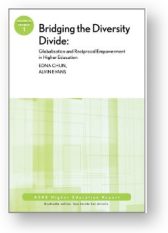
The sweeping forces of globalization present new challenges for higher education but also represent a clear mandate for change. Because of the unfinished business of remedying the underrepresentation of minorities and women in higher education, this book is designed to assist campus leaders and educators in the difficult process of cultural transformation in support of diversity and inclusion. The book explores the model of reciprocal empowerment as a moral framework linking the institution’s values, culture, and workplace practices to the outside world through the prism of diversity.
Bridging the Diversity Divide is a practical guide that provides concrete approaches to the creation of a genuinely inclusive campus. Its focus is on research-based strategies that will enable institutions of higher education to assess current practices, create successful action plans, and move beyond structural representation to true reciprocal empowerment. The measurement strategies, organizational learning tools, and best practices included here will assist institutions of higher education in building a flexible repertoire of institutional approaches to reciprocal empowerment and inclusion.
Only by systemic organizational change will universities bridge the diversity divide and create a campus culture that values and celebrates the contributions of all its members. This is a must-read for educators seeking to translate diversity principles into practice.
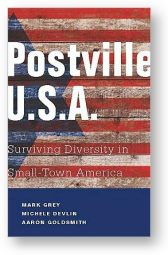
Postville is an obscure meatpacking town in the northeast corner of Iowa. Here, in the most unlikely of places, unparalleled diversity drew international media. Now people declare the town’s experiment in multiculturalism dead. It was not native Iowans, or the newly-arrived Orthodox Jews, or the immigrant workers who made Postville fail.
Postville was stopped in its tracks by a massive raid by U.S. Immigration and Customs Enforcement (ICE) on May 12th 2008. 20% of the population was arrested, forcing the closure of the town’s kosher meatpacking plant. The raid exposed the disastrous enforcement of immigration policy, the exploitation of Postville by activists, and disturbing questions about the packing house’s operators.
This innovative work provides a new model for the analysis of ethnic and racial settlement patterns in the United States and Canada. Ethnoburbs — suburban ethnic clusters of residential areas and business districts in large metropolitan areas — are multiracial, multiethnic, multicultural, multilingual, and often multinational communities in which one ethnic minority group has a significant concentration but does not necessarily constitute a majority. Wei Li documents the processes that have evolved with the spatial transformation of the Chinese American community of Los Angeles and that have converted the San Gabriel Valley into ethnoburbs in the latter half of the twentieth century, and she examines the opportunities and challenges that occurred as a result of these changes.
Traditional ethnic and immigrant settlements customarily take the form of either ghettos or enclaves. Thus the majority of scholarly publications and mass media covering the San Gabriel Valley has described it as a Chinatown located in Los Angeles’ suburbs. Li offers a completely different approach to understanding and analyzing this fascinating place. By conducting interviews with residents, a comparative spatial examination of census data and other statistical sources, and fieldwork—coupled with her own holistic view of the area—Li gives readers an effective and fine-tuned socio-spatial analysis of the evolution of a new type of racially defined place. The San Gabriel Valley tells a unique story, but its evolution also speaks to those experiencing a similar type of ethnic and racial conurbation. In sum, Li sheds light on processes that are shaping other present (and future) ethnically and racially diverse communities.
Understanding of cultural diversity is essential to a healthy multicultural society. Fundamental to this book’s approach is the belief that a comparative, cross-cultural view of human differences and similarities enhances understanding of diversity and multiculturalism within contemporary North America.
On Being Different provides an up-to-date, comprehensive, and interdisciplinary account of diversity and multiculturalism in the United States and Canada. Conrad Kottak and Kathryn Kozaitis clarify essential issues, themes, and topics in the study of diversity, including ethnicity, religion, gender, and sexual orientation. The book also presents an original theory of multiculturalism, showing how human agency and culture work to organize and change society. The authors use rich and varied ethnographic examples, from North America and abroad, to help students apply the material to their own lives, and thus gain a better understanding of diversity and multiculturalism.
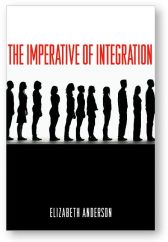
More than forty years have passed since Congress, in response to the Civil Rights Movement, enacted sweeping antidiscrimination laws in the Civil Rights Act of 1964, the Voting Rights Act of 1965, and the Fair Housing Act of 1968. As a signal achievement of that legacy, in 2008, Americans elected their first African American president. Some would argue that we have finally arrived at a postracial America, but The Imperative of Integration indicates otherwise.
Elizabeth Anderson demonstrates that, despite progress toward racial equality, African Americans remain disadvantaged on virtually all measures of well-being. Segregation remains a key cause of these problems, and Anderson skillfully shows why racial integration is needed to address these issues. Weaving together extensive social science findings–in economics, sociology, and psychology–with political theory, this book provides a compelling argument for reviving the ideal of racial integration to overcome injustice and inequality, and to build a better democracy.
Considering the effects of segregation and integration across multiple social arenas, Anderson exposes the deficiencies of racial views on both the right and the left. She reveals the limitations of conservative explanations for black disadvantage in terms of cultural pathology within the black community and explains why color blindness is morally misguided. Multicultural celebrations of group differences are also not enough to solve our racial problems. Anderson provides a distinctive rationale for affirmative action as a tool for promoting integration, and explores how integration can be practiced beyond affirmative action.
Offering an expansive model for practicing political philosophy in close collaboration with the social sciences, this book is a trenchant examination of how racial integration can lead to a more robust and responsive democracy.
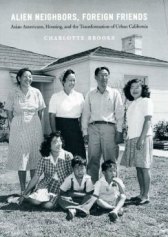
Between the early 1900s and the late 1950s, the attitudes of white Californians toward their Asian American neighbors evolved from outright hostility to relative acceptance. Charlotte Brooks examines this transformation through the lens of California’s urban housing markets, arguing that the perceived foreignness of Asian Americans, which initially stranded them in segregated areas, eventually facilitated their integration into neighborhoods that rejected other minorities.
Against the backdrop of cold war efforts to win Asian hearts and minds, whites who saw little difference between Asians and Asian Americans increasingly advocated the latter group’s access to middle-class life and the residential areas that went with it. But as they transformed Asian Americans into a “model minority,†whites purposefully ignored the long backstory of Chinese and Japanese Americans’ early and largely failed attempts to participate in public and private housing programs.
As Brooks tells this multifaceted story, she draws on a broad range of sources in multiple languages, giving voice to an array of community leaders, journalists, activists, and homeowners—and insightfully conveying the complexity of racialized housing in a multiracial society.
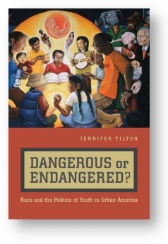
How do you tell the difference between a “good kid†and a “potential thug� In Dangerous or Endangered?, Jennifer Tilton considers the ways in which children are increasingly viewed as dangerous and yet, simultaneously, as endangered and in need of protection by the state.
Tilton draws on three years of ethnographic research in Oakland, California, one of the nation’s most racially diverse cities, to examine how debates over the nature and needs of young people have fundamentally reshaped politics, transforming ideas of citizenship and the state in contemporary America. As parents and neighborhood activists have worked to save and discipline young people, they have often inadvertently reinforced privatized models of childhood and urban space, clearing the streets of children, who are encouraged to stay at home or in supervised after-school programs. Youth activists protest these attempts, demanding a right to the city and expanded rights of citizenship.
Dangerous or Endangered? pays careful attention to the intricate connections between fears of other people’s kids and fears for our own kids in order to explore the complex racial, class, and gender divides in contemporary American cities.
Although there are differences in hairstyle and dress, at least when it comes to the contestants’ faces, I have to say that I agree with the page’s consensus that all the women look virtually the same.
Physical Homogeneity and the Yellow Peril
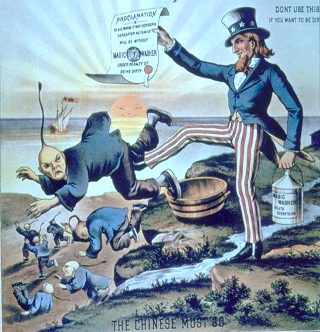
As such, this brings up a few different implications. The first, as mentioned in several of the Reddit comments, is that it seems to reinforce the unfortunate stereotype that all Asians look the same. On the one hand, there tends to be a certain degree of visual conformity and homogeneity in beauty pageants in general, but as many Asian Americans can attest to, this particularly stereotype about all Asians looking the same unfortunately feeds into the image of us as the Yellow Peril — the depiction of Asians as a faceless and almost sub-human mass bent on attacking, taking over, and/or destroying U.S. society, its economy, and culture.
This imagery of Asians as the Yellow Peril can be seen in the graphic below from the 1800s, which is actually a magazine advertisement for soap (that’s what Uncle Same is holding in his left hand). The image’s main focus however, is on him kicking out the Chinese out of the country toward the squinty-eyed sun in the horizon. Just as important is the imagery of physically indistinguishable Chinese scurrying into the background, the Yellow Peril vanquished by American might and superiority. As described elsewhere on this blog, this stereotype that all Asians are the same has also led to many tragic instances of blatant bigotry, discrimination such as racial profiling, and even violence.
Conformity to Western Beauty Standards
Secondly, the image of the Miss Korea 2013 contestants brings up the question of whether Asians and Asian Americans are implicitly or explicitly conforming to dominant western standards of physical beauty. Within the Asian American community, this question has taken the form of the debate about the cultural implications of Asian Americans getting cosmetic surgery and in particular, whether procedures such as double-eyelid surgery, breast augmentation, and using products to whiten one’s skin represent conforming to western standards of beauty. This question is highlighted in a segment from ABC’s NightLine from a couple of years age:
Of course, there are passionate opinions on both sides of this debate about these particular cosmetic procedures represent conforming to western standards of beauty, but more generally, I would venture to say that most people, Asian American and otherwise, would agree that westerns ideals of beauty are still a dominant force in the media and fashion industries in industrialized nations around the world and do indeed exert an influence on how young Asian American women judge themselves and their physical appearance.
The downside to such pressures can often be disastrous for Asian American women and take such forms as eating disorders, depression, and when combined with other pressures to conform to the model minority image, even suicide.
The Ironies of Multiculturalism
The irony in all of this is that, in the context of globalization, multiculturalism, and increased racial/ethnic diversity in U.S. society, our society has generally been more open and likely to recognize and celebrate more diverse forms of cultural representation. But one area in which this does not seem to be the case is standards of physical beauty where western and White images and idealizations still predominate. Even in the ABC NightLine video segment above, while the overall trend is toward greater inclusion of Asian and Asian American models in the fashion industry, the reality of their portrayals have included an underlying profit motive to tap into the burgeoning Asian consumer market and (inadvertently?) homogenizing the models.
Going back to the contestants of the Miss Korea 2013 pageant, like most people, I would certainly concur that the young women are all attractive just based on their physical appearance. Nonetheless, I hope that Korean and western societies in general will eventually acknowledge and appreciate that beauty can take many diverse forms and can wear more than just one face.
I am very pleased to report that this post is the 1,000th post published on the Asian-Nation blog. Thank you for helping to keep Asian-Nation going strong since 2001 and here’s to the next 1,000 posts and beyond!
I have compiled and organized a course guide about Asians, Asian Americans, and Pacific Islanders for the public sociology blog Sociological Images. The guide contains links to Sociological Images posts, organized by theme. Hopefully it will be useful for instructors teaching courses in sociology, anthropology, ethnic studies, and related fields. I will be updating it periodically as new posts on the topic get published.
Here are some more announcements, links, and job postings about academic-related jobs, fellowships, and other opportunities for those interested in racial/ethnic/diversity issues, with a particular focus on Asian Americans. As always, the announcements and links are provided for informational purposes and do not necessarily imply an endorsement of the organization or college involved.
Position: Ethnic Studies, Univ. of Colorado
The Department of Ethnic Studies at the University of Colorado Boulder invites applications for a full-time instructorship in Comparative Ethnic Studies with an emphasis in critical sports studies. Applicants must be able to teach classes on sports and their social contexts of race, gender, sexuality, and/or globalization, as well as a comparative Foundations of Ethnic Studies course and other courses in their specialties.
A Ph.D. is preferred, though ABD candidates will be considered. The teaching load is 4-3, plus additional service to the department such as working with student groups. This is a non-continuing position with a two-year contract beginning in Fall 2013. To apply, please send a letter of application discussing teaching interests and experience, c.v., and evidence of teaching excellence to: ethnicst@colorado.edu. Review of applications will begin on April 8 and continue until the position is filled.
Post-Doc: Immigration, USC
The Center for the Study of Immigrant Integration (CSII) combines data analysis, academic scholarship, and civic engagement to support improved economic mobility for, enhanced civic participation by, and receiving society openness to immigrants.
Mellon Post-Doctoral Fellowship, 2013-2015
The USC Center for the Study of Immigrant Integration (CSII) and the USC Department of Sociology announce a two-year post-doctoral Andrew W. Mellon Postdoctoral Teaching Fellowship, beginning Fall 2013. The fellowship focuses on immigrant populations and the potential impact and/or need for Comprehensive Immigration reform (CIR) for the 2013-2014 and 2014-2015 academic years.
While we would prefer a post-doctoral teaching fellow looking at the populations likely to benefit from CIR in order to help us build a research project looking at the longitudinal effects, we would also be open to candidates who would study the politics of change. We would prefer an interdisciplinary researcher who could utilize and teach mixed methods approaches (i.e., both quantitative and qualitative) to Sociology graduates and undergraduates in his/her teaching role. The fellow will teach one course each semester at USC and is expected to conduct research with CSII. The fellowship will offer a competitive salary, a yearly $2,000 research allowance, and fringe benefits. The fellow must have completed all requirements for the Ph.D. by mid-August, 2013.
Review of applications will commence on May 03, 2013, with a decision expected approximately May 17, 2013. Please follow the application process and upload the following materials:
C.V.
Detailed description of the nature of the research to be undertaken during the fellowship period
Relevant writing sample of no more than 30 pages
Contact information for three references (they will be asked to directly submit on your behalf)
Center for the Study of Immigrant Integration
950 W. Jefferson Blvd., JEF 102 | Los Angeles, CA 90089-1291
P: 213.740.3643 | F: 213.740.5680 | E: csii@usc.edu
Lecture Series: Mentoring Faculty of Color, CUNY
Mentoring of Future Faculty of Color Project Lecture Series
Developed in conversation with many students in the GC English PhD program, this initiative aims to offer scholarly and professional mentorship to students of color in CUNY PhD Programs by bringing in faculty of color from a variety of U.S. universities to share both their scholarship and their experiences in navigating the academy. We are delighted to announce that four fantastic scholars will be visiting us each consecutive Friday, starting April 19th. Each of these scholars will provide a talk on their current research. Please find the description, dates/times and venues for each of the four talks below. All events taking place at the CUNY Graduate Center (365 Fifth Ave NYC).
“Cosmopolitanism, Nationalism, and Empire: British Literature in the Eighteenth-century”
Suvir Kaul (English at UPenn)
Fri 4/19 @ 2PM – Room 4406, English Lounge
This paper will explore the idea that “Cosmopolitanism,” as a term, an idealized state of being, and a cultural and political idea, comes into vogue in historical circumstances where the putative attributes of cosmopolitanism—tolerance of, even ease with, people of different nationalities, cultures, religions, and races—are disabled in practice. Eighteenth-century English and European commentators on cultural difference derived most of their operative sociological and historical categories from the explosion of information produced by commercial and colonial expansion across the globe.
Out of this welter of knowledge emerged the theories of kinship and social development that underpinned imperialist ideas of human difference as well as more cosmopolitan arguments that insisted on the recuperative powers of cultural knowledge and human sympathy. Such cosmopolitanism was a forceful, though necessarily compromised, response to the cultural coercions of empire. I will show that eighteenth-century literary texts are a fruitful archive for discussions of the forms and vocabularies of cosmopolitanism, and also venture a larger, more speculative claim: cosmopolitanism, that is, the awareness of the mediated relations between provinces and nations, nations and colonies, and between competitive empires in history and in the contemporary moment, enabled “English Literature†to come into institutional being in the eighteenth century.
“‘One of these mornings, you’re gonna rise up singing’: Black Women (Un)Doing Gershwinian Time”
Daphne Brooks (English at Princeton)
Fri 4/26 @ 2PM – Room 4406, English Lounge
This talk considers the ways in which a range of black women musicians–from jazz musicians and opera legends to pop divas and avant-garde experimentalists–have traversed the music of the Gershwins’ folk opera Porgy and Bess, and it explores the ways that these artists have transformed this unlikely musical vehicle into black feminist temporal insurgencies.
“Carceral Aesthetics: Art and Visuality in the Era of Mass Incarceration”
Nicole Fleetwood, (American Studies at Rutgers)
Fri 5/3 @ 2PM – Room 4406, English Lounge
Popular entertainment, journalistic exposes, and documentary sobriety produce countless images of “life behind bars.†These images fascinate, horrify and titillate; and yet prison is a site that the majority of the public will never enter as inmate, guest, worker, or researcher. It is a site that we know almost exclusively through the lens of others; and yet we know it so well. As Angela Davis argues, prison is such a foundational feature of our contemporary environment and polity that it has taken on a quality of familiarity and common sense. The popularity of visual representations of prison life underscores the significance of visuality in establishing and maintaining the modern carceral system—particularly in the United States. And yet, the visual world of prison has received little sustained analysis in scholarship and public discourse.
In this talk I examine carceral aesthetics to refer to how visual lenses operate and artistic practices emerge in relationship to the modern prison industrial complex. The talk examines late twentieth century documentary studies and artistic projects by incarcerated and non-incarcerated subjects. These works are composed and staged in ways that speak to, work through, or incorporate the ever-looming and multiple lenses of carceral optics. The works of Deborah Luster, Dread Scott, Duron Jackson, and others will be considered.
“Wildness” has emerged as a post-ecological motif among critics interested in pushing queer and critical race studies past the impasse of the death-bound subject. But where exactly is this wild to which we imagine a return located? This talk mounts an imaginative itinerary through the haunts and havens of the fabulous beasts and little monsters of today. It speculates that a new entelechy of the queer is increasingly subsuming the epistemology of the closet, with its emphasis of power-knowledge. Queerness is mutating and developing new immunities to disclosure and new vulnerabilities as raw life. Popular music increasingly moves along the grooves of this fugitive queer vitalism.
Please feel free to forward widely and to contact us should you have any further questions: ceng@gc.cuny.edu
Call for Papers: Asians in the Americas, Pepperdine Univ.
Call for Papers: Second Symposium on Asians in the Americas Pepperdine University
Sponsored by Pepperdine University and the International Studies and Languages Division
September 27-28, 2013
This symposium aims to explore the multifaceted representations of Asian lives in the Americas in history, sociology, religion, anthropology, art, education, film, and popular culture. In contemporary diaspora, globalization, and transnational studies we are reminded of the movement of Asians to the Americas as a people and through representations. We emphasize that although Asians have been in the Americas since at least the 16th Century, the movement of Asians outside of Asia is, ostensibly, a footnote in many fields. Similarly, current scholarship of Asians in the Americas focuses on East Asians in the Americas and rarely discusses South Asians, Southeast Asians, Central Asians, and Western Asians.
The symposium seeks to examine the multiple intersections of borders, race, nationality, geopolitical power, homeland, identity, and the transmission of culture as it specifically relates to the Asians in the Americas. We invite papers that focus on any aspect of the symposium themes and especially encourage interdisciplinary approaches. Topics may focus on a specific diaspora, such as the Japanese diaspora, or tied to the specific host country, for example, the South Asians in Canada, but should be able to serve as a general context to this hemisphere as a whole.
Please send an abstract of no more than 200 words to:
Dr. David Simonowitz (Organizer) by May 15, 2013
David.simonowitz@pepperdine.edu
Co-organizers: Dr. Zelideth Rivas, Marshall University
Dr. Alejandro Lee, Central Washington University
Positions: Poll Workers, Boston
The Boston Election Department is recruiting Poll Workers to assist in the important work of staffing the City’s 254 precincts for all the upcoming Elections.
In order to guide voters through the electoral process smoothly and speedily and to ensure that all the poll-ing locations are adequately staffed, the Election Department requires a full complement of Poll Workers. There is also a critical need for bilingual individuals to serve in all the Poll Worker roles: Wardens, Clerks, Inspectors and Interpreters. Bilingual speakers of Spanish, Cape Verdean, Vietnamese, Chinese, Haitian Creole, Russian, Portuguese, and Somali are strongly encouraged to apply.
Job responsibilities include, but are not limited, to the following: assist with preparing the voting location for opening; hang signs in accordance with legal requirements; count ballots; check in voters; maintain a record of the Election Day・s activities; check handicap access; assist in removing signage; pack up election materials; and help check counts at the end of the day.
Please note these are one day positions only.
There are stipends ranging from $135-$175 for Poll Workers. While it is encouraged that all Poll Workers be available from 6AM to the closing of the polls (9PM), those workers serving as Inspectors or Interpreters may opt for a half-day shift: 6AM to 2PM or 1PM to 9PM (prorated pay rate of $9/hour). All prospective Poll Workers will be required to attend a mandatory 2-hour training session prior to the Elections.
Poll Workers must be registered voters in the Commonwealth of Massachusetts; preference will be given to voters with proven and consistent voter history. All Poll Workers must exhibit a professional and helpful demeanor, and must be respectful and mindful of the ethnic and cultural diversity of Boston・s voters.
For more information on becoming a Poll Worker , please contact the Boston Election Department at (617)635 ・3767 or by email at email at Election@cityofboston.gov. Applications can be downloaded directly from our website and can be mailed, faxed or returned as an email attachment.
Strip mall sign in Koreatown, Los Angeles. Photo: Tyler Goss (Flickr/Creative Commons)
Two contrasting articles about bilingualism came my way this morning. In the first one, Los Angeles Times immigration reporter Cindy Chang writes about how the changing geopolitical context is pushing middle class parents to ensure that their kids are bilingual:
Nowadays, with China on the rise, it’s considered borderline criminal for Mandarin speakers not to pass on the language. Even parents who were born here address their children in less-than-perfect Chinese in hopes that some of it will stick. Bilingual mania has taken root among the Tiger Mom set, and not just among Chinese Americans. Many families go to great lengths to make sure their kids are fluent in another language, whether it’s Korean, Spanish, French or Swedish.
Bilingualism is great! Mandarin for everyone! But does this mark a wholesale change in the negative attitudes toward the use of non-dominant languages? (more…)
The following new books look at the intersections and connections between race, ethnicity, immigration, and community and how different groups of color/immigrants negotiated the political, economic, and cultural landscape of U.S. society through the years, the impacts they’ve had on their new surroundings, and vice versa. As always, a book’s inclusion is for informational purposes only and does not necessarily mean a full endorsement of its contents.
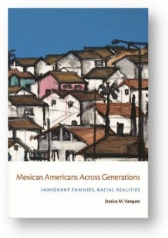
While newly arrived immigrants are often the focus of public concern and debate, many Mexican immigrants and Mexican Americans have resided in the United States for generations. Latinos are the largest and fastest-growing ethnic group in the United States, and their racial identities change with each generation. While the attainment of education and middle class occupations signals a decline in cultural attachment for some, socioeconomic mobility is not a cultural death-knell, as others are highly ethnically identified. There are a variety of ways that middle class Mexican Americans relate to their ethnic heritage, and racialization despite assimilation among a segment of the second and third generations reveals the continuing role of race even among the U.S.-born.
Mexican Americans Across Generations investigates racial identity and assimilation in three-generation Mexican American families living in California. Through rich interviews with three generations of middle class Mexican American families, Vasquez focuses on the family as a key site for racial and gender identity formation, knowledge transmission, and incorporation processes, exploring how the racial identities of Mexican Americans both change and persist generationally in families. She illustrates how gender, physical appearance, parental teaching, historical era and discrimination influence Mexican Americans’ racial identity and incorporation patterns, ultimately arguing that neither racial identity nor assimilation are straightforward progressions but, instead, develop unevenly and are influenced by family, society, and historical social movements.
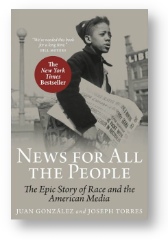
From the earliest colonial newspapers to the Internet age, America’s racial divisions have played a central role in the creation of the country’s media system, just as the media has contributed to—and every so often, combated—racial oppression. News for All the People reveals how racial segregation distorted the information Americans received from the mainstream media. It unearths numerous examples of how publishers and broadcasters actually fomented racial violence and discrimination through their coverage. And it chronicles the influence federal media policies exerted in such conflicts. It depicts the struggle of Black, Latino, Asian, and Native American journalists who fought to create a vibrant yet little-known alternative, democratic press, and then, beginning in the 1970s, forced open the doors of the major media companies.
The writing is fast-paced, story-driven, and replete with memorable portraits of individual journalists and media executives, both famous and obscure, heroes and villains. It weaves back and forth between the corporate and government leaders who built our segregated media system—such as Herbert Hoover, whose Federal Radio Commission eagerly awarded a license to a notorious Ku Klux Klan organization in the nation’s capital—and those who rebelled against that system, like Pittsburgh Courier publisher Robert L. Vann, who led a remarkable national campaign to get the black-face comedy Amos ‘n’ Andy off the air.
Based on years of original archival research and up-to-the-minute reporting and written by two veteran journalists and leading advocates for a more inclusive and democratic media system, News for All the People should become the standard history of American media.
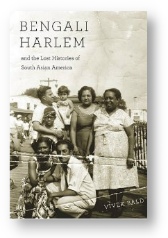
In the final years of the nineteenth century, small groups of Muslim peddlers arrived at Ellis Island every summer, bags heavy with embroidered silks from their home villages in Bengal. The American demand for “Oriental goods” took these migrants on a curious path, from New Jersey’s beach boardwalks into the heart of the segregated South. Two decades later, hundreds of Indian Muslim seamen began jumping ship in New York and Baltimore, escaping the engine rooms of British steamers to find less brutal work onshore. As factory owners sought their labor and anti-Asian immigration laws closed in around them, these men built clandestine networks that stretched from the northeastern waterfront across the industrial Midwest.
As steel and auto workers in the Midwest, as traders in the South, and as halal hot dog vendors on 125th Street, these immigrants created lives as remarkable as they are unknown. Their stories of ingenuity and intermixture challenge assumptions about assimilation and reveal cross-racial affinities beneath the surface of early twentieth-century America.
Whiteness and Racialized Ethnic Groups in the United States, in order to account for the never ending discrimination toward racialized ethnic groups including First Nations, blacks, Chinese, and Mexicans, revisits the history of whiteness in the United States. It shows the difference between remembering a history of human indignities and recreating one that composes its own textual memory. More specifically, it reformulates how the historically reliant positionality of whiteness, as a part of the everyday practice and discourse of white supremacy, would later become institutionalized.
Even though “whiteness studies,” with the intention of exposing white privilege, has entered the realm of academic research and is moving toward antiracist forms of whiteness or, at least, toward antiracist approaches for a different form of whiteness, it is not equipped to relinquish the privilege that comes with normalized whiteness. Hence, in order to construct a post white identity, whiteness would have to be denormalized and freed of it of its presumptive hegemony.
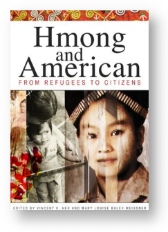
Farmers in Laos, U.S. allies during the Vietnam War, refugees in Thailand, citizens of the Western world—the stories of the Hmong who now live in America have been told in detail through books and articles and oral histories over the past several decades. Like any immigrant group, members of the first generation may yearn for the past as they watch their children and grandchildren find their way in the dominant culture of their new home.
For Hmong people born and educated in the United States, a definition of self often includes traditional practices and tight-knit family groups but also a distinctly Americanized point of view. How do Hmong Americans negotiate the expectations of these two very different cultures?
In an engaging series of essays featuring a range of writing styles, leading scholars, educators, artists, and community activists explore themes of history, culture, gender, class, family, and sexual orientation, weaving their own stories into depictions of a Hmong American community where people continue to develop complex identities that are collectively shared but deeply personal as they help to redefine the multicultural America of today.
Before the Khmer Rouge takeover of Cambodia in April 1975, Sao Bounchoeurn and San Bounriem grew up in idyllic, though vastly different, circumstances. After a secondary education, Bounchoeurn entered the army, joined the Special Forces, and worked for the Americans. He became a slave laborer after the fall of Phnom Penh and eventually escaped to Thailand. In another part of Cambodia, Bounriem lived happily spoiled and uneducated.
Fleeing from the advancing Khmer Rouge, she arrived at the same refugee camp as Bounchoeurn, where they met, married, and immigrated to America. This riveting memoir chronicles the couple’s childhoods, their lives under the Khmer Rouge, their journeys to Thailand and later the United States, and their efforts to forge a new life. This remarkable tale offers an intimate look inside the terrors of the Khmer Rouge and an inspiring portrait of the immigrant experience in America.
Here are some more announcements, links, and job postings about academic-related jobs, fellowships, and other opportunities for those interested in racial/ethnic/diversity issues, with a particular focus on Asian Americans. As always, the announcements and links are provided for informational purposes and do not necessarily imply an endorsement of the organization or college involved.
Position: Korean American Studies, U.C. Riverside
The Department of Ethnic Studies at the University of California, Riverside, announces a tenured Associate or Full Professor position in Korean American Studies, beginning July 1, 2013. Advanced degree in field related to theories and principles of Korean American Studies is required. The candidate should be a scholar with demonstrated record of commitment to research, grant writing, fundraising, teaching excellence, and community service.
UCR is a research institution with high expectations for scholarly productivity and excellence in teaching. Position supports the Young Oak Kim Center for Korean American Studies at UC Riverside with research and inquiry to facilitate effective Center planning, decision making and mission fulfillment. Salary will be commensurate with education and experience.
Interested candidates should send electronic applications of their curriculum vitae, a cover letter describing their interest in and fit for the position, research and teaching statements, and 2-3 sample essays; journal articles, book chapters, or other works-in-progress (if available) to yokapp@ucr.edu. Additionally, arrange to have at least three letters of recommendation sent to yokrec@ucr.edu.
All application materials should be sent as email attachments in a PDF format and addressed to: Edward T. Chang, Recruitment Committee Chair, Ethnic Studies Department. Review of applications will commence on February 1, 2013. We will continue to accept applications until this position is filled.
Position: Sociology/Globalization, Christopher Newport Univ.
The Department of Sociology, Social Work, and Anthropology at Christopher Newport University invites applications for a non-tenure appointment as Lecturer or Instructor of Sociology/Social Work to begin August 19, 2013. This is a one-year appointment, with potential for renewal depending upon the incumbent’s performance and University need. The teaching load is 4-4. The position requires a Ph.D. granted, or nearly completed, in Sociology or Social Work, or a closely related field. Candidates with a MSW from a CSWE-accredited program and a minimum of two years post-MSW practice experience are strongly encouraged to apply.
A hired candidate with a Ph.D. in hand by August 19, 2013 can anticipate an initial appointment of Lecturer. A hired candidate with a Ph.D. nearly completed can anticipate an initial appointment of Instructor. We seek creative, effective teachers who are committed to excellence in undergraduate teaching in the context of liberal learning. Expertise and/or willingness to teach in one or more of the following areas is strongly preferred: Globalization; Race, Class and Gender; Macro-Practice or Field Instruction.
To apply, send a letter of interest, statement of teaching philosophy, graduate transcripts (photocopies acceptable for initial screening), and three letters of reference to:
Director of Equal Opportunity and Faculty Recruitment
Sociology/Social Work (Lecturer/Instructor) Faculty Search
Search #8405
Christopher Newport University
1 Avenue of the Arts
Newport News, VA 23606-3072
Or mlmoody@cnu.edu
Review of applications begins February 25, 2013. Applications received after February 25, 2013, will be accepted but considered only if needed. Search finalists are required to complete a CNU sponsored background check.
Position: Immigration & Diaspora, Pratt Institute
The Department of Social Science and Cultural Studies in the School of Liberal Arts and Sciences at Pratt Institute invites applications for the position of Assistant Professor with expertise in the study and teaching of immigration and diaspora. Areas of specialization might include, but are not limited to, Memory, Trauma, Genocide, War Crimes, Stateless Peoples and Human Rights. This is a full-time, tenure-track faculty position available August 2013.
Pratt is an internationally recognized school of architecture, art, design, information science, writing, and critical and visual studies. Its strong programs in architecture, film, video, photography, computer graphics and other areas of art and design draw students from diverse cultural and geographical backgrounds. The Department of Social Science and Cultural Studies contributes to the students’ core education and also has its own major in Critical and Visual Studies. The Institute is located on a 25 acre campus in the historic Clinton Hill section of Brooklyn.
Position Responsibilities:
Teach six courses per year to students from a range of disciplines
Contribute to either the department’s World History program and/or the Minor in Psychology
Develop curriculum in Social Science and Cultural Studies
Advise students
Serve on department, School and Institute committees
Provide outreach to other departments in the Institute
Complete individual research projects
Perform all other related activities as required
Salary is competitive and commensurate with qualifications and experience.
Qualifications:
The successful candidate will have a Ph.D in a core area of the social sciences, history, psychology or philosophy. ABD will be considered only for otherwise exceptionally accomplished applicants. While disciplinary field is open, preference will be given to candidates who can contribute to the Department’s World History program or to building a departmental Minor in Psychology. Candidates must have at least one (preferably two) year’s college level teaching experience in an institution other than the one in which terminal degree was earned. Strong evidence of future scholarly productivity is essential.
To Apply:
Please submit only your cover letter, resume/CV, and the names and contact information for three professional references. Review of application will begin on February 25, 2013 and continue until the position is filled.
Leadership Education for Asian Pacifics (LEAP) 2013 Leadership In Action Program
Developing emerging young leaders
Bridging self and community
Taking learning beyond the classroom
Approaching its 16th year, LEAP’s eight-week Leadership In Action (LIA) Summer Internship Program offers a unique opportunity for personal leadership development with hands-on training and exploration of the Asian and Pacific Islander (API) nonprofit sector. Interns will be placed at a nonprofit organization four days a week and will receive leadership training with LEAP once a week.
The 2013 program will be held in Los Angeles from June 17 – August 9, 2013. (Applicants must be able to commit to the entire program). The intern will be paid $2,500 for the eight-week internship.
Applicants will be evaluated based on demonstration of leadership, community service, interpersonal skills, written and verbal communication skills, maturity and professional demeanor, and grade point average.
Applicants must have completed two years of college by June 18, 2013
Applicants must be either currently enrolled in college or a recent graduate
Interested applicants must submit all application materials by Tuesday, March 12, 2013
Conference: Latino Communities
Latino Communities in Old and New Destinations: Multi-Disciplinary Approaches to Assessing the Impact of Legal Reforms
Conference Organizer:
Elizabeth Aranda
University of South Florida
Co-sponsors:
University of South Florida System Internal Awards Program
Department of Sociology, USF
College of Arts & Sciences, USF
Citizenship Initiative, USF
Institute for the Study of Latin America and the Caribbean (ISLAC), USF
Dates and Location: November 8, 2013, Vinoy Renaissance St. Petersburg Resort & Golf Club, St. Petersburg, FL.
Theme: Latinos/as in the United States are increasingly diverse with regards to their countries of origin, race, social class and immigrant status. Long-standing Latino communities in traditional ‘gateway’ cities are diversifying as they are receiving new Latin American immigrants at the same time that immigrant Latinos/as are establishing thriving communities in new destinations.
As Latinos in these communities incorporate into the United States, they encounter federal, state and local laws that are often in tension with one another. Homeland Security programs continue to result in detentions and deportations of undocumented immigrants and state laws modeled after Arizona’s S.B. 1070 continue to be proposed and passed; at the same time, recent federal initiatives are providing temporary legal status to select populations and new laws are expanding the social safety net for Latino/a citizens through reforms such as the Affordable Care Act of 2010. Moreover, immigration laws are often intertwined with policies that affect other realms of social life, such as education and social welfare. Unclear is how these recently enacted laws and initiatives are currently affecting and will continue to shape the various dimensions of Latino/a lives in both old and new destinations.
This conference seeks to bring together leading scholars who are researching a variety of social, economic and political issues confronting Latino communities in both old and new destinations to answer the question of how these laws, including current efforts at immigration reform, are affecting the lived experiences of Latinos/as—both recent arrivals as well as those who have been in the United States for generations. This will be the common theme uniting the conference panels.
Specific topics of interest include: how recently enacted laws and policies affect the educational prospects of Latinos/as? What are the consequences and implications of legal uncertainties and the contradicting realities dictated by federal, state and local laws for the psychological states of immigrants and their children, including their health and family well-being? How are proposals for immigration reform being received by Latinos/as (both immigrant and U.S. born) in old and new destinations, particularly how they affect civic engagement and political attitudes?
Consideration also will be given to papers that focus on more general issues of critical importance to all Latinos/as regardless of destination (e.g., health, crime, politics, inter-ethnic relations, gender, etc.). Preference will be given to works in which empirically and theoretically meaningful comparisons may be drawn between Latinos/as in old and new destinations, and in which the impact of federal reforms and state and local laws on Latino populations is assessed.
Objectives:
To bring together a group of social scientists from across the country involved in cutting-edge research on issues of importance to Latino/a populations
To learn how recent changes in federal, state and local laws and current legislative attempts are shaping the lived experiences of Latinos/as around the country
To identify areas of future research within Latino Studies and their policy implications by collectively proposing an agenda for future work in this field that would advance our knowledge of Latino communities across the country
Outcomes:
The inter-disciplinary journal, American Behavioral Scientist, has committed to publishing a select group of manuscripts for a special issue on the general themes of the conference. Laura Lawrie, Managing Editor for the journal, will attend the one-day conference as well as the second-day workshop centered on preparing the selected manuscripts for publication.
Deadline:
Please submit an extended abstract (1-2 pages single spaced) of your paper in which you identify a research question, theoretical framework, data source and methodology by March 31, 2013 to earanda@usf.edu. Please put in the subject line of the email: Latino/a Conference Submission. Papers will be due by September 1, 2013. Conference funds will be used to pay for two nights of lodging at the Vinoy and meals for the day of the conference for the author of each manuscript that is accepted for presentation and completed by the due date. A workshop will be held the day after the conference for those authors whose completed papers will be part of the special issue of ABS. Questions should be directed to Elizabeth Aranda (email address above).
Call for Applications: 2013 East of California Junior Faculty Retreat
Location: University of Illinois at Chicago
July 25-27, 2013
Application Deadline: April 1, 2013
This July, East of California and University of Illinois at Chicago will host a junior faculty development workshop for early-career Asian Americanists. The workshop reflects EOC’s historical commitment to mentoring junior faculty and providing support to those working to increase the disciplinary and curricular visibility of Asian American Studies in higher education. Specifically, the workshop will help professionalize junior faculty by focusing on how to:
Create extra-institutional networks of support
Identify meaningful research projects and develop vocabularies for how to talk about such projects with a variety of audiences (department chairs, audiences outside of Asian American Studies, potential editors)
Confront pedagogical challenges
Establish effective collegial relationships
Navigate the tenure process successfully
To accomplish these goals, the workshop will feature panel discussions, breakout sessions, and work-in-progress workshops. The workshop will begin on Thursday (7/25) and conclude on Saturday (7/27). We will provide lodging for two nights (Thurs-Fri) and some meals (depending on funding). Participants will be expected to cover their own travel.
Please note that space will be limited to ensure a high level of interaction among all participants. Interested scholars should submit:
Brief letter of application outlining what the applicant hopes to gain by attending the workshop
Draft or excerpt of approximately 7-15 pages of the article or book chapter being proposed for workshop development (only work that has not yet been published is eligible)
CV
Please send materials (and questions) to Mark Chiang (mchiang@uic.edu) and Sue J. Kim (sue_kim@uml.edu).
This event is funded by the University of Illinois at Chicago, the University of Connecticut Asian American Studies Program, Northwestern University, DePaul University and UMass Lowell.
Food and Immigrant Life: The Role of Food in Forced Migration, Migrant Labor, and Recreating Home
The 29th Conference in the Social Research Series
Presented By The Center For Public Scholarship At The New School
April 18-19, 2013, NYC
The conference will examine the complex relationships between food and migration. Food scarcity is not only at the root of much human displacement and migration-the food industry also offers immigrants an entry point into the U.S. economic system and it, simultaneously, confines migrants to low wages and poor, if not unsafe, work conditions. In addition, food allows immigrants to maintain their cultural identity. The conference places issues of immigration and food service work in the context of a broader social justice agenda and explores the cultural role food plays in expressing cultural heritage.
The keynote address will be given by Dolores Huerta, co-founder and first Vice President Emeritus of United Farm Workers of America, on Thursday, April 18 at 6:00pm.
The New School’s Center for Public Scholarship and the Food Studies Program presents this conference in collaboration with the Writing Program, India China Institute, Vera List Center for Art and Politics, Center for New York City Affairs, Global Studies Program, Gender Studies Program, and International Center for Migration, Ethnicity, and Citizenship (ICMEC).
Tickets:
$45 Full Conference + Proceedings
$15 per Session + Proceedings
Free for all Students, New School Alumni, Staff (Eligible to Buy Proceedings For $9)
We Petition the Obama Administration to:
Work with Congress to Establish a National “Immigrants Day” Holiday
There are currently 11 federal holidays many of which recognize landmark moments and people that quintessentially shaped America. These include Independence Day, Veterans Day, Labor Day, and MLK Day.
America is a nation founded by immigrants and still composed largely of first-generation immigrants and their families, all of whom share a common dedication to the American Dream. Further, the landmark passage of the 1965 Immigration and Nationality Act fundamentally changed American demographics and remains a model of immigration legislation worldwide.
This petition proposes that the White House work with Congress to establish October 3, the day the 1965 Immigration Act was signed by Pres. Johnson, as national ‘mmigrants Day to celebrate immigrants and remember our history of immigration. Please consider signing the online petition.
Call for Participants: Vietnamese
Hello,
I am currently engaged on a research project for the University of Edinburgh, Scotland, examining that often-neglected period in the Vietnam War from the moment the last U.S. ground combat unit left country to President Ford’s official declaration that the conflict was at an end. I am particularly interested in the experiences of the Southern Vietnamese people when faced with the increasing encroachments of the NLF and PVA. I wonder if any of those reading this might have memories of this time or heard stories from their parents. I would be most grateful for any help in this quarter. Please contact me at the email below.
Research in the Sociology of Work is accepting manuscripts for Volume 26, focusing on “Immigration and Work” (Expected publication early 2015).
We invite manuscripts that address issues of immigration and work broadly defined, such as entrepreneurship, labor markets, low-wage and high-wage work, technology, globalization, equity and discrimination, and racial/ethnic relations in the workforce. Submissions may be quantitative, qualitative, or mixed methods. We welcome submissions from all fields. The deadline for submission of manuscripts is February 1, 2014.
Submit manuscripts/inquiries/abstracts to Jody Agius Vallejo (Editor, Volume 26), University of Southern California, Los Angeles, Department of Sociology. Electronic submissions to vallejoj@usc.edu preferred.
Today, I’m taking some time to write about the late Senator Daniel Inouye: Medal of Honor Winner, President pro tempore, Hawaiian Statesman, and Asian American Icon. As an American of Asian descent, born and raised in Hawaii, Senator Inouye has been a familiar name, and his death was very personal to myself, and my family, and my state.
For those who aren’t familiar, Senator Inouye was born before WWII. After Pearl Harbor, he joined the famous 442nd Regimental Combat Team where his gallantry on the battle field took a back seat to his courageous leadership. (Forbes has a much better account of the heoric Daniel Inouye than I could muster, check it out here.)  After the War, Inouye returned to Hawaii earned a degree from the University of Hawaii in Political Science. He then wen onto George Washington University to earn his law degree. He was elected to the Territorial House of in 1957, and became Hawaii’s first congressman upon statehood in 1959. Since then, Inouye had moved up the ranks to become the highest ranking Asian American in the history of the United States. This is only part of what I remember when I think of Senator Inouye.
Placing Sentaor Inouye into the Asian American experience is an all encompassing effort. He was born to poor Japanese immigrants in Honolulu, Hawaii. He worked and lived in territorial Hawaii, and survived both the bombing of Pearl Harbor, and the Anti-Japanese Racism that ensued. He fought together, with his Japanese brothers, in a racialized war and created bonds that have improved life in Hawaii—alas, the link between Senator Inouye and Senator John A. Burns is another blog entry.
When I was first learning about Senator Inouye, I remember a distinct feeling… a feeling of ethnic pride. Prior to “the story of Dan Inouye,” I thought American War heroes looked like Duke (G.I. Joe), Captain Miller (Tom Hanks, Saving Private Ryan) or George Washington. Put simply, I though American war heroes were white men and “the Story of Dan Inouye” challenged that myth.
The purpose of a leader is to provide space, either physical, economical, or psychological. Senator Inouye, for me, provided a psychological space where the Asian American man could kick some but and be the hero. His story showcased that an Asian American can fight for America, be a statesman, and go toe to toe with an unjust president.
The death of Senator Daniel Inouye is sad, but it provides an opportunity for the 21st century Asian American leader to “step up.”
The nation is facing new and different challenges. As we graduate from college, the economy seems nevertheless daunting. As our families join us from over seas, the process of immigration becomes more and more flawed. As we talk with our unemployed family and friends, we see the brokenness of the welfare system, and witness the frustration of good people without good choices.
First of all I want to say I’m happy to be on board. I’ve been following Asian and Asian American sociopolitical issues for some time now, and I only hope to create dialogue by outlining major points of discussion related both to intercultural issues between the U.S. and Asian countries, as well as specific issues among Asian America. Being an aspiring professional in the field of Intercultural Relations, I want to work towards bridging the aspects that divide us and encourage more respect and observation of all of our unique identities.
Recently I was able to attend a conference focused on diversity and inclusion at universities at MIT. Among many workshops, one was focused on the issue of the bamboo ceiling. I’m sure most of you are familiar with this concept, but for clarification, the term is borrowed from the phrase “Glass Ceiling” and refers to the barriers in the workplace or society that targets Asian people and prevents or impedes on career advancement and inclusion in the workplace. The phrase was coined by author Jane Hyun in the book Breaking the Bamboo Ceiling: Career Strategies for Asians. Has anyone read it? It’s on my to-do list.
There are a few key points in this discussion to think about. First, what is the problem? When we think of our society and economy we often pride ourselves that the U.S. values hard work and individual tact over racial and other social categorizations. Ideally, we’d like to promote a “Meritocracy”, where one is judged by their merit. When this isn’t the case, it shines a light on how complex and difficult this process is, and why we need to spend time creating action plans to address this in the workplace, just as we’ve made great strides with combating sexual harassment in the workplace.
So what isn’t working and how is this specific to Asian and Asian Americans? There are a number of salient factors that constitute the problem of the bamboo ceiling. Some are well known, in the case of pure racial discrimination – the typical concept of the old boys club, while a few arose that I found interesting.
We talked a lot about how different values contribute. I think this is a controversial discussion with points on both sides, but generally speaking many of the values in the workplace common in America conflict with values taught in Asian countries and vice versa. You can say “when in Rome, do as the Romans do”, but also managers should recognize the worth in integrating values they aren’t so familiar with and seeing the work as a complex and multi-faceted individual.
According to the workshop and from discussion, the major cultural difference in this case was in how the U.S. values traits such as proactiveness (sometimes downright aggressiveness) and being bold, injecting oneself into conversations and not merely contributing, but controlling the conversation when needed. We say “the squeaky wheel gets the grease”. However the saying from the speaker, reflecting his Chinese background says “the loudest duck gets shot” and my favorite is “the tallest grass gets chopped”.
It is easy to feel intimidated when the rules of the game put the dominant class at a continuous advantage by virtue of being born into that class. Like so many social systems, the process feels gamed to perpetuate those already in positions of power by a cycle of reinforcement of dominant values and exclusion of others.
However, in the business world, conforming to norms is simply a matter of pragmatism and often success. Although a particular manager may be sympathetic to these concerns, these “rules” are not easily alterable. So what can we do? Who has the responsibility to adjust? The speaker suggested how multiple concepts of leadership can be integrated into the workplace, and how the employee can be counseled specific to the manner they are most comfortable with.
For example (stereotype:beware!) they felt that Asian and Asian American workers tend to prefer technical traits and may prefer positions of leadership that involve training and managing in the technical aspects of the job. This can be a positive step, but I worry about perpetuating the stereotypes and not addressing ones individuality. This would create a class where leadership positions are more attainable, but susceptible to being treated as inferior to the “main” leadership class. I think a good manager can spend time to assess the abilities of his workers and provide more individualized resources and training without creating a new set of labels. Meanwhile the worker should think about how to “own” their career by spending time outside of their comfort zone as much as possible.
In the end the success may be determined by the relationship between the worker and supervisor and how well the worker feels supported while the manager feels the worker is truly concerned for their developing professional skills. Assessing relationships in the workplace in this sense is a key concern in tackling this issue.
Another issue that I never thought about until this event is the concept of “protective hesitation”. This is a backlash of concerns over racism. The manager is actually too sensitized to issues of discrimination that they don’t give criticism when they should. They feel they are doing well to avoid potential misunderstandings that are perceived as discrimination, and as a result the affected employee doesn’t get the support they need through critical feedback. This is support that other workers of the same perceived identity as the manager do receive.
How do we deal with the manager’s apprehension? This relates to the first matter and can be dealt with similarly. Communication needs to be opened up. The employee should be prepared to receive the criticism as any professional would, while the manager needs to perceive their employee not in a color-blind manner, but with regard to the aspects of their identity that contribute to or hinder their progress, despite being categorized in lenses of dominant values vs. outliers.
Again, the relationship matters, and managers themselves should held accountable to bring out the best in their employees. If we really want to talk about equal access (different than equal result) we do need to adjust from a hierarchical process of “working your way up the ladder”, to a perspective that is concerned with maximizing the human resources in an institution. We need to allow for a supervisor/subordinate relationship that also is a mutually beneficial one.
Equal access is about perceiving appropriate roles rather than seeking equivalency that often results from striving for egalitarianism. I first learned of this concept in a Chinese history class in fact. Mutually (ideally, of course) beneficial roles have been a part of Chinese society for quite some time, and can be seen as an alternative to our obsession with equivalency in this country.
The last topic was brought up in discussion by a colleague and relates to identity. At the end of the day, a lot of advancement in the workplace results simply from the rapport one has in their workplace community. It is easy for people who perceive their identities as similar to build rapport and quite frustrating and intimidating for people born outside of the dominant identities at play in the workplace. My colleague explained how she must initially put on a workplace identity, and slowly introduce her real self over time.
Perhaps this can be said of all of us, but the distance one has to go is far greater for someone with an identity outside of the mainstream. Again, it’s all about relationships. Forming them, acknowledging them and nurturing them from both sides. While it is hard to accomplish as a member of a minority group, it is important to consider how it is that much more demanding to overcome when you face multiple identity barriers, as in the case for Asian American women in the workplace.
This topic can be continued at great length and I encourage you to bring up other key points. The takeaway from this is first to establish this dialogue. I do believe that a lot of what we perceive as ignorance is really lazy obliviousness. Getting these issues out there is the first step. Secondly, for the role of the human resource department, there needs to be a focus on a workplace that nurtures positive relationships, between everyone of course, but more importantly between supervisors and subordinates.
And lastly, both the supervisor and employee should be encouraged to spend time outside of their comfort zone. The whole issue with identity and discrimination is that it is just so much easier to think and work among people you see as “like you”. But this often doesn’t, and sometimes even opposes, progress and positive results.
What about you? Have you faced this concept of bamboo ceiling in your own life. If you don’t identify as someone affected by this, have you considered the issue of protective hesitation? Do you truly treat the subject as an individual or do you just replace one bad discriminatory behavior for another? Have you ever spoken up or wanted to speak up when you observed this from others in your workplace?
The Asian American blogosphere and print media, which in many ways set the terms of the discussion around Asian American issues, rarely touches on issues outside the United States. I don’t remember the last time I read an article in an English-language Asian American blog about political or social problems in Asia. English-medium Asian American bloggers have been silent on issues like the island disputes in Northeast and Southeast Asia, Burma and Thailand’s unacceptable treatment of Rohingya refugees, and the election of a dictator’s daughter to the presidency in South Korea.
Even the Delhi gang rape incident, a tragedy that caught the attention of people the world over, scarcely got mentioned in Asian American media. Hyphen Magazine’s blog published a post about it, but it originally came from the Asia Society’s Asia Blog.
Are events in Asia outside of the scope of “Asian American” media, and if so, why? Is it a reaction to the unending accusations of being foreign and un-American? Is it because organizing around the pan-ethnic “Asian” label makes people loath to make statements on sensitive ethnonational conflicts across the Pacific, lest the solidarity built up in the American context breaks down? Does our US-born population’s general lack of language skills and knowledge of non-American history make these issues inaccessible and incomprehensible?
As another contributing author to the Asian-Nation team, I would like to introduce Justin Lockenwitz.
Justin graduated from UMass Amherst with a degree in Political Science and an Asian/Asian American Studies Certificate. Currently he is enrolled in a Master’s program in Intercultural Relations at Lesley University. He is also an office manager for a business research center at MIT Sloan and plans to pursue a career in International Education.
Welcome aboard, Justin. It’s great to have you be a part of the expanding Asian-Nation team and I and my readers look forward to reading your posts!