The views and opinions expressed on this site and blog posts (excluding comments on blog posts left by others) are entirely my own and do not represent those of any employer or organization with whom I am currently or previously have been associated.
Academic Version: Applying my personal experiences and academic research as a professor of Sociology and Asian American Studies to provide a more complete understanding of political, economic, and cultural issues and current events related to American race relations, and Asia/Asian America in particular.
Plain English: Trying to put my Ph.D. to good use.
Last week, the U.S. commemorated the 70th anniversary of the attack on Pearl Harbor by the Japanese military that led to the U.S.’s entry into World War II. Of course, the attack was a watershed moment in U.S. history — Japan’s unjustified and heinous act led to the deaths of 3,000 human beings, united the U.S. like never before, and in the end, was the start of Japan’s downfall as a imperial military power.
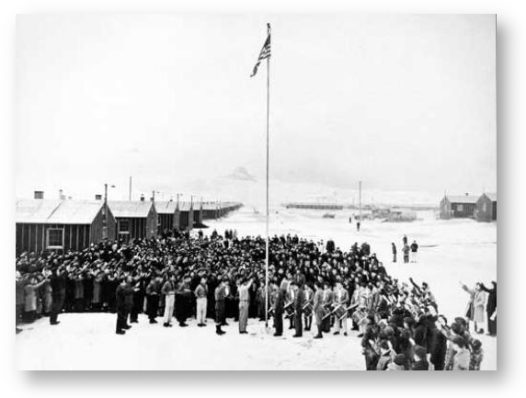
Unfortunately, the Pearl Harbor attacks also prompted the U.S. government to strip 120,000 Japanese Americans of their legal rights and imprison them without any due process, based largely on the “fear” that Japanese Americans would be loyal to Japan and engage in espionage or treason against their adopted U.S. homeland.
This entire “internment” episode has been recounted and analyzed over the years, most notably by the bipartisan Congressional “Commission on Wartime Relocation and Internment of Civilians,” which ultimately conducted a thorough investigation and in their final report titled “Personal Justice Denied: Report of the Commission on Wartime Relocation and Internment of Civilians,” finally concluded that the imprisonment of Japanese Americans during World War II was a “grave injustice” and resulted from “race prejudice, war hysteria, and a failure of political leadership.” Congress then approved and distributed a reparation payment of $20,000 to all surviving Japanese Americans who were imprisoned. To my knowledge, this is the only instance in which the U.S. government has officially apologized and provided monetary reparations to any of the injustices that they’ve committed in its history.
As it turns out, this week’s anniversary commemoration unfortunately prompted some to once again bring up the old argument that there was a logical rationale to the U.S.’s imprisonment of Japanese Americans, or that it was even completely justified. For example, in a museum review of Heart Mountain Interpretive Center (in Wyoming, site of one of the prison camps) in the Dec. 9, 2011 edition of the New York Times, ‘art critic’ Edward Rothstein engages in such musings.
Specifically, Rothstein uses a few historical examples of misdeeds by Japanese and Japanese Americans to argue that “the threat was palpable” and that therefore, there was a “rationale” for the U.S.’s subsequent imprisonment of 120,000 Japanese Americans. While Rothstein does state, “I am not suggesting that such factors justified the relocations,” the tone of his piece displays an ignorant accounting of the entire collection of historical facts surrounding how isolated incidents of Japanese and Japanese Americans misdeeds were exaggerated and generalized to an entire population, how many allegations of espionage and sabotage by Japanese Americans were never substantiated and even completely fabricated, and how similar and even more pernicious acts by Germans and German Americans were largely ignored.
Unfortunately, Rothstein’s piece is a sad example of selective memory, if not outright revisionist history. The examples he cited as providing “rationale” for the mass imprisonment are of dubious historical accuracy and value and even if valid, only reinforce and perpetuate the tired notion that the acts of a few can be taken out of context and generalized to an entire population. In response to Rothstein, I would like to share the responses of some of my colleagues who provide a more clear and comprehensive picture of the supposed “palpable” threat of Japanese Americans after the Pearl Harbor attacks:
In his attempt to understand the wartime removal of Japanese Americans, Edward Rothstein (“the How of Internment, but not all the Whys”, NYT, December 9) repeats a set of falsehoods and distortions about its causes. He insists that because Japan engaged in widespread espionage, and decoded Japanese messages (in reality a mere handful) spoke of contacts, surely Japanese Americans were implicated in espionage. In fact, Tokyo’s spymasters shied away from using Americans of Japanese ancestry, whose loyalty to Japan they rightly suspected, and made use of non-Japanese. Col. Kenneth Ringle, the prewar agent of the Office of Naval Information who broke the most important Japanese spy ring in Los Angeles and was in a position to know the facts, was an outspoken defender of the loyalty of Japanese Americans.
Similarly, Rothstein declares that the Japanese “threat was palpable” since a Japanese submarine had sunk American shops and shelled a California oil field. In fact, only a single American ship was sunk, compared to the hundreds sunk by German submarines off the East Coast, and the single shelling incident took place after the order to remove Japanese Americans had already been issued. Worse, Rothstein argues that the “treasonous” conduct of a Nisei couple in Hawaii validated the fears of government authorities about West Coast Japanese Americans. The absurdity of this statement is easily demonstrated by the fact that there was no mass roundup of the large Japanese community in Hawaii itself.
Although he insists that he is not justifying removal, cultural critic Rothstein sadly displays not only a carelessness toward history, but reveals how much the baseless ideas about “Japanese” disloyalty that led to mass removal still remain in the culture.
I write this disappointed letter in response to Edward Rothstein’s December 9, 2011 piece, “The How of an Internment, but Not All the Whys.” Notwithstanding the express reason for this piece (as a review), I was particularly struck by Mr. Rothstein’s incomplete and incendiary reading of not only U.S. history but Japanese American history. Dismissing the “now standard” evaluation of the internment as the “result of wartime hysteria and racism,” Mr. Rothstein offers an allegedly “clearer understanding of the prewar Japanese-American population” rooted in familiar characterizations of yellow peril takeovers, perpetual foreign frames, and traitorous subjects. What is especially remarkable and distressing is that Mr. Rothstein manages – quite irresponsibly — to take NYT readers “back in time” to aforementioned “wartime hysteria and racism.”
Cathy J. Schlund-Vials
Assistant Professor, English and Asian American Studies
University of Connecticut
I teach Asian American Studies to graduates of this city’s k-12 system, and I am continuously disheartened by the many young people who have never heard of Japanese American internment, or, if they have, possess no meaningful understanding of the nature of the event. With that lack of information in mind, I was appalled to see your paper repeat long since discredited misinformation in apparent disregard for rigorous scholarly work, and the trauma inflicted upon thousands upon thousands of individuals and families who did nothing but look like “the enemy.” Despite his assurance to the contrary, Edward Rothstein’s review of the Heart Mountain Interpretive Center implies that we should explore long since debunked (dare I say “fringe”) theories that justify the racial stereotype of Japanese Americans as inherently treasonous, and thereby make excuses for what scholars agree is a racially motivated and shameful event in U.S. civil rights history.
Jennifer Hayashida
Director, Asian American Studies Program
Hunter College, City University of New York
In Edward Rothstein’s review of the Heart Mountain Interpretive Center (“the How of Internment, but not all the Whys”, NYT, December 9) he declares that the unconstitutional incarceration of over 110,000 people of Japanese ancestry was “a geographic rationale, not simply a racial one.” Yet Mr. Rothstein fails to account for the fact that mass removal and incarceration of Japanese Americans did not occur at the site that propelled the U.S. into WWII—Hawaii. Indeed, all reputable scholars of the Japanese American Internment note that it was war time xenophobia and racism that spurred Executive Order 9066—an order that never specified ethnic ancestry and that effectively nullified the constitutional rights of every person living on the West Coast during WWII. FDR ordered the military to target Japanese Americans using EO9066. If that’s not a racial rationale, I’m not sure what is.
Jennifer Ho
Associate Professor
University of North Carolina, Chapel Hill
Unfortunately, as a country, we are now poised to repeat the same mistake that was committed 70 years against Japanese Americans. Specifically, Congress is currently debating the National Defense Authorization Act for fiscal year 2013. One of the proposed provisions is to give U.S. government authorities the ability to arrest and indefinitely detain anybody who they deem to be a threat to national security — including U.S. citizens — without charging them with a crime or giving them a trial. In other words, it would basically legalize what happened to Japanese Americans after the Pearl Harbor attacks.
Fortunately, there is opposition to these provisions from both sides of the political spectrum. If you also oppose these provisions, I urge you to contact your Representative and Senator and tell them to vote against these provisions. As George Santayana’s quote goes, “Those who cannot learn from history are doomed to repeat it.”
As 2011 comes to an end, once again I look back at the major events, developments, and trends in U.S. racial/ethnic relations during the past year and focus on some of the positive highlights as well as the setbacks in terms of achieving racial/ethnic equality and justice, with a particular focus on Asian Americans (my area of expertise). This list is not meant to be an exhaustive review of all racial/ethnic news in 2011, but rather the ones that I covered in this blog and ones that I believe have the most sociological significance.
Thoughts on the ‘Tiger Mother’ Controversy The firestorm over Amy Chua’s Battle Hymn of the Tiger Mother book highlights some key lessons for Asian Americans and non-Asians in terms of parenting and cultural differences.
Happy 10th Birthday to Asian-Nation Reflections on where this website and blog has been as I celebrate the 10th birthday of Asian-Nation.org.
Here are some more announcements, links, and job postings about academic-related jobs, fellowships, and other opportunities for those interested in racial/ethnic/diversity issues. As always, the announcements and links are provided for informational purposes and do not necessarily imply an endorsement of the organization or college involved.
Define American Campaign Manager Define American is changing the way we think and talk about immigration. Our mission: change the public conversation by reaching new audiences with fresh content about, and by, immigrants and their champions.
About Us:
We’re a unique social media campaign launched in June 2011 that is already creating dramatic waves across the country. We draw on the stories of immigrants and their non-immigrant champions – telling the untold truths about how our nation’s immigration is impacting real communities. The effort was launched by a small team of dynamic leaders, inspired by our co-founder Jose Antonio Vargas, a Pulitzer prize winning former journalist, who “came out†as an undocumented immigrant in a courageous piece in the New York Times Magazine. Unlike many non-profits that want to live forever, we are hoping to be so successful that we work ourselves out of existence.
About You:
You are a fierce self-starter with black-belt multi-tasking ability. You are tenacious, and ambitious, and somehow, maintain an ability to laugh at yourself. You can work remotely and still drive the project forward. You know how to tell stories and produce content. You’re able to manage big personalities and balance competing interests. You’re able to think creatively and outside-the-box about everything, but particularly immigration. You have a start-up attitude that is less Washington-centric and more mainstream-pop culture-social media savant.
Let’s be honest: This job is an all-consuming, multi-layered position that will require your utmost focus and commitment. We know we’re coming on strong, but if you’re hungry to make a mark and help own one of the most exciting movements of our time, then we know you’re picking up what we’re putting down.
Responsibilities:
Work with Executive Team to determine priorities and implement Define American’s overall strategy for promoting a new national conversation around immigration
Manage daily operations including relationship with Tides Center
Manage a growing team of interns, volunteers and support staff
Initiate, plan, and coordinate public events that encourage a public dialogue on immigration
Plan and coordinate private meetings with opinion leaders and key stakeholders
Manage production and dissemination of written and video content for DefineAmerican.com and social media collateral
Work in coalition with other organizations with related interests
Manage incoming requests for partnership, events, etc.
Establish work flow systems and process to manage the work of multiple team members
Requirements and Qualifications:
Experience and demonstrated creativity with campaigns, organizing and communications
Exceptional project and time management skills – with the ability to balance multiple projects at once
Excellent written and verbal communication skills, with an emphasis on editing and writing for the web
Team management experience, and ability to manage up
Proficiency in social media tools and web-centric communities (such as list-serves and other groups)
Demonstrated knowledge of immigration reform and commitment to Define American’s goals
Physical Demands:
(These physical demands are representative of the physical requirements necessary for an employee to successfully perform the essential functions of the job. Reasonable accommodation can be made to enable people with disabilities to perform the described essential functions of the job.)
Requires sitting, talking, keying and/or listening for up to 5 hours per day
Standing and moving for up to 3 hours per day, reaching with hands and arms for up to 3 hours per day
An average of 3-5 hours per day spent at computer
Occasional stooping, kneeling, crouching or crawling and lifting up to 25 pounds
Requires moving from place to place, sitting, and talking for 5+ hours per day
Define American, a project of Tides Center, is an equal opportunity employer. We strongly encourage and seek applications from women, people of color, including bilingual and bicultural individuals, as well as members of the lesbian, gay, bisexual, and transgender communities. Applicants shall not be discriminated against because of race, religion, sex, national origin, ethnicity, age, disability, political affiliation, sexual orientation, gender identity, color, marital status, medical condition (cancer-related) or conditions Acquired Immune Deficiency Syndrome (AIDS) and AIDS-related conditions (ARC). Reasonable accommodation will be made so that qualified disabled applicants may participate in the application process. Please advise in writing of special needs at the time of application.
To Apply:
Please send a letter of intent outlining who you are, why you do what you do, what are you most proud of, how you fit into this conversation and how you will expand it, along with your resume to jobs@defineamerican.com by December 3rd, 2011. Salary commensurate with experience. Competitive benefits package.
Position: Sociology, State Univ. of New York, Plattsburgh
The Department of Sociology and Criminal Justice at the State University of
New York College at Plattsburgh is seeking an Assistant Professor in Sociology, effective fall 2012.
Responsibilities include: The successful candidate must be well qualified to teach in two or more of the following areas: qualitative methods, race & ethnicity, gender, globalization, or social stratification. Teaching will occasionally include the introductory course in sociology. Responsibilities also include engaging in scholarly work, student advising, and department
and university service.
Required Qualifications: Ph.D. in Sociology from an accredited institution required. ABD’s will be considered for appointment at a lesser rank. Evidence of promise in teaching, scholarship, and service.
Salary: $45,000 per year minimum, plus excellent benefits. Review of applications will begin immediately and continue until the position is filled. Materials received by January 16, 2012 will be guaranteed full consideration. Please apply to http://jobs.plattsburgh.edu/postings/3029 and include CV, cover letter of interest, evidence of teaching effectiveness and contact information for 3 current references. Official transcripts from an accredited institution will be required prior to employment.
The Washington Leadership Program (WLP) is pleased to announce that it is accepting applications from high-potential South Asian college students for the 2012 summer leadership program scheduled to take place from June 9, 2012 to August 3, 2012. The WLP cultivates the South Asian American community’s next generation of leaders by placing them in Congressional offices or Government Agencies for eight-week summer internships and a structured leadership-training curriculum. The students gain a firsthand view of the policy-making and legislative process, as well as gain access to high-profile South-Asian leaders in the nation’s capitol. Applications are available online. The deadline for submitting applications is January 20, 2012.
All students who are either US citizens or legal permanent residents are encouraged to apply. Selection to the WLP is highly competitive and not limited to students pursuing majors in social sciences. The backgrounds of past participants have ranged from medical school to art and business.
Interns will receive a total stipend of $1,500 and will be required to complete 2-3 short writing assignments during the internship.
The WLP has over 180 alumni who have interned for notable elected officials including Sen. Hillary Clinton (D-NY), Rep. Frank Pallone (D-NJ), Sen. Bill Frist (R-TN), and Rep. Bobby Jindal (R-LA). Alumni from the program have gone on to win Rhodes, Marshall, Fulbright, and Mitchell Scholarships, as well as acceptances into top-flight medical, law, public policy, and other post-graduate programs. Several alums are currently senior advisors to government officials, and one is an elected representative from the State of Maryland.
The original program built a strong reputation on both the Hill and in the community and continues to receive favorable reviews from former participants. Former House Democratic Leader Dick Gephardt (D-MO) called the WLP “the best program of its kind on the Hill.” The program has continued to receive generous support from alumni, the community-at-large, and community organizations and corporations.
The National Japanese American Citizens League (JACL) has kicked off its Scholarship Program for the 2012 academic year. The JACL offers over 30 awards, with an annual total of over $70,000 in scholarships. Awards are available in the following categories: Freshman, Undergraduate, Graduate, Law, Creative & Performing Arts, and Financial Aid.
The 2012 National JACL Scholarship Program informational brochure and applications were recently posted on the JACL website.
Freshman applications are to be submitted to the applicant’s local JACL Chapter by March 1, 2012. The chapters shall then review the applications and forward the “outstanding” ones to the National JACL Freshman Scholarship Committee (c/o Salt Lake City JACL, P.O. Box 584, Salt Lake City, UT 84110) by April 1, 2012.
All other National JACL Scholarship applications are to be sent directly by the applicants to: National JACL Scholarship Program, c/o Portland JACL, P.O. Box 86310, Portland, OR 97286. The deadline for these applications is April 1, 2012. For additional information regarding the JACL National Scholarship Program, please contact JACL Regional Director Patty Wada at (415) 345-1075, jacl-ncwnpro@msn.com or Jason Chang, National JACL Vice President for Planning & Development, at vpp-d@jacl.org.
Positions: MinKwon Center for Community Action
The MinKwon Center for Community Action (formerly YKASEC) was established in 1984 to meet the needs and concerns of the Korean American community through our five program areas: Community Organizing and Advocacy, Social Services, Civic Participation, Youth, and Culture. Since our founding, we have made a profound presence in the Korean American community through various grassroots organizing, education, and advocacy initiatives that address important community issues, including immigration policies at the national, state and city levels, voter rights, and cultural awareness.
The MinKwon Center places a special emphasis on meeting the needs of our marginalized community members who have less access to resources, including the youth, the elderly, recent immigrants, low-income residents, and limited English proficient residents.
Our goals are to educate community members about issues that are impacting immigrant communities, including the Korean American community; to increase Korean American civic participation and to promote immigrant rights through long-term organizing, advocacy and education programs; to serve the marginalized members of our community through various social service programs; and to preserve our cultural roots by involving members of our community in projects that promote our ethnic and cultural heritage.
Open Position #1: Advocacy & Organizing Director (Full-Time)
The Advocacy & Organizing Director would help lead our Advocacy and Community Organizing Program to engage in advocacy campaigns on issues such as comprehensive immigration reform, fairer allocation of city and state budgets and other social justice issues; and to develop an informed, active base of community members engaged on these issues. The Director would have the following specific responsibilities:
Work closely with senior-level staff and Board to plan, develop and strengthen both existing and new campaigns
Represent MinKwon and play leadership role in meetings with other coalition groups on joint campaigns
Supervise and work closely with MinKwon’s Community Organizers
Work with organizers to engage in intensive outreach to Korean community members
Mobilize community members to participate in MinKwon campaign events
Work with Organizers to develop members’ leadership’ abilities, coordinate regular member meetings, and track members contacts in our membership database
Speak at rallies, campaigns and media appearances on behalf of organization
Work closely with development staff & Administrative Director on grant reports & applications
Job Requirements/Candidates will be evaluated on the basis of the following:
Experience in advocacy and/or community organizing (strongly preferred)
Demonstrated interest, experience and commitment to working on social justice issues, such as immigrants’ rights and civil rights
Ability to work closely and cordially with co-workers and allies in close-knit team environment
Excellent communications skills and ability to guide and help lead group meetings
Ability and willingness to participate in regular evening/weekend events
Ability to be highly organized, adapt to simultaneous timelines, and take initiative on projects
Strong communication skills in Korean
Open Position #2: Development Director (Full-Time)
The Development Director will work closely with the Executive Director and with other staff, Board and volunteers to plan, execute and implement a robust fundraising strategy for the organization. Specifically, the Development Director will have the following responsibilities:
Help develop, oversee and strengthen our organization’s long-term fundraising strategy, working closely with Program Directors and Board
Set annual fundraising goals together with organization’s leadership, and meet goals through strong execution of development efforts
Prospect potential funding streams of all sources (foundation, major donor, individual, corporate, government), and develop new funding partnership opportunities
Lead cultivation and solicitation of donor prospects and coordinate with leadership, program staff, and Board
Help plan, execute and implement annual Gala and a Spring Reception to raise funds and awareness of the MinKwon Center and its mission
Plan and execute at least two mailed fundraising appeals per year
Develop, draft and edit proposals for our specific program areas as well as for general organizational support
Prepare, draft and edit grant reports to funders, and work with Administrative Director and other staff to gather needed financials, statistics and budget information
Maintain detailed grants management database, records, and systems
Help manage and grow volunteer Friends of MinKwon group
Ensure regular communication with current and prospective program officers and funders
Job Requirements
2+ years experience in development and fundraising efforts and developing relationships with funders (strongly preferred)
Interest, experience and demonstrated commitment in working on social justice issues, such as immigrants’ rights, workers’ rights, and civil rights
Ability to work closely and cordially with co-workers and allies
Excellent ability to communicate our mission, impact, growth trajectory, and programs
Strong project management skills working in team environment
Excellent interpersonal skills and ability to manage funder relationships
Ability to be highly organized, adapt to simultaneous timelines, and take initiative on projects with minimal supervision
Ability and willingness to participate in occasional evening/weekend events
Demonstrated strong writing skills
Open Position #3: Youth Program Associate (Part-Time)
The MinKwon Center views young people as potential leaders, both now and in the future. Our Youth Empowerment Program provides the opportunity for local Asian American high school youth to become future leaders for the community, by educating them on critical issues and providing them opportunities to advocate for themselves on these issues. Through our work, we hope to raise a generation of socially conscious individuals that understand the importance of community engagement and civic involvement. The Associate would have the following specific responsibilities:
Help plan, coordinate, and facilitate weekly meetings with youth
Help maintain direct contact with youth through follow-ups
Participate in community organizing efforts to engage youth
Help conduct educational activities for youth to inform them of issues that are impacting immigrant youth communities, including the Korean American community
Engage in advocacy efforts on behalf of youth, immigrants, and low-income community members
Job Requirements/Candidates will be evaluated on the basis of the following:
Strong interest in social justice issues
Have the desire to empower the Asian American community
Exceptional interpersonal and communication skills
Strong organizational skills and independence, requiring minimal supervision
Experience in working with youth (strongly preferred)
For all three open positions, the MinKwon Center will accept applications on a rolling basis until each position is filled. Please prepare a detailed cover letter and resume describing your interest in the organization and position to:
The following is a list of recent academic journal articles and doctoral dissertations from scholars in the social sciences and humanities that focus on race/ethnicity and/or immigration, with a particular emphasis on Asian Americans. The academic journal articles are generally available in the libraries of most colleges and universities and/or through online research databases. As always, works included in this list are for informational purposes only and do not imply an endorsement of their contents.
The latest issue of the Journal of Ethnic and Migration Studies focuses on issues and dynamics of racial/ethnic diversity and multiculturalism in East Asian countries. As I’m sure you know, countries such as Japan, South Korea, and Taiwan tend to be rather racially/ethnically/culturally homogeneous. At the same, as a reflection of the ongoing evolution of globalization around the world, these societies have also become more multicultural in recent decades. In recognition of this, these articles looks at the political, economic, and cultural consequences of such societal changes.
Salazar Parreñas, Rhacel and Joon K. Kim. 2011. “Multicultural East Asia: An Introduction.” Journal of Ethnic and Migration Studies 37:10:1555-1561.
Abstract: This introduction to the special issue of JEMS on multicultural East Asia underscores the nexus between national identity and multiculturalism in Korea, Japan and Taiwan. Demographic and structural changes are assumed to serve as levers of change toward multiculturalism. However, the articles in this issue demonstrate the cultural and social challenges engendered by multiculturalism, and the salience of race, gender, ethnicity and class in the structuring of immigration policies and the social integration of international migrants.
Kim, Hyuk-Rae and Ingyu Oh. 2011. “Migration and Multicultural Contention in East Asia.” Journal of Ethnic and Migration Studies 37:10:1563-1581.
Abstract: Japan, Korea and Taiwan have experienced rapid and dramatic demographic changes during the last three decades. In all three countries, changes of fertility decline, aging and sex imbalances preceded massive increases in international marriages and labor migration. In this article, we analyze how these demographic and social transformations affect policies of migration and integration in this region. Demographics are changing with the integration of foreign brides and professional migrants and with declining fertility rates. Despite this, the magnitude and speed of change within the policy provisions for migration and integration are still very limited and slow—Japan, Korea and Taiwan, for instance, all maintain ‘assimilationist’ or ‘passive multicultural’ migration and integration policies.
Kim, Joon. 2011. “The Politics of Culture in Multicultural Korea.” Journal of Ethnic and Migration Studies 37:10:1583-1604.
Abstract: The South Korean government has demonstrated a strong commitment towards the social integration of international brides and the children of mixed ethnic heritage by establishing 100 ‘multicultural family support centres’ throughout the country. Given its record of opposing the long-term settlement of foreigners in Korea, this recent government announcement signals a very significant change in its policies concerning international migrants. Consequently, the proliferation of migrant support programs bearing the title ‘multiculturalism’ unwittingly suggests that Korean society is receptive toward the internationalization of families.
In this article I show that the establishment of these support centers represents a governmental response to the accumulated societal pressure from below that sought to improve the precarious social conditions of international migrants and to embrace multiculturalism as an inevitable, but positive, social force. Despite their impressive scope and resource allocation, the contents and approaches of the newly emerging multicultural programs reproduce, rather than minimize, the cultural hierarchy between Koreans and non-Koreans. I utilize the concepts of ‘cultural paternalism’ and ‘cultural fetishism’ in order to capture the manner in which the dominant members of Korean society define the terms of and approaches to dealing with cultural diversity, reduce the complex issues of social equality to cultural differences, and treat culture as a fetish by uniformly emphasizing the expressive dimensions of culture.
Ishiwata, Eric. 2011. “‘Probably Impossible’: Multiculturalism and Pluralisation in Present-Day Japan.” Journal of Ethnic and Migration Studies 37:10:1605-1626.
Abstract: This article offers a critical engagement with multiculturalism and pluralisation in Japan. While recent efforts to introduce multicultural policies such as ‘domestic internationalisation’ policies and the textbook reform movement are encouraging, I suggest that they are limited as they fail to address notions of exclusivity—those founded on the ideology of nihonjinron—that shape Japanese identity. Moreover, mere recognition of minority populations works to entrench rather than undermine ethno-cultural hierarchies. That is, if official engagements with the ethno-cultural ‘Other’ simply reinscribe notions of exclusivity, exceptionality and even superiority, the hierarchalised distinctions drawn between inside/outside and ‘Japanese’/foreigner will continue to persist and minority populations will be relegated permanently to a second-class citizenry.
Therefore, this contribution turns to the recently opened Kyushu National Museum as a means of addressing multiculturalism and pluralisation in Japan. Themed ‘Ocean Ways, Asian Paths’, the Kyushu National Museum is actually a transnational museum as it focuses not on artefacts specific to Japanese identity, but instead on the variegated ways in which Japan is inextricably connected with and indebted to its Asian neighbours. Thus, by exhibiting the miscegenated character of Japan’s national origins, the Kyushu National Museum stands as a concrete example whereby notions of exclusivity are refashioned into a more accommodating, and perhaps ethical, engagement with alterity.
Cheng, Sealing. 2011. “Sexual Protection, Citizenship and Nationhood: Prostituted Women and Migrant Wives in South Korea.” Journal of Ethnic and Migration Studies 37:10:1627-1648.
Abstract: This article examines the making of two distinct groups of women—‘prostituted women’ and migrant wives—into citizen-subjects in South Korea at the turn of the twenty-first century. Though the lives of these women barely intersect, they become visible in the public sphere as victims of sexual violence and therefore in urgent need of state protection. Defined as such, prostitutes and migrant wives come under the gaze of the state and civil society through anti-prostitution policy and multiculturalism policy respectively.
I suggest that, through the language of protection, the South Korean state and civil society seek to redefine moral order and national borders through the regulation of a woman’s body and sexuality. For prostituted women, leaving prostitution restores them to the embrace of the nation as good Korean daughters. For immigrant wives, reproduction is their gendered path to citizenship as good Korean mothers. Through an analysis of the gender ideals reproduced in these policies, and their repercussions on the lives of women, I tease out the gendering of citizenship and nationhood and its tensions with the universalist ideals of gender equality and human rights in the modernising project in South Korea.
Kim, Denis. 2011. “Catalysers in the Promotion of Migrants’ Rights: Church-Based NGOs in South Korea.” Journal of Ethnic and Migration Studies 37:10:1649-1667.
Abstract: The scholarship on Korean migration indicates that pro-immigrant NGOs are significant social actors who have influenced the formation and transformation of Korean immigration policy. Nevertheless, it has neglected the conspicuous impact of both church-based NGOs and the leadership of activist-clergy upon the promotion of immigrant rights and status. This article explores the origins of advocacy, its contribution and the unintended consequences. It argues that both the transnational characteristics of the church and the historical experience of church-based activism for democratisation have stimulated activist-clergy into spearheading the immigrant advocacy effort. Korea offers an exemplary case in which transnational religion has played a profound role in enhancing the social and political inclusion of immigrants.
Lan, Pei-Chia. 2011. “White Privilege, Language Capital and Cultural Ghettoisation: Western High-Skilled Migrants in Taiwan.” Journal of Ethnic and Migration Studies 37:10:1669-1693.
Abstract: Drawing on the case of Taiwan, this article looks at high-skilled migration from the West to Asia. I explore how Western high-skilled migrants exert agency to negotiate their positions as non-citizens, privileged others and professional workers. I have coined the term ‘flexible cultural capital conversion’ to describe how English-speaking Westerners convert their native-language skills, as a form of global linguistic capital, into economic, social and symbolic capitals.
Their privileged positions are nevertheless mediated and constrained by their class, nationality, race/ethnicity and gender. In the global context, whiteness is marked as a visible identity and the ‘superior other’. Such cultural essentialism functions as a double-edged sword that places white foreigners in privileged yet segregated job niches. Their flexibility in capital conversion and transnational mobility is territory-bound. Many experience the predicament of ‘cultural ghettoisation’ in the global South, and they often face grim job prospects on returning home to the North.
Here are some more announcements, links, and job postings about academic-related jobs, fellowships, and other opportunities for those interested in racial/ethnic/diversity issues. As always, the announcements and links are provided for informational purposes and do not necessarily imply an endorsement of the organization or college involved.
Position: Ethnic Studies, Chinese Diaspora, Univ. of Hawai’i Manoa
University of Hawai’i at MÄnoa, Department of Ethnic Studies, Chinese Diaspora Specialist, Assistant Professor (Pos. #084819).
Duties: Teach courses and conduct research on Chinese immigrant communities in Hawai’i and the United States, and/or other parts of the world. Teach introductory course in ethnic studies and upper division courses in Asian American studies. Advise and
supervise undergraduate students; seek extramural funding; participate actively in local communities. The successful applicant should maintain an active program of research and scholarly publication that integrates innovative theoretical analyses with empirical work, and furthers the University’s excellence in Hawaiian, Asian, and Pacific studies.
Minimum Qualifications: PhD in Ethnic Studies, related interdisciplinary studies, social sciences field, or history from an accredited college at the time of the appointment, August 1, 2012 (ABD will be considered). ABD candidates must submit a letter from their committee chairs attesting that dissertation and all degree requirements will be completed by the date of hire. Demonstrated ability to teach and conduct research on Chinese diasporic communities, which incorporates theories of race, ethnicity, gender, and class; and strong record of research, teaching, and community service.
Desirable Qualifications: Evidence of research and university-level teaching about Asian American or Pacific Islander Studies; ability to teach courses on immigration, and/or ethnic/race relations; ability to contribute to the College of Social Sciences Public Policy Center; a record of peer-reviewed publications; commitment to innovative educational strategies, and to working with students with diverse backgrounds and experiences.
Call for Papers: The American University Meets the Pacific Century
Workshop: The American University Meets the Pacific Century (AUPC)
Date: March 9-10, 2012
Location: University of Illinois at Urbana-Champaign (UIUC)
Deadline: December 1, 2011
Notification: December 15, 2011
Award: Limited funds to support room and board at Workshop and partial travel vouchers will be available.
What to submit: A 1-2 page abstract of a circa 20-25 page paper that you will prepare for discussion at the Workshop.
How to submit: Please submit your materials electronically to Kelley Frazier, kdfrazie@illinois.edu.
Inquiries: Inquiries about the conference should be directed to: Nancy Abelmann, nabelman@illinois.edu; Soo Ah Kwon, sakwon@illinois.edu; Tim Liao, tfliao@illinois.edu; Adrienne Lo, adr@illinois.edu.
Workshop Information
This Workshop will be hosted in association with the American University Meets the Pacific Century Project (AUPC, 2010-), an interdisciplinary team of social scientists who are currently researching the internationalization of the undergraduate student body at the University of Illinois at Urbana-Champaign. The project is principally interested in the American university as a contact zone in which record levels of international undergraduates, largely from Asia, meet American students whose futures are increasingly impacted by global transformations, the economic and scientific rise of Asia among them.
Participants will present papers (circa 20-25 pages) broadly related to the study abroad of degree-seeking undergraduate students from China and South Korea, relevant developments in those countries, and all aspects of the U.S. as a contact zone.
Below please find a brief synopsis of our own research project; we are,however, open to proposals of all variety.
The American University Meets the Pacific Century Project
Broadly, the AUPC project is examining how the escalating numbers of international undergraduates are transforming the American university. Many American universities, like top-tier universities throughout the world, are increasingly becoming global institutions, no longer held exclusively to national interests.
This larger context occasions several broad research questions. First, a number of scholars, anthropologist Aihwa Ong and geographer Katharyne Mitchell foremost among them, have alerted us to a veritable cultural warfare as Asian elites find their way to North American schooling. They ask whether the liberal democratic ideals of the American university, including multiculturalism’s commitment to an integrated national community, are foundationally shaken by international students who pass through the American university to accrue the technical skills for flexible citizenship elsewhere. We are thus interested in what American students assume about these new international students and their place in American higher education.
Second, we ask how this trend is shaping American undergraduates’ vision of their futures as global citizens in the broader context of the global economy, and in what some have called “the Pacific Century.” With the widely decried slippage in the U.S. global hegemony in scientific and technological fields and the particular attention to the “Rise of China,” these questions are particularly pressing. Also of note is that while U.S. international student numbers are up, we are in fact enjoying less of the pie of total global student mobility (slipping from 2001 to 2008 from 25% to 21%; while China grew from under 2% to 6%).
Third, we examine the impact of this internationalization on the racial realities of the American university. As globalization accelerates the mobility of people, ideas, and media, one perhaps unexpected consequence has been the rise of what sociologist Karen Pyke calls “intraethnic othering” or the heightened salience of divisions within what might be considered one
ethnic/racial group. Preliminary work by the AUPC project has already documented the tense relations between those Asian Americans who find that they are becoming the minority of Asians on their campus, and those international undergraduates, who sometimes see themselves as wealthy, cosmopolitan elites with little in common with local Asian Americans.
Finally, we are interested in what has motivated international students to come to the United States and the reality of their study abroad experience. We consider these students’ future goals, ones that of course are impacted upon by the study abroad experience itself. With these contexts and processes in mind, we focus on the following research questions:
What are the motivations and expectations of these Chinese and South Korean international undergraduate students? Are they interested in the liberal and multicultural commitments of the American university? How do their goals change over time as they experience the realities of the American university?
How do American students understand and respond to this new student body? Do they think of these international students as in any way detrimental to American multiculturalism and liberalism?
Do Asian American students experience these demographic changes in particular ways? Are they inclined to distance themselves from these newly-arrived Asian students?
What is the nature and extent of the interactions between domestic students and these international students?
Do domestic students who aspire to become engineers and business professionals feel threatened by the significant number of students from precisely those countries that represent the greatest scientific and economic challenge to the United States? Are they worried about their professional futures?
How are university professionals, including faculty, responding to and managing this new student body?
Position: Asian American Studies, UCLA
The UCLA Asian American Studies Center invites applications for a tenured full-time faculty position (Tracking Number 2060-1112-01) beginning July 1, 2012. The selected candidate is expected to be
appointed to the UCLA Alumni and Friends of Japanese American Ancestry Endowed Chair. The rank is to be at the Associate or Full Professor level, with the primary appointment and teaching responsibilities in the Department of Asian American Studies.
Distinguished scholars of Japanese American studies are encouraged to apply, and this position provides an opportunity to strengthen Center and Department commitments to areas such as preservation/archives, community-based documentation in the visual arts, transnational studies, and community-oriented research, education, and activism.
The generosity of alumni and friends led to the establishment of this endowed chair in Japanese American Studies to further the research prominence of the UCLA Asian American Studies Center, which was founded in 1969. Currently, the Center’s faculty number over fifty members representing nearly every division and school at UCLA, including the Department of Asian American Studies in the College of Letters and Science. The Department of Asian American Studies, established in 2004, oversees dynamic undergraduate and graduate programs.
Although applications will be accepted until the position is filled, all materials should be submitted by December 9, 2011 to be guaranteed full consideration. UCLA offers an attractive salary and benefits package, including a housing assistance program for new faculty members. Salary is commensurate with education and experience.
Position: Sociology & Puerto Rican/Latino Studies, Univ. of Connecticut
The Sociology Department at the University of Connecticut invites applications for a tenure track position to begin August 23, 2012. The successful candidate will be jointly appointed with the Latino/a Studies program. The successful candidate will pursue rigorous research programs, contribute to graduate and undergraduate teaching, provide service to the university and the profession, and seek external funds to support their scholarly activities. The typical course load is two courses per semester. We prefer candidates for the assistant professor rank, but appointments at the associate professor rank for exceptionally well qualified candidates who can advance the diversity of our teaching and research
mission may be considered.
Qualifications:
Minimum Qualifications: Doctorate in sociology; research that focuses on Latino populations in the United States; ability to teach qualitative research methods; and substantive research interests in at least one of the following areas of specialization: health and health care organization; gender and sexuality, labor, family. Equivalent foreign degrees are acceptable.
Preferred Qualifications: The ability to contribute to research, teaching and/or public engagement to the diversity and excellence of the learning experience.
To Apply: Applicants please upload their curriculum vitae, a statement describing their research plan and teaching interests,
selected scholarly publications, and three letters of reference via Husky hire www.jobs.uconn.edu. Search 2012289. Applications submitted by January 6, 2012 will be given fullest consideration.
Position: Development Coordinator, Asian American Justice Center
Organization Description
Founded in 1991, the Asian American Justice Center (AAJC) works to advance the human and civil rights of Asian Americans, and build and promote a fair and equitable society for all. AAJC is nationally recognized as a leading expert on issues of particular importance to the Asian American community including affirmative action, anti-Asian violence prevention, broadband and telecommunications policy, census, immigration and immigrant rights, media diversity and voting rights.
In 2010, AAJC deepened its alliance with the Asian Law Caucus (ALC), the Asian American Institute (AAI) and the Asian Pacific American Legal Center (APALC) by coming together as the Asian American Center for Advancing Justice (Advancing Justice). Under the common name, we hope to build a more powerful and unified voice for Asian Americans who are deeply committed to the cause of civil and human rights. Based in Washington, DC, AAJC has a budget of approximately $5 million and a staff of 18.
Position Description
Title: Development Associate
Location: Washington, DC
Compensation: Competitive salary, depending on level of skills and experience. Full health benefits, flexible spending plan and generous vacation and sick leave.
Summary: The role of the Development Associate is to assist the Director of Development in undertaking a proactive campaign to secure funds to carry out the organization’s mission and vision and to implement its strategic and tactical plans. Requirements include: good management, planning and coordinating skills; excellent attention to detail and follow-through; experience in using and maintaining a database.
Responsibilities:
Serve as lead coordinator to ensure the success of the organization’s primary special event fundraiser, the annual American Courage Awards reception.
Provide support (planning, correspondence, etc.) required to implement all fundraising events and meetings.
Create, manage and maintain corporate and law firm partnerships to enhance fundraising and in-kind donations.
Conduct prospect research on potential funding sources including corporations and law firms.
Coordinate sponsorship agreements with partner organizations.
Assist in maintaining the integrity of the department’s Raiser’s Edge fundraising database through conducting data entry and reporting.
Produce quality written documents as it relates to primary functional areas, such as: solicitations for the American Courage Awards and acknowledgements.
Schedule and prepare background materials for meetings for Director of Development and Executive Director with current corporate donors and prospects.
Contribute to the department’s marketing functions by serving as a liaison for annual report production, Web updates and other collateral, as needed.
Assist the Director of Development in setting organizational income goals. Assist with the preparation of periodic income reports and projections as needed.
Perform other development tasks and duties as assigned by the Director of Development.
Supervisory responsibilities: Assist in supervising development intern.
Qualifications:
Knowledge, skills and abilities: Must be detail-oriented and extremely organized. Must have excellent interpersonal and writing skills that indicate an ability to communicate effectively with a wide range of audiences. Must be able to coordinate multiple tasks concurrently while being thorough and comprehensive. Must have initiative and the ability to exercise good judgment. Flexible, independent team player.
Experience:
Bachelor’s degree and at least one year of development experience. Proficiency in Raiser’s Edge strongly preferred. Event planning and experience in the nonprofit sector a plus.
Application deadline: December 2, 2011
Send resume with references, writing sample and a cover letter to:
Hannah Stone, Director of Development, at hstone@advancingequality.org or AAJC; 1140 Connecticut Avenue NW, Suite 1200; Washington, DC 20036.
The Leadership Conference on Civil and Human Rights is a coalition charged by its diverse membership of more than 200 national organizations to promote and protect the civil and human rights of all persons in the United States. Through advocacy and outreach to targeted constituencies, The Leadership Conference works toward the goal of a more open and just society – an America as good as its ideals. The Leadership Conference Education Fund builds public will for federal policies that promote and protect the civil and human rights of all persons in the United States. The Education Fund’s campaigns empower and mobilize advocates around the country to push for progressive change in the United States.
The Leadership Conference and The Education Fund offer a substantive, fast-paced internship program designed to give undergraduate students interested in civil and human rights, public service, advocacy, journalism and online communications, real-world work experience in the policy arena. The program provides interns the chance to increase their knowledge and awareness of civil and human rights issues, enhance their understanding of coalition politics, and observe the legislative process of our federal government. Interns are fully integrated into staff activities and involved in field operations, development work, web content, and communications work.
Leadership Conference/Education Fund interns work out of our office in downtown Washington, D.C., easily accessible by metro or several bus lines. Internships are for a length of one school semester. Start and end dates are flexible to accommodate your school’s schedule, and we require a 24 hour minimum weekly commitment.
Summer interns: Internship May 30 to Sept. 1; Application Deadline April 15, 2012
Fall interns: Internship Sept. 1 to Dec. 15; Application Deadline August 5, 2012
Spring interns: Internship Jan. 15 to May 15; Application Deadline December 4, 2011
Core Intern Responsibilities
Writing articles for the website
Tracking legislation and litigation related to key issues
Monitoring media coverage of policy issues
Attending steering committee and task force meetings as assigned
Helping to coordinate grassroots and media events
Attending congressional hearings and briefings
Conducting on- and off-line research to support Leadership Conference/Education Fund staff
Occasional administrative work
Applicants should have strong writing skills, a desire and ability to work with diverse groups of people, ability to work collaboratively, the ability to multitask, and a strong commitment to social justice issues.
The internship is unpaid. Need-based scholarships are available during the summer – applicants interested in financial aid should submit a Free Application for Federal Student Aid (FAFSA) form and a letter detailing their financial need with their application. Sensitive information such as Social Security Numbers can be withheld by the applicant.
How to Apply
Interested individuals should email a cover letter detailing their interest in The Leadership Conference on Civil and Human Rights, resume, and short writing sample (no longer than three pages) to:
Avril Lighty
Intern Coordinator
The Leadership Conference on Civil and Human Rights/The Leadership Conference Education Fund
lighty@civilrights.org
Or send by mail to:
The Leadership Conference on Civil and Human Rights/The Leadership Conference Education Fund
Attn: Avril Lighty
1629 K Street, NW, 10th Floor
Washington, D.C. 20006
Please note: we are unable to handle phone inquiries.
Call for Papers: Asian American Expressive Culture
Changing Boundaries and Reshaping Itineraries:
An International Conference on Asian American Expressive Culture
Co-sponsored by Chinese American Literature Research Center, and Information Center for Worldwide Asia Research, Beijing Foreign Studies University, China & Asian American and Asian Diaspora Studies Program, University of California at Berkeley, USA.
The extensive geopolitical realignments and movements of peoples and capital that continue to mark our present moment have significantly reshaped our understanding of the functions and effects of national boundaries, and have turned concepts such as “transnationalism” and “globalization” into staples of academic discussion. In this moment of unsettling boundaries, how then are we to understand or locate Asian American literature (or, more broadly, Asian American Studies), which at least nominally continues to reside under the sign of the U.S. nation-state? How has this unsettling of boundaries contributed, for example, to rethinking the relation between Asian America and Asia?
Have these changed conditions introduced a set of new concerns, themes, or formal strategies for Asian American writers? How does the experience of reading Asian American literature in the U.S. differ from that of reading the literature in Beijing or Manila, Seoul or Singapore? How have scholars and critics of Asian American literature (and other forms of expressive culture) grappled with the theoretical and/or methodological challenges of engaging with these reconfigured national and transnational frameworks?
With this range of pressing questions forming a critical backdrop, the Chinese American Literature Research Center and the Information Center for Worldwide Asia Research at Beijing Foreign Studies University are joining with the Asian American and Asian Diaspora Studies Program at the University of California at Berkeley to invite submissions of original papers on the theme of “changing boundaries” and “unsettling itineraries” to be presented at an international conference on Asian American literature to be held in Beijing from May 25-28, 2012.
Topics for the conference will include but are not limited to the following areas: New directions in Asian American Studies and Asian American criticism Asian American literature or film in a transnational frame Memories without borders in Asian American literature Re-aligning Asian American Studies and Asian Studies Sino-US relations and Chinese American literature Resituating Asian America in relation to East Asia, South Asia, or Southeast Asia
To submit a proposal from China’s mainland, Hong Kong, and Taiwan, please send your proposals (300-400 words) and brief biographies (c. 200 words) to Dr. Liu Kuilan at liukuilankate@yahoo.com.cn; and from North America, Europe, and other countries, please send your proposals to Prof. Elaine Kim at ehkim@berkeley.edu by December 15, 2011.
The Center for American Progress is dedicated to improving the lives of Americans through progressive ideas and action. Building on the achievements of progressive pioneers such as Teddy Roosevelt and Martin Luther King, our work addresses 21st-century challenges such as energy, national security, economic growth and opportunity, immigration, education, and health care. We develop new policy ideas, critique the policy that stems from conservative values, challenge the media to cover the issues that truly matter, and shape the national debate.
One very important goal of American Progress is to inspire and educate the next generation of progressive Americans. American Progress offers full and part-time internships each summer and academic semester. All undergraduate and masters-level students and J.D. and Ph.D. candidates are eligible to apply. Successful applicants will be bright, highly motivated scholars with strong academic records and an interest and aptitude for public policy and/or political communication. Interns will be directly engaged with the Center’s policy experts and participate in a variety of activities including research, writing, and web-based projects. They will also assist staff with administrative tasks and help organize the Center’s many conferences and events.
American Progress offers a monetary stipend as well as a transportation subsidy for interns. Intern applicants can apply for placement in the following department:
Race Policy / Progress 2050
American Progress is seeking an intern to work with Progress 2050, an American Progress project that develops new ideas for an increasingly diverse America. Its work uses current and future U.S. demographic trends as a foundation for progressive policies that advance racial equity.
The Progress 2050 intern’s primary responsibilities will include researching the relationship between race and public policy, census data evaluation, and media tracking. The intern’s additional duties include assisting in public and private events, independent research/writing, and day-to-day tasks as assigned.
Candidates must possess excellent oral and written communications skills. He or she must be open to a broad array of assignments and have strong oral and written communications skills. Some qualitative research experience preferred. No specific academic background is required, but the ideal intern ought to have a general understanding of racial and ethnic communities, U.S. history, and key domestic affairs.
Eligibility: All undergraduate and masters-level students and J.D. and Ph.D. candidates as well as recent graduates are eligible to apply. International students must have INS authorization to work in the United States.
Application Process: In order to apply for a Center for American Progress Internship, please submit the following:
Writing Sample of approximately 3 pages (your own words, unedited)
College or University Transcript (unofficial is acceptable)
2-3 References (please provide both the phone and email contact information, and include a professor or other individual familiar with your work)
Please note that only those individuals whose qualifications match the current needs of the organization will be considered applicants and receive responses from American Progress.
Suggested Deadlines:
Winter/Spring: November 15
Summer: February 1
Duration
Summer: June – August
Fall: September – December
Winter: January – March
Spring: January – May
*starting dates are flexible
Please send completed application materials via email only to:skerby@americanprogress.org. Before emailing your materials please put your name and the term for which you are applying in the subject line. Ex.: John Doe-Summer 2010. No phone calls, please.
One of the most popular and controversial articles on my Asian-Nation.org site is the one on Interracial Dating and Marriage. This is a topic that has provoked much discussion and debate among Asian Americans through the years and continues to do so today. Within the larger range of opinions on interracial dating and marriage, many Asian Americans and non-Asians alike consider dating and marrying someone outside of your racial/ethnic group as a natural progression of Asian Americans becoming more integrated into the mainstream, while others see it as renouncing one’s Asian identity.
As the saying goes, you are entitled to your opinion, but not your facts. In that context, as a sociologist, I try to make an empirically-sound and objective contribution to this debate by presenting updated data and statistics from the 2010 U.S. Census American Community Survey (ACS) on the racial/ethnic marriage patterns of Asian Americans for both men and women and the six largest Asian ethnic groups. The full tables are presented in my Interracial Dating and Marriage page, but below is a summary of recent trends and changes from 2006, the last time I updated these statistics:
Consistently, rates of marriages involving Asian Americans and Whites have declined. Specifically, among those marriages in which both spouses are U.S.-raised (either born in the U.S. or immigrated before age 13, and thereby socialized within the U.S. racial/ethnic landscape), for five of the six Asian American ethnic groups, the rates of having a White spouse for both men and women declined from 2006 to 2010. Among men/husbands, the largest decline involved Asian Indians and Koreans. For women/wives, the largest decline was for Filipinos and Koreans.
The only exceptions to this trend of declining rates of White-Asian marriages were for Asian Indian women/wives (whose rate slightly increased from 2006 to 2010) and for both Vietnamese men/husbands and women/wives. For Vietnamese men, their rates of having a White wife increased from 15.0% to 21.9% while for Vietnamese women, their rate for having a White husband jumped from 28.3% to 41.3%.
Strangely, the population sizes for U.S.-raised married Vietnamese American men and women declined from 2006 to 2010. For example, in 2006, there were about 40,500 and 45,200 U.S.-raised Vietnamese men and women respectively who were married. In 2010, those numbers declined to 26,795 and 34,998. Some possible explanations are that many who were married in 2006 got divorced, U.S.-raised Vietnamese men and women are delaying getting married, and/or many U.S.-raised Vietnamese have changed their ethnic identity to some other ethnic group, such as Chinese or Hmong.
In contrast to the declining rates of Asian-White marriages, the rates for Pan-Asian/Other Asian marriages have increased notably from 2006 to 2010 (having a spouse of a different Asian ethnicity). This increase was almost universal across all the six ethnic groups and for both genders (the only exception was for Filipino women). Among U.S.-raised men/husbands, Vietnamese Americans experienced the biggest increases in having a pan-Asian spouse — from 5.8% in 2006 to 13.7% in 2010 for men and from 7.8% to 12.2% for women/wives.
The following new books highlight how demographic, political, economic, and cultural changes taking place in U.S. society are transforming racial/ethnic dynamics as well. In the process, the traditional relationship of being White and being American — and the larger dynamics of Whiteness — are also evolving. As always, a book’s inclusion is for informational purposes only and does not necessarily mean a full endorsement of its contents.
The Myth of Post-Racial America provides a history of race and racism in the United States. These concepts became integral parts of American society through social, psychological, and political decisions, which are documented so readers can learn about the origin of myths and stereotypes that have created schisms in our society from its founding to the present day. This information is essential reading for students and teachers so they can become more effective in their work and value cultural differences, modes of expression, and learning styles.
Discrimination and racism has existed in America since the very early days of colonization. In the Declaration of Independence, our founding fathers declared “We hold these truths to be self-evident, that all men are created equal.” and yet, it would be another 189 years before Americans would be equal by law. It has been suggested that with the passage of the Voting Rights Act of 1965, America had finally overcame its ugly past of racism and discrimination. As we entered into the new millennium, the author wondered if America had really set aside its biases and discriminatory practices.
The author interviewed eight people as he developed the foundations for this book. One of the people he was honored to interview was Brian Swann, the brother of famous footballer Lynn Swann. Brian shared his story of a racially motivated encounter that he and his brother’s had experienced in the 1970’s in San Francisco, California, at the hands of the San Francisco Police Department. Each of the eight people interviewed for this book brought with them a different experience and viewpoint as it relates to discrimination and racism in America, and more specifically, white male privilege in America. The author brought these eight individual viewpoints together, and told their story as they relate to American history, from the early days of colonization through the present day.
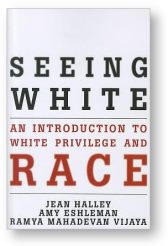
This interdisciplinary textbook challenges students to see race as everyone’s issue. Drawing on sociology, psychology, history, and economics, Seeing White introduces students to the concepts of white privilege and social power. Seeing White is designed to help break down some of the resistance students feel in discussing race. Each chapter opens with compelling concrete examples to help students approach issues from a range of perspectives.
The early chapters build a solid understanding of privilege and power, leading to a critical exploration of discrimination. Key theoretical perspectives include cultural materialism, critical race theory, and the social construction of race. Each chapter includes discussion questions to help students evaluate institutions and policies that perpetuate or counter forces of privilege and discrimination.
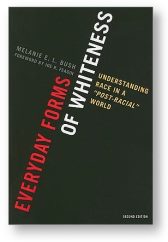
The second edition of Melanie Bush’s acclaimed Everyday Forms of Whiteness looks at the often-unseen ways racism impacts our lives. The author has interviewed and surveyed hundreds of college students and reveals that even though we talk as though we live in a ‘post-racial’ world after the election of Barack Obama, racism is still very much a factor in everyday life. The second edition incorporates new data and interviews to show how the everyday thinking of ordinary people contributes to the perpetuation of systemic racialized inequality. The book introduces key terms for the study for race and ethnicity, reveals the mechanisms that support the racial hierarchy in U.S. society, then outlines ways we can challenge long-standing patterns of racial inequality.
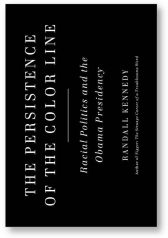
Kennedy tackles such hot-button issues as the nature of racial opposition to Obama, whether Obama has a singular responsibility to African Americans, electoral politics and cultural chauvinism, black patriotism, the differences in Obama’s presentation of himself to blacks and to whites, the challenges posed by the dream of a postracial society, and the far-from-simple symbolism of Obama as a leader of the Joshua generation in a country that has elected only three black senators and two black governors in its entire history. Eschewing the critical excesses of both the left and the right, Kennedy offers a gimlet-eyed view of Obama’s triumphs and travails, his strengths and weaknesses, as they pertain to the troubled history of race in America.
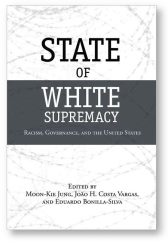
The deeply entrenched patterns of racial inequality in the United States simply do not square with the liberal notion of a nation-state of equal citizens. Uncovering the false promise of liberalism, State of White Supremacy reveals race to be a fundamental, if flexible, ruling logic that perpetually generates and legitimates racial hierarchy and privilege.
Racial domination and violence in the United States are indelibly marked by its origin and ongoing development as an empire-state. The widespread misrecognition of the United States as a liberal nation-state hinges on the twin conditions of its approximation for the white majority and its impossibility for their racial others. The essays in this book incisively probe and critique the U.S. racial state through a broad range of topics, including citizenship, education, empire, gender, genocide, geography, incarceration, Islamophobia, migration and border enforcement, violence, and welfare.
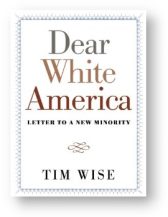
White Americans have long been comfortable in the assumption that they are the cultural norm. Now that notion is being challenged, as white people wrestle with what it means to be part of a fast-changing, truly multicultural nation. Facing chronic economic insecurity, a popular culture that reflects the nation’s diverse cultural reality, a future in which they will no longer constitute the majority of the population, and with a black president in the White House, whites are growing anxious.
This anxiety has helped to create the Tea Party movement, with its call to “take our country back.” By means of a racialized nostalgia for a mythological past, the Right is enlisting fearful whites into its campaign for reactionary social and economic policies. In urgent response, Tim Wise has penned his most pointed and provocative work to date. Employing the form of direct personal address, he points a finger at whites’ race-based self-delusion, explaining how such an agenda will only do harm to the nation’s people, including most whites. In no uncertain terms, he argues that the hope for survival of American democracy lies in the embrace of our multicultural past, present and future.
As I’m sure you’ve heard, Republican presidential nominee candidate Herman Cain is dealing with a bit of a scandal at the moment, as he tries to deal with allegations that he sexually harassed multiple women in his past. In true comedic style that had me LMAO, David Letterman commemorates Cain’s situation with his “Top Ten Herman Cain Pick-Up Lines“:
You’re like a Godfather’s pizza: a little doughy, but still hot
May I stuff your crust?
You put the ‘ass’ in National Restaurant Association
Can I buy you a glass of whatever Rick Perry is drinking?
Would you describe yourself as the litigious type?
(Video: Newt Gingrich having sex with a vending machine)
The following is a list of recent academic journal articles and doctoral dissertations from scholars in the social sciences and humanities that focus on race/ethnicity and/or immigration, with a particular emphasis on Asian Americans. As you can see, the diversity of research topics is a direct reflection of the dynamic and multidimensional nature of people’s lives, experiences, and issues related to race/ethnicity and immigration.
The academic journal articles are generally available in the libraries of most colleges and universities and/or through online research databases. As always, works included in this list are for informational purposes only and do not imply an endorsement of their contents.
Schlund-Vials, Cathy J. 2011. “Re-Seeing Race in a Post-Obama age: Asian American Studies, Comparative Ethnic Studies, and Intersectional Pedagogies.” New Directions for Teaching & Learning 125:101-109.
Abstract: Focused on comparative ethnic studies and intersectionality, the author commences with a discussion about Barack Obama’s historic inauguration and the Asian American literature classroom. Such historical and educational frames foreground a deeper discussion about the possibilities and challenges associated with cross-cultural, cross-racial pedagogies within Asian American studies and ethnic studies.
DuongTran, Paul. 2011. “Coping Resources among Southeast Asian-American Adolescents.” Journal of Human Behavior in the Social Environment 21(2):196-208.
Abstract: This study examines the relationships of gender and ethnic differences in the experiences of stressful life events, coping-specific responses, and self-reported depression. Seventy high-school aged respondents, 40 boys and 30 girls, responded to a self-reported questionnaire that asked questions on the perceived distress of related life events (i.e., person, family, peer, acculturation events), coping-specific responses, and depression. The findings provide important data on gender and ethnic variations in the ways Southeast Asian-American adolescents deal with life stress and depression. These findings have important implications for social work practice and future research on the psychosocial adjustment with both immigrant and ethnic children and adolescents.
Borrero, Noah E. and Christine J. Yeh. 2011. “The Multidimensionality of Ethnic Identity Among Urban High School Youth.” Identity: An International Journal of Theory and Research 11(2):114-135.
Abstract: This study was designed to explore the associations of ethnic identity dimensions with collective self-esteem membership, school interest, student interest in learning, and community engagement among 406 ethnically diverse (Asian American, Black, Latino, Pacific Islander, and multiracial) high school students. Using the Ethnic Identity Scale, this article presents the relationships between school and community variables with students’ perceptions of ethnic identity exploration, resolution, and affirmation.
Correlational analyses and post hoc t tests using Steiger’s modified z statistic show strong positive correlations between most school and community variables and students’ ethnic identity exploration and resolution. They also reveal a strong negative correlation between students’ school interest and ethnic identity affirmation. Results are discussed in terms of the emergent distinctions between student interest in learning and school interest as they relate to ethnic identity dimensions and collective self-esteem membership.
Okamura, Jonathan Y. 2011. “Barack Obama as the Post-Racial Candidate for a Post-Racial America: Perspectives from Asian America and Hawai’i.” Patterns of Prejudice 45(1 & 2):133-153.
Abstract: Okamura reviews the 2008 US presidential campaign and the election of Barack Obama as a ‘post-racial candidate’ in terms of two different meanings of ‘post-racialism’, namely, colour blindness and multiculturalism. He also discusses his campaign and election from the perspective of Asian America and Hawai’i given that Obama has been claimed as ‘the first Asian American president’ and as a ‘local’ person from Hawai’i where he was born and spent most of his youth.
In both cases, Obama has been accorded these racialized identities primarily because of particular cultural values he espouses and cultural practices he engages in that facilitate his seeming transcendence of racial boundaries and categories generally demarcated by phenotype and ancestry. Okamura contends that proclaiming Obama as an honorary Asian American and as a local from Hawai’i inadvertently lends support to the post-racial America thesis and its false assertion of the declining significance of race: first, by reinforcing the ‘model minority’ stereotype of Asian Americans and, second, by affirming the widespread view of Hawai’i as a model of multiculturalism.
Shin, Hyoung-jin. 2011. “Intermarriage Patterns among the Children of Hispanic Immigrants.” Journal of Ethnic and Migration Studies 37(9):1385-1402.
Abstract: Utilizing data from the 2005–07 American Community Survey Public Use Micro Sample (ACS-PUMS), this study investigates the intermarriage patterns of Mexican, Cuban and Dominican Americans who were born in the United States or came to the country as immigrant children. Using intermarriage patterns as an indicator of social relations, I examine how cultural and structural assimilation factors affect the marital assimilation process among the children of Hispanic immigrants.
One of the major contributions of this study is the examination of diversity within the US census categorization of ‘Hispanic’. Results from multinomial logistic regression analyses suggest that the marital assimilation process of Mexicans, Cubans and Dominicans varies across and within the groups according to their different individual characteristics and metropolitan context. My study is novel because it recognizes that broad-sweep analyses of intermarriage patterns are overly simplistic renderings of racial/ethnic assimilation because they fail to reveal distinctive and noteworthy within-group diversity.
Jain, Sonali. 2011. “The Rights of ‘Return’: Ethnic Identities in the Workplace among Second-Generation Indian-American Professionals in the Parental Homeland.” Journal of Ethnic and Migration Studies 37(9):1313-1330.
Abstract: This article explores the salience of ethnicity for second-generation Indian-American professionals who ‘return’ from the US to their parental homeland, India. Drawing on in-depth interviews with 48 second-generation Indian-Americans in India, it examines when and how they adopt ethnic identities in the workplace. My findings suggest that, bolstered by their transnational experiences and backgrounds, returnees construct ethnic identities and utilize ethnic options that reflect the cultural and economic environments of their adopted homeland.
At the same time, and often contemporaneously, work relationships, experiences and personal interactions with those they encounter in the parental homeland factor into their transnational identity constructions. Also proposed is a preliminary framework within which to explore the conditions that facilitate the construction and assertion of returnees’ ethnic identities in the workplace in India.
It’s Halloween time again. Around this time every year, many people — particularly high school and college students — think it’s “all in good fun” to dress up as a member of some racial, ethnic, religious, or cultural minority group as a “costume” for Halloween. As some examples, they might dress up as a geisha, or a Muslim terrorist, or a Mexican border-crosser, or in blackface as a rap star. Unfortunately, in virtually all cases, these kinds of “costumes” end up reinforcing and perpetuating offensive imagery and racist stereotypes against such minority groups.
Inevitably, when members of that minority group protest and criticize them, the costume-wearers reply that it’s just a joke, that they don’t mean to offend people, or even that the costumes are meant to “celebrate” that particular personality or culture that they’re portraying. The problem of course, is that it may just be a joke to them, but to the minority group being portrayed in such a stereotypical manner, it is deeply offensive and does nothing more than promote the naive and misguided idea of colorblindness — that since we now have an African American president, that we’re all equal now and as such, it’s perfectly fine to make fun of minorities and not suffer any consequences from it.
Fortunately, many young Americans around the country are fighting back. Specifically, a student group at Ohio University named Students Teaching About Racism in Society has put together an awesome campaign to encourage everyone to think twice about Halloween costumes (thanks to AngryAsianMan for first mentioning it). Some of their posters are below.
Please help to circulate their message as widely as possible.
Here are some more announcements, links, and job postings about academic-related jobs, fellowships, and other opportunities for those interested in racial/ethnic/diversity issues. As always, the announcements and links are provided for informational purposes and do not necessarily imply an endorsement of the organization or college involved.
The University of Pennsylvania’s Asian American Pacific Islander student resource center, the Pan-Asian American Community House (PAACH), is looking for a new Director. PAACH is the hub of AAPI activism and student life at Penn so this position is very important to us.
Duties: The Director provides collaborative leadership and administrative oversight of the Pan Asian American Community House (PAACH). The director leads the provision of co-curricular, cultural and social programs for students and student organizations with an emphasis on Asian Pacific American diasporic programming. The Director assists in programming to support the recruitment and retention of undergraduate, graduate and professional students from diverse ethnic and socioeconomic backgrounds. The Director collaborates with student groups affiliated with the center and other university entities to connect students to all resources relevant to their academic and leadership development and represents the office on University Committees. Position reports to the Associate Vice Provost for Equity and Access.
Qualifications: Master’s required, Ph.D. preferred; minimum of 3-5 years experience in higher education administrations, program development and management, preferably in student affairs; teaching experience desired. Strong knowledge of Asian/Pacific American community required; excellent interpersonal, organizational, technology and communication skills require
The National Portrait Gallery and the Smithsonian Asian Pacific American Program are collaborating on an exhibition that will be the Smithsonian’s first major showcase of contemporary Asian American portraiture. Through the groundbreaking work of seven artists from across the country, Asian American Portraits of Encounter offers provocative artistic responses to the Asian experience in America. The exhibition brings together artists including CYJO, Hye Yeon Nam, Shizu Saldamando, Roger Shimomura, Satomi Shirai, Tam Tran, and Hong Chun Zhang into one exhilarating exhibition. Their portraits of encounter offer representations against and beyond the stereotypes that have long obscured the complexity of being Asian in America.
The exhibit also includes a Portraits After 5: Asian 2 AmericanMingle at the Museum event on Friday, November 4 – 7:30 p.m. to 10:00 p.m.
Immerse yourself in an amazing evening of art, food, and music in the National Portrait Gallery, among works from one of the art world’s most exciting fields. View the exhibition Portraiture Now: Asian American Portraits of Encounter and converse with exhibit curators and Smithsonian Asian Pacific American Program staff about these provocative works. Then have your own story told by one of the Corcoran College of Art + Design students on hand to draw your portrait and add it to the works from the collections being projected on the walls of the Kogod Courtyard. Then sample the delicious food and drinks as DJs Yellow Fever transform the courtyard with a soundscape of international beats.
“Faces of China” – Making Connections in the Simplest Way
Miami Photographer Tom Salyer Showcases 6 Years of Work in China
Miami based professional photographer Tom Salyer will showcase an exhibit of his work documenting his annual visits to China. The Opening Reception will be held on Saturday, November 5, 2011 at 7:00 p.m. and the exhibit will run through January 21, 2012.
The show will also feature an audio accompaniment of natural, field-recorded sound. As well as traditional commercial photography, Salyer specializes in multimedia presentations and ‘talking postcards’ that combine photographs and sound so that audiences gain a fuller, more compelling experience than any one of those elements could achieve by themselves. Images detailing the meditation routine of Tibetan Monks are preserved moments in time when complemented with the sounds of horns, cymbals, chants, conch shells, clanging tea cups, and rice being rhythmically scooped and poured over bowls and rings.
ACND Gallery of Art
Archbishop Curley Notre Dame High School
4949 NE 2nd Avenue
Miami, FL 33137
November 5th – January 21st, 2012
Opening: November 5th 7:00 PM – 9:00 PM
The College of Humanities and Social Sciences invites applications for a tenure-track position in International Studies at the rank of Assistant Professor with research focusing on the Middle East. The position will be a joint appointment with a commitment to teaching in the International Studies program and a commitment to teaching Middle East studies courses within a disciplinary department. Tenure when granted will be held in the disciplinary department. Personnel decisions will originate in the disciplinary department with input from the International Studies program.
Applications are welcomed from scholars in the fields of Anthropology, History, Political Science, Religious Studies, Sociology, or related fields. The College seeks scholars whose research covers the geographical area of the Middle East. In addition, the College seeks applications from scholars who are prepared to assume major but not singular responsibility for the core and capstone courses in the International Studies major. Preference for candidates with significant time living or working in the Middle East. For more information about the Middle East Studies Program visit http://ids.chass.ncsu.edu/mestudies/.
Qualifications: Applicants for the position must hold the PhD in an appropriate field and have some teaching experience. ABDs who plan on having their PHD completed by August 15, 2012 will be considered but preference will be given to applicants who will have a completed PHD.
To apply please visit http://jobs.ncsu.edu and search for position 00101890. Applicants will be asked to submit a letter of application that speaks to their interdisciplinary and comparative/global interests and their research as it pertains to the Middle East, a copy of their current CV, syllabi, and a representative sample of teaching evaluation. In addition, please arrange for submission of three letters of recommendation to: Dr. Akram Khater, College of Humanities and Social Sciences, Department of History, North Carolina State University, CB 8108, Raleigh NC 27695-8108. Review of applications will begin on November 9, 2011 and continue until the position is filled.
The College of Ethnic Studies at San Francisco State University invites applications for a full-time tenure-track position in the Asian American Studies Department with specialization in Chinese American Studies, to commence Fall 2012 semester (Search #12.11).
Qualifications: PhD or equivalent terminal degree by August 1, 2012. Candidates must demonstrate excellence in curricular development and student advising, ability to teach general and comparative Asian American Studies courses (both undergraduate and graduate levels), and commitment to scholarly/professional activities and community service. Open fields of specialization in the social sciences and humanities. Consideration will be given to candidates with bilingual/bicultural competency and expertise in the areas of Chinese American history, literature, writing/composition, and/or cultural studies.
Rank and Salary: Assistant Professor. Salary commensurate with rank and qualifications. Application Deadline: December 15, 2011. Submit application dossier (cover letter, cv, official transcripts, samples of published or other related professional works) and a minimum of three references to:
Asian American Studies Hiring Committee, Search #12.11
College of Ethnic Studies – EP 103
San Francisco State University
1600 Holloway Avenue
San Francisco, CA 94132-4100
* * * * * * * * *
Position Two:
The College of Ethnic Studies at San Francisco State University invites applications for a full-time tenure-track position in the Asian American Studies Department, to commence Fall 2012 semester (Search #13.11).
Description and Qualifications: PhD or equivalent terminal degree by August 1, 2012. Candidates must demonstrate excellence in curricular development and student advising, ability to teach general and comparative Asian American Studies courses (both undergraduate and graduate levels), and commitment to scholarly/professional activities and community service. Preference will be given to candidates with specialization in (1) Asian American family, gender, sexuality, and Queer studies, and/or (2) South Asian American Studies. Consideration will be given to candidates with bilingual/bicultural competency.
Rank and Salary: Assistant Professor. Salary will commensurate with experience and qualifications. Application Deadline: December 15, 2011. Submit application dossier with a cover letter, cv, official transcripts, samples of published or related professional works, and a minimum of three references to:
Asian American Studies Hiring Committee, Search #13.11
Office of the Dean, College of Ethnic Studies, EP 103
San Francisco State University
1600 Holloway Avenue
San Francisco, CA 94132-4100
For further information contact aas@sfsu.edu, 415/338-2698
The Africana Studies Program at Texas A & M University invites applications for the position of Director. This is a faculty position with appointment at the Associate or Full Professor level. PhD required. We seek candidates who have a strong record of research, teaching, and administrative experience in Africana, Diaspora, or related Studies. A joint appointment with a department outside Africana Studies is possible. Duties include teaching Africana Studies classes. The position will begin August 1, 2012.
The program in Africana Studies is housed in the College of Liberal Arts. The interdisciplinary program offers an undergraduate minor and a graduate certificate. The Africana Studies faculty and curriculum are distinctively interdisciplinary and transnational. The program is currently composed of eight core faculty members, who hold joint appointments in our departments of Anthropology, Communication, English, Hispanic Studies, Performance Studies, and Psychology. More than twenty other faculty from an array of academic disciplines teach classes and participate in program activities as affiliated faculty members. All are engaged in exciting research that is advancing knowledge in their fields of specialty and raising the program to national prominence.
Texas A & M is a large and expanding research university located in Bryan/College Station, a growing metropolitan community with a clean environment, attractive amenities, a low cost of living, and close proximity to the large metropolitan areas of Austin, Dallas, Houston and San Antonio. It holds the unusual distinction of being a land, sea, and space grant university.
Applicants should submit a letter describing their research, teaching, and statement of their vision for advancing Africana Studies at Texas A & M; curriculum vitae, one writing sample (article or book chapter), and names of three references. Address correspondence to: Africana Search Committee, 4456 TAMU, College Station, TX 77843-4456. Review of applications will begin January 2, 2012 and continue until the position is filled.
The following new books highlight the different dimensions of globalized and transnational connections between Asia and Asian American as reflected in empirical, cultural, and literature studies of diasporas, communities, and ethnic enclaves within the U.S. and their relationship back to Asia and the rest of the world. As always, a book’s inclusion is for informational purposes only and does not necessarily mean a full endorsement of its contents.
In the United States, perhaps no minority group is considered as “model” or successful as the Asian American community. Rather than living in ominous “ghettoes,” Asian Americans are described as residing in positive-sounding “ethnic enclaves.” Writing the Ghetto helps clarify the hidden or unspoken class inequalities faced by Asian Americans, while insightfully analyzing the effect such notions have had on their literary voices.
Yoonmee Chang examines the class structure of Chinatowns, Koreatowns, Little Tokyos, and Little Indias, arguing that ghettoization in these spaces is disguised. She maintains that Asian American literature both contributes to and challenges this masking through its marginalization by what she calls the “ethnographic imperative.” Chang discusses texts from the late nineteenth century to the present, including those of Sui Sin Far, Winnifred Eaton, Monica Sone, Fae Myenne Ng, Chang-rae Lee, S. Mitra Kalita, and Nam Le. These texts are situated in the contexts of the Chinese Exclusion Era, Japanese American internment during World War II, the globalization of Chinatown in the late twentieth century, the Vietnam War, the 1992 Los Angeles riots, and the contemporary emergence of the “ethnoburb.”
Combining critical dance history and ethnography to look at issues of immigration, citizenship, and ethnic identity, Priya Srinivasan’s groundbreaking book Sweating Saris considers Indian dance in the diaspora as a form of embodied, gendered labour. Chronicling the social, cultural, and political relevance of the dancers’ experiences, she raises questions of class, cultural nationalism, and Orientalism. Srinivasan presents stories of female (and male) Indian dancers who were brought to the United States between the 1880s and early 1900s to perform.
She argues that mastery of traditional Indian dance is intended to socialize young women into their role as proper Indian American women in the twenty-first century. The saris and bells that are intrinsic to the shaping of female Indian American gender identity also are produced by labouring bodies, which sweat from the physical labour of the dance and thus signifies both the material realities of the dancing body and the abstract aesthetic labour.
Srinivasan merges ethnography, history, critical race theory, performance and post-colonial studies among other disciplines to investigate the embodied experience of Indian dance. The dancers’ sweat stained and soaked saris, the aching limbs are emblematic of global circulations of labor, bodies, capital, and industrial goods. Thus the sweating sari of the dancer stands in for her unrecognized labor.
Srinivasan shifts away from the usual emphasis on Indian women dancers as culture bearers of the Indian nation. She asks us to reframe the movements of late nineteenth century transnational Nautch Indian dancers to the foremother of modern dance Ruth St. Denis in the early twentieth century to contemporary teenage dancers in Southern California, proposing a transformative theory of dance, gendered-labor, and citizenship that is far-reaching.
As Adam M. McKeown demonstrates, the push for increased border control and identity documentation is the continuation of more than 150 years of globalization. Not only are modern passports and national borders inseparable from the rise of global mobility, but they are also tied to the emergence of individuals and nations as the primary sites of global power and identity.
McKeown’s detailed history traces how, rather than being a legacy of “traditional” forms of sovereignty, practices of border control historically rose from attempts to control Asian migration around the Pacific in the 1880s. New policies to control mobility had to be justified in the context of contemporary liberal ideas of freedom and mobility, generating principles that are taken for granted today, such as the belief that migration control is a sovereign right of receiving nations and that it should occur at a country’s borders.
McKeown shows how the enforcement of these border controls required migrants to be extracted from social networks of identity and reconstructed as isolated individuals within centralized filing systems. Methods for excluding Asians from full participation in the “family of civilized nations” are now the norm between all nations. These practices also helped institutionalize global cultural and economic divisions, such as East/West and First and Third World designations, which continue to shape our understanding.
Over three decades have passed since the first wave of Indochinese refugees left their homelands. These refugees, mainly the Vietnamese, fled from war and strife in search of a better life elsewhere. By investigating the Vietnamese diaspora in Asia, this book sheds new light on the Asian refugee era (1975-1991), refugee settlement and different patterns of host-guest interactions that will have implications for refugee studies elsewhere. The book provides:
A clearer historical understanding of the group dynamics among refugees – the ethnic Chinese ‘Vietnamese refugees’ from both the North and South as well as the northern ‘Vietnamese refugees’
An examination of different aspects of migration including: planning for migration, choices of migration route, and reasons for migration
An analysis of the ethnic and refugee politics during the refugee era, the settlement and subsequent resettlement
This book will be of interest to students and scholars of globalization, migration, ethnicities, refugee histories and politics.
This collection examines the exchange of Asian identities taking place at the levels of both film production and film reception amongst pan-Pacific cinemas. The authors consider, on the one hand, texts that exhibit what Mette Hjort refers to as, “marked transnationality,” and on the other, the polysemic nature of transnational film texts by examining the release and reception of these films.
The topics explored in this collection include the innovation of Hollywood generic formulas into 1950’s and 1960’s Hong Kong and Japanese films; the examination of Thai and Japanese raced and gendered identity in Asian and American films; the reception of Hollywood films in pre-1949 China and millennial Japan; the production and performance of Asian adoptee identity and subjectivity; the political implications and interpretations of migrating Chinese female stars; and the production and reception of pan-Pacific co-productions.
Exploring how each Chinatown is different; Benton explains how a unique culture developed and outlines their basic cultural, social, and political features. He highlights the unique features of the different Chinatowns surveyed. For instance, in Paris, there is a Chinatown populated primarily by Chinese who are the descendants of Chinese migrants to Southeast Asia (a former French colony).
In the United States, the cloistered nature of Chinatowns stemmed from institutionalized racism. And in Australia, weaker taboos against interracial sex led to more open enclaves. Everywhere, though, Chinatowns have been stereotyped as places of exoticism and corruption, and to this day are frequently viewed through an Orientalist gaze. In this truly unique book, Gregor Benton applies his vast knowledge to cover all of these features.