The views and opinions expressed on this site and blog posts (excluding comments on blog posts left by others) are entirely my own and do not represent those of any employer or organization with whom I am currently or previously have been associated.
Academic Version: Applying my personal experiences and academic research as a professor of Sociology and Asian American Studies to provide a more complete understanding of political, economic, and cultural issues and current events related to American race relations, and Asia/Asian America in particular.
Plain English: Trying to put my Ph.D. to good use.
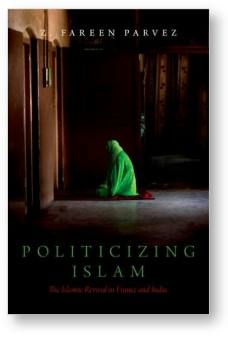
In my ongoing series of interviews with Asian American academics that highlight new books and research that illuminate different aspects and details related to the Asian and Asian American experiences, I am very happy to present an interview with fellow colleague in the Department of Sociology at the University of Massachusetts Amherst, Assistant Professor Fareen Parvez, highlighting her new book Politicizing Islam: The Islamic Revival in France and India. Her book explores the political, social class, gender, and religious dynamics of Muslim communities in Lyon, France and Hyderabad, India within the context of growing anti-Muslim sentiments locally and globally. The book’s description:
Home to the largest Muslim minorities in Western Europe and Asia, France and India are both grappling with crises of secularism. In Politicizing Islam, Fareen Parvez offers an in-depth look at how Muslims have responded to these crises, focusing on Islamic revival movements in the French city of Lyon and the Indian city of Hyderabad. Presenting a novel comparative view of middle-class and poor Muslims in both cities, Parvez illuminates how Muslims from every social class are denigrated but struggle in different ways to improve their lives and make claims on the state.
In Hyderabad’s slums, Muslims have created vibrant political communities, while in Lyon’s banlieues they have retreated into the private sphere. Politicizing Islam elegantly explains how these divergent reactions originated in India’s flexible secularism and France’s militant secularism and in specific patterns of Muslim class relations in both cities. This fine-grained ethnography pushes beyond stereotypes and has consequences for burning public debates over Islam, feminism, and secular democracy.
Can you elaborate on your initial motivations for studying this particular topic in these two specific nations, France and India?
The initial motivation was to see how Muslim minorities in secular democracies were responding to the war on terror and what their politics (if any) looked like. France and India have very different models of secularism, so I was also able to compare how this difference between states affected the types of politics minority Muslims could pursue. When I first started, this seemed like an odd comparison. But today more scholars are talking about what Europe might learn from India’s history of managing diversity. Social class has also always been an important lens for me, so I wanted to look at two places where most Muslims were at the bottom of the class structure. Besides these intellectual motivations, as an ethnographer you have to think about your skills and connections. In this case I spoke enough French and Urdu to carry out the research.
In the course of doing your fieldwork, what was your most notable memory or personal observation when you were in either Lyon or Hyderabad?
Even though your research focuses specifically on France and India, what might be some ways in which your findings can be applicable to Muslims in the U.S.?
On a broad level, comparing French and Indian secularisms puts American secularism into sharper perspective. American secularism is relatively flexible, and religious liberties are robust. But they also cannot be taken for granted, especially in the current climate. As Muslim identity in the U.S. becomes an object of political debate, it might become harder for Muslim activists to focus on issues of class and economic justice. This is what I observed in the French case. Also, one of the themes of the book is that Muslims do not necessarily want to make a public issue of their faith. In fact, faith is something deeply personal and private. But because the state has politicized them, they have to deal with the consequences of that. In part that means having to always define and defend what it means to be Muslim, which is invariably constraining and oversimplifying. I think this process of having to define (and thus, reduce and simplify) what it means to be a Muslim is well underway in the U.S. too.
In your analysis of the intersection of religion, social class, and gender, do any of these points of focus seem to be emerging as more significant in terms of their impact on Muslims communities as we move forward in the 21st century?
Since inequality has risen across the world, issues of class and gender justice are critical for most communities. And these might interact deeply with religious faith. My book in some ways highlights how concerns for social and/or economic transformation become sidelined, as communities face the urgency of mobilizing specifically around religious identity.
Clearly, these are very challenging times for Muslims around the world, particularly those in western nations such as the U.S. What are some points of connection between Muslims and other racial, ethnic, or cultural minority groups that might allow them to work together to achieve social equality and justice?
This is an interesting and important question. Personally, I think there is so much to learn from the powerful vision put forth by Black Lives Matter activists. And actually, there are some exciting coalitional events and conversations happening, bridging issues like respecting faith, dismantling racism, and supporting Native resistance. The main unifying point across these groups is that people are looking to protect their communities in a context of surveillance, violence, and rise in hate crimes.
What are some pieces of advice that you can give young Muslims around the world as they try to balance asserting their religious identity, while also integrating themselves into mainstream society as much as possible?
Well, I grew up in a time and place where staying quiet about religious faith and ethnic identity was the default way to stay safe and avoid judgment and harassment. But remaining silent also carries a psychological cost. I admire young people today, of whatever persuasion, who have the courage to not be ashamed of their histories and traditions and to stand up for others who are marginalized. My advice is to find a supportive community and have faith that you belong — even when xenophobic nationalists tell you to “go home!â€
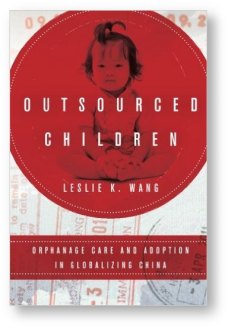
I am very pleased to present an interview with my friend and colleague, Professor Leslie K. Wang, faculty in Sociology at the University of Massachusetts Boston, regarding her new book Outsourced Children: Orphanage Care and Adoption in Globalizing China. Her book explores the political, economic, and cultural dynamics of western humanitarian organizations caring for orphan children, many with special needs, in modern China. The book’s description:
It’s no secret that tens of thousands of Chinese children have been adopted by American parents and that Western aid organizations have invested in helping orphans in China — but why have Chinese authorities allowed this exchange, and what does it reveal about processes of globalization?
Countries that allow their vulnerable children to be cared for by outsiders are typically viewed as weaker global players. However, Leslie K. Wang argues that China has turned this notion on its head by outsourcing the care of its unwanted children to attract foreign resources and secure closer ties with Western nations. She demonstrates the two main ways that this “outsourced intimacy” operates as an ongoing transnational exchange: first, through the exportation of mostly healthy girls into Western homes via adoption, and second, through the subsequent importation of first-world actors, resources, and practices into orphanages to care for the mostly special needs youth left behind.
Outsourced Children reveals the different care standards offered in Chinese state-run orphanages that were aided by Western humanitarian organizations. Wang explains how such transnational partnerships place marginalized children squarely at the intersection of public and private spheres, state and civil society, and local and global agendas. While Western societies view childhood as an innocent time, unaffected by politics, this book explores how children both symbolize and influence national futures.
What initially motivated you to research this dynamic of international adoption from China?
My interest in the topic of adoption dates back to when I studied abroad as a college student at Peking University during the late 1990s. At the time few Westerners lived there and Chinese society and economy was beginning to change very quickly. One day I visited the Forbidden City and was surprised to see two white American couples with strollers each carrying a Chinese baby girl. For the first time I became aware that children were being both abandoned and internationally adopted, and I wanted to find out how their movement across borders related to China–U.S. relations. Once I returned to the U.S. these issues became the focus of my senior honor’s thesis, then my master’s thesis, and eventually expanded into my dissertation and ultimately this book.
What’s your most notable or poignant memory in the time that you spent in China researching this topic?
During my fieldwork in orphanages, I was most touched by the moments when young children expressed deep care and compassion for each other. For example, oftentimes when another child was crying or in distress, kids as young as toddlers would run over to alert me to come help. One of the most poignant memories I have is from the four months I spent volunteering with a Western humanitarian group I call Tomorrow’s Children, which ran an infant palliative care unit on one floor of a Chinese state-run orphanage. I spent weeks getting to know a hilarious, spunky, and intelligent three-year-old girl with heart failure named Rose. Despite her poor physical condition, this tiny child would ask to “hold†other babies in the unit, clapping her hands before reaching out to hug them. I still have photos from these times, which I hold dear because Rose passed away shortly after.
Your book highlights the challenges faced by special needs youth in China. As China continues to modernize, how has its treatment of people (and particularly children) with special needs evolved through the years?
China does not have a great track record in terms of its treatment of individuals with disabilities, including children. Part of this is due to the state’s single-minded emphasis on furthering economic modernization and raising China’s global status since the late 1970s. To attain these goals, authorities have sought to create a productive, “high quality” workforce that only includes those who are able-bodied. Consequently, those who are seen as unable to contribute to this national agenda have been cast to the societal margins. Furthermore, there are lasting and pervasive cultural stigmas against disability in China that state officials have only exacerbated by maligning special needs children as undue burdens on their families and the country. That said, since the early 1980s, a set of policies has been enacted to protect the rights of disabled people. There is general consensus, however, that these laws have not been enforced uniformly, especially within rural areas with little access to financial, medical, and educational resources.
China recently rolled back its “One Child” policy and now allows two children per family. How do you think this change will affect international adoption in China?
For the past decade the trend of Chinese international adoptions has completely transformed. Most notably, whereas the majority of available children were once healthy female infants, now most international adoptees are children with minor to major special needs (many of them boys). Secondly, the overall rates of Western adoption have dramatically decreased as more domestic adoptions have taken place and more families have founds ways to keep additional children. The ending of the One Child Policy will likely intensify all of these shifts as citizens can have two children without penalty.
Beyond helping the Chinese children in their care, what are some other motivations on the part of the western humanitarian NGOs in this dynamic?
From my experience, the majority of Western humanitarian aid groups in China that are involved with orphan care are faith-based — typically Christian and Catholic. Although many volunteers would have liked to proselytize, they were limited in doing so by China’s atheistic stance toward religion. Therefore, I found that many of these groups engaged in “lifestyle evangelism,” in which they tried to use their work to set an example for local people to follow; they accomplished this by encouraging locals to care more about marginalized youth and by importing first-world care practices and philosophies about children into local orphanages. So beyond merely helping institutionalized youth, I would say that numerous Western NGOs were also motivated to expose Chinese people to more global notions of human rights.
The luster surrounding China’s meteoric economic rise during the last 30 years seems to be waning, as citizens from both developed and less-developed nations are increasingly weary about the negative impacts of globalization. How do you think this recent trend will affect international adoption from China going forward?
While it is true that China’s development has slowed down in recent years, I don’t believe that this has impacted Western parents’ desire to adopt. If anything, the demand for Chinese children (especially healthy female infants) has increased over time and stayed high in countries across the global north. The major difference is that domestic changes in China have shifted the supply of adoptable youth to include more disabled, ill, and older kids. So I would say that the lower numbers of adopted Chinese children have more to do with the implementation of domestic Chinese state policies that don’t specifically have to do with international adoption.
One country that has transitioned from being less-developed to highly-developed is South Korea. They were also a source of large numbers of international adoptions but have dramatically reduced the number of its children adopted internationally in recent years. Do you think China is headed in that direction?
Definitely. As I noted earlier, China is already headed in that direction. For the case of South Korea, during the 1988 Seoul Summer Olympics government authorities were heavily critiqued for “exporting” babies to other countries. As a result, the South Korean government began to slow adoptions and ultimately decreased them by more than two-thirds. In China’s case, the numbers have dropped dramatically from a high of roughly 14,000 foreign placements in 2005 to fewer than 3,000 in 2014. Since the emphasis now is on special needs children, who have low chances of domestic adoption due to cultural stigmas against disabilities, this trend may continue for some time. It’s conceivable that China will eventually stop adoptions altogether, though it is unclear when that time might be.
The following post was originally published on AAPI Voices on May 22, 2014 by Jerry Z. Park and Joshua Tom.
Are Asian Americans in a state of religious confusion? And are Asian American Protestants fleeing their religion?
Consider the example of Lisa, a 20-year old second-generation Vietnamese American from Houston: “I really don’t think I have a religious preference,” she says “I believe that someone is up there, and I’m pretty much screwed up in the head,” she continued with a laugh. “You know ‘cuz I went to Catholic school until I was in 8th grade, and when my parents got divorced I went to [Buddhist] temple for like about 5 or 6 years. So I got the aspects of both religions, and I think that both of them have good aspects, and both of them have bad aspects. And I do what [my parents] ask me to do, but in my own mind I really don’t have like a set religion y’know?”
Lisa’s story isn’t often told in the writings on Asian American religion, academic or otherwise. This gap is particularly apparent when we try to understand religion among those who are the children of immigrants, sometimes called the second-generation. A quick glance at prior studies gives the impression that there is great vitality in religious affiliation and participation.
Indeed one lone conflicting voice, journalist Helen Lee, back in the 1990s made huge waves when she proposed that a “silent exodus” of second-generation Asian American Protestants was taking place. As she noted, churches developed by immigrant Protestant Christians were not filling to capacity by their children and their friends. As these young men and women matured, their parents expected new congregations with English-friendly worship services alongside the main immigrant churches. Indeed in my various visits with Protestant churches lead by second-generation Asian American Protestants over the past 15 years, the Sunday morning congregation never seemed to number more than a couple of hundred and usually averaged between 25 and 75.
Where were the second-generation Protestants? For that matter how was the Asian American second-generation who were not Protestants, like Lisa Tran, doing with regard to their faith?
The need for quantifiable data on religion among Asian Americans is ever more pressing as this population grows more rapidly than the rest of the nation. One of the most rigorous attempts at surveying Asian Americans comes from the Pew 2012 Asian American Survey (hereafter Pew Survey). Through this survey of over 3,500 Asian Americans (with more than 800 from the second-generation), we are able to identify some important patterns that provide context to the numerous smaller-scale studies on religion among the Asian American second-generation that otherwise suggested great intergenerational vitality.
With respect to the silent exodus of the second-generation, we can look at the data from two vantage points, the percentage of those who retained their faith from childhood, and the percentage of current affiliates who grew up with that faith. The first number tells us whether religious individuals have remained committed to their faith tradition, while the second tells us whether today’s believers are made up of long-term followers or new converts. These figures can grant us insight into the negotiation of cultural identities by second-generation Asian Americans, especially as these identities change over time.
For the second-generation Protestants, these two figures are surprisingly similar. The data shows us that 66 percent of those who grew up Protestant were still Protestant at the time they were surveyed. Similarly, about two-thirds of today’s second-generation Asian American Protestant Christians grew up as Protestant. Either way we look at the data, there does not appear to be a mass exodus, if nearly two-thirds who started their faith journey as Protestants are still Protestant.
Importantly, the Pew survey data also let us see these patterns for Protestants in comparison to other religious groups (see below). As the Pew survey indicates, 88 percent of today’s second-generation Asian American Catholics started out as Catholic, a fairly high rate compared to the Protestants. Based on a small sample of only 20 second-generation Asian American Muslims, nearly all grew up Muslim.
Similarly more than 96 percent of today’s second-generation Asian American Hindus were raised Hindu and 81 percent of today’s second-generation Asian American Buddhists were raised Buddhist. In this light, it appears that the supply of second-generation Asian American “cradle Protestants” accounts for a smaller fraction of Protestants than the cradle believers of other faiths. So there does appear to be a disproportionate exodus of Protestants.
At the same time, the exodus does not seem to be towards other religious traditions. The figure above shows the adult religious affiliation of second-generation respondents to the Pew Survey by the religion that they were raised in. The blue bars can be thought of as the ‘retention rate’ for these groups, or the degree to which they avoid losing adherents to other groups However, most of those who change religious affiliation seem to be heading towards a category that sociologists of religion call “nones” or the nonaffiliated.
While this category comprises those who do not identify with a particular religious tradition, religious “nones” encompass a variety of religious orientations including atheists, agnostics and the ‘spiritual but not religious’. A religious “none” may still pray or engage in other identifiably religious activities, or they may be wholly irreligious in identity and behavior.
While there is some variation among religious groups in the likelihood of the second generation becoming religiously nonaffiliated as adults, it is a decidedly popular destination. The green columns in the figure above show the likelihood of second-generation Asian Americans identifying as a religious “none” by the religion they were raised in. Among second-generation Asian Americans, 25% of Protestant-raised and 18% of Catholic-raised currently identify as religiously nonaffiliated.
Buddhist-raised respondents were even more likely to identify as a “none” at the time of the survey, with 34% now claiming no religious affiliation. Small sample size does not permit us to generalize on the proportions for other religious groups, but the data do suggest significant proportions become unaffiliated during adulthood.
These proportions, coupled with the data showing the retention rates for religious groups, account for the majority of religious mobility among second-generation Asian Americans. Stated differently, next to staying in one’s religion, the second most preferred religious destination for second-gen Asian Americans is to have no religion at all. As we saw earlier, these religiously mobile individuals comprise half of all second-gen Asian American “nones”. One might say that the silent exodus is not just a Protestant phenomenon for second-gen Asian Americans; it applies to followers from many faiths.
The big question still to be answered is why: Why is nonaffiliation so appealing to a large minority of “cradle believers” in the second-generation? If part of the answer is conformity to the mainstream, we have some indication of a cultural turning point in American society. Whereas being Protestant, Catholic or Jewish was once thought of as an indication of assimilation into American society for the immigrants and their children, perhaps lack of affiliation today marks a new way that today’s immigrants identify with America.
This possibility coincides with the contemporary rise of the religiously nonaffiliated among Americans in general; while such identification hovered around 10% at the turn of the millennium the proportion has grown to 20% in a single decade. This movement toward irreligion may run even deeper than identity; about 18% second generation Asian-Americans say they don’t believe in God or a universal spirit, compared to only 6% of the general public. By these measures first-generation Asian Americans have always been less religious than their contemporaries, so irreligion may be a fundamentally easier shift for the second generation.
Additionally, the Pew survey data suggest that higher educational attainment among second-generation Asian Americans is associated with disaffiliation among former Protestants and Catholics; this is consistent with our knowledge of the religious ‘nones’ generally, and may help explain the religious switching of Asian Americans specifically. Higher educational attainment can indicate a variety of things that contribute to irreligion; for example, particular religious doctrines may become less tenable with exposure to scientific explanations of reality, or individuals may become less sure of their religious convictions upon repeated interactions with people of different worldviews. Perhaps educational attainment serves to create cultural distance from one’s immigrant parents which may include disaffiliation.
The religious story of the second-generation is far from settled. Right now, they constitute only about one-third of all Asian Americans, and they are relatively young compared to the immigrant generation. Perhaps we will see a return to religious affiliation as more of them marry, and raise children. Time will tell if the second-generation of Asian Americans will replicate the pattern of earlier white European immigrants, or if we are indeed facing a changing religious future.
This past summer I continued my readings in social scientific and popular renderings of ethnicity, race, and religion. In one popular reading I was introduced to early 20th century Chinese history through the perspectives of nationalists and Christian converts. More than a work of history, it is an invitation into Chinese mythology and the sense of the spiritual that animates the minds of many young people.
Noted author and artist Gene Luen Yang, a second-generation Chinese American, recently published a two-volume series called Boxers and Saints. Told from two different perspectives, it revisits the Boxer Rebellion of the early 1900s as seen from two young Chinese people, a man and a woman. Boxers, the larger of the two works sets the stage for the events that are retold in Saints. It’s reminiscent of the two-part film series by Clint Eastwood chronicling the Battle of Iwo Jima from the perspective of US forces (Flags of Our Fathers) and Japanese forces (Letters From Iwo Jima). For film fans, both Eastwood and Yang’s works are preceded by the classic film Rashomon directed by Akira Kurosawa.
For those wanting to know more about the Boxer Rebellion, Boxers and Saints is an easy introduction into this pivotal moment in world history. I say “world history†because while it takes place in China, it is very much the story of western imperialism and evangelicalism which prompted these events in the first place. Yang, an educator at heart, ends both volumes with a list of readings that helped shape his understanding of the events he chronicled. My focus in this post is on the work’s significance for Asian Americans, particularly those with a religious background.
Boxers invites us into a world filled with Chinese gods and demigods who inspire and empower young peasant men to resist what they see as an encroaching Western presence in their homeland. Westerners and their foreign religion of Christianity are cast as devils that must be purged from the land, and only the power of China’s old gods can resist them. Saints similarly imagines a world visited by Catholic saints from the perspective of a young peasant woman who is introduced to this religion by foreign missionaries from the west and converts she meets along the way. She is empowered by Saint Joan of Arc to side with the religious Westerners, Catholic and Protestant missionaries and new Chinese converts. Interestingly, from the perspective of the Christians, the Boxers’ violence is not spiritualized as demonic but rather remain an earthly violent force set on killing them. The turn to the saints is for physical protection.
What struck me was the introduction of this spiritual dimension which plays a significant part for both the participants in the Boxer movement as much as the Christians. In typical readings of these moments, the spiritual is irrelevant apart from a few sidebars of the folklore that ran through local villages who encountered the Boxers or the Christians. But for Yang, the spiritual is very much a part of lived reality and whether it is “real†in some scientific sense may be less important than the notion that spiritual characters motivate people to act in heroic, compassionate and violent ways. Such is the power of belief whether Chinese mythology or Western Christianity, at least during this period.
Boxers and Saints accomplishes more than presenting two sides of an event. For readers who are second-generation Chinese American (or know someone who is) and searching for a sense of rootedness, this work highlights a part of the history that they likely have not heard in any course they have taken in school or college. And perhaps it is not told by their family members who are often working long hours to make ends meet. In the contemporary context, without available resources to help young Chinese Americans take hold of their Chinese roots, their ethnicity might signify little if anything. Boxers and Saints becomes an important means by which ethnicity can be socialized for young people. Sociologists note that ethnicity and religion are both social constructions; understanding Chinese identity and Christian identity require materials that describe the origins and meanings for the group’s existence, along with rituals, and relationships with others who help reinforce what one is learning. In this wayBoxers and Saints, geared at a younger audience, is one such material resource to help inculcate a sense of being a part of the folk religious Chinese people and Christian Chinese people.
Given the fairly strong presence of Christianity within Chinese American circles (about 30 percent based on last year’s Pew Research Center survey on Asian Americans), the second book, Saints, serves a similar function as Boxers by conveying a sense of rootedness with a faith that perhaps seems distal to their Chinese heritage. Reading Boxers and Saints still conveys a sense that Christianity is not Chinese culturally; it is imported by white Westerners. But it does remind readers that Chinese Christians have been around for more than a century. Wrestling with this reality, and coming to terms with it is an important exercise, and perhaps one that could be done in community for these young men and women.
Boxers and Saints extends beyond the Chinese American community as well; second-generation Asian Americans have fairly diverse networks relative to whites and blacks. For those who have friends in the Asian American community, this work can help introduce a perspective that is altogether new as well. It invites non-Asian Americans to consider what it might mean to be both Chinese and American (read: Western). In particular it asks us to think about what it means to be rooted in a culture that is animated by a pantheon of gods rather than one God? With that in mind, what might it mean to encounter the god of foreigners particularly in the midst of geopolitical turmoil involving exploitation? As Chinese immigration continues steadily through the 21stcentury, successive waves of second-generation Chinese Americans will continue to face these same questions of identity be it religious, ethnic or both. Boxers and Saintscould prove a useful tool in helping individuals and groups understand their place in the world, and their place in history.
Here are some more announcements, links, and job postings about academic-related jobs, fellowships, and other opportunities for those interested in racial/ethnic/diversity issues, with a particular focus on Asian Americans. As always, the announcements and links are provided for informational purposes and do not necessarily imply an endorsement of the organization or college involved.
Kansas State University invites applications for Director of the American Ethnic Studies Program. The Program will grow significantly over the next three years to meet the requirements to become a department and to contribute to the university’s goal of being recognized as a top 50 public research university by 2025: http://www.k-state.edu/2025. This is a 12-month, tenure line appointment with a reduced teaching load.
Requirements include a strong record of teaching, research, and service that focuses specifically on historically under-represented racial and ethnic populations in the U.S. Candidates with a Ph.D. in Ethnic Studies or related interdisciplinary field are especially encouraged to apply. Regardless of research field, the successful candidate will demonstrate an emphasis on interdisciplinarity and have a clear and demonstrated understanding of how race, culture, language, ethnicity, gender, sexuality, and multiple perspectives in the U.S. context intersect with important elements of inequality and opportunity. Candidates should also demonstrate academic administrative experience with diverse groups of professionals, a strong commitment to supporting research and scholarship within an interdisciplinary department, and a vision for the program’s future. The successful candidate will also have excellent interpersonal and organizational skills, will be able to exhibit innovative thinking about the program’s ongoing development and resource challenges, and will possess a commitment to working with the Dean and college department Directors/Heads.
Responsibilities
The director will:
provide leadership for the development of the program according to program, college, and university strategic goals
oversee and supervise programmatic functions (e.g., scheduling, budgeting, and personnel)
represent the program on and off-campus
mentor faculty members in their research and teaching
teach, advise, and pursue focused research interrogating the multiple perspectives and contexts for historically under-represented racial and ethnic populations in the U.S.
foster a sense of community by promoting open communication, cooperation, and collegiality among faculty, staff, and students
work with the college, K-State Foundation, and alumni to attract funds and resources
relate effectively to individuals of diverse backgrounds
Required Qualifications
Earned Ph.D. in a discipline with a clear teaching, research, and service focus specific to historically under-represented racial and ethnic populations in the U.S.
Strong background of interdisciplinary scholarship
Excellent leadership and administrative skills
Experience working with diverse groups
Qualifications consistent with the rank of Associate Professor or Professor
Preferred Qualifications
Demonstrated success in a leadership or administrative role
Demonstrated ability to obtain and administer external funding, including philanthropic gifts
Qualifications consistent with the rank of Professor
Application Information
Review of applications will begin January 14, 2013, and continue until the position is filled. Applicants must submit: (1) a letter of application that describes their qualifications and background, (2) a one-page statement outlining a vision for expanding the department’s capabilities and productivity, especially in research, scholarship, and creative activity, (3) a curriculum vita, and (4) the names and contact information for three references. Submit materials (preference is for a single PDF file) to Ms. Karen Solt, College of Arts & Sciences, Kansas State University, Manhattan, KS 66506-1005; (785) 532-6900. Submissions by email are preferred: solt@k-state.edu. Contact Ms. Karen Solt with any questions. Kansas State University is an equal opportunity employer and actively seeks diversity among its employees. A background check is required.
– – – – – – – – – – – – – – –
American Ethnic Studies Tenure Track Assistant Professor Position
The American Ethnic Studies Program at Kansas State University invites applications for a tenure-track Assistant Professor. Candidates must have a record or clear promise of:
research publication in Asian-American, Latino/a, OR American-Indian studies
strong teaching
demonstrated commitment to departmental and institutional service and diverse student populations
Regardless of research field, the successful candidate will have a clear and demonstrated understanding of how race and ethnicity in the U.S. context intersect with important elements of inequality and opportunity
The person hired will play a key role in developing the new major in American Ethnic Studies. Teaching load is 3/2, including Introductory American Ethnic Studies surveys, upper-level American Ethnic Studies courses, and upper-level courses in area of specialty. Completed PhD in related field by time of appointment.
Review of applications begins December 7, 2012. Send letter, CV, one sample of article-length scholarly writing, three letters of recommendation, and evidence of teaching effectiveness to Kimberly Garver, kgarver@k-state.edu, Kansas State University, American Ethnic Studies Program, 3 Leasure Hall, Manhattan, KS 66506. Electronic submissions are encouraged.
Department Information
Created as a secondary major over twenty years ago, American Ethnic Studies is a now an academic major with strong support from the College Administration. This position is one of two hires for 2013, with a third new position anticipated the following year. By the end of Spring 2015, the program will have four tenure-track faculty and begin the transition to the status of a department.
Currently, one tenure track faculty (focusing in African American Studies), one interim director, and three instructors comprise the core faculty. The program has 19 undergraduate majors and 79 minors. In addition, the program is supported by 27 affiliated faculty from around the university and advised by an 11-person governance board. The program’s core areas of scholarship inquiry may be found on the web site: http://www.k-state.edu/ameth/.
The University of Arkansas at Little Rock (UALR) invites applications and nominations for the Director of the UALR Institute on Race and Ethnicity. . . . [T]he Institute is dedicated to dismantling the remaining historical, cultural, and institutional barriers that have impeded the progress of racial and ethnic justice in America.
UALR established the Institute on Race and Ethnicity in late 2011 after seven years of comprehensive planning, research, and public discussion led by Chancellor Joel Anderson. Today the Institute is poised to become a state-wide forum for direct conversation, focused action, and systemic change by bringing people of diverse backgrounds together through scholarly research, public forums, and action-driven initiatives to foster civic renewal and reconciliation.
The Search Advisory Committee seeks a visionary builder with a passion for social justice and talents as a collaborator and mediator. The successful candidate in this broad national search will have the signal opportunity to help write the next chapters in the history of race relations in Arkansas and the South; to position the Institute as a world-class change agent in achieving fuller cooperation among the races; and to lead in refining and implementing its vision, mission, and strategic plan as the Institute grows in stature regionally and nationally.
The Search Committee will accept applications and nominations until the on-campus interview stage. For best consideration, materials should be received before February 15, 2013. Interviews will begin in March. Applications should include a detailed letter of interest describing relevant experiences and interest in the position; curriculum vitae; names of five references with titles, addresses, and telephone numbers. Individuals who wish to nominate a candidate should submit a letter of nomination, including name, position, address, telephone number, and email address of the nominee.
Materials should be electronically submitted via MS Word or pdf to UALRInstitute@academic-search.com. The search is assisted by John B. Hicks, Senior Consultant Academic Search, Inc. John.hicks@academic-search.com 205-345-7221.
University of Nebraska at Omaha
Research Associate-Social Demographer
6001 Dodge St., Omaha NE 68182
Job Summary
The University of Nebraska at Omaha and the Office of Latino/Latin American Studies of the Great Plains (OLLAS) invites applications for a post-doctoral scholar who can help OLLAS build its record of local and trans-hemispheric community-oriented and policy relevant research in areas related to Latino/Latin American population movements as well as socioeconomic characteristics and impacts. The University and OLLAS have a strong commitment to achieving diversity among faculty and staff. We are particularly interested in receiving applications from members of under-represented groups and strongly encourage women and persons of color to apply.
Qualifications
PhD required. Must be proficient in U.S. census analysis as well as knowledgeable of Latin American censuses. Must have excellent writing and oral communication skills. Teaching experience and experience working with grassroots Latino communities and a record of collaborative research and engagement are required. Proficiency in reading, writing, and speaking of Spanish language is highly desirable. Must have a secondary area of research such as health, education, social inequality, or migration.
Essential Duties
The successful candidate must be able to conduct research, publish reports, and participate in related community engagement projects in the areas of Latino/Latin American migration and socioeconomic issues associated with multi-generational Latinos in Nebraska and Great Plains region.
To Apply
Apply for this position at http://agency.governmentjobs.com/unomaha/default.cfm and submit the following items electronically: cover letter, curriculum vitae, names of at least three references, and research statement. Hard copies of materials that cannot be attached electronically should be mailed to Dr. Lourdes Gouveia, OLLAS, University of Nebraska at Omaha, 6001 Dodge Street, Omaha NE, 68182.
Call for Submissions: Asian American Religions in a Globalized World
Amerasia Journal Special Issue Call for Papers: Asian American Religions in a Globalized World
Guest Editors: Professor Khyati Y. Joshi (Farleigh Dickinson University) and Professor Sylvia Chan-Malik (Rutgers University)
Publication Date: Spring 2014
Due Dates: 400-word abstracts due on January 10, 2013; authors with selected abstracts will be notified shortly after, with an April 1, 2013 due date for completed essay submissions.
How does religion shape the existing and emergent terrains of Asian Pacific America? In our contemporary moment, as neoliberal policies of globalization and militarism converge with legacies of colonialism and racial violence, what role has religion played in the racial formation of Asian Pacific Americans in the U.S. and beyond? As dividing lines between the “religious†and the “secular†become increasingly blurred, how do processes of racialization affect what we understand as “religious†practices in APA communities, both domestically and transnationally? To investigate such questions, we seek critical essays, book reviews, and first-person accounts that engage the intersections of Asian Pacific America and Religion for a special issue of Amerasia Journal, scheduled for publication in Spring 2014.
Building upon “Racial Spirits†(1996), an earlier project exploring Asian American religions in Amerasia Journal, this special issue will look at how religion plays a central role in creating belonging and identity formation in Asian Pacific America, alongside how APA religions themselves are constructed and reproduced through lived experience and community formation. While broadly speaking, there is increasing interest in religion amongst scholars in Asian American Studies, much more inquiry is necessary to assess the salience of spirituality and religion in the everyday lives of Asian Pacific Americans, as well as how religion has been racialized, gendered, and sexualized in the post-9/11 era. We are particularly interested in how religion provides transnational sources of identification for APA communities, enabling and fostering affiliations that often span beyond the nation-state and challenge U.S.-based categories of racial and religious formation.
We seek scholarship engaging APA religions from a variety of methods and disciplines, and welcome intersectional analyses that account for and offer new frameworks for understanding the dynamic interplay between categories of race, gender, class, sexuality, and religion. In addition to scholarly essays, we encourage submissions of first-person narratives from community activists, theologians, and religious leaders. Stepping across theoretical and disciplinary boundaries is strongly encouraged.
The issue’s major foci will be on:
Asian Pacific American Religious Histories and Communities, in particular those affected by post-9/11 racializing practices, e.g. Sikhs, Hindus, Muslims, etc.
Lived Religion in the Asian Pacific American Experience
Asian Pacific American Religious Communities and Social Justice
Race and Sacred Spaces
Interracial-Interreligious Intersections, i.e. Relationships between Asian Pacific American Religious Communities and other religious communities of color (i.e. Black/Chicano-Latino/Native American-Indigenous, etc.)
To submit, please send a 400-word abstract, along with a short biographical note, to Dr. Khyati Joshi, Dr. Sylvia Chan-Malik, and Dr. Arnold Pan at the addresses below by January 10, 2013. If selected for publication, final pieces will range from 3000-5000 words.
Submission Guidelines:
The editorial procedure involves a three-step process. The guest editors, in consultation with the Amerasia Journal editors and peer reviewers, make decisions on the final essays:
1. Approval of abstracts
2. Submission of papers solicited from accepted abstracts
3. Revision of accepted peer-reviewed papers and final submission
Please send correspondence regarding the special issue on religion and Asian American Studies to the following addresses. All correspondence should refer to “Amerasia Journal Religion Issue” in the subject line.
Professor Khyati Joshi: khyati@fdu.edu
Professor Sylvia Chan-Malik: s.chanmalik@rutgers.edu
Arnold Pan, Associate Editor, Amerasia Journal: arnoldpan@ucla.edu
“Hmong Across Borders†Conference
Friday, October 4 to Saturday, October 5, 2013
University of Minnesota, Twin Cities
The Consortium for Hmong Studies between the University of Minnesota-Twin Cities and the University of Wisconsin-Madison (http://hmongstudies.wisc.edu/index.htm) will be hosting our second conference entitled “Hmong Across Borders” on October 4-5, 2013 at the University of Minnesota-Twin Cities. This will be an interdisciplinary, international conference that will focus on current, innovative research on the Hmong across different intellectual and national boundaries around the world. The aim of the conference is to gather scholars around the globe who are interested in critical Hmong studies and related ideas.
This includes bringing together well-established scholars as well as those beginning their careers. Graduate students are encouraged to submit abstracts. Although the central focus of this conference is on the Hmong, papers of a comparative nature that focus on the Hmong and other ethnic groups are equally welcome. Presenters will not be required to pay the registration fee for attending, but will be expected to cover their own travel and accommodation costs.
Scholars interested in presenting are encouraged to submit individual abstracts not exceeding 250 words, or ideas for panels not exceeding 400 words. Submissions should be sent to Mai Na M. Lee at mainalee@umn.edu. Abstracts should be received no later than April 15, 2013. Acceptance of abstracts and panel ideas will be confirmed by May 30, 2013.
Organized panels should compose of 3-4 participants presenting formal papers and 1 discussant. Panel organizers should supply the following information:
Title of the panel
Name, institution, address and email of the panel organizer
Name, institution, address and email of each presenter
Name, institution, address and email of the panel discussant
Abstract (250 words or less) describing the panel as a whole
Title and abstract (250 words or less) of each individual papers
Individual papers must include the following information:
Title of the paper
Name, institution, address and email address of the presenter
The recent mass murder tragedy in Norway has once again focused attention on ongoing sociological issues related to Islam in general and Muslim Americans in particular. As we approach the 10th anniversary of the 9/11 attacks, the debate and controversy surrounding the present and future dynamics of Muslim-west relations will only intensify. With this in mind, the following news articles and recently-released books shed more light on these important issues facing not just Muslim Americans, but all of U.S. society and indeed, the entire world.
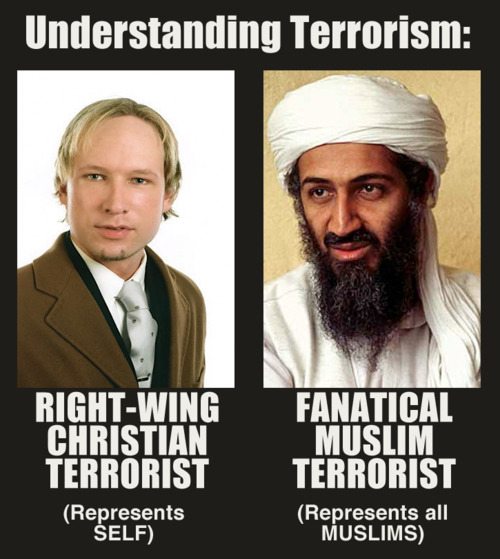
Difference Between a Christian and Muslim Terrorist
This graphic (I found it on Digg.com but am not sure who the creator of it is) caught my attention and I think makes a powerful statement about how criticism of religious extremism seems to differ according to which religion is implicated:
As the 10th anniversary of the 9/11 attack approaches, new data from the Pew Research Group shows that unfortunately, tensions and suspicions still exist between the west and Muslim populations.
Muslim and Western publics continue to see relations between them as generally bad, with both sides holding negative stereotypes of the other. . . . However, the latest Pew Global Attitudes survey finds somewhat of a thaw in the U.S. and Europe compared with five years ago. A greater percentage of Western publics now see relations between themselves and Muslims as generally good compared with 2006.
In contrast, Muslims in predominantly Muslim nations are as inclined to say relations are generally bad as they were five years ago. And, as in the past, Muslims express more unfavorable opinions about Christians than Americans or Europeans express about Muslims. Muslims in the Middle East and elsewhere who say relations with the West are bad overwhelmingly blame the West. However, while Americans and Europeans tend to blame Muslims for bad relations, significant numbers believe Westerners are responsible.
A suspected hate crime in Sacramento CA tragically highlights the inability (or refusal) of some Americans to distinguish between Asian ethnic and religious groups and instead, blindly acting on racist stereotypes to attack innocent Americans.
The traditional [Sikh] headwear might have singled them out late last week when they were gunned down, one fatally, in what police are investigating as a suspected hate crime. On Monday, local religious leaders pleaded for the community to come forward with leads but also said they will not be deterred by violence.
“Our community will continue to wear our turbans proudly,” said Navi Kaur, the granddaughter of Surinder Singh, 65, who died from his wounds. His friend, 78-year-old Gurmej Atwal, remains in critical condition. They were walking through their neighborhood in Elk Grove, just south of the California state capital Sacramento, Friday afternoon when someone in what witnesses described as a pickup truck opened fire.
Monday also marked the start of a trial involving a confirmed hate crime against a Sikh. . . . [Amar Shergill] is the attorney for a Sikh cab driver beaten four months ago by passengers who shouted anti-Islamic slurs at him in West Sacramento, which sits across the Sacramento River from the state capital. The two defendants pleaded no contest Monday to felony assault.
As the 10th anniversary of the Sept. 11 attacks approaches, several people at Monday’s news conference drew links between the Sacramento-area crimes and national and international developments. From unrest in North Africa to congressional hearings on radicalization of Muslims in the U.S., speakers warned of an increasingly hostile climate.
Student enrollment in Arabic, Korean and Chinese classes is showing the fastest growth among foreign language courses at U.S. colleges, even though Spanish remains the most popular by a huge margin, a new study shows.
The survey of more than 2,500 colleges and universities by the Modern Language Assn., or MLA, found that enrollment in Arabic surged by 46% between 2006 and 2009. More U.S. college students are studying Arabic than Russian, a change that officials say reflects a shift of interest from Cold War concerns to current issues involving the Middle East and terrorism.
Last year’s controversy about the location of a Muslim center near Ground Zero has many American Muslims exasperated about if and when they will ever be fully accepted into mainstream U.S. society.
For nine years after the attacks of Sept. 11, many American Muslims made concerted efforts to build relationships with non-Muslims, to make it clear they abhor terrorism, to educate people about Islam and to participate in interfaith service projects. They took satisfaction in the observations by many scholars that Muslims in America were more successful and assimilated than Muslims in Europe.
Now, many of those same Muslims say that all of those years of work are being rapidly undone by the fierce opposition to a Muslim cultural center near ground zero that has unleashed a torrent of anti-Muslim sentiments and a spate of vandalism. . . . Dr. Ferhan Asghar, an orthopedic spine surgeon in Cincinnati and the father of two young girls [says], “In no other country could we have such freedoms — that’s why so many Muslims choose to make this country their own. But we do wonder whether it will get to the point where people don’t want Muslims here anymore.”
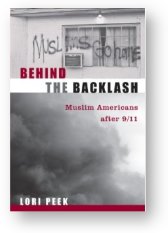
As the nation tried to absorb the shock of the 9/11 attacks, Muslim Americans were caught up in an unprecedented wave of backlash violence. Public discussion revealed that widespread misunderstanding and misrepresentation of Islam persisted, despite the striking diversity of the Muslim community.
Letting the voices of 140 ordinary Muslim American men and women describe their experiences, Lori Peek’s path-breaking book, Behind the Backlash presents moving accounts of prejudice and exclusion. Muslims speak of being subjected to harassment before the attacks, and recount the discrimination they encountered afterwards. Peek also explains the struggles of young Muslim adults to solidify their community and define their identity during a time of national crisis.
Behind the Backlash seeks to explain why blame and scapegoating occur after a catastrophe. Peek sets the twenty-first century experience of Muslim Americans, who were vilified and victimized, in the context of larger sociological and psychological processes. Peek’s book will be of interest to those in disaster research studies, sociology of religion, and race and ethnic relations.
In Muslims in Motion, Nazli Kibria provides a comparative look at Bangladeshi Muslims in different global contexts-including Britain, the U.S., the Middle East, and Malaysia. Kibria examines international migrant flows from Bangladesh, and considers how such migrations continue to shape Islamization in these areas. Having conducted more than 200 in-depth interviews, she explores how, in societies as different as these, migrant Muslims, in their everyday lives, strive to achieve economic gains, sustain community and family life, and realize a sense of dignity and honor.
Muslims in Motion offers fresh insights into the prominence of Islam in these communities, especially an Islam defined by fundamentalist movements and ideologies. Kibria also focuses on the complex significance of nationality-with rich analyses of the diaspora, the role of gender and class, and the multiple identities of the migrants, she shows how nationality can be both a critical source of support and also of difficulty for many in their efforts to attain lives of dignity. By bringing to life a vast range of experiences, this book challenges prevailing stereotypes of Muslims.
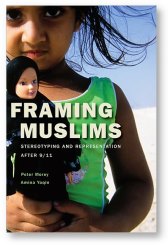
Can Muslims ever fully be citizens of the West? Can the values of Islam ever be brought into accord with the individual freedoms central to the civic identity of Western nations? Not if you believe what you see on TV. Whether the bearded fanatic, the veiled, oppressed female, or the shadowy terrorist plotting our destruction, crude stereotypes permeate public representations of Muslims in the United States and western Europe. But these “Muslims” are caricatures—distorted abstractions, wrought in the most garish colors, that serve to reduce the diversity and complexity of the Muslim world to a set of fixed objects suitable for sound bites and not much else.
In Framing Muslims: Stereotyping and Representation after 9/11, Peter Morey and Amina Yaqin dissect the ways in which stereotypes depicting Muslims as an inherently problematic presence in the West are constructed, deployed, and circulated in the public imagination, producing an immense gulf between representation and a considerably more complex reality. Crucially, they show that these stereotypes are not solely the province of crude-minded demagogues and their tabloid megaphones, but multiply as well from the lips of supposedly progressive elites, even those who presume to speak “from within,” on Muslims’ behalf.
Based on nuanced analyses of cultural representations in both the United States and the UK, the authors draw our attention to a circulation of stereotypes about Muslims that sometimes globalizes local biases and, at other times, brings national differences into sharper relief.
This book seeks to tell the life stories of the innocent men and women who have been needlessly swept up in the “war on terror.†As we approach the ten-year anniversary of 9/11, this collection of narratives gives voice to the people who have had their human rights violated here in the U.S. by post-9/11 policies and actions.
Among the narrators:
Young men of Arab, Muslim, South Asian, and Middle Eastern descent, who were arrested and detained or singled out for voluntary interviews because of their national origin or religion. Scholars who have been blacklisted or subjected to interrogation for their research or writings on Islam and related topics. Muslim women who have suffered from job discrimination, harassment, and assault for wearing a veil or similar head covering.
= = = = = = = = = =
UPDATE
After this post was published, I came across a few more noteworthy articles on Islam and Muslim Americans:
Muslim Americans are now more optimistic about their lives than any other major American faith group as their economic well-being improves and they feel more politically enfranchised. A Gallup study released on Tuesday found 60 percent of Muslim Americans surveyed reported they were “thriving”, slightly higher than for Americans of any other religion except for Jews, who edged them out of the top spot by one percentage point.
Pollsters noted in particular the rapid surge in positive sentiment among Muslim Americans. The percentage of Muslims who were “thriving” grew by 19 points since 2008, double that of any other major faith group. . . .
Authors of the study said they attributed the change in outlook to improved economic conditions and a sense of more political enfranchisement since the election of President Barack Obama, a Christian with Muslim family roots who has reached out to Muslim communities worldwide. The report said Obama’s approval rating among Muslim Americans was 80 percent, and that 46 percent, or a plurality, of Muslim Americans identified as Democrats, compared to only 9 percent who identified as Republicans.
[I]mprovements in Muslim sentiment came despite continuing controversies. Those included a controversy surrounding a plan to build a Muslim cultural center and mosque near the site of New York’s September 11 al-Qaida attack, and hearings on Islamic extremism called by U.S. Representative Peter King, which critics viewed as a witch-hunt.
The same Gallup Organization study mentioned in the above article also notes that among major U.S. religious groups, Muslim Americans are the most likely to oppose individual or military violence against civilians. This particular report would be a very useful resource to contradict ongoing stereotypes that Muslims are more prone to support violence than other religious groups.
Muslim Americans are the staunchest opponents of military attacks on civilians, compared with members of other major religious groups Gallup has studied in the United States. Seventy-eight percent of Muslim Americans say military attacks on civilians are never justified. . . . Respondents from other faith groups, particularly Mormon Americans, are more likely to say military attacks are sometimes justified than never justified.
Each year, the Federal Bureau of Investigation releases its official report on Hate Crimes in the U.S. First, a little background — hate crimes are defined as a criminal offense committed against a person or property, which is motivated, in whole or in part, by bias against the victim’s actual or perceived race, ethnicity, religion, sexual orientation, or disability, and that is formally reported to law enforcement. This definition is important in many ways, as I explain a little later.
The number of hate crimes committed against Asian Americans and Pacific Islander Americans declined from 188 incidents and 219 offenses in 2007, to 137 incidents and 162 offenses in 2008.
Similarly, the number of hate crimes committed against Hispanic Americans declined from 595 incidents and 775 offenses in 2007, to 561 incidents and 735 offenses in 2008.
The number of hate crimes committed against Muslim Americans also declined, from 115 incidents and 133 offenses in 2007, to 105 incidents and 123 offenses in 2008.
These are positive signs of progress and we should acknowledge them as such. Unfortunately there appears to be at least an equal number of bad news as well:
In total, the number of reported hate crimes are at their highest level since 2001. In 2008, there were 7,783 hate crime incidents and 9,168 hate crime offenses reported, an increase from 7,624 and 9,006 reported in 2007, respectively.
The number of hate crime crimes directed at Blacks increased from 2,658 incidents and 3,275 offenses in 2007, to 2,876 incidents and 3,413 offenses in 2008. Such anti-Black hate crimes are at their highest levels since 2001 and are pretty clear evidence that despite Barack Obama’s election, racism against Blacks is still alive and well in America.
Hate crimes based on sexual orientation are also at their highest level since 2001, increasing from 1,265 incidents and 1,460 offenses in 2007, to 1,297 and 1,617 in 2008, respectively.
Aside from the decline in anti-Muslim hate crimes, there was an overall increase in the number of hate crimes based on religious bias in general. For example, the number of hate incidents and offenses committed against Jewish Americans increased from 969 and 1,010 in 2007, to 1,013 and 1,055 in 2008, respectively.
To further put these hate crime numbers in perspective, we should note the specifics related to how they were collected. Specifically, as in years past, the vast majority of the law enforcement agencies who participated in the data collection (84.4% to be exact) reported absolutely zero hate crimes — that there were no hate crime incidents in their particular jurisdiction.
In addition, thousands of police agencies across the nation did not participate in the hate crime data collection program at all, including at least five agencies in cities with a popular of over 250,000 and at least eleven agencies in cities with populations between 100,000 and 250,000.
Many of these jurisdictions who did not participate or who reported zero hate crimes include areas in the South. I’m sorry, but I have a hard time accepting that there was only one (1) hate crime committed in the state of Mississippi, just two (2) in Georgia, and just four (4) in Alabama in 2008.
On top of this uneven and inconsistent participation and reporting on the part of police agencies, we should also note that, as sociological and criminological studies consistently point out, the majority of hate crime incidents are never reported to police at all — their victims stay silent. This is particularly true with many immigrant groups and communities of color, including Asian Americans.
That is, many victims may not be fluent in English and therefore feel that it is futile to report it to the police. They may also feel that the police would be unlikely to take their reports seriously for lack of cultural competency, or they may distrust the police entirely based on previous negative experiences with police in their area, or with corrupt police and government agencies back in their home country. Also, many victims may simply fear retaliation from the offenders if they report the incidents to police.
As you can see, the “official” data should be taken with a big grain of salt and almost surely represent an undercount — maybe even a significant one — of the real number of hate crimes committed in 2008. Unfortunately, in the quest for racial/ethnic/religious/sexual equality, American society still seems to be taking two steps forward, and two steps back.
You might be interested to read the following posts from Octobers of years past:
2008: Racists Who Support Obama Analyzing why a large percentage of American voters who hold racist views of minorities nonetheless support Obama.
2007: Tila Tequila and Her Reality TV Show The latest high-profile Asian American media personality, Tila Tequila, gets her own reality TV show.
2006: Experiencing Race in the U.S. A new study looks at political opinions among communities of color and finds notable differences across social class lines for some, but not all groups.
2004: Affirmative Action: Beginning of the End? Recent political and educational trends suggest that the use of affirmative action programs is declining, although the need for such programs is still open to debate.
You might be interested to read the following posts from September of years past:
2008: What Exactly is a Hate Crime? How a recent racial attack against an Indian American symbolizes the injustices people of color have experienced through the years.
2007: Using Religion to Unite Racial Groups In times of economic insecurity, demographic change, and political conflict, common religious beliefs might be the social glue that bonds groups from different backgrounds together.
2006: Indian Americans: Model Immigrants? The socioeconomic success of many Indian Americans in recent decades is due to their individual and collective hard work and existing advantages that they brought with them as immigrants.
2005: “Anti-Asian” Laws Passed by APA Politicians Looking at the racial, ethnic, and political complexities of laws and regulations proposed by Asian American politicians that seem to disproportionately hurt other Asian Americans.
As part of this blog’s mission of making academic research and data more easily accessible, understandable, and applicable to a wider audience and to practical, everyday social issues, I highlight new sociological books about Asian Americans and other racial/ethnic groups as I hear about them. As always, please remember that I highlight them for informational purposes only and do not necessarily endorse their entire content or arguments.
In Christianity, as with most religions, attaining holiness and a higher spirituality while simultaneously pursuing worldly ideals such as fame and fortune is nearly impossible. So, how do people pursuing careers in Hollywood’s entertainment industry maintain their religious devotion without sacrificing their career goals?
For some, the answer lies just two miles south of the historic center of Hollywood, California, at the Oasis Christian Center. In “Hollywood Faith”, Gerardo Marti shows how a multiracial evangelical congregation of 2,000 people accommodates itself to the entertainment industry and draws in many striving to succeed in this harsh and irreverent business. Oasis strategically sanctifies ambition and negotiates social change by promoting a new religious identity as “champion of life” – an identity that provides people who face difficult career choices and failed opportunities a sense of empowerment and endurance.
The first book to provide an in-depth look at religion among the “creative class.” “Hollywood Faith” will fascinate those interested in the modern evangelical movement and anyone who wants to understand how religion adapts to social change.
In my previous post entitled “The Downside of Diversity,” I wrote about a new study by a Harvard professor which concluded that in areas with high levels of racial/ethnic diversity, residents are more likely to feel alienated and distrustful of each other.
In that context however, as the New York Times reports, in many churches around the country, an influx of new immigrants has led to increased racial, ethnic, and cultural diversity in their churches. More importantly and in contrast to the findings of the above-mentioned, it has actually strengthened the social bonds between church members:
The Clarkston International Bible Church, which sits along an active freight rail line down the road from the former Ku Klux Klan bastion of Stone Mountain, is now home to parishioners from more than 15 countries. . . The church’s Sunday potluck lunch features African stews and Asian vegetable dishes alongside hot dogs, sweet tea and homemade cherry pie.
The transformation of what was long known as the Clarkston Baptist Church speaks to a broader change among other American churches. Many evangelical Christians who have long believed in spreading their religion in faraway lands have found that immigrants offer an opportunity for church work within one’s own community. And many immigrants and refugees are drawn by the warm welcome they get from the parishioners, which can stand in stark contrast to the more competitive and alienating nature of workaday America.
Indeed, evangelical churches have begun to stand out as rare centers of ethnic mixing in a country that researchers say has become more culturally fragmented, in part because of immigration.
The article describes that the transition to a multi-ethnic and multicultural church was not an easy one. As their town was experiencing these profound demographic changes, many old-time White residents were appalled and moved elsewhere, rather than live next to more immigrants and people of color.
Nonetheless, other long-time residents turned to the Bible to get guidance on how to deal with these social changes and found the answer in Jesus’s example of praying for unity among his followers. As a result, the church first rented out its facilities to Filipino, Vietnamese, and African groups for their own services. Eventually, the church invited these separate congregations to join them to form an expanded and inclusive congregation.
Further, the article notes that all groups involved had to change a little: †Merging congregations has meant compromise for everyone. The immigrants who join the main congregation have to give up worshiping in their native languages. Older Southern Baptist parishioners have given up traditional hymns and organ music.â€
This story about the evolution of the Clarkston International Bible Church is a great example of sociology in so many ways. The first lesson is that globalization and demographic change are practical realities of American society. With that in mind, “traditionalists†can try to keep running away and moving from town to town if they like, but eventually they will have to deal with these changes one way or another.
Alternatively, as illustrated by William Perrin’s example in the article, they can summon up the courage to consciously adapt to these changes and learn to even embrace these changes because it is these kinds of challenges that make us stronger and more united as a community and as a society.
A third “lesson” we might learn from this story is the positive power of religion to facilitate social unity and solidarity. Many Americans and particularly many academics, are rather skeptical and even hostile towards organized religion. In many cases, they see religion as a divisive force that only serves to perpetuate “us versus them” mentalities.
In many cases, these critics of religion certainly have a point and there are plenty of examples to support their perspective. Nonetheless, as this article illustrates, not all aspects of organized religion are divisive and in fact, as shown by the Clarkston example, religion can serve as a powerful and effective focal point that can bring together people from diverse backgrounds.
All combined, the final sociological lesson to be learned is that rather than leading to more alienation and distrust, racial, ethnic, and cultural diversity, with the help of some kind of “social glue” like religion, can indeed offer us the opportunity to socially evolve and to become better American citizens.